Picking a broker is one of the first decisions a new investor makes, and it affects your costs for years. A broker is the company that holds your investments and carries out your buy and sell orders. The good news is that the checks are the same in almost every country, and they take less time than most people expect.
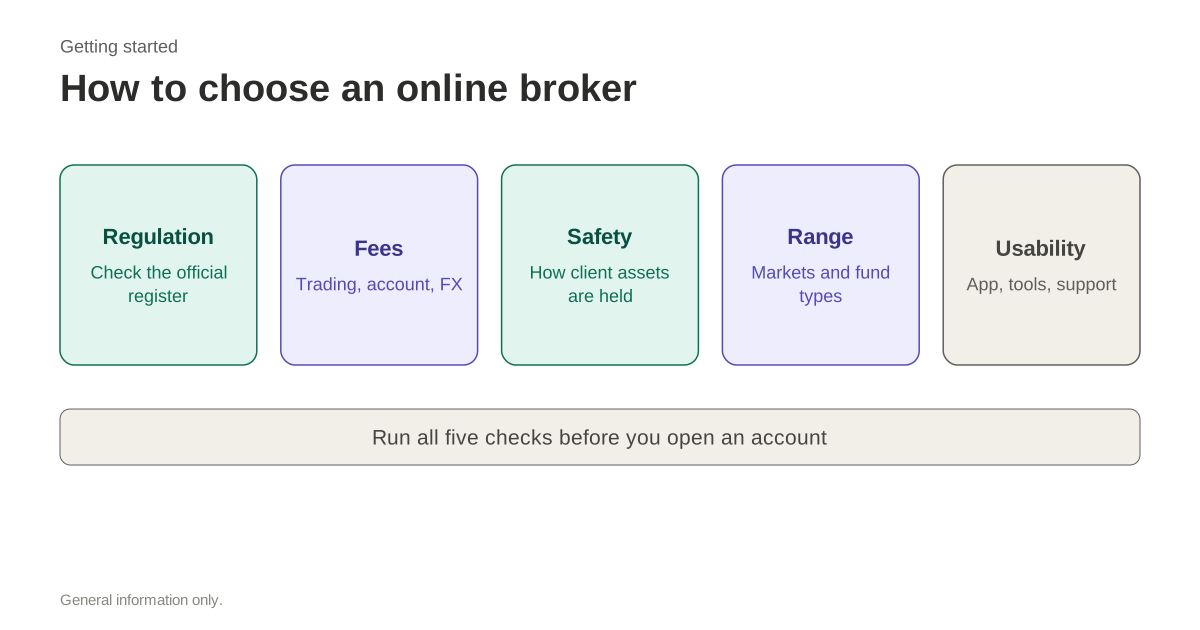
This guide walks through the checks in a sensible order. Start with safety, then look at cost, then at what you can actually buy, and finally at the tools you will use every month. A broker that looks cheap but fails the first check is not a bargain.
1. Check the regulator
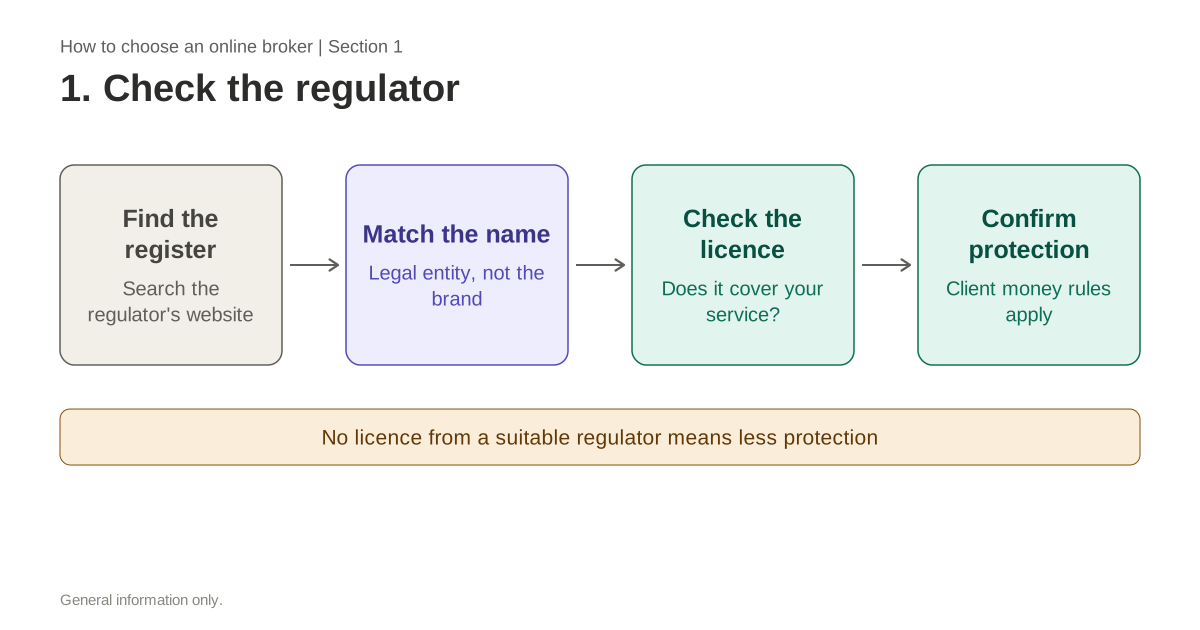
Only use a broker that is licensed by the financial regulator in your country, or by a strong regulator that is permitted to serve people where you live. Regulators set rules on how client money is held, how the firm reports, and what happens if it fails. Without that oversight, you have far less protection.
You can usually search the regulator's public register by the company's name. Check that the licence covers the service you want, such as dealing in shares or funds, and not only a related activity. Note the firm's full legal name, because a brand name on an app may belong to a different company from the one that holds your money.
2. Look at the full cost
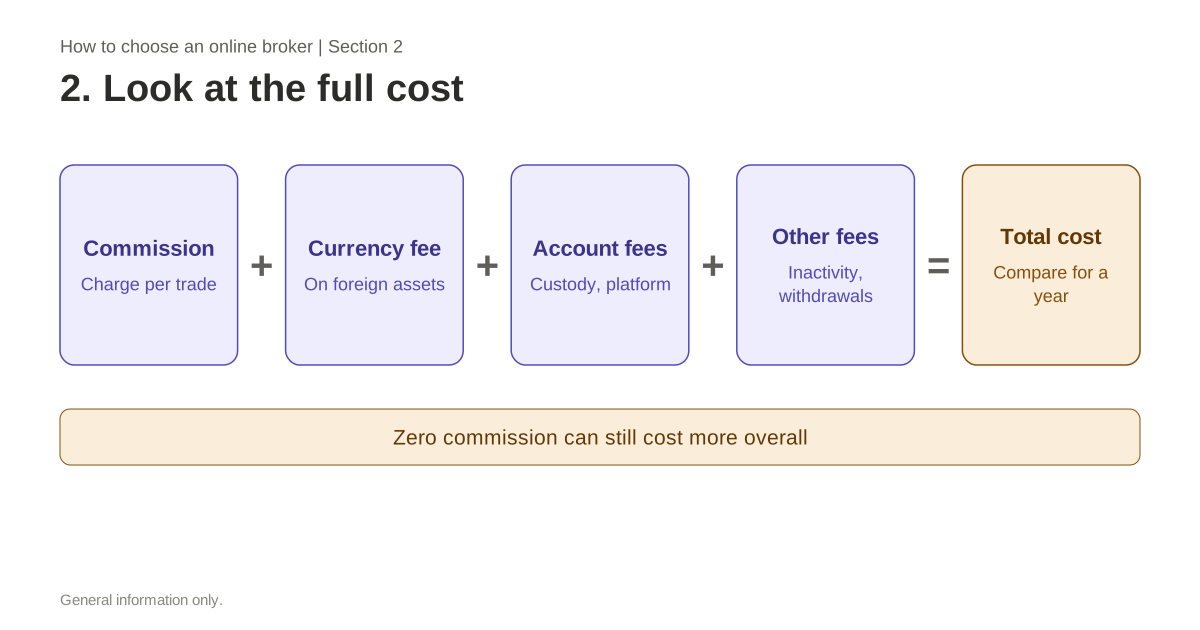
Commission is only one fee, and it is often the easiest one to see. Also check the currency conversion charge if you buy assets priced in another currency, custody or account fees, inactivity fees, and the charge for withdrawing money. A broker with zero commission can still cost more than a rival if its currency fee is high or if it charges to keep an account open.
Ask for a full schedule of charges and compare the total cost for a typical year of your own trading. If you plan to invest a fixed amount every month, the cost of that routine matters more than the cost of one large trade. Our broker fees article explains the most common charges in more detail.
3. Make sure it has what you want to buy
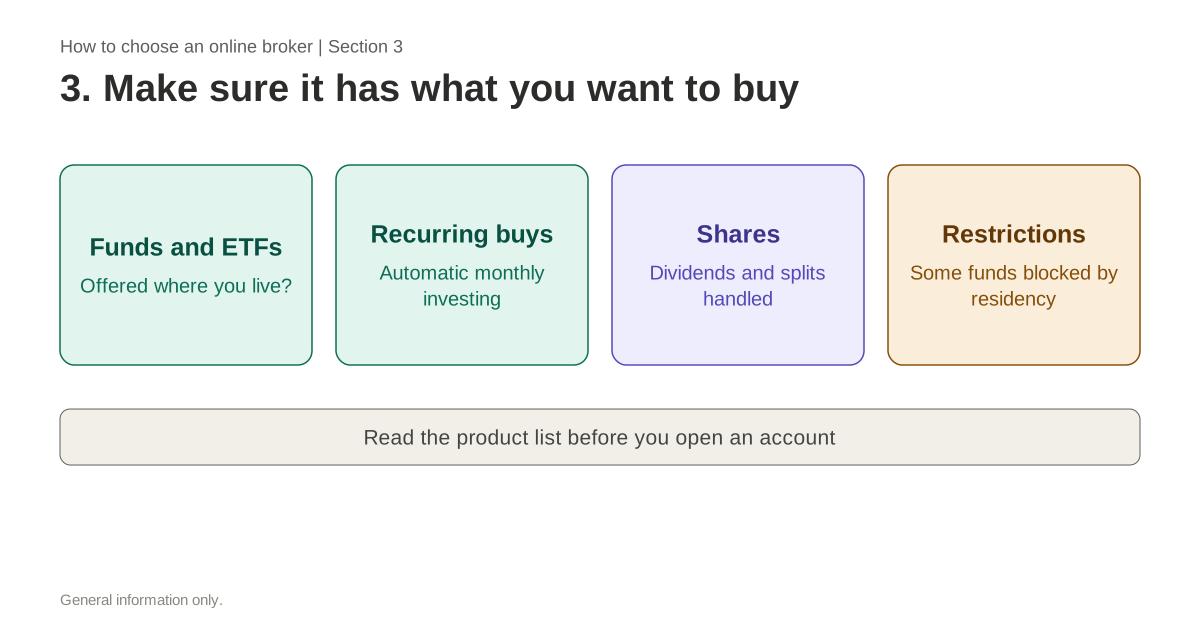
Different brokers offer different products. If your plan is to buy index funds or exchange-traded funds every month, check that the broker offers them in your country and that it supports automatic or recurring investing. If you want to hold individual shares, check how the broker handles dividends and corporate actions such as share splits.
Some brokers also restrict access to certain funds for residents of some countries. Read the list of available products before you open an account, not after you have chosen what to buy.
4. Look for tax-advantaged accounts
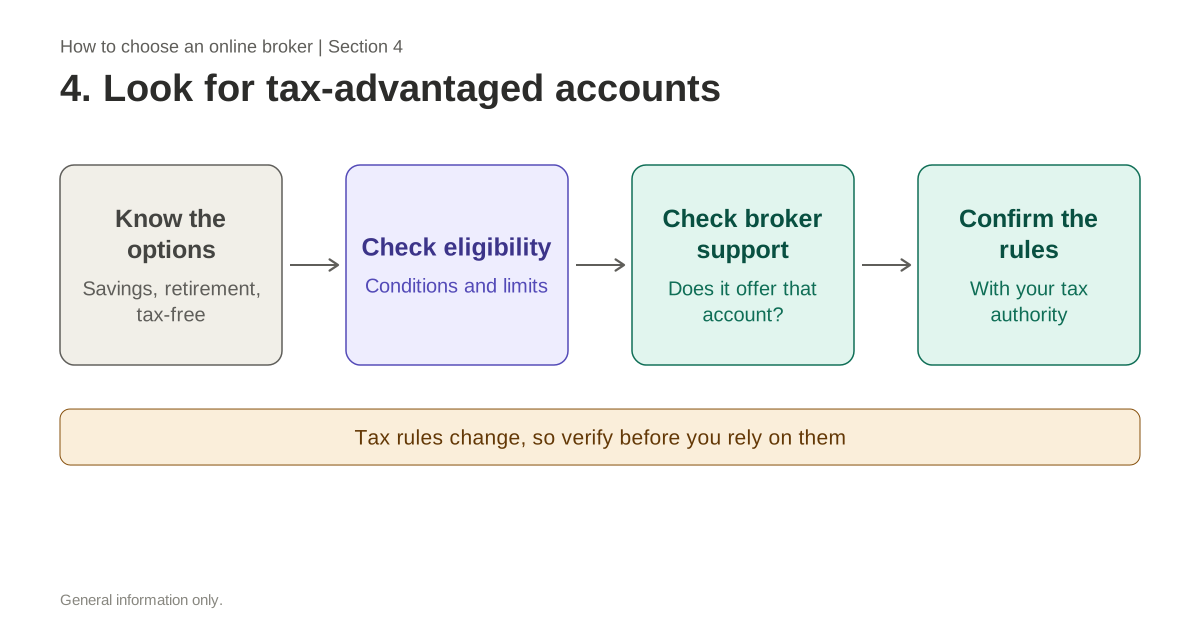
Many countries offer special accounts that shelter investment growth or income from tax, if you meet the conditions. Examples include individual savings accounts, retirement accounts and tax-free savings accounts, and the names and rules vary widely. A broker that supports the account you are eligible for can save you more than any small difference in fees.
Check whether the broker offers the account type you need, how it reports tax information, and whether there are limits on contributions. Tax rules change, so confirm them with the tax authority in your country before you rely on them.
5. Try the app before you deposit
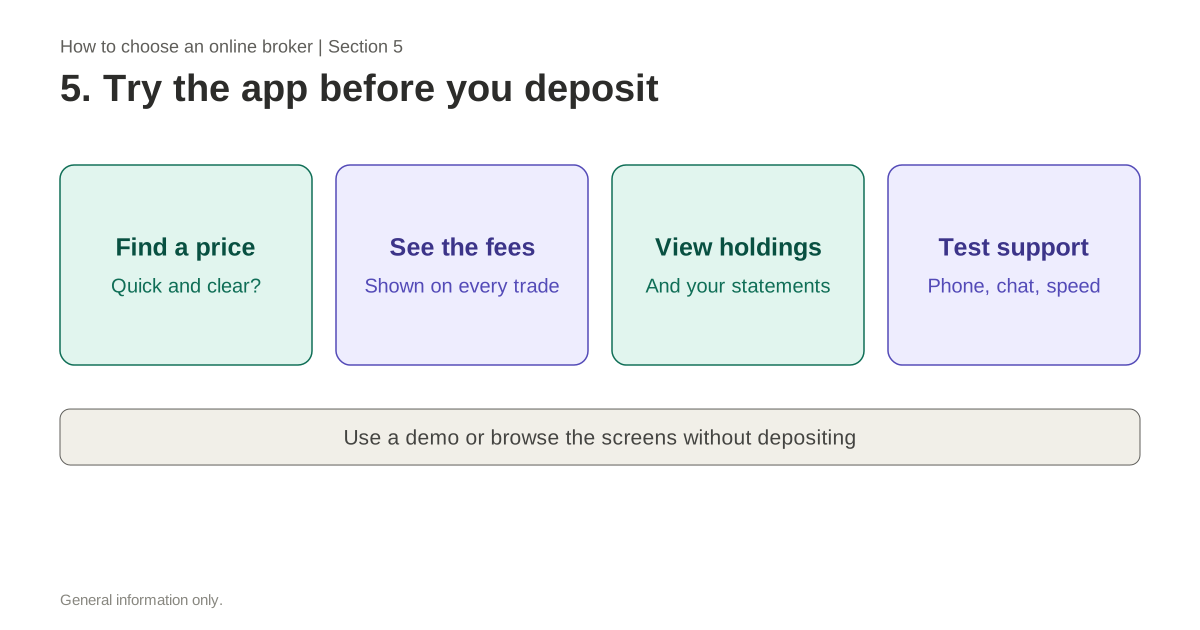
You will use the broker's app or website for years, so it should feel clear to you. Open the demo, if there is one, or look at the screens without depositing money. Check that you can find the price of an investment, the fees on a trade, your holdings and your statements without searching.
Think about support as well. Find out how you can contact the firm, whether there is a phone or chat option, and how quickly it answers. You will not need support often, but when you do, a slow response can be costly.
Put the checks in order
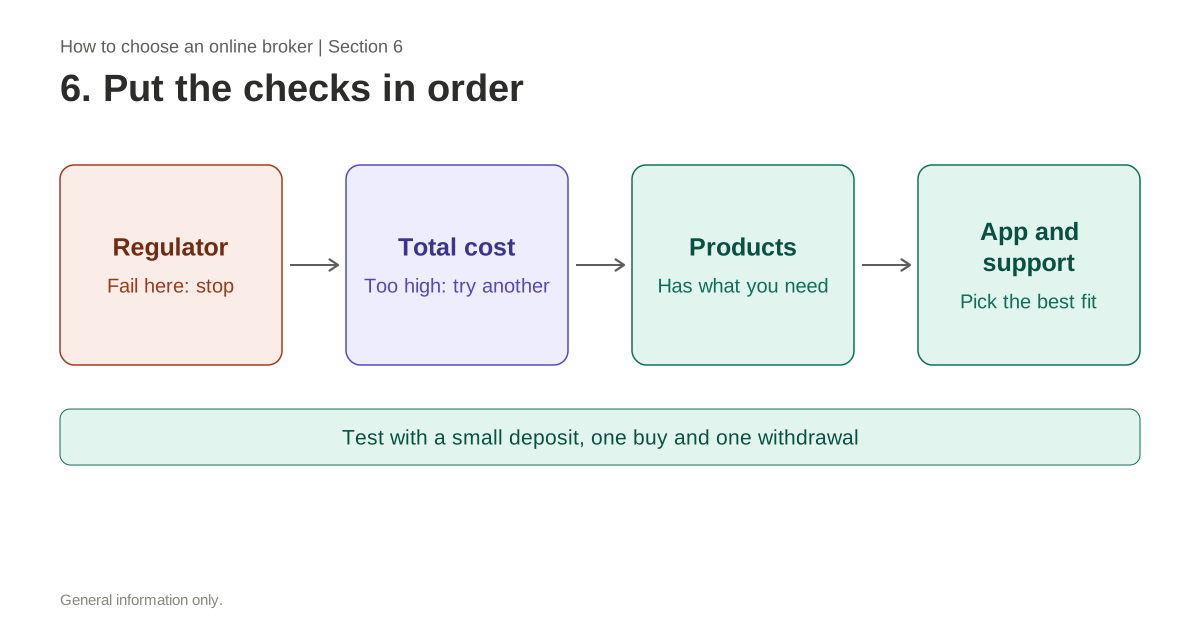
Work through the list in the order above. If a broker fails the regulator check, stop there. If the total cost is too high for your plan, compare another firm. Only then choose between the remaining options on features and convenience.
It is also sensible to open an account with a small amount first, make one purchase and one withdrawal, and see how long each step takes. Real experience of the process often tells you more than any comparison table.
Keep a record
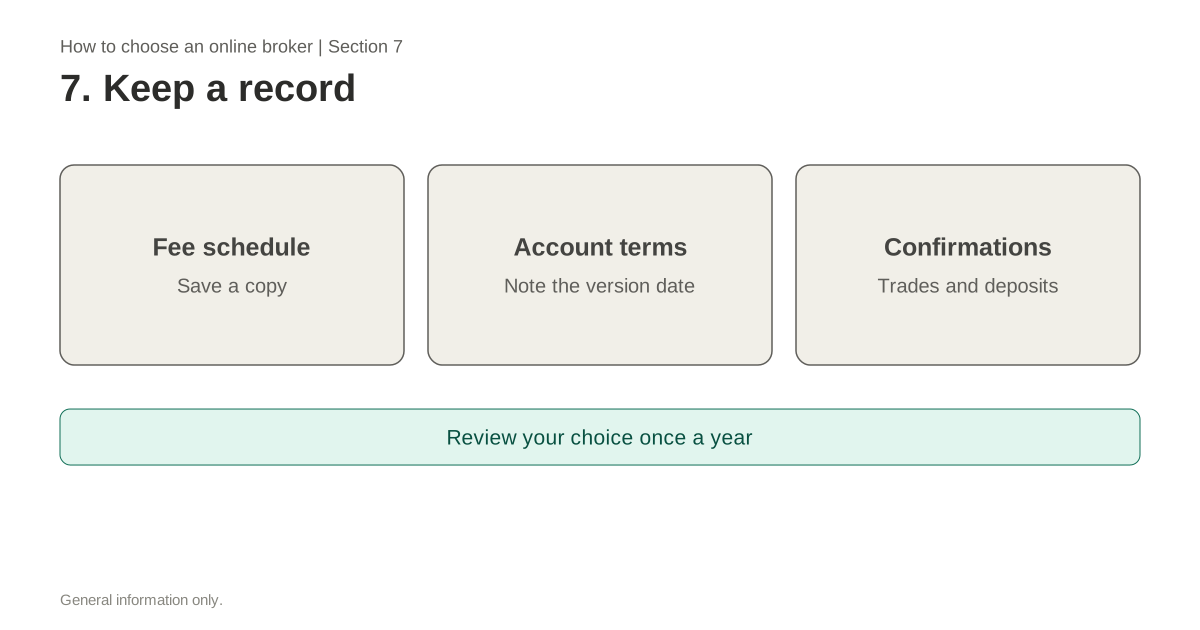
Save the fee schedule, the account terms and any confirmations you receive. If fees change, you will have a record to compare against. A broker is a long-term service, so it is worth reviewing your choice once a year, especially if your trading habits or your country's account rules change.
Common mistakes to avoid
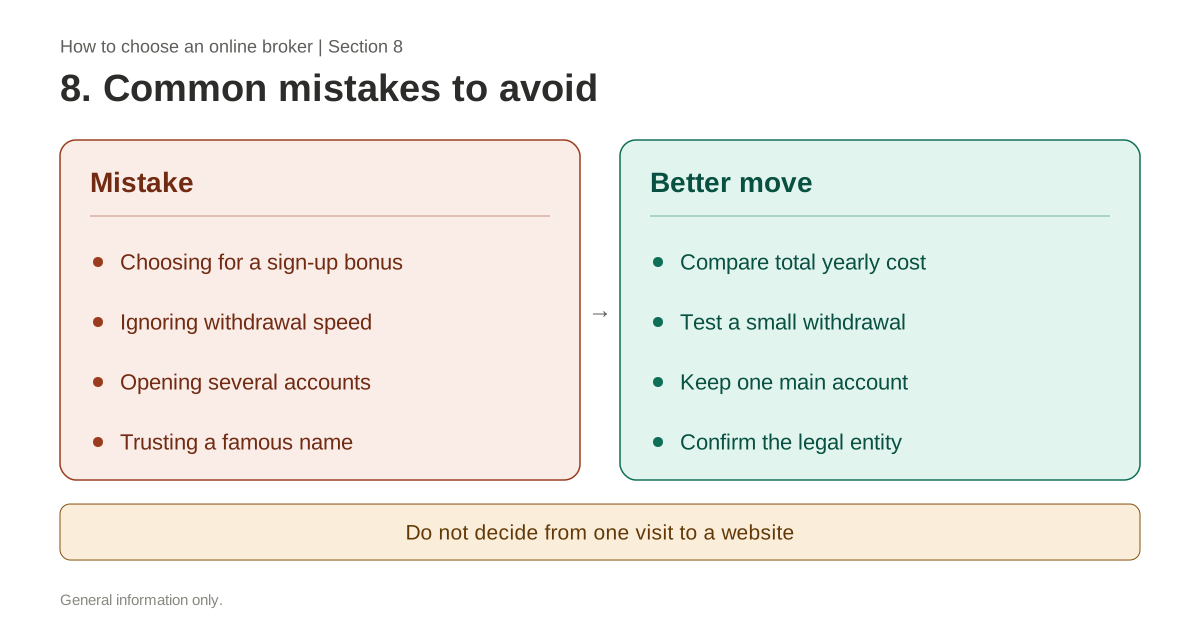
Many new investors pick a broker because a friend uses it or because an advertisement caught their eye. Those are poor reasons on their own. The first mistake is to focus on the sign-up bonus, which often comes with conditions that make the account more expensive over time. The second is to ignore the withdrawal process, which can be slow or costly and only shows up when you need your money back.
Another common error is to open several accounts at once, each for a slightly different purpose. This makes it hard to see your total holdings and fees. A third mistake is to assume that a well-known name is automatically safe. Always confirm the licence and the legal entity that will hold your money, because the brand you see on screen is not always the company that holds your assets.
Finally, avoid making a long-term decision based on a single visit to the website. Check how the firm responds to a question before you deposit, and read a recent independent review or regulator notice if one exists.
Questions to ask before you deposit
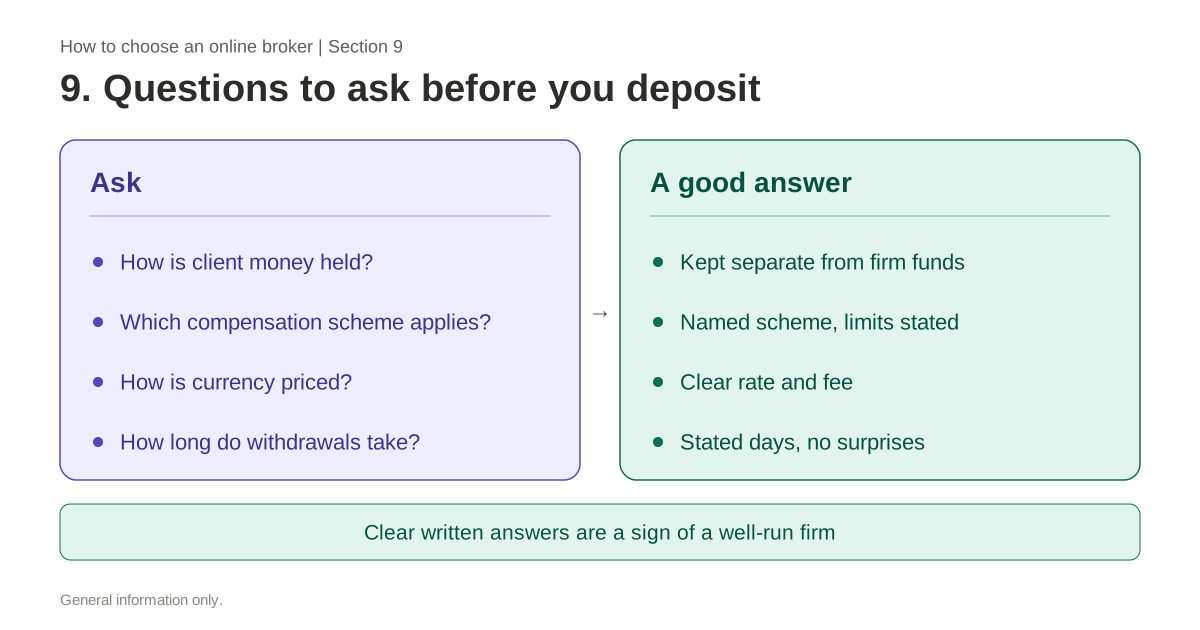
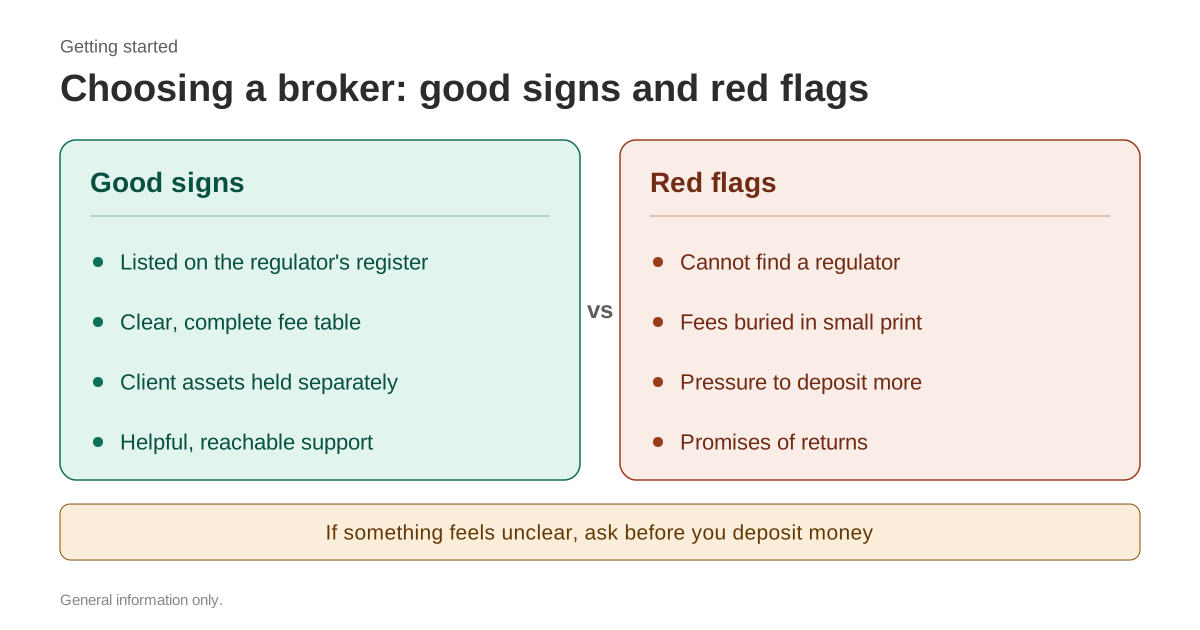
Before you deposit, ask the firm how client money is held, whether it is kept separate from the company's own funds, and which compensation scheme applies if it fails. Ask how it prices currency conversion, how long a withdrawal takes, and whether there is a charge for transferring your holdings to another firm. Those answers tell you how the firm behaves when things are not going smoothly.
It is also useful to ask what happens to your holdings if you stop using the account for a long period. Some firms charge inactivity fees, while others simply hold the assets. Knowing the rules now saves a surprise later, and a clear, written answer is a good sign of a well-run service.
Frequently asked questions
Do I need a broker to invest?
In most cases, yes. A broker gives you access to the market, holds your investments and executes your orders. Some employers and pension schemes also offer investing through a plan, which may not need a separate broker account.
Is a broker with zero commission always the cheapest?
Not necessarily. Zero commission can be offset by higher currency conversion charges, wider spreads or account fees. Compare the total annual cost for the way you plan to invest.
What happens to my money if a broker goes bankrupt?
In regulated markets, client assets are usually kept separate from the firm's own money, and many countries run a compensation scheme. The rules differ, so check the protection that applies where you live and what it covers.
How many brokers should I open accounts with?
One is usually enough for most people. Several accounts can make it harder to track your investments and fees, so only open a second account if it offers something the first cannot.