Inflation is the general rise in prices over time. When inflation is positive, the same amount of money buys less than it did before. A coffee, a train ticket or a monthly bill that cost a certain amount a few years ago may cost more today. Because inflation affects every part of the economy, it has a direct effect on savings, investments, wages and debts.
This article explains what inflation is, how it is measured, why it matters for your finances and how to plan for it. Inflation rates vary between countries and over time, so check the official figures for your own area.
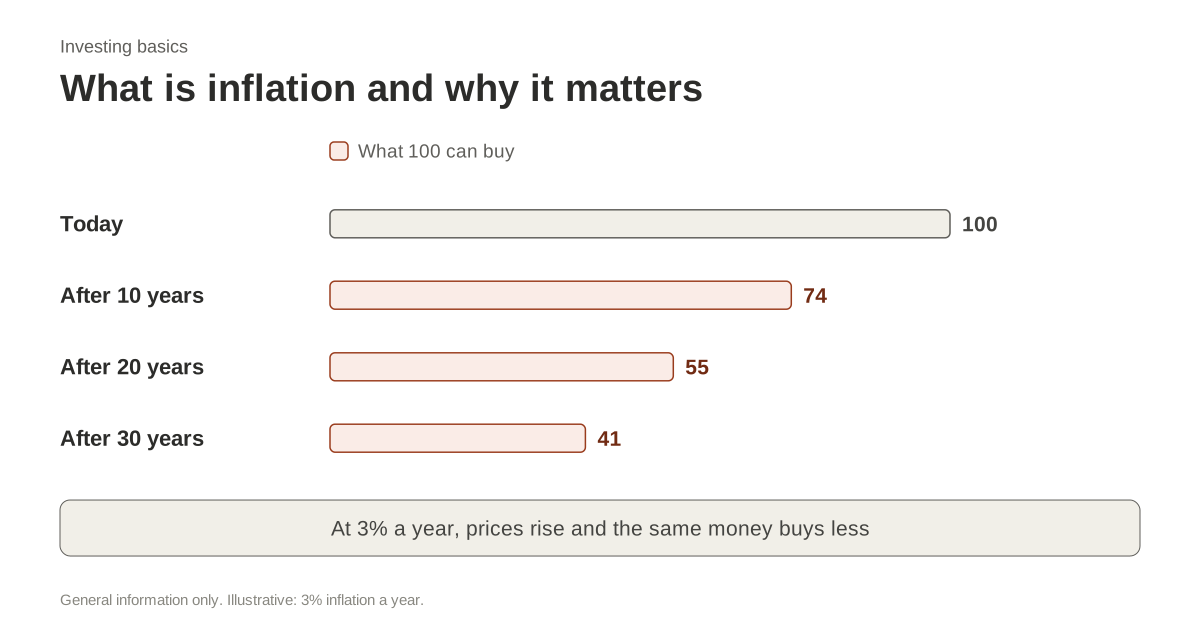
What inflation means
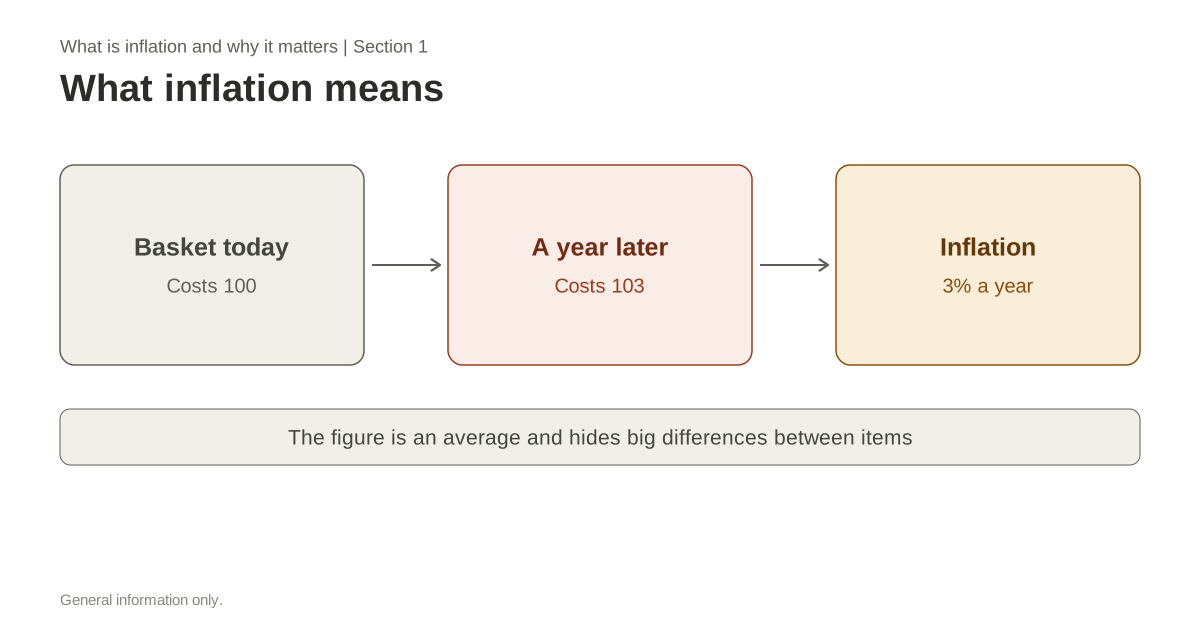
Inflation is measured as the percentage change in a broad set of prices over a year. If a basket of everyday goods and services costs 100 one year and 103 the next, inflation is 3%. The figure is an average, and it hides large differences between items. Some prices may rise sharply while others fall or stay flat.
A small rate of inflation is common in many economies. Economists and central banks often aim for a low, steady rate, because it encourages spending and investment and reduces the risk of prices falling in a damaging way. The concern is usually high or unpredictable inflation, which makes planning and saving harder.
How it is measured
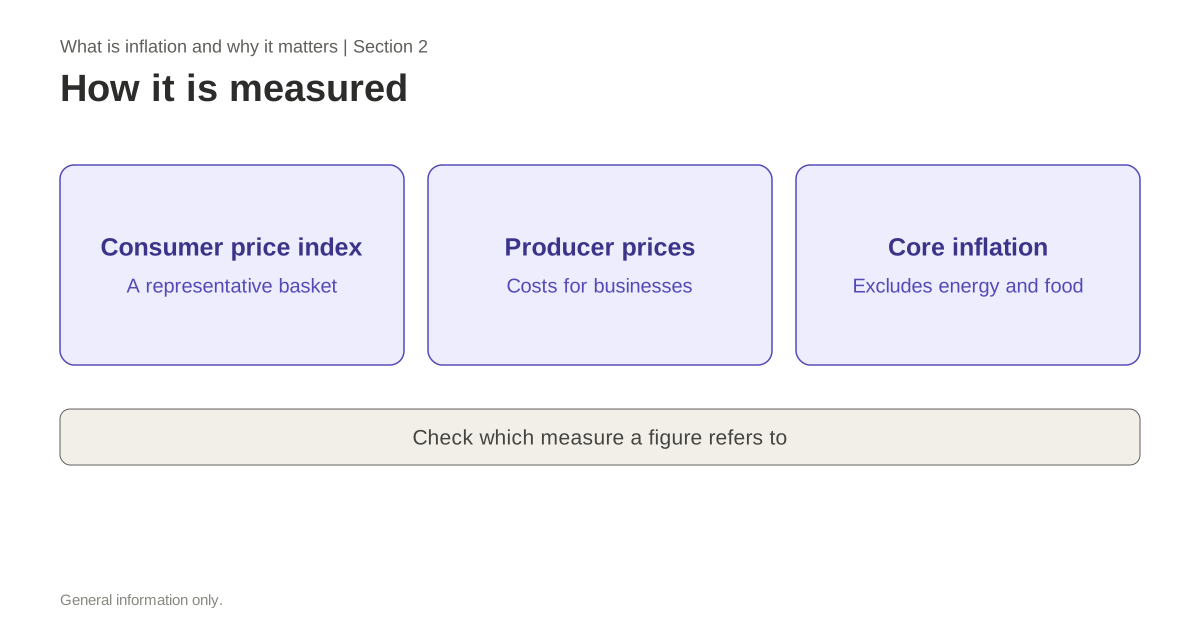
Most countries publish a consumer price index, which tracks the cost of a representative basket of goods and services. The basket is updated periodically to reflect how people spend. Some countries also publish producer price measures or core inflation figures, which exclude volatile items such as energy and food.
When you read an inflation figure, check which measure it refers to and how often it is updated. The headline figure is the most widely reported, but it may not match the costs you face, especially if your spending differs from the average.
Why it erodes purchasing power
Purchasing power is what your money can buy. If you hold cash that earns no interest, inflation reduces its value every year. A sum of 1,000 kept under the mattress will buy noticeably less after several years of steady inflation. The same is true for money in accounts that pay less interest than prices are rising.
This is why the real return matters more than the nominal return. A savings account that pays 3% a year while prices rise 3% a year leaves your purchasing power unchanged, before tax. If the account pays less than inflation, your money is losing value in real terms.
Effects on debt
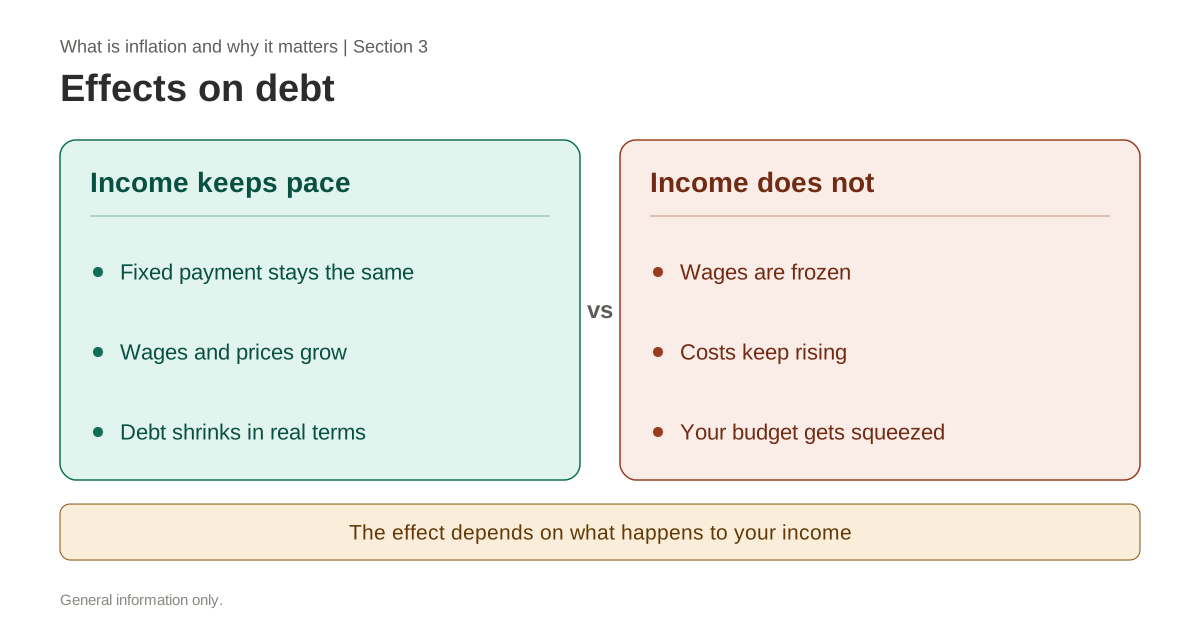
Inflation can make debt easier to carry, provided your income rises with prices. A fixed-rate loan becomes relatively smaller over time, because the monthly payment stays the same while wages and prices grow. This is one reason borrowers sometimes benefit from inflation, particularly when they have fixed long-term debt.
The effect depends on whether your income keeps pace. If your wages are frozen but your costs rise, inflation can squeeze your budget even when debt is fixed.
Effects on investments
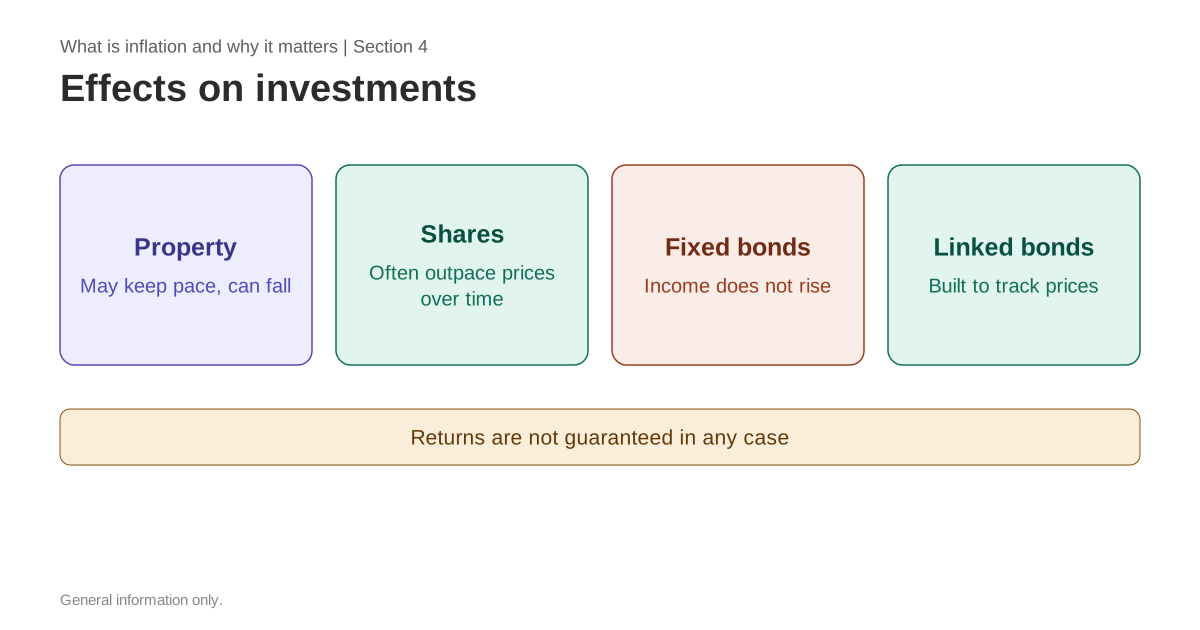
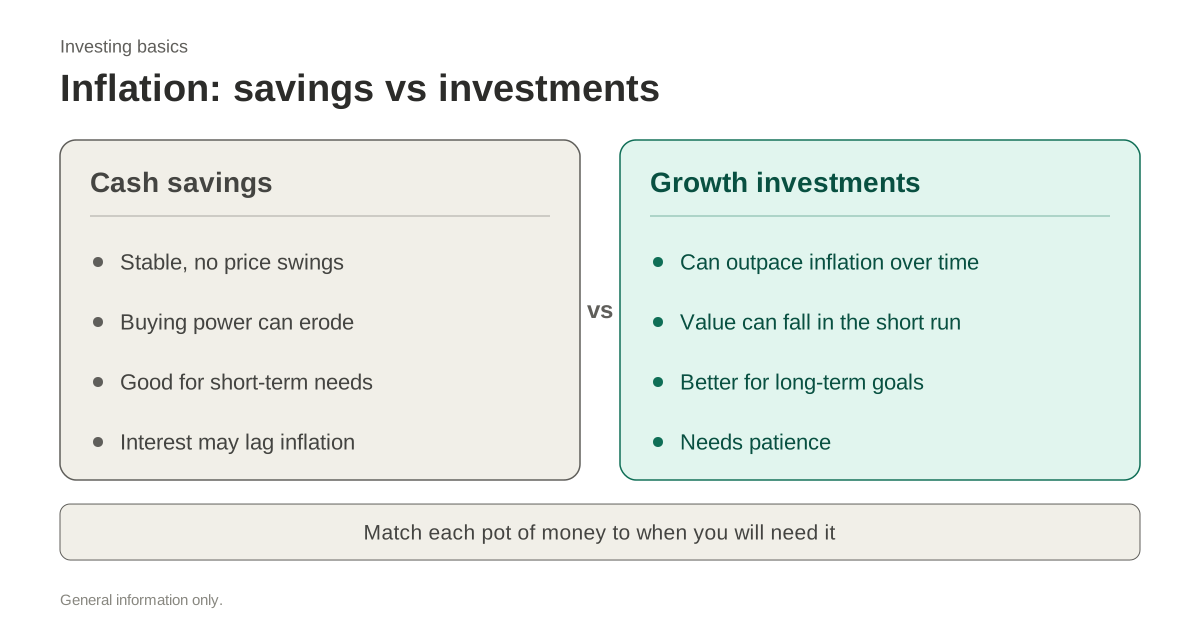
Different investments respond to inflation in different ways. Some assets, such as property and certain shares, may keep pace with rising prices over long periods, though they can fall in value too. Bonds that pay fixed interest are more exposed, because their income does not rise with inflation. Inflation-linked bonds, where available, are designed to protect against rising prices.
Over long periods, growth investments have historically tended to outpace inflation, but this is not guaranteed. Returns are uncertain, and a period of high inflation can reduce the real value of a portfolio even when its nominal value rises.
Planning for inflation
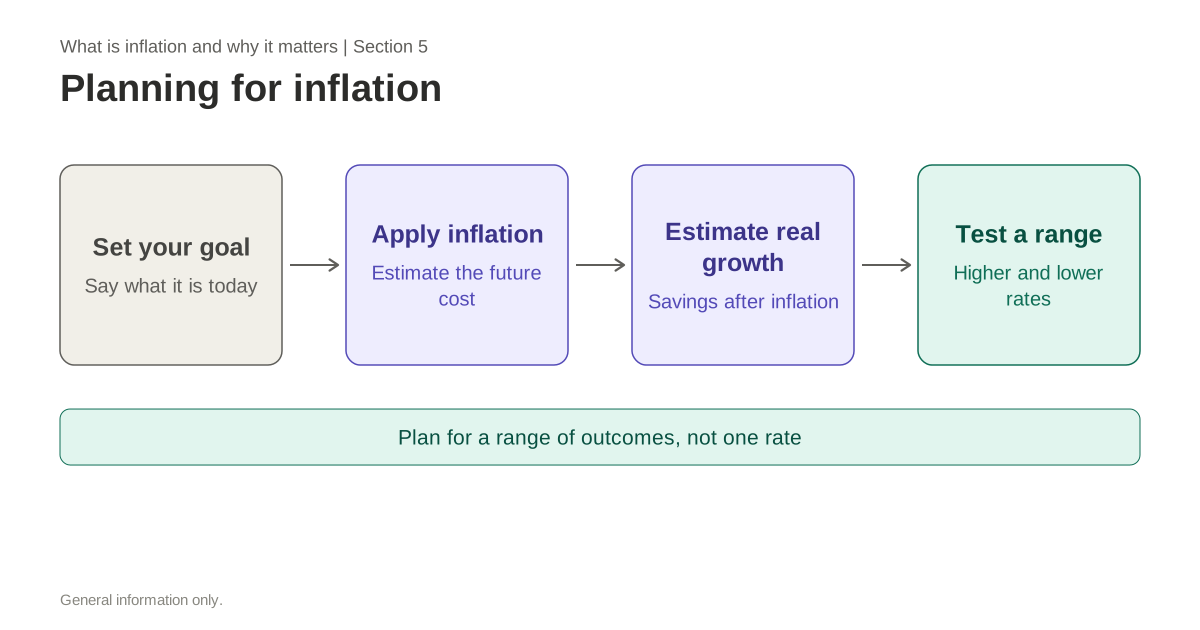
A useful habit is to think in real terms. When you set a savings goal, estimate what the target will cost in future money by applying a realistic inflation rate. Then compare that figure with your expected savings growth after inflation. Our inflation calculator shows how prices change over time, and the future value calculator shows how investments grow.
Choose your inflation assumption carefully. Use a figure that reflects the costs you actually face, and test a higher rate as well as a lower one. Planning for a range of outcomes is more reliable than assuming a single rate will hold.
Protect your income
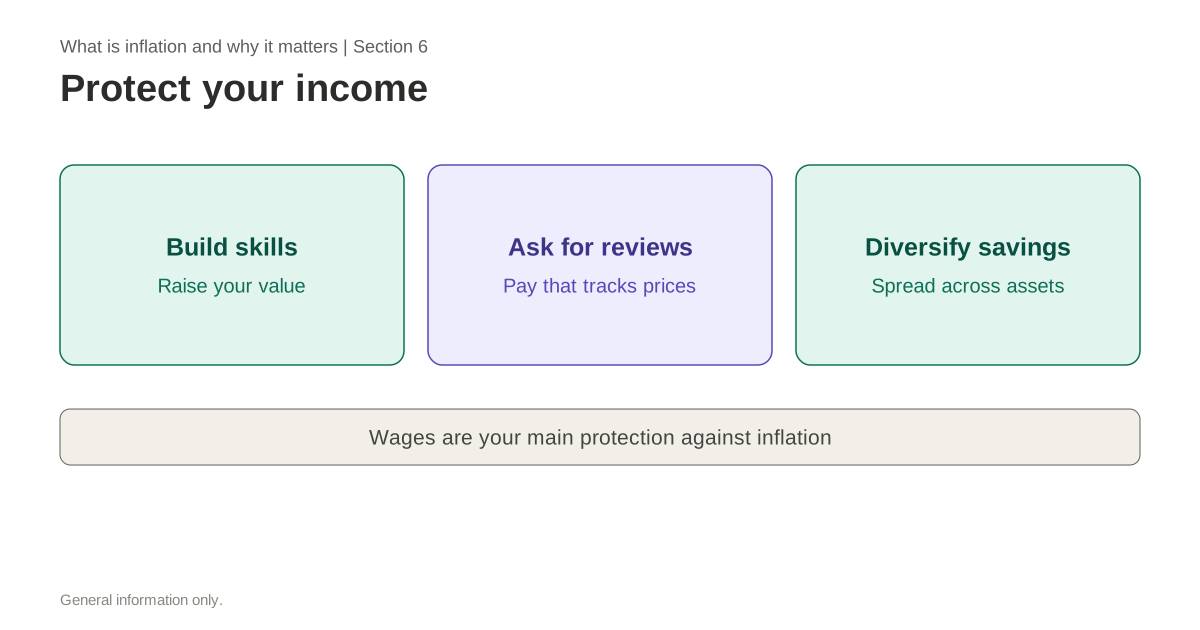
Your wages are your main protection against inflation, because they can rise over time. Building skills, asking for pay reviews and changing jobs when opportunities arise can all help your income keep pace. A diversified savings and investment plan adds further protection by spreading risk across different assets.
Inflation and everyday decisions
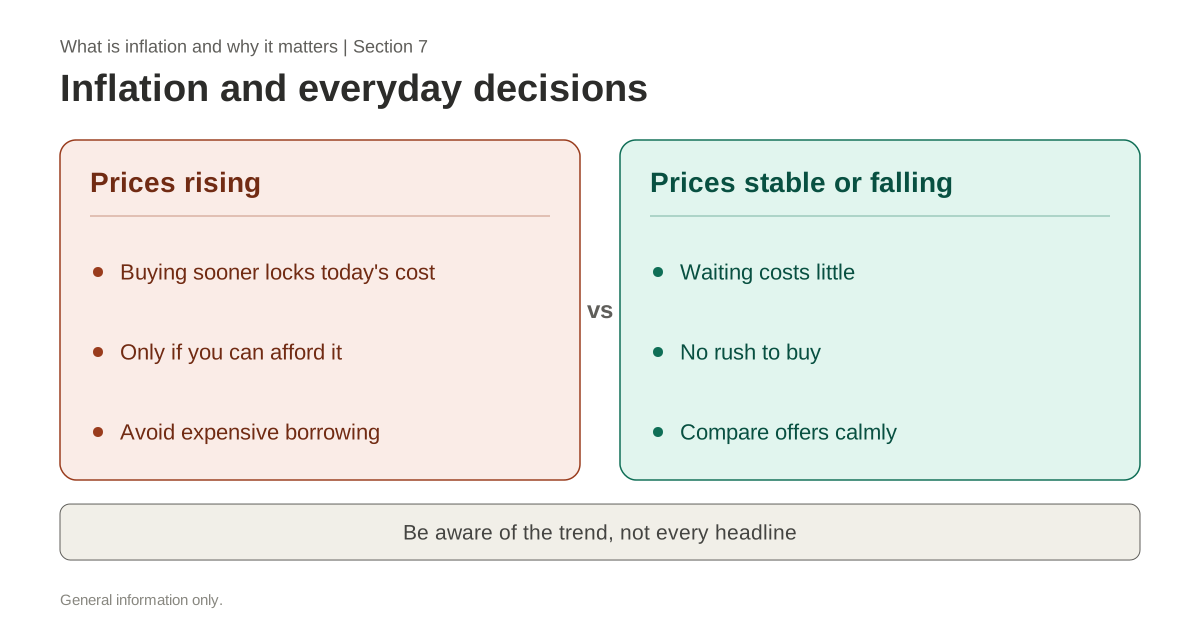
Inflation affects many everyday decisions. When prices are rising, buying a large item sooner rather than later can lock in today's cost, if you can afford it without borrowing expensively. When prices are falling or stable, waiting may cost nothing extra. The point is to be aware of the trend, rather than reacting to every headline.
It also influences how you negotiate. Wage reviews, rent renewals and supplier contracts often include inflation adjustments. Knowing the official rate and your own cost increases helps you judge whether an offer keeps pace, and gives you a stronger basis for asking for a fair adjustment.
Inflation in the long run
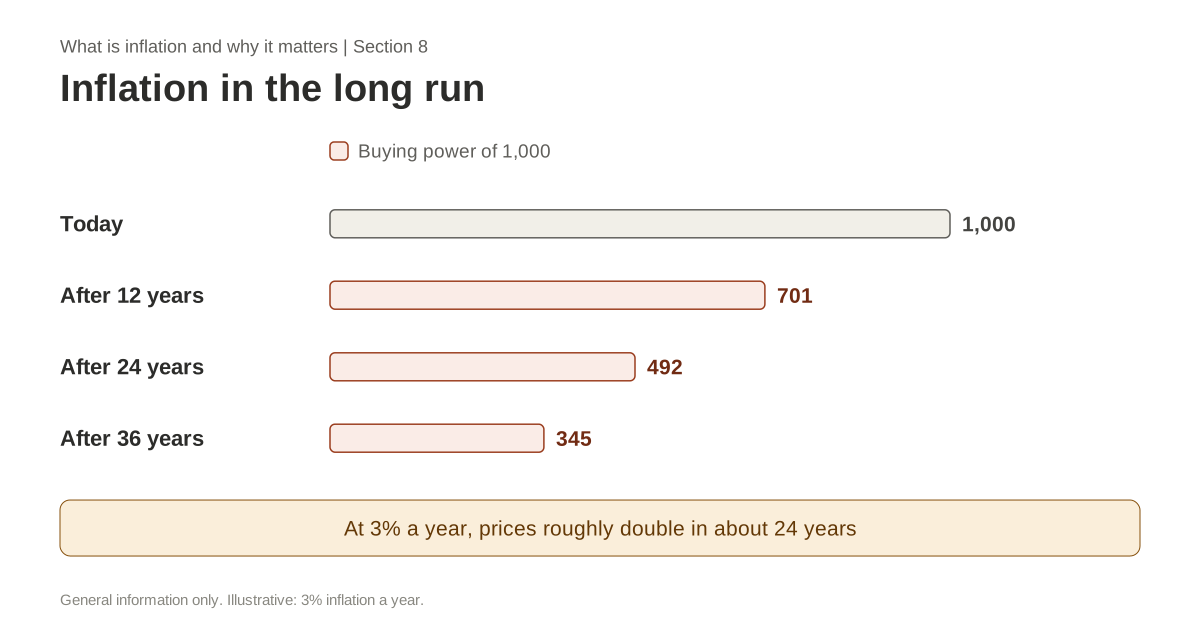
Over long periods, even modest inflation has a large effect. At 3% a year, prices roughly double in about 24 years, so a sum of money loses about half its buying power over that time. This is why long-term savers and retirees pay close attention to the real value of their income and savings, rather than the nominal amount.
When you plan for the distant future, use a realistic long-run inflation assumption and test a higher figure as well. A plan that still works under higher inflation is more robust than one that depends on prices staying calm.
Inflation expectations
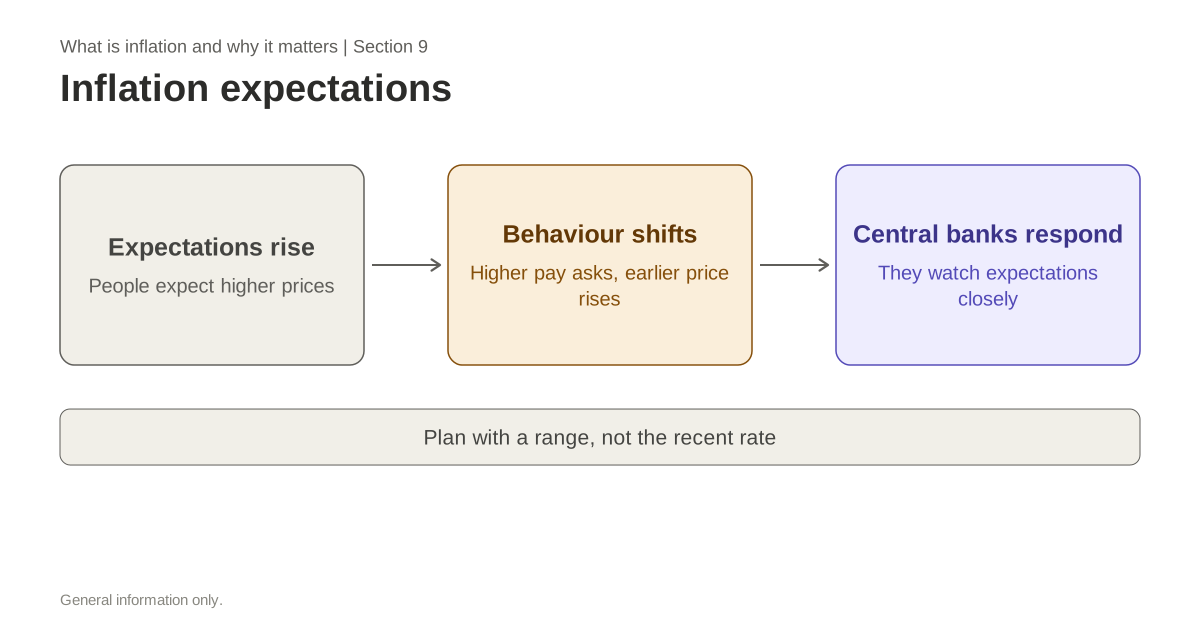
Inflation expectations matter as well as actual inflation. When people expect prices to rise, they may ask for higher wages, and businesses may raise prices in advance. Central banks watch expectations closely, because they can shape how inflation develops. For an individual, the practical lesson is to plan with a range of outcomes, rather than assuming the recent rate will continue indefinitely.
The bottom line
Inflation quietly reduces the value of money that is not growing at least as fast as prices. Understand the official measure, think in real terms when you plan, and make sure your savings and investments have a reasonable chance of keeping pace over the long run. Inflation cannot be avoided, but it can be planned for.
Frequently asked questions
What is a good inflation rate?
Many central banks aim for a low, stable rate, often a few per cent a year. What matters for you is whether your savings and income grow faster than your own costs, rather than a single national figure.
Does inflation affect savings in a bank account?
Yes. If the interest paid is lower than inflation, the real value of your savings falls over time, even though the balance rises in cash terms.
How do I know my personal inflation rate?
Track your spending across categories for a year and compare the change with the official figure. Your personal rate can differ, especially if you spend more on housing, healthcare or education.
Can investing protect me against inflation?
Some investments have historically kept pace with prices over long periods, but returns are not guaranteed. Diversification and a long time horizon help, but no investment fully removes inflation risk.