Compound interest is interest earned on both the money you originally put in and the interest that has already been added to it. It is one of the most powerful ideas in personal finance, because it makes growth accelerate over time. The longer money is left to compound, the more the later years contribute to the total.
This article explains how compound interest works, why the timing of your decisions matters, and where the idea applies to savings, investments and debt. The calculators on this site show the numbers for your own situation.
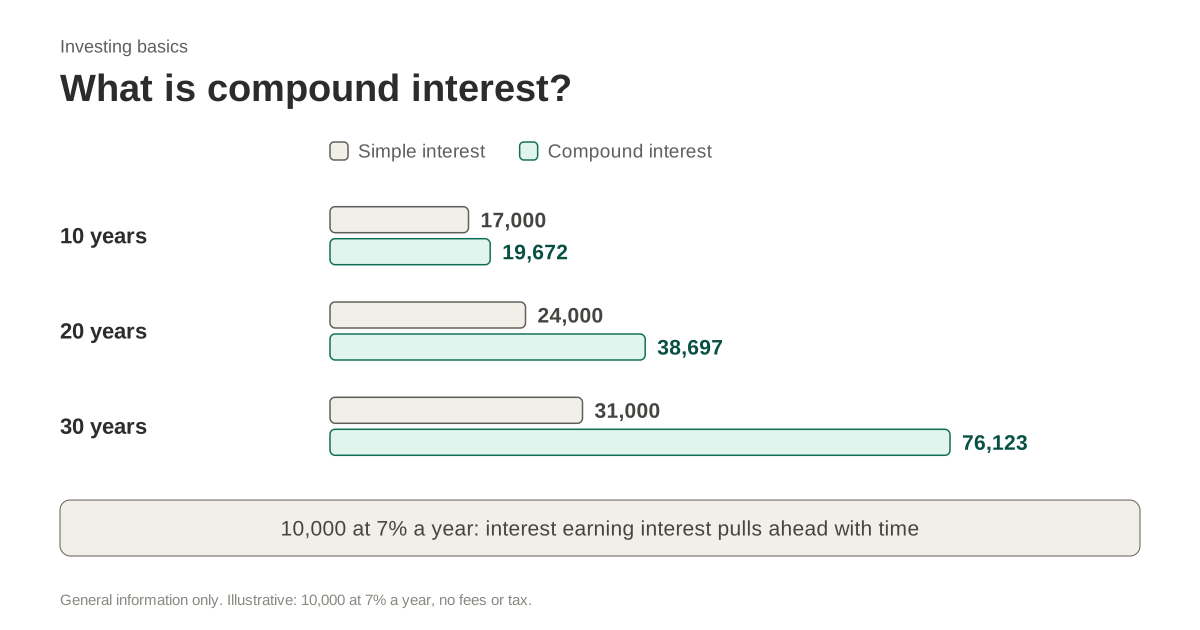
Simple interest and compound interest
With simple interest, you earn interest only on the original amount. If you deposit 1,000 at 5% a year, you earn 50 each year, whatever happens afterwards. The interest does not add to the balance and does not earn anything itself.
With compound interest, the interest is added to the balance at set intervals, and the next period's interest is calculated on the larger amount. The same 1,000 at 5% a year, compounded annually, grows to 1,050 after the first year, and then earns 52.50 in the second year rather than 50. The difference is small at first, but it grows steadily.
Why time matters most
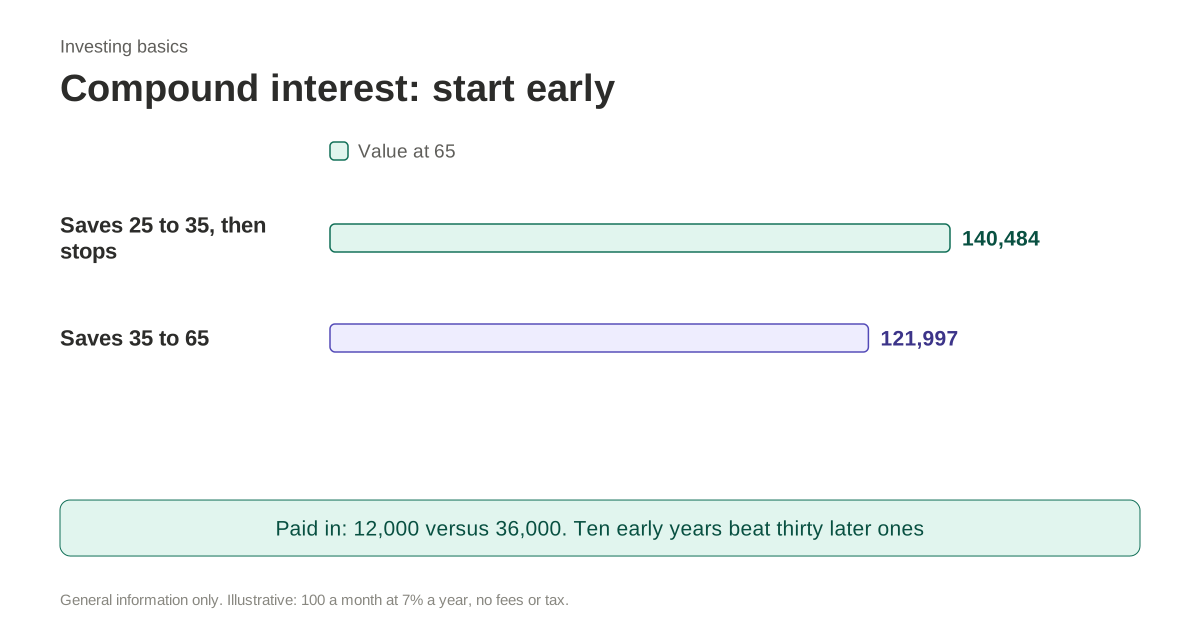
The effect of compounding depends heavily on how long money stays invested. In the early years, the interest earned is modest, so growth looks slow. Later, the balance is larger, and each year's interest is bigger still. Most of the growth in a long plan arrives in the last part of the period.
This is why starting early can matter more than investing a large sum later. A person who saves a modest amount from a young age can end up with more than someone who saves more but starts a decade later, because the early savings have longer to compound.
Compounding frequency
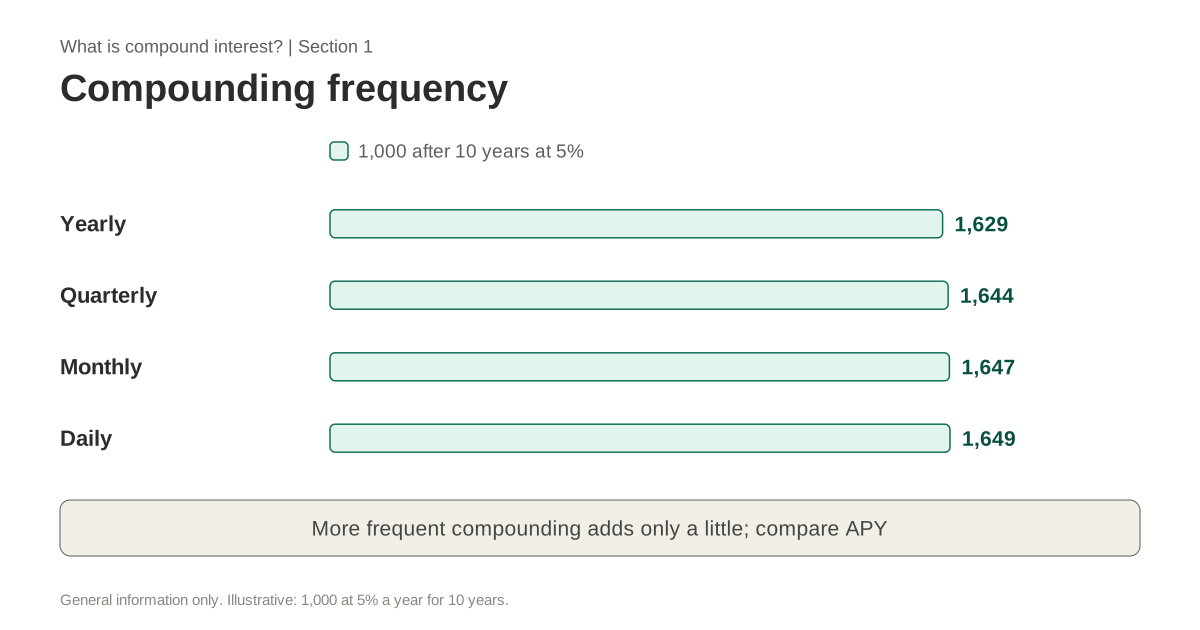
Interest can be compounded yearly, half-yearly, quarterly, monthly or daily. The more often interest is added, the sooner it starts earning its own interest, so the final amount is slightly higher for the same stated rate. The difference between annual and monthly compounding is usually small, but it becomes more noticeable at higher rates and longer periods.
When comparing savings accounts, look at the annual percentage yield, which includes the effect of compounding over a year. It gives a fair comparison even when accounts add interest at different intervals.
Compounding in investments
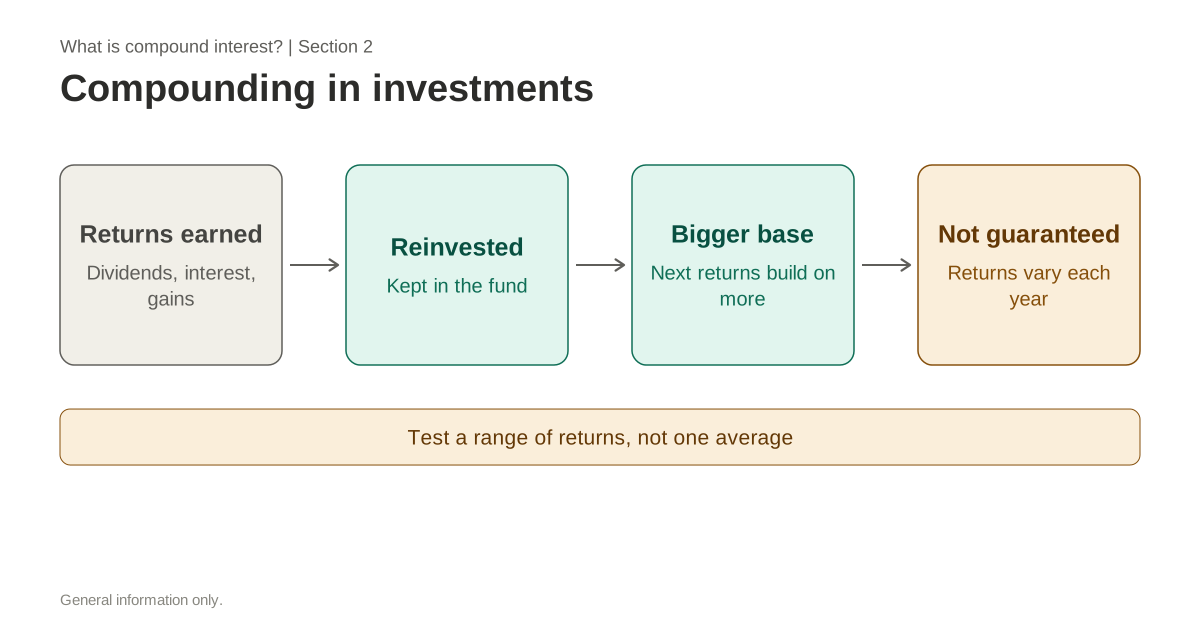
Investments compound when the returns they produce, such as dividends or reinvested income, are kept in the fund and earn returns of their own. Capital growth also compounds in a sense, because a rise in value increases the base on which future gains are calculated.
Investment returns are not guaranteed and vary from year to year. A steady rate is a simplifying assumption. In practice, a fall in value early on can take a long time to recover from, which is why it is sensible to test a range of possible returns rather than relying on one average.
Compounding against you in debt
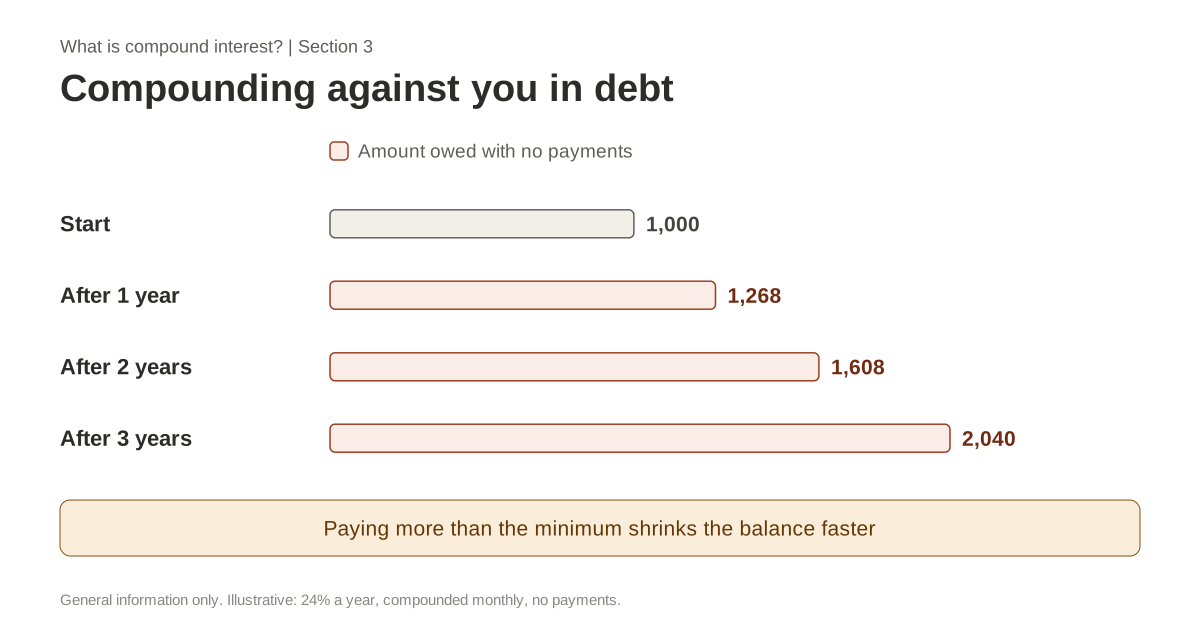
Compound interest works in the other direction on debt. Interest charged on an unpaid balance is added to what you owe, and the next charge is calculated on that larger amount. Credit card debt is especially costly for this reason, because interest can accumulate quickly if the balance is not cleared each month.
Paying more than the minimum reduces the balance faster, so less interest is added. The same logic that makes savings grow makes debt expensive, so it pays to reduce high-interest balances early.
Rule of thumb calculations
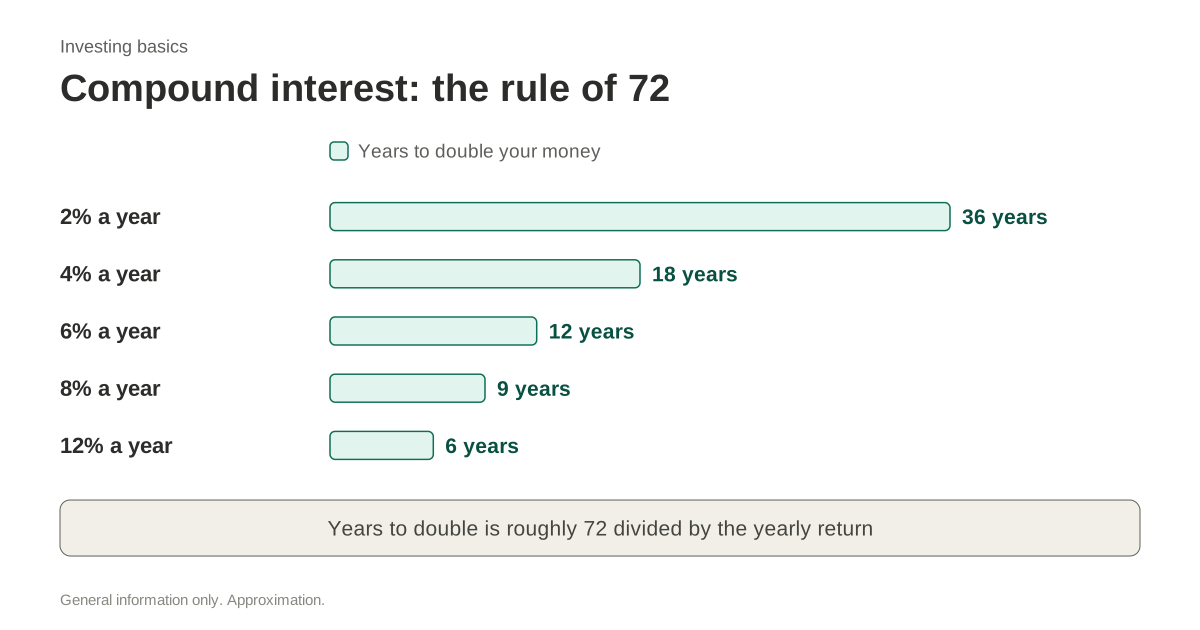
A rough shortcut is the rule of 72. Dividing 72 by the annual rate gives an approximate number of years for money to double. At 6% a year, money doubles in about 12 years. The shortcut is only an estimate, but it helps you judge quickly whether a growth rate is realistic.
For precise figures, use a calculator that compounds at the frequency you need. Check the assumptions, especially the rate and any fees or taxes that reduce what you keep.
Using the idea in your plan
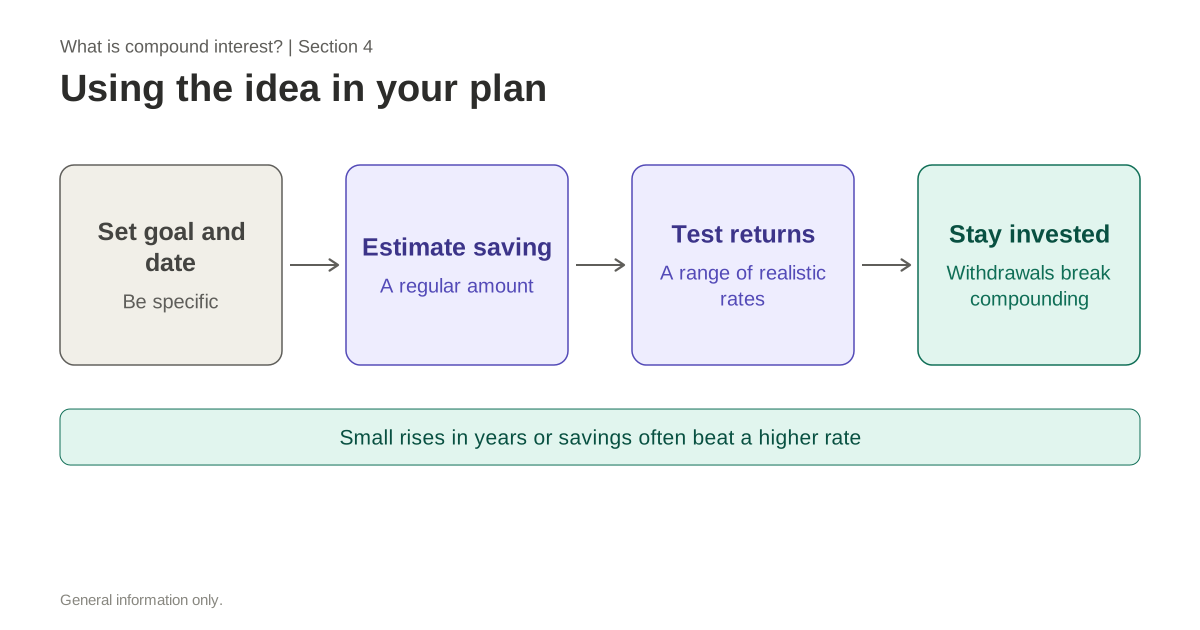
Start by setting a goal and a date. Then estimate how much you can save regularly, and test a range of realistic returns. Look at how much of the final amount comes from your contributions and how much from growth. Small increases in the amount saved or the years invested often have a larger effect than a higher rate.
Keep the money invested through ups and downs where you can. Withdrawing early interrupts the compounding, and the growth you lose does not come back.
Common mistakes
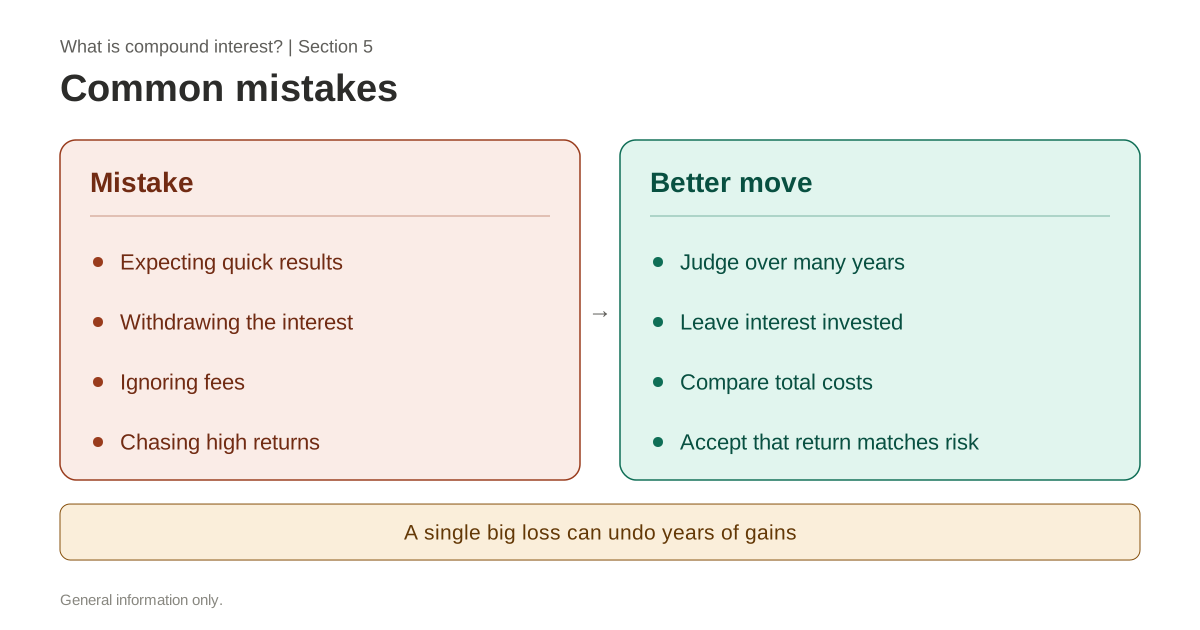
A frequent mistake is to expect compounding to work quickly. In the first few years, the extra return is modest, and it is easy to become discouraged and stop. Another mistake is to withdraw interest that could have stayed invested, which removes both the money and the growth it would have earned in later years.
People also underestimate the effect of fees. A charge of one per cent a year can absorb a large share of the growth over several decades, because it reduces the balance that compounds. Finally, avoid chasing high returns that promise to compound quickly. Higher return usually means higher risk, and a single large loss can undo years of gains.
Compounding and inflation
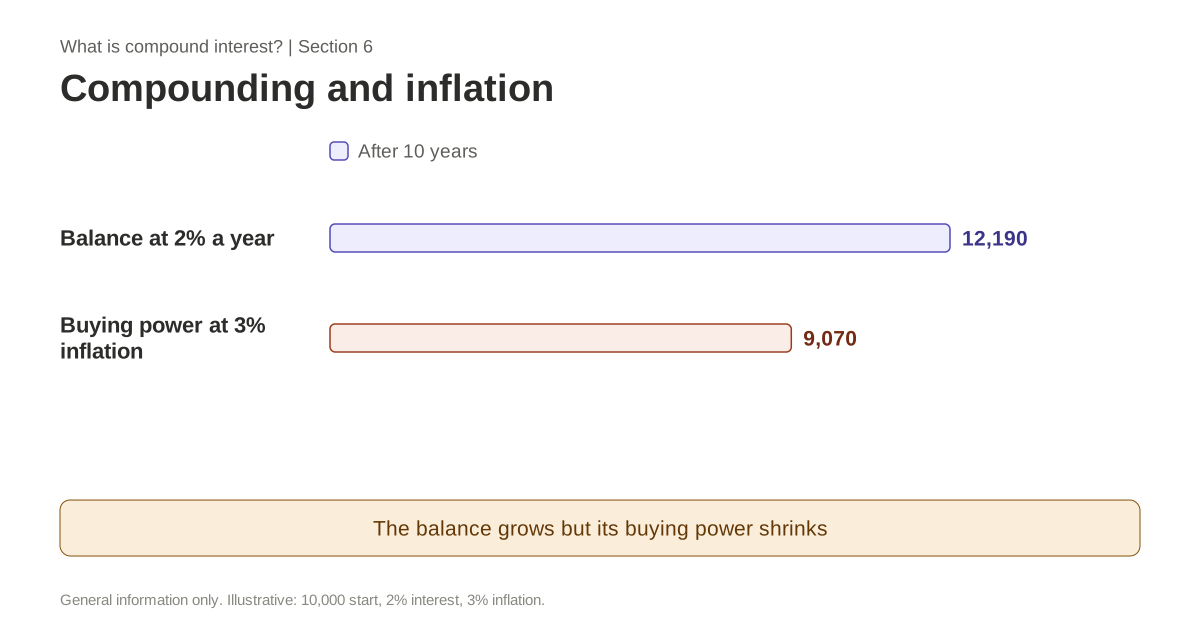
Compound growth is most useful when it outpaces inflation. An account that compounds at 2% while prices rise 3% a year is losing purchasing power, even though its balance is growing. The real rate of growth, after inflation, shows whether your savings are truly building wealth.
When planning, it helps to think in real terms. A goal such as a future education cost should be estimated in future money, then compared with the expected real growth of your savings. The inflation calculator and the compound interest calculator on this site can help you test both figures together.
The bottom line
Compound interest rewards patience and consistency. It works for you in savings and investments, and against you in debt. Understand how it works, start as early as you can, and reduce high-cost borrowing before you try to grow your savings.
Frequently asked questions
What is the difference between simple and compound interest?
Simple interest is earned only on the original amount. Compound interest is earned on the original amount and on interest already added, so growth accelerates over time.
How often is interest compounded?
It depends on the product. Some compound yearly, others monthly or daily. More frequent compounding gives a slightly higher return for the same stated rate.
Does compound interest always work in my favour?
No. It works in your favour when you are earning interest and against you when you owe it, especially on credit card balances that are not cleared each month.
What is the rule of 72?
It is a quick estimate. Divide 72 by the annual growth rate to find roughly how many years it takes for money to double. For example, at 6% a year, money doubles in about 12 years.