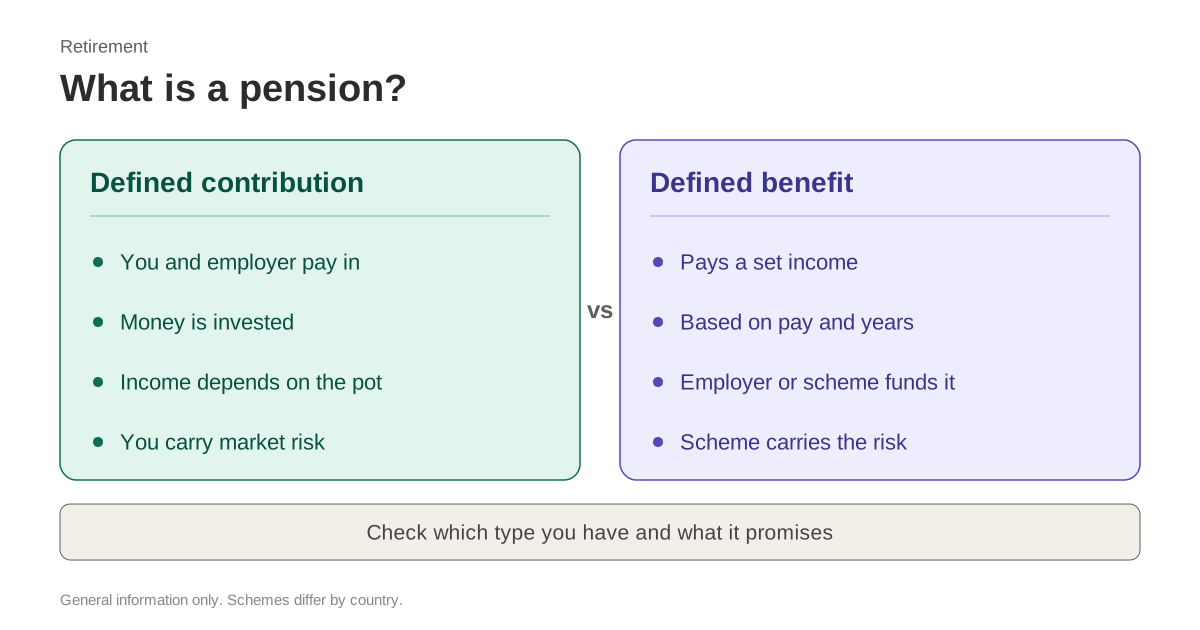
A pension is an arrangement that saves money during your working life and pays an income when you retire. The term covers many different structures, from state schemes funded by taxes or contributions to private plans you open yourself. Some pensions promise a set income, while others pay whatever their investments have earned. Knowing which type you have is the first step to understanding what it is worth.
This article explains the main pension types, how they are funded and paid, and what to check. Pension rules vary widely between countries, so treat this as an introduction and check the details of your own scheme.
State and public pensions
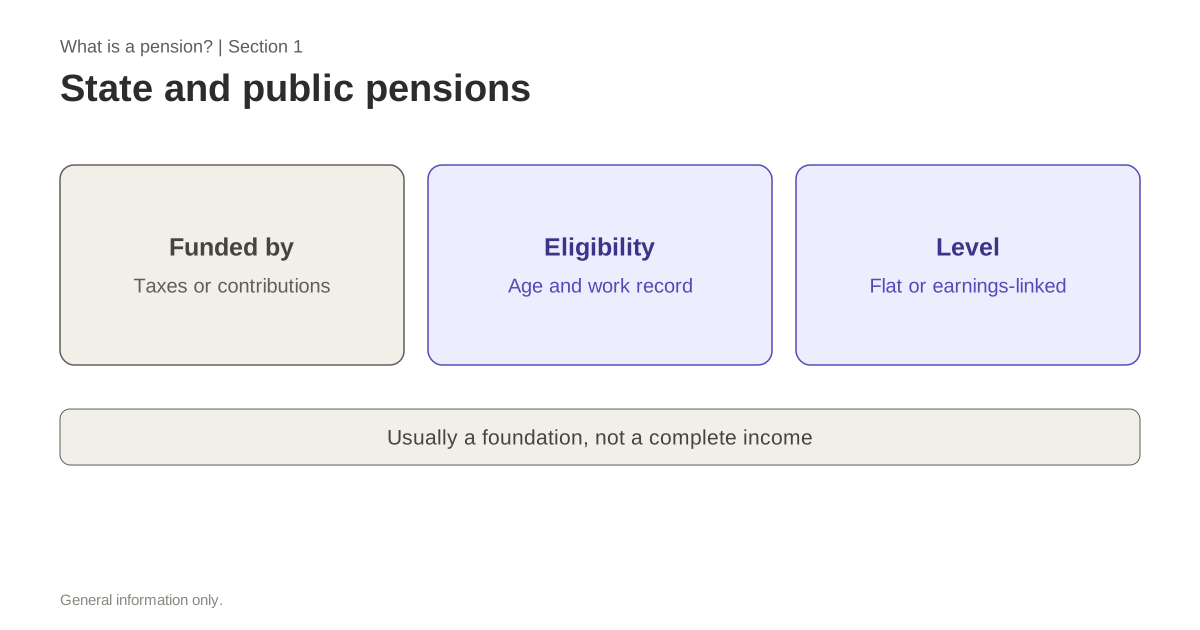
Many governments provide a basic pension funded by taxes or by contributions from workers and employers. Eligibility usually depends on age and on a record of work or residence. The amount may be flat or linked to earnings, and it is often increased in line with inflation or wages.
A state pension is usually a foundation rather than a complete income. It may not cover all your needs, so it is worth finding out what you are entitled to and when you can claim it. Many countries provide a forecast of your entitlement, which you can use to plan the gap.
Workplace pensions
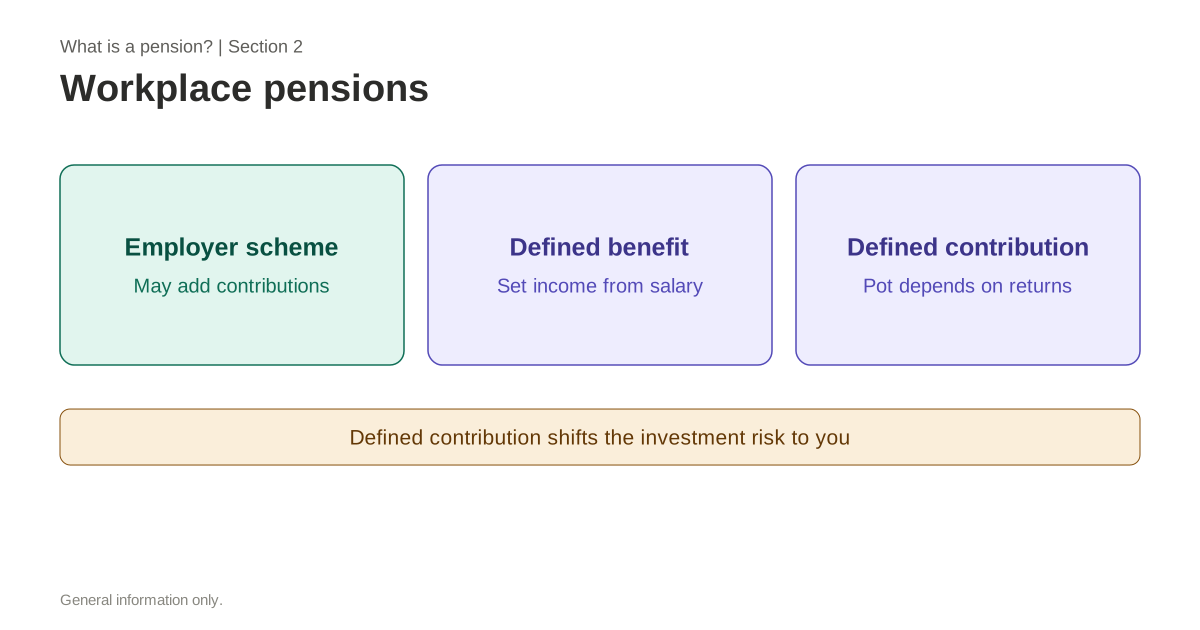
Employers may offer a pension scheme, sometimes with a contribution from the employer as well as from you. These come in two main forms. A defined benefit scheme promises a set income based on your salary and years of service. A defined contribution scheme builds a pot from contributions and investment returns, and the final income depends on how much that pot is worth when you retire.
Defined benefit schemes are less common than they used to be, and they can be valuable because they carry the investment risk for you. Defined contribution schemes shift the risk to the member, so the choice of investments and the level of contributions matter a great deal.
Personal pensions
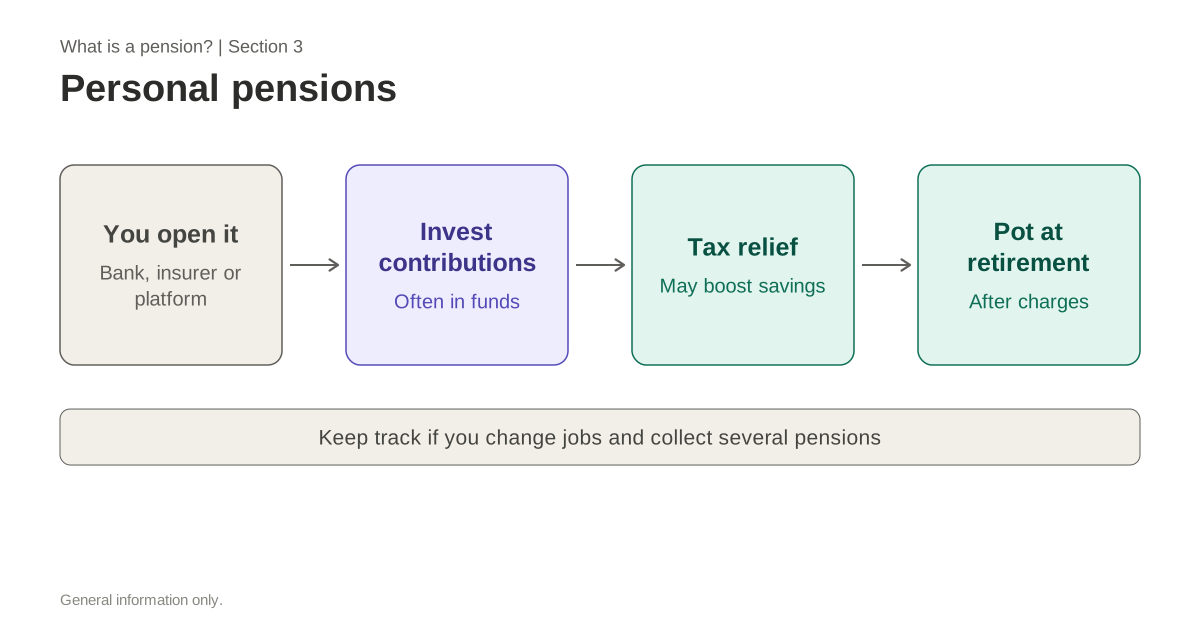
A personal pension is an account you open yourself, usually with a provider such as a bank, insurer or investment platform. Contributions are typically invested in funds, and the value at retirement depends on the amounts paid in, the returns earned and the charges deducted. Many countries give tax relief on contributions, which can significantly boost the amount saved.
If you change jobs, you may have several pensions. Keeping track of them is important, because old schemes can be forgotten, and charges can add up if the funds are not managed well.
How contributions grow
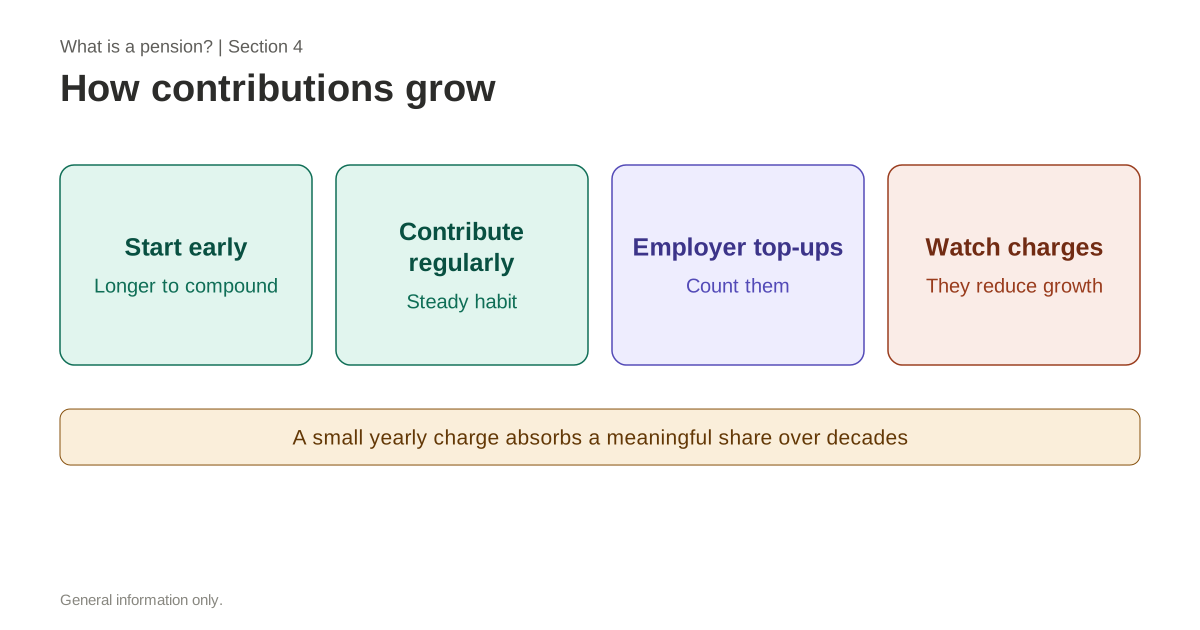
Pension contributions are invested and grow over time, benefiting from compound returns. Starting early and contributing regularly are the most important drivers of the final pot. Employer contributions, where available, are a valuable addition, and they should be taken into account when you compare options.
Charges reduce growth, so check the fees on your scheme. A small annual charge can absorb a meaningful share of the pot over several decades.
Taking your pension
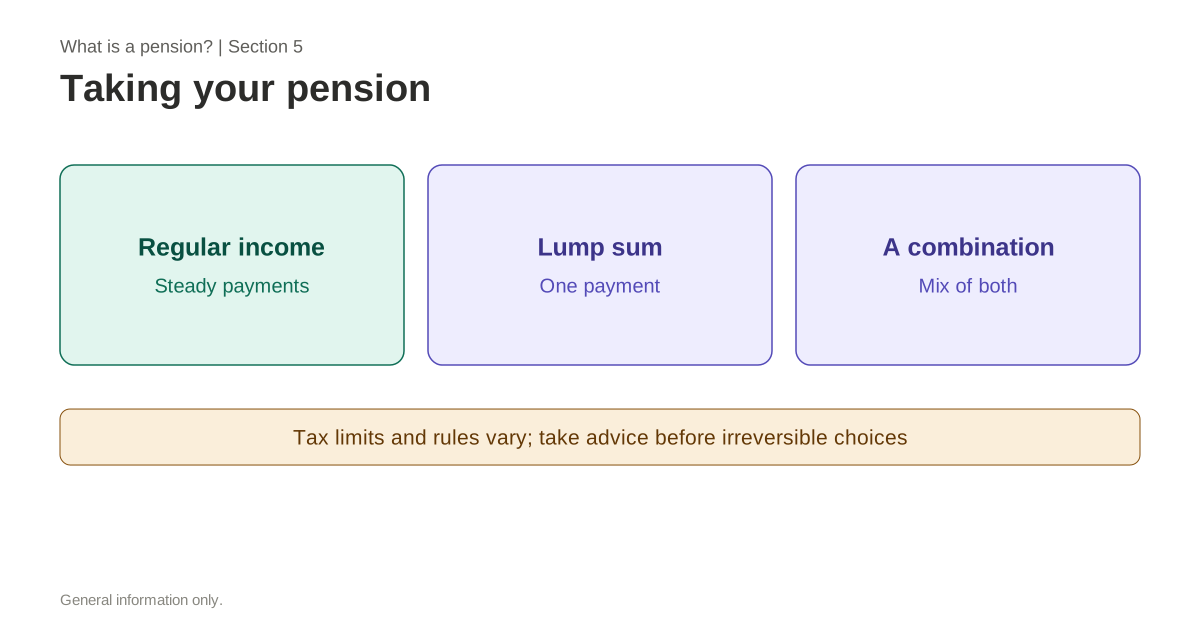
When you reach the eligible age, most schemes allow you to take money out. Options may include a regular income, a lump sum, or a combination, depending on the rules. Some countries limit how much can be taken tax-free, and some tax withdrawals as income. Each choice has consequences for tax, for how long the money lasts and for your flexibility.
Take advice before making decisions that cannot easily be reversed. A regulated adviser can help you understand the options and their trade-offs.
Keeping track
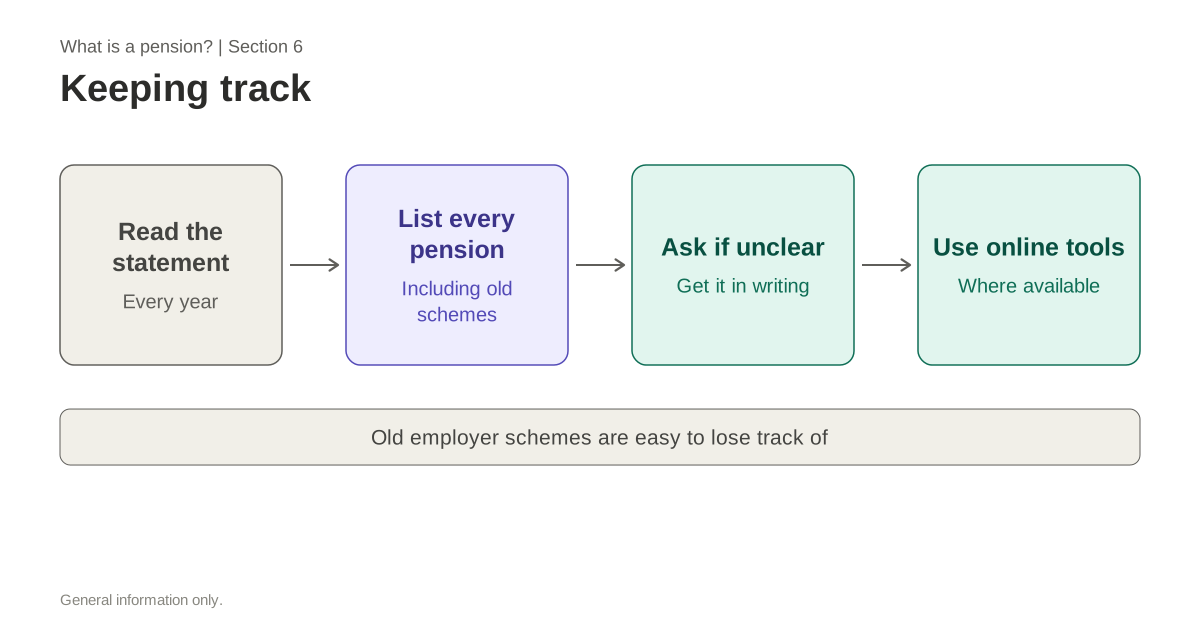
Check your pension statement each year. It should show the value, the contributions, the charges and the expected income if you retire at a given age. If the statement is unclear, ask the provider to explain it in writing. Keep a list of all your pensions, including old employer schemes, so you know where your money is.
Some countries run online services that bring pension information together, which can make tracking easier.
What to check in your scheme
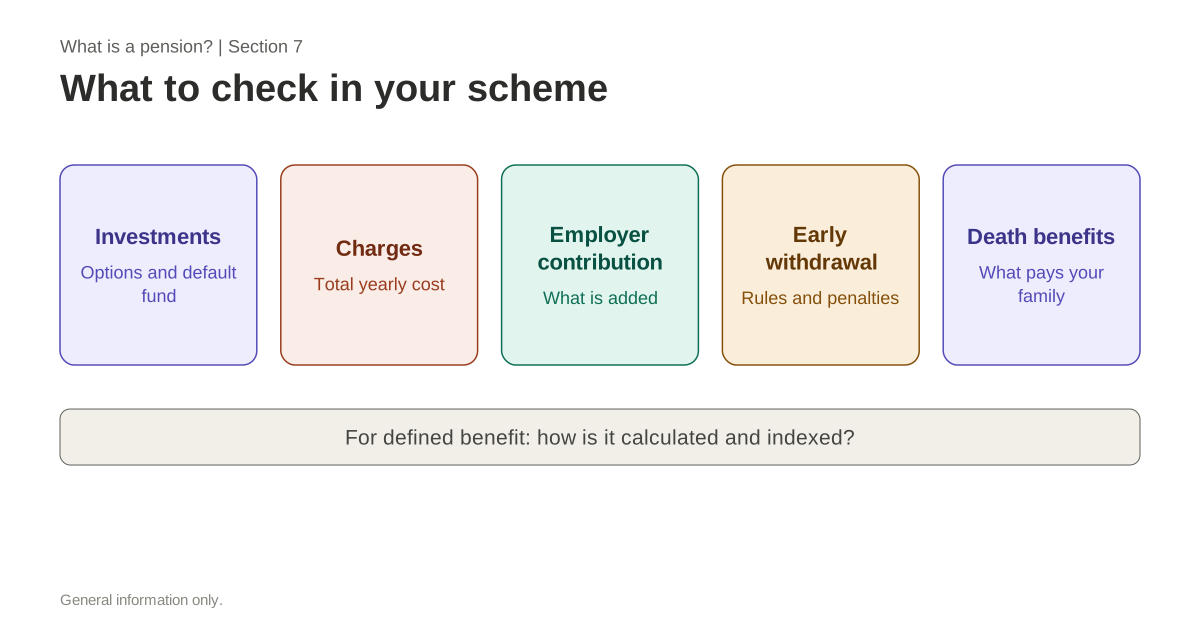
Ask about the investment options, the default fund and its charges, the employer contribution, and the rules on early withdrawal. Check whether the scheme offers a choice of retirement ages, and how the income is calculated if you retire early or late. Look also at the death benefits, which may pay to your family.
If you have a defined benefit scheme, check how the benefit is calculated, whether it is indexed to inflation and what happens if you leave the employer before retirement.
Pensions and working longer
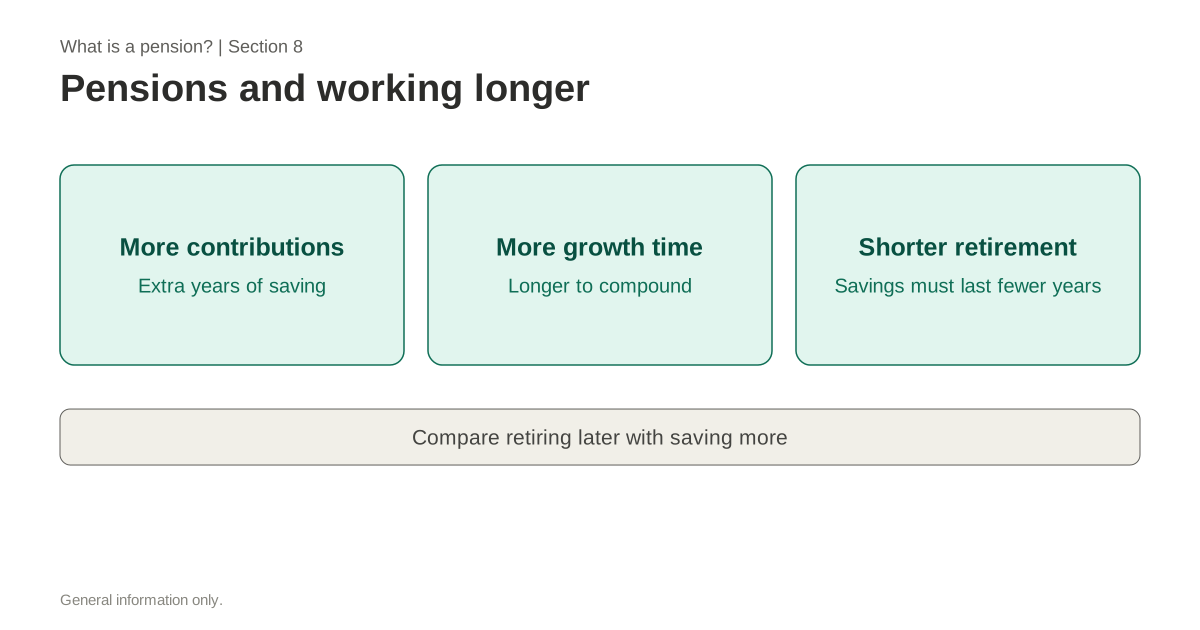
Working for a few extra years can strengthen a pension in several ways. It gives more time for contributions and growth, it may increase the benefit in some schemes, and it shortens the period over which savings must last. Compare the effect of retiring a year or two later with the effect of saving more, because the two can produce similar improvements.
Questions to ask your pension provider
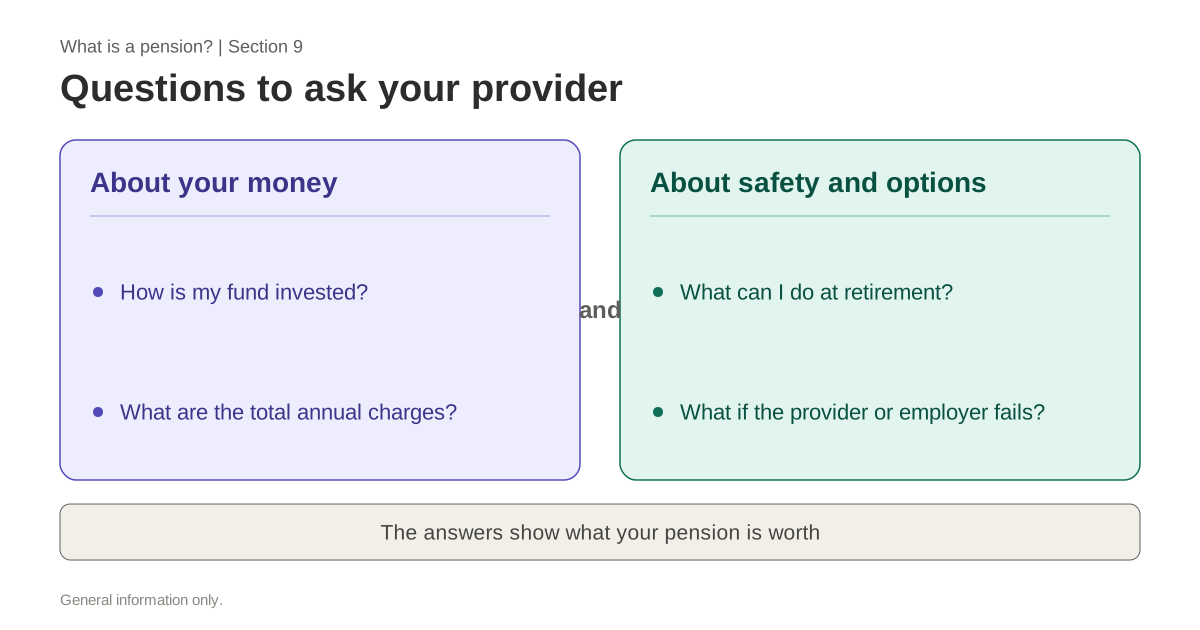
Ask your provider how your fund is invested, what the total annual charges are, what options you have when you retire, and how your benefits are protected if the provider or employer fails. The answers will help you understand what your pension is worth and what decisions you may need to make later.
Pension forecasts
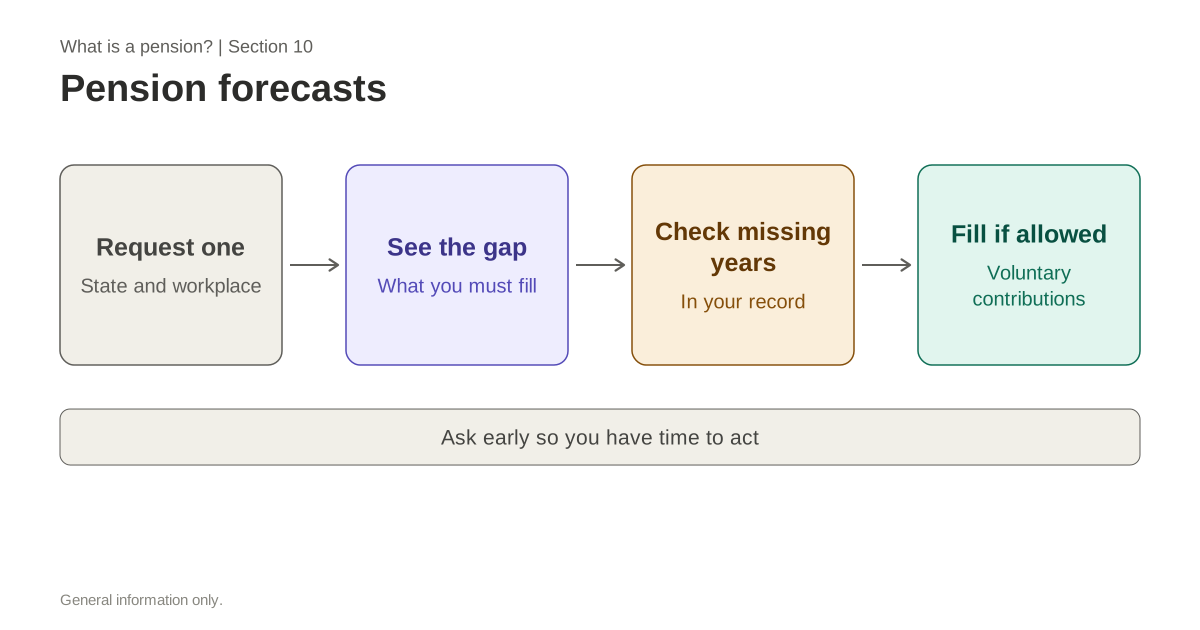
Many countries offer a forecast of your state or public pension entitlement, and workplace schemes usually provide annual statements. Request these forecasts early, because they show the gap you must fill and help you decide how much to save. A forecast also reveals whether any years are missing from your record, which can often be filled by making voluntary contributions where the rules allow.
Pensions and divorce or inheritance
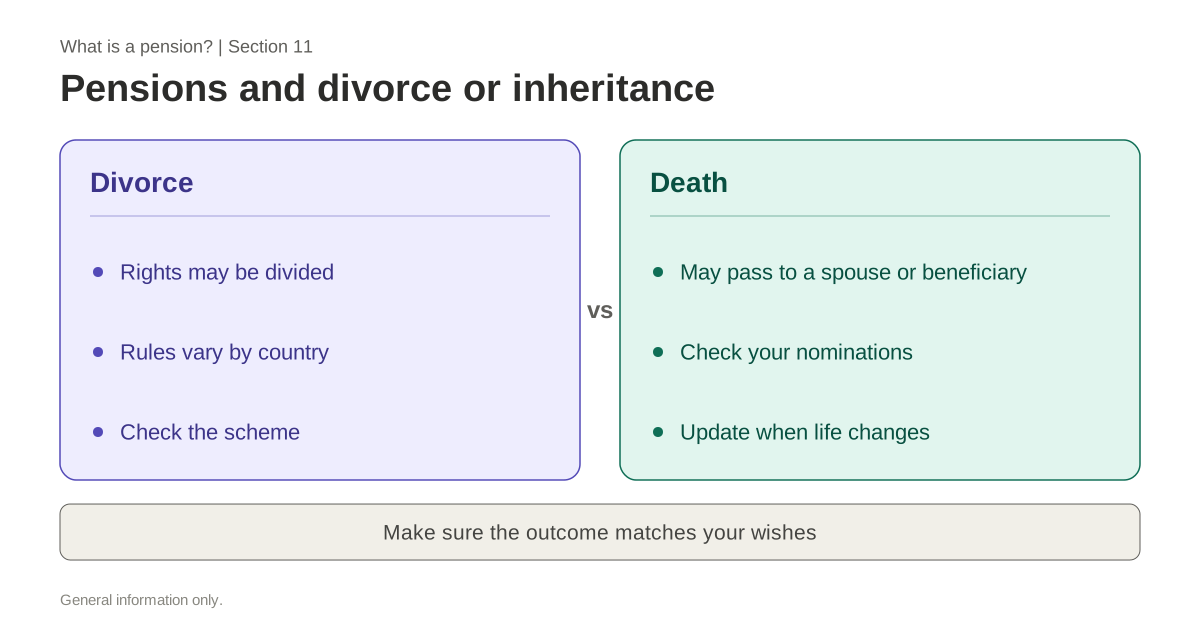
Pensions can be affected by family changes. Some countries divide pension rights on divorce, and some allow a pension to pass to a spouse or other beneficiary on death. Check the rules that apply to your scheme and update the nominations when your circumstances change, so the outcome matches your wishes.
The bottom line
A pension is a way of setting aside money during working life to support you in retirement. Know which pensions you have, what they are worth, what they cost and what rules apply to taking them. Combine them with any state entitlement, and review the plan regularly to make sure it is on track.
Frequently asked questions
What is the difference between a defined benefit and a defined contribution pension?
A defined benefit pension promises a set income based on salary and service, while a defined contribution pension builds a pot from contributions and returns, and its final value depends on investment results.
Can I have more than one pension?
Yes. Many people have several, especially after changing jobs. Keep track of each one, because old schemes can be forgotten and their charges can reduce the value over time.
Is a state pension enough on its own?
It may be a foundation, but it often does not cover all needs. Find out your entitlement and plan for any gap through other savings or workplace and personal pensions.
Can I take my pension early?
Usually not without restrictions. Most schemes set a minimum age, and early withdrawals may trigger penalties or tax. Check the rules of your scheme before making any decision.