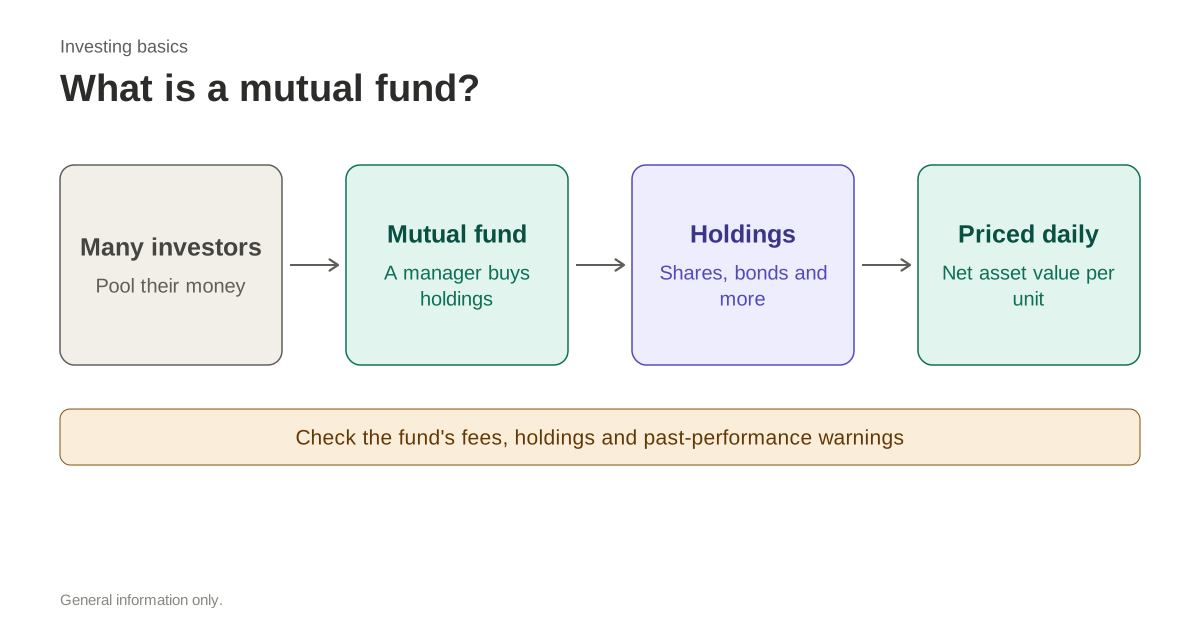
A mutual fund is an investment that pools money from many people and invests it in a portfolio of shares, bonds or other assets. Each investor owns units in the fund, and the value of those units rises and falls with the value of the holdings. Mutual funds are one of the most common ways for individuals to invest, because they offer diversification and professional management in a single purchase.
This article explains how mutual funds are structured, how they are priced and what to check before you buy. It is general information, and it does not recommend any particular fund.
How the pool works
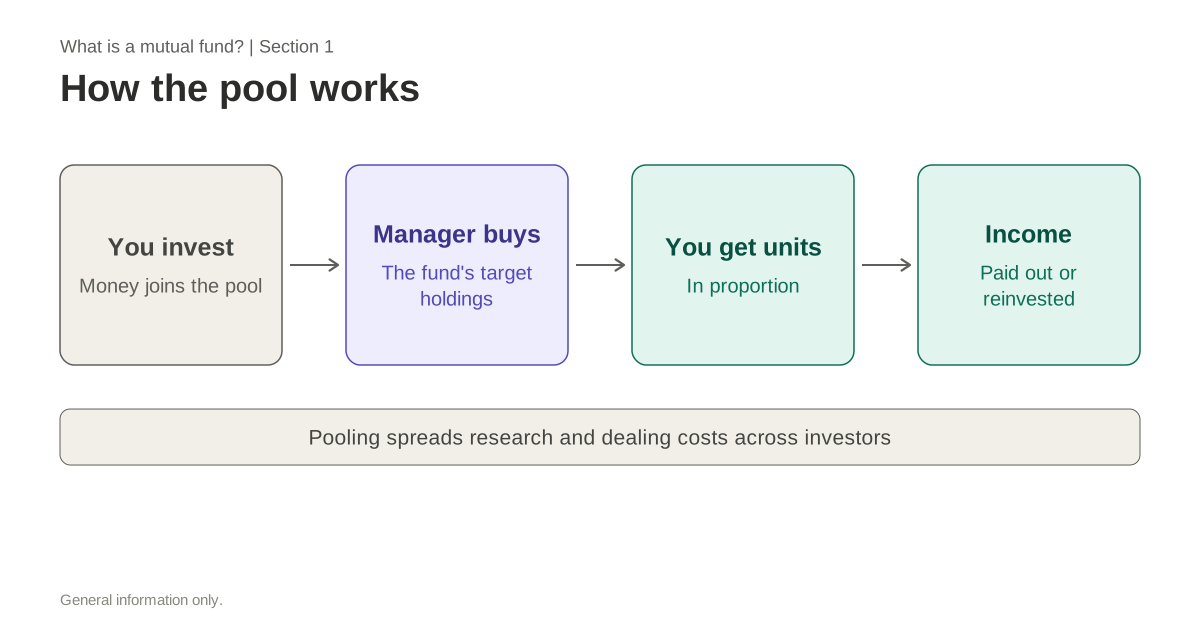
When you invest in a mutual fund, your money joins the pool, and the fund manager uses it to buy the investments the fund is designed to hold. You receive units in proportion to the amount you invest. As the holdings change in value, the value of your units changes too. Income from the holdings, such as dividends or interest, may be paid out to you or reinvested in the fund.
The pooling gives small investors access to a diversified portfolio that would be expensive to build alone. It also spreads research and dealing costs across many investors.
How units are priced
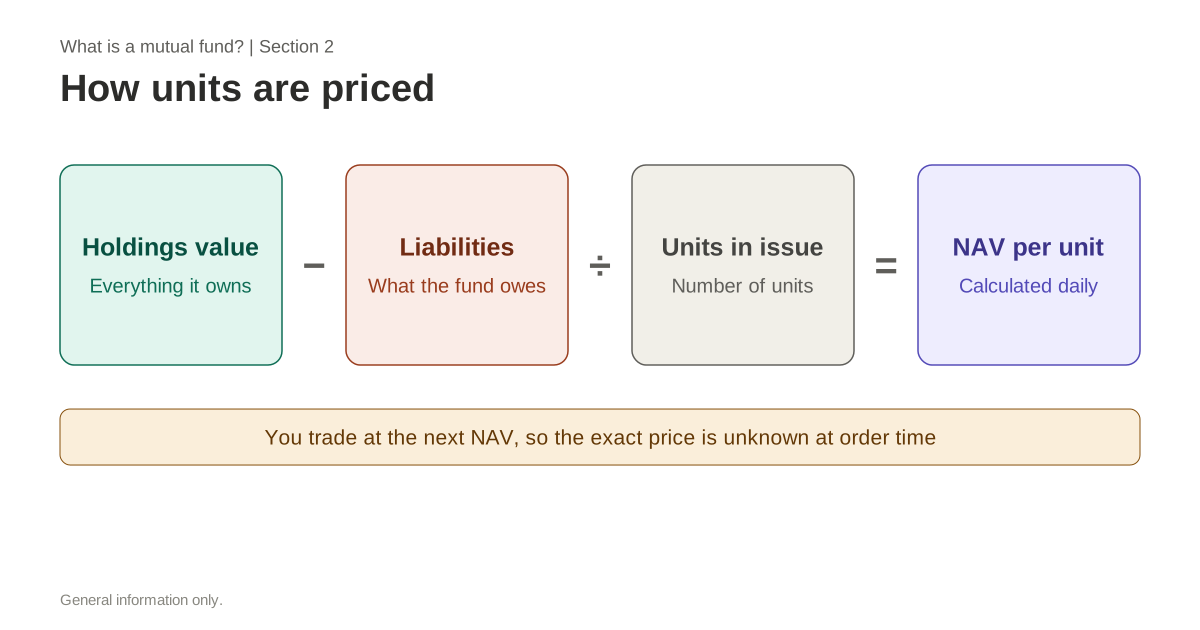
Most mutual funds calculate a net asset value once a day, usually after the markets close. The NAV is the total value of the holdings minus the fund's liabilities, divided by the number of units. When you buy or sell, you normally transact at the next available NAV, which means you do not know the exact price at the time you place your order.
This is a key difference from exchange-traded funds, which trade throughout the day at prices set by the market. For a long-term investor, the daily pricing is rarely a problem, but it is worth knowing before you place an order.
Active and passive funds
An actively managed fund is run by a manager who selects investments and aims to beat a benchmark. A passive fund, sometimes called an index fund, aims to match a benchmark by holding the same investments. Active funds usually charge higher fees because they require research and trading. Passive funds are typically cheaper, though their costs still vary.
Neither type guarantees success. Active managers may outperform in some periods and underperform in others, and it can be difficult to identify in advance which ones will do well.
Costs to check
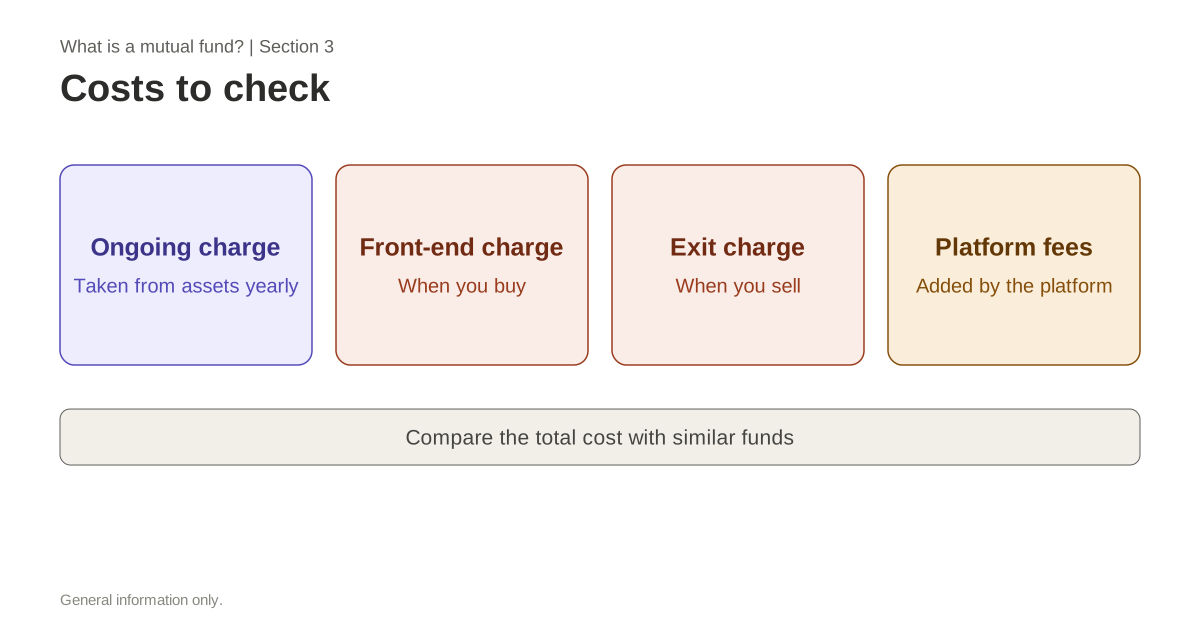
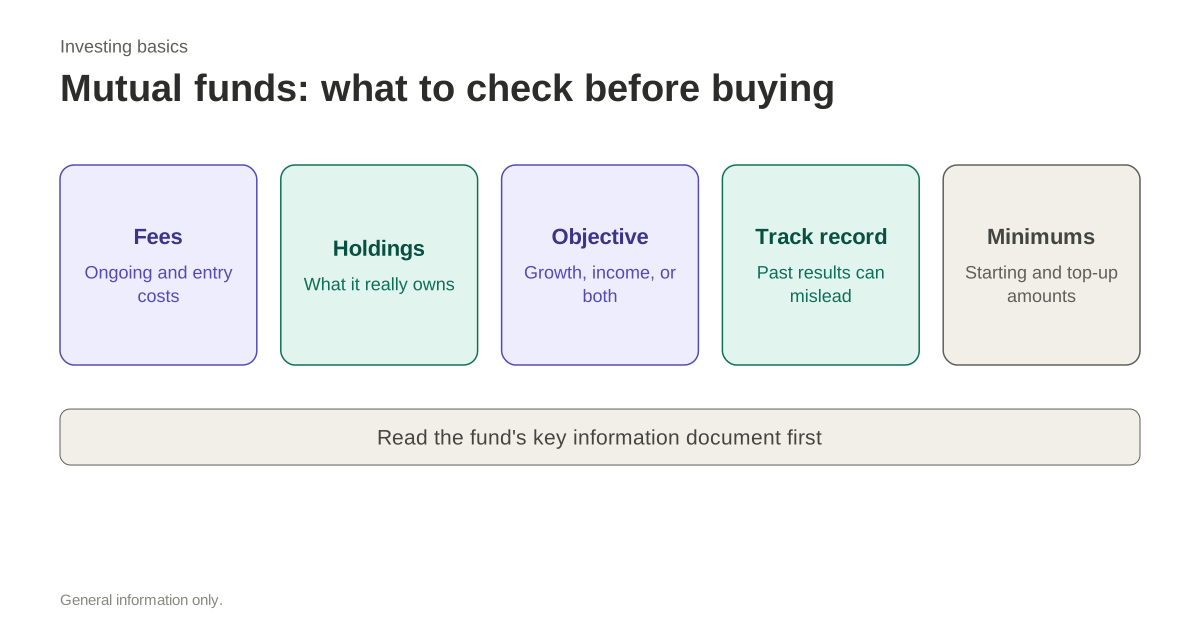
Mutual funds charge several types of cost. The ongoing charge, sometimes called the expense ratio, is taken from the fund's assets each year and reduces your return. Some funds also charge a front-end sales charge when you buy, or an exit charge when you sell. Platforms that hold the fund may add their own fees.
Read the fund's key information document, which should show the costs in a standard format. Compare the total cost, including platform charges, with similar funds before deciding.
Risks to understand
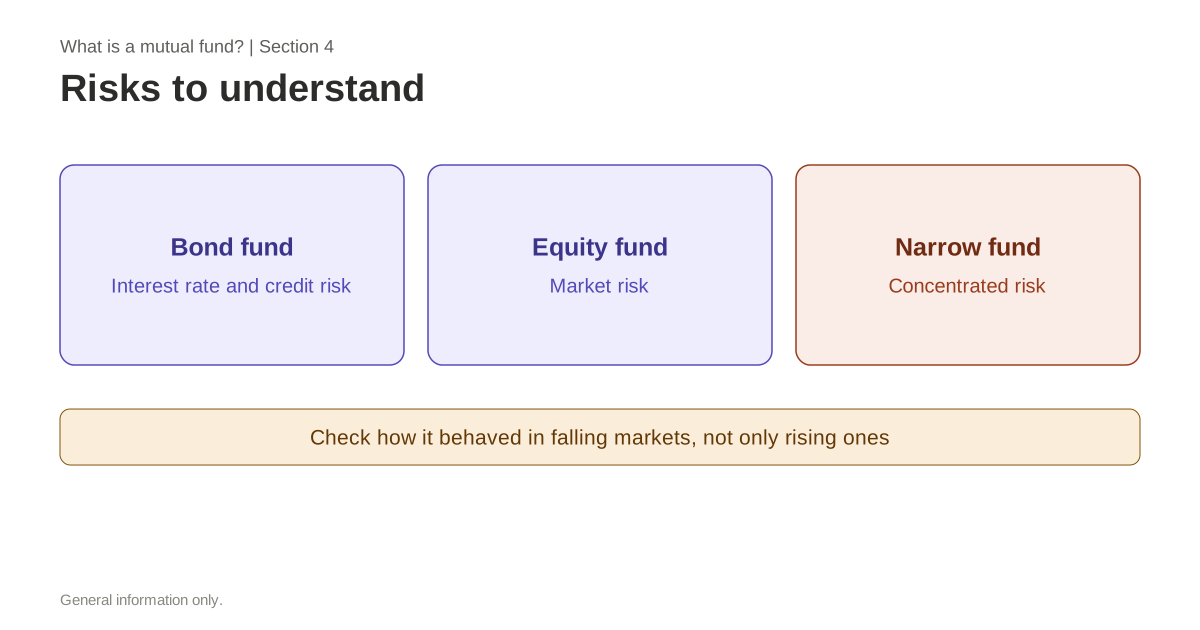
A mutual fund's value can fall, sometimes sharply, when its holdings fall. The risk depends on what the fund holds. A bond fund is exposed to interest rate and credit risk, and an equity fund is exposed to market risk. A fund focused on one country, sector or theme carries concentrated risk.
Check the fund's objective and its history, but remember that past performance does not guarantee future results. Look at how the fund behaved in falling markets as well as rising ones.
Buying and selling
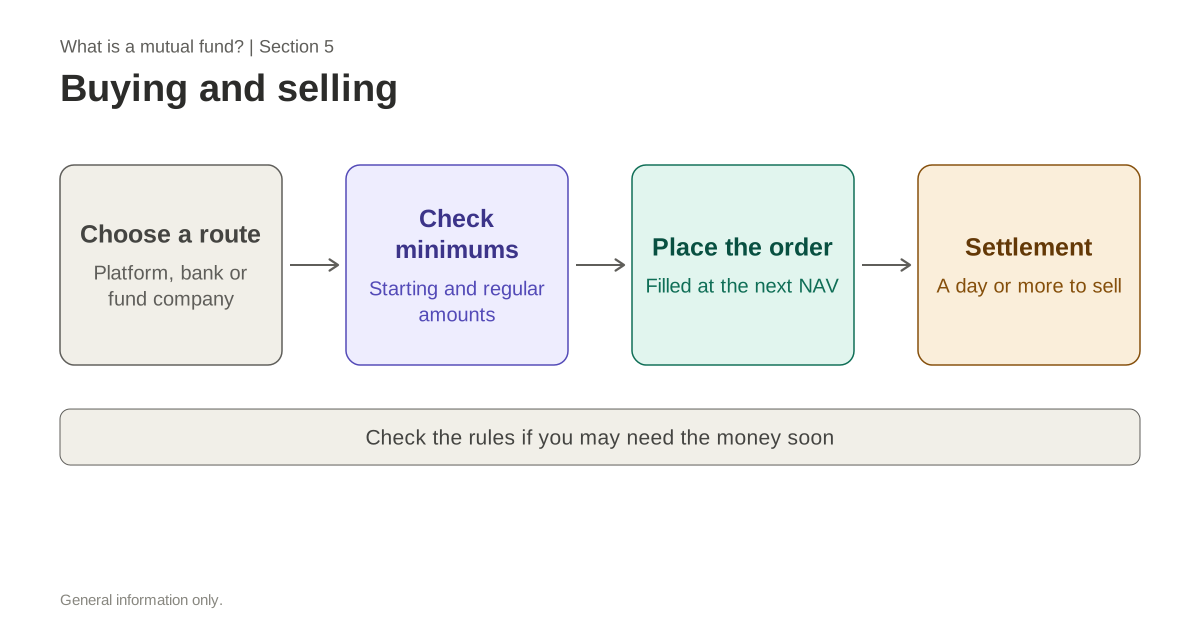
Mutual funds are usually bought through a platform, a bank or directly from the fund company. Some funds have minimum investment amounts, and some allow regular monthly purchases. Selling may take a day or more to settle, and some funds have restrictions on how often you can sell or charge for selling early.
Check the rules before you invest, particularly if you may need the money at short notice.
Tax
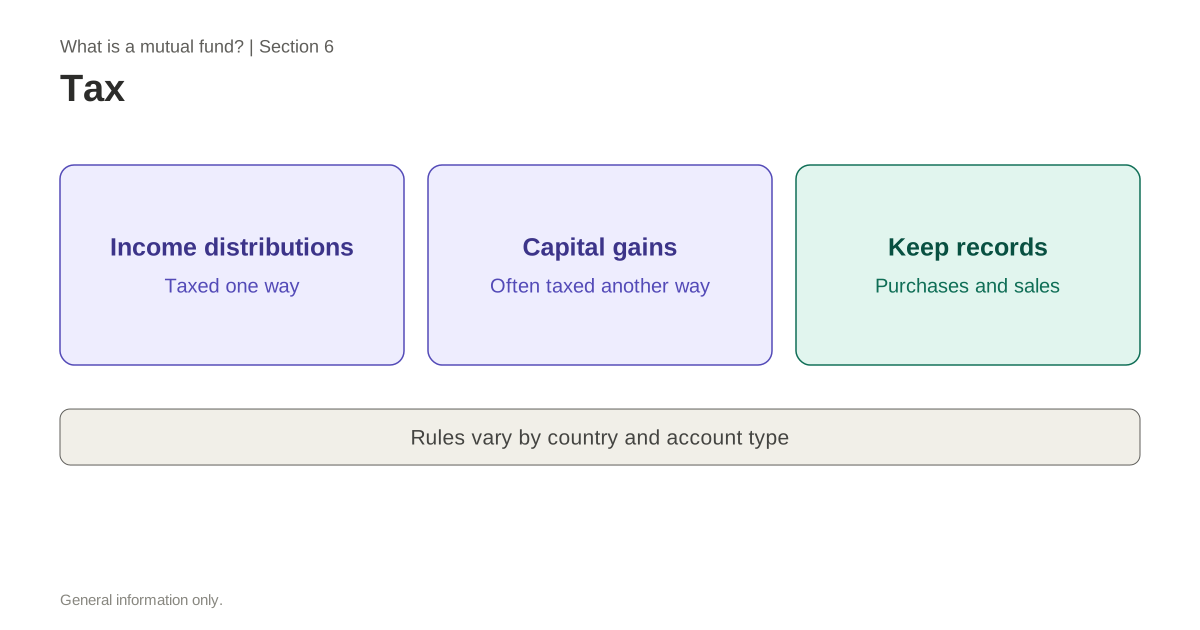
The tax treatment of mutual funds varies by country and by the type of account. Income distributions and capital gains may be taxed differently, and some funds offer a choice between paying income out and reinvesting it. Keep records of your purchases and sales, because they are often needed to calculate gains.
Mutual funds and the long run
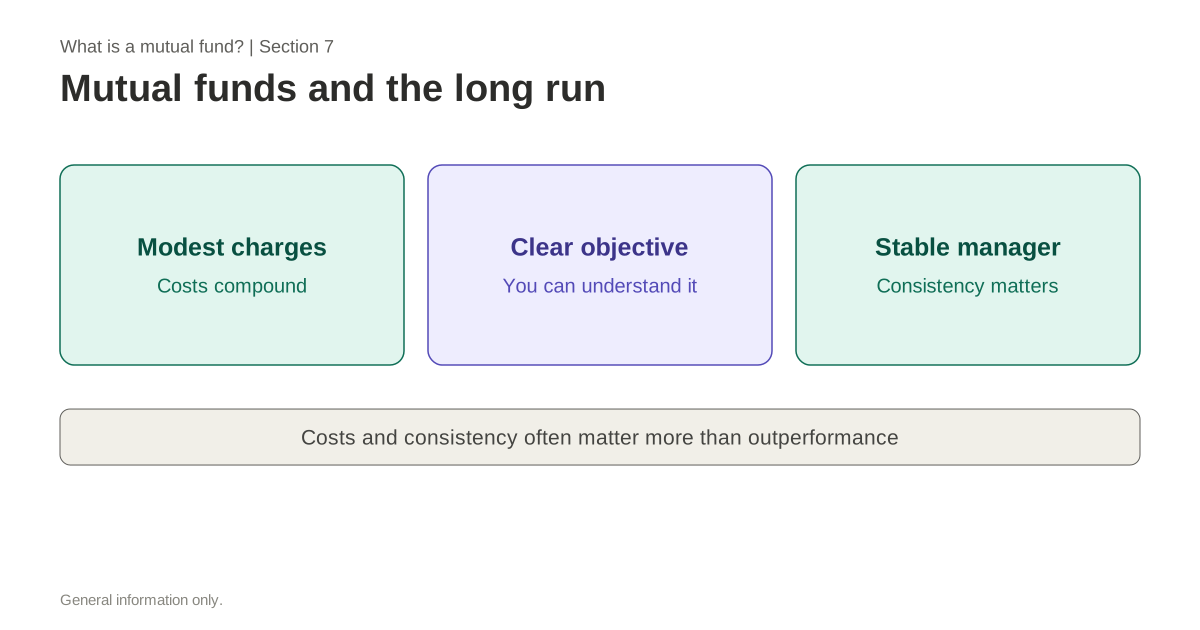
Over long periods, the differences between mutual funds often come down to costs and consistency rather than dramatic outperformance. A fund with modest charges, a clear objective and a stable manager can serve a long-term saver well. Choose a fund you can understand, hold through ordinary ups and downs, and review once a year.
Fund documents worth reading
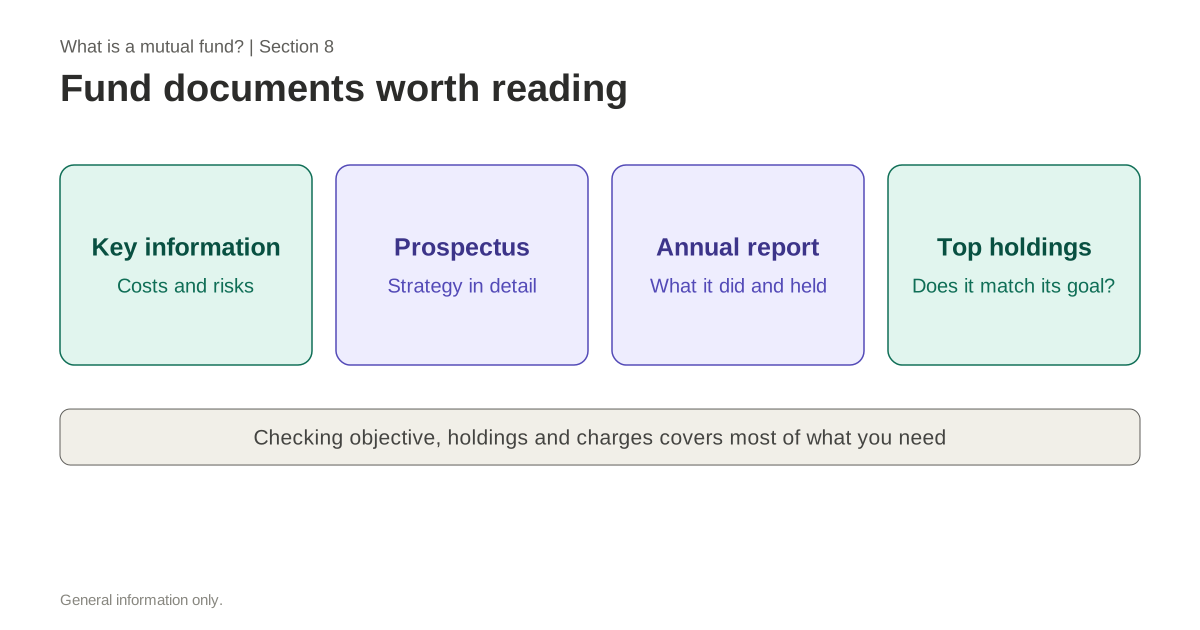
Beyond the key information document, the fund's prospectus and annual report describe its strategy, its risks and its holdings in more detail. You do not need to read every page, but checking the objective, the top holdings and the charges will tell you most of what you need to decide.
Keeping the decision in perspective
A mutual fund is a tool for a goal, not a goal in itself. Revisit the reason you bought it each year, and check that the fund still serves that reason. If it no longer does, a change may be sensible, weighed carefully against the costs of switching.
Switching and transfers
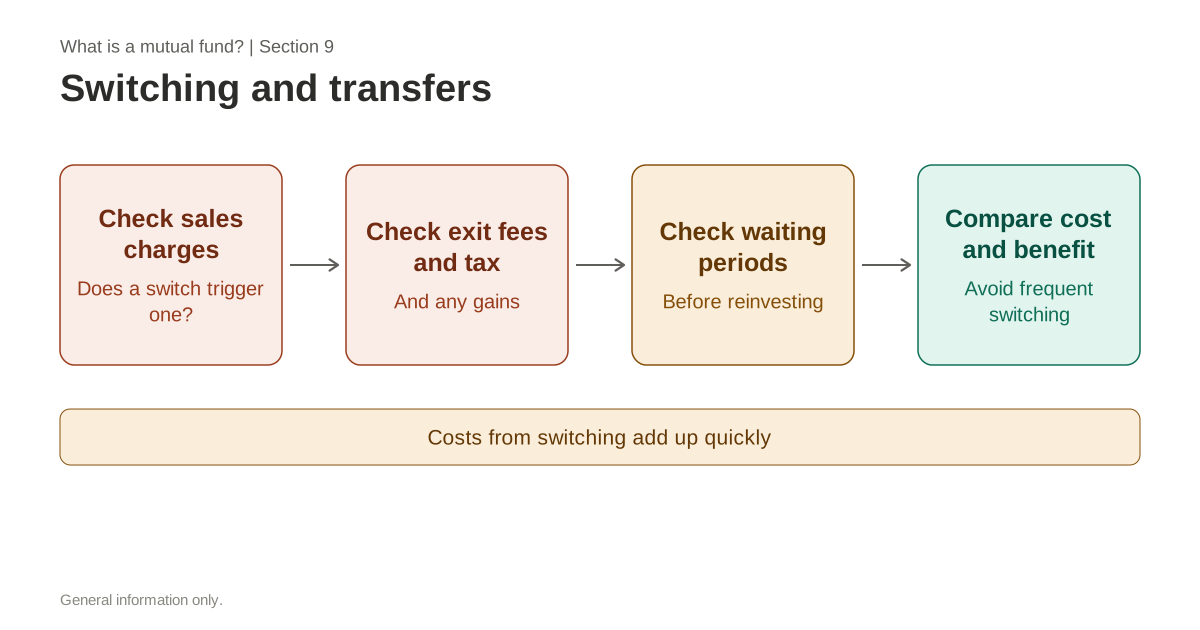
If you decide to move from one fund to another, check whether the change triggers a sales charge, a deferred exit fee or a tax liability. Some funds also apply a waiting period before the money can be reinvested. Compare the cost of switching with the expected benefit, and avoid switching frequently, because the costs add up quickly.
Reading the annual report
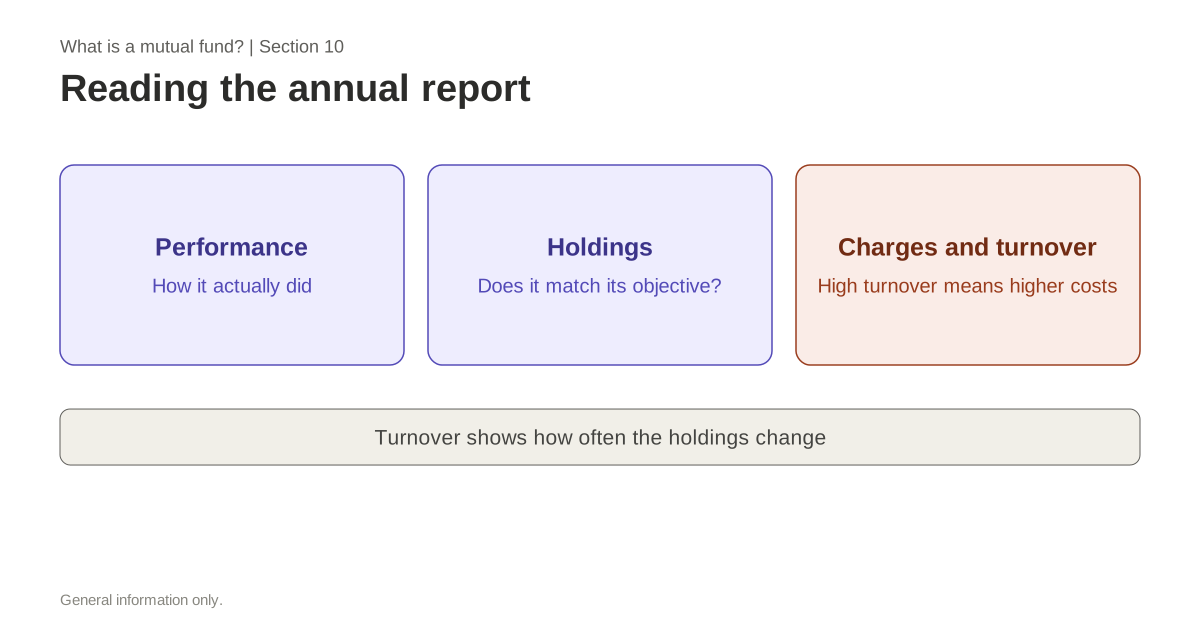
The annual report shows how the fund actually performed, what it held and what it paid in charges. Read the list of holdings to see whether the fund matches its stated objective, and check the turnover rate, which indicates how often the holdings change. High turnover usually means higher trading costs, which reduce the return you keep.
Keeping the decision in perspective
A mutual fund is a tool for a goal, not a goal in itself. Revisit the reason you bought it each year, and check that the fund still serves that reason. If it no longer does, a change may be sensible, weighed carefully against the costs of switching.
The bottom line
A mutual fund pools money into a diversified portfolio, managed to a stated objective. Its advantages are diversification and simplicity, but its costs, its pricing and its risks all matter. Read the key information document, compare the total cost and make sure the fund's objective fits your plan.
Frequently asked questions
What is the difference between a mutual fund and an ETF?
A mutual fund is usually priced once a day at its net asset value, while an ETF trades on an exchange throughout the day at market prices. Both can hold similar investments and both carry market risk.
What is a net asset value?
It is the value of a fund's holdings minus its liabilities, divided by the number of units in issue. Most funds calculate it once a day.
Do mutual funds guarantee returns?
No. The value of a mutual fund can fall as well as rise, and past performance does not predict future results. Check the risks in the key information document before investing.
Are actively managed funds better than index funds?
Not necessarily. Active funds may outperform in some periods, but they usually cost more, and it is hard to know in advance which will beat their benchmark over time.