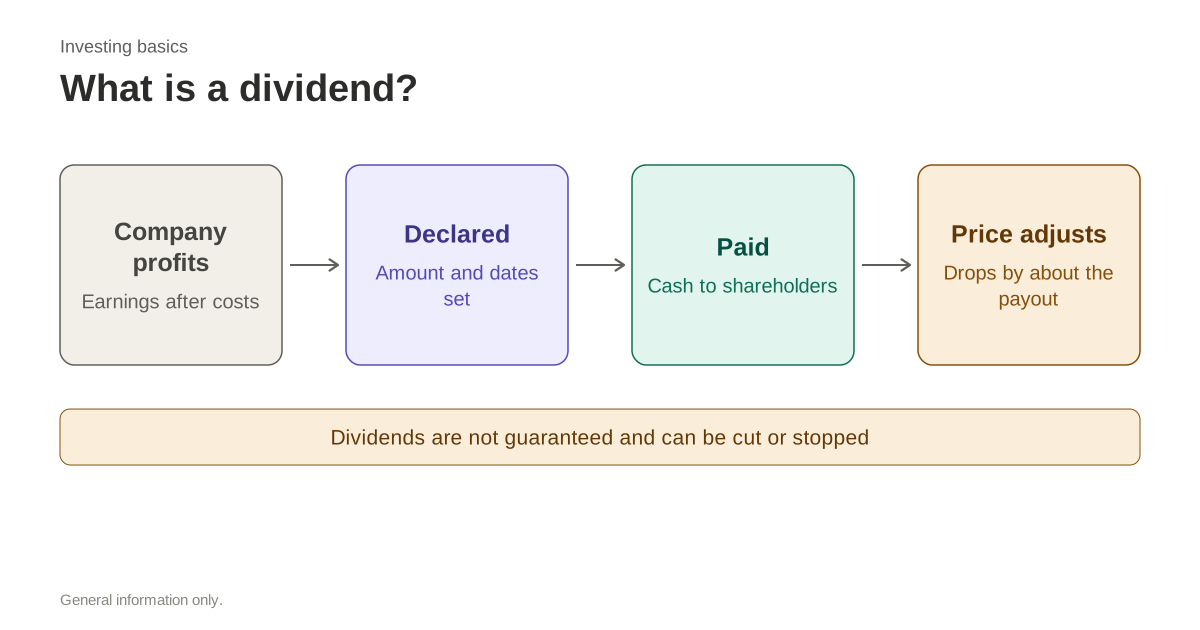
A dividend is a payment that a company makes to its shareholders, usually from its profits. It is one of the main ways that owning shares can produce income, as well as a potential source of growth when the dividends are reinvested. Not every company pays dividends. Many growing businesses reinvest all their profits instead, and some pay only occasionally.
This article explains how dividends work, what they can tell you about a company, and what to watch for before relying on them. It is general information, not advice on any particular share.
How dividends are paid
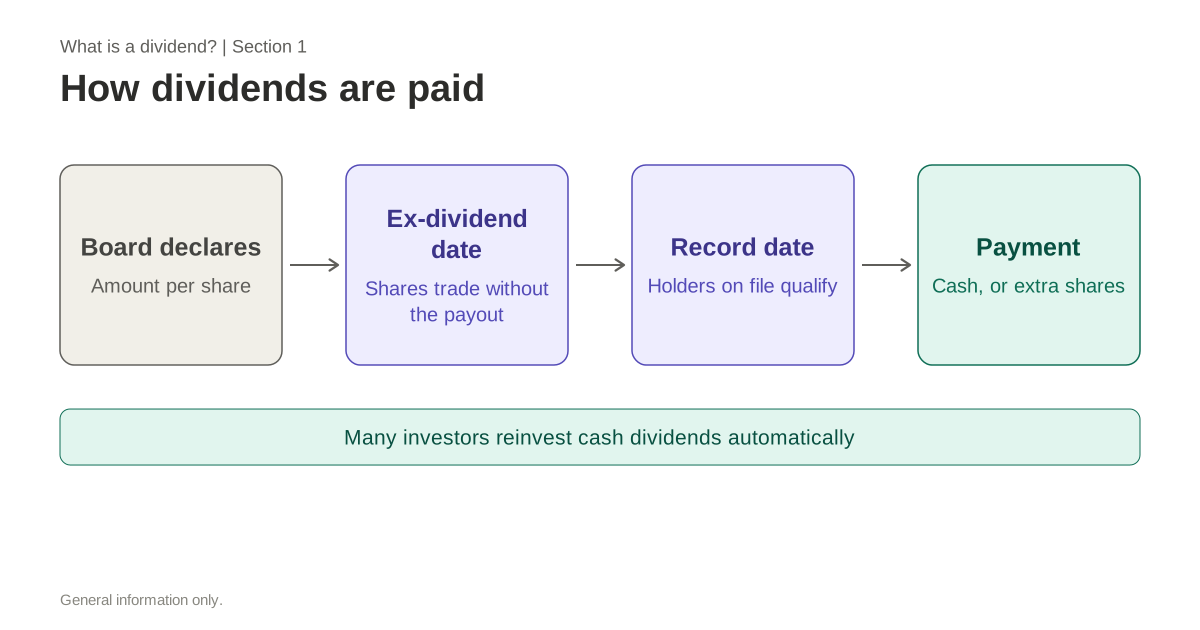
A company's board decides whether to pay a dividend and how much. The payment is usually expressed as an amount per share and is often paid quarterly, half-yearly or annually, depending on the company and the country. Shareholders on the record date receive the payment, and the company's share price usually adjusts on the ex-dividend date, which is the day the shares begin to trade without the right to the upcoming payment.
Dividends can be paid in cash or, in some cases, in extra shares. Cash is the most common form. Some investors reinvest cash dividends automatically to buy more shares, which can help compound growth over time.
Why companies pay them
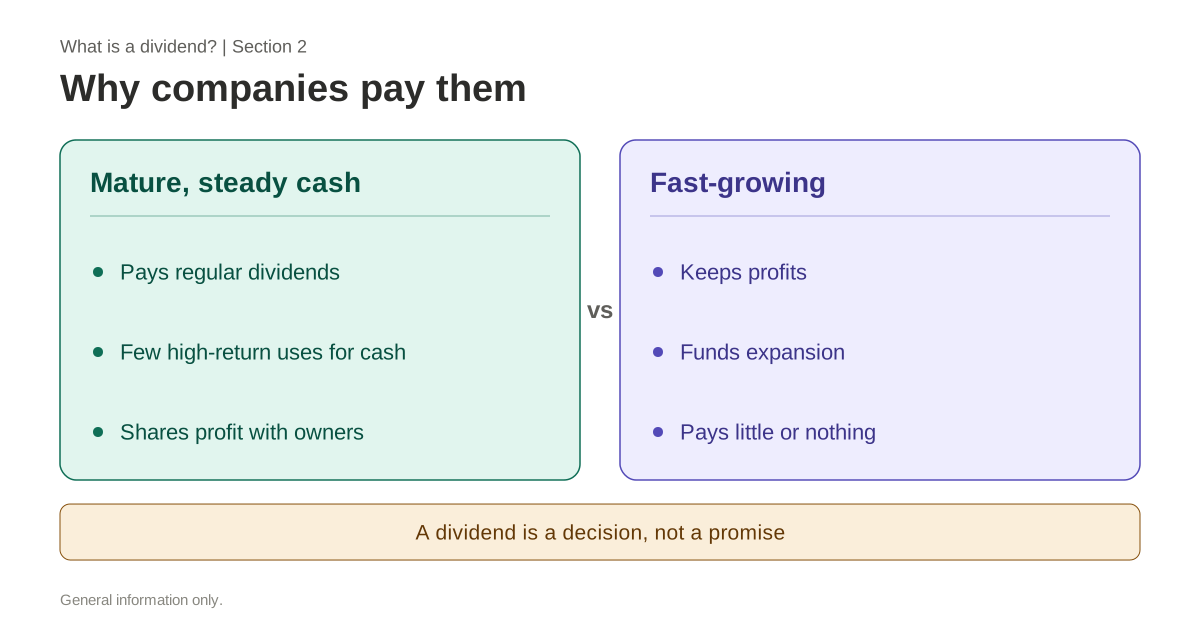
A dividend is a way of sharing profits with the owners of the business. Companies that are mature and generate steady cash often pay regular dividends, because they have fewer opportunities to reinvest at high returns. Companies that are growing quickly usually keep profits to fund expansion.
A dividend can also signal management's confidence in the company's future cash flows. However, a dividend is a decision, not a promise, and boards can cut or cancel it at any time.
Dividend yield
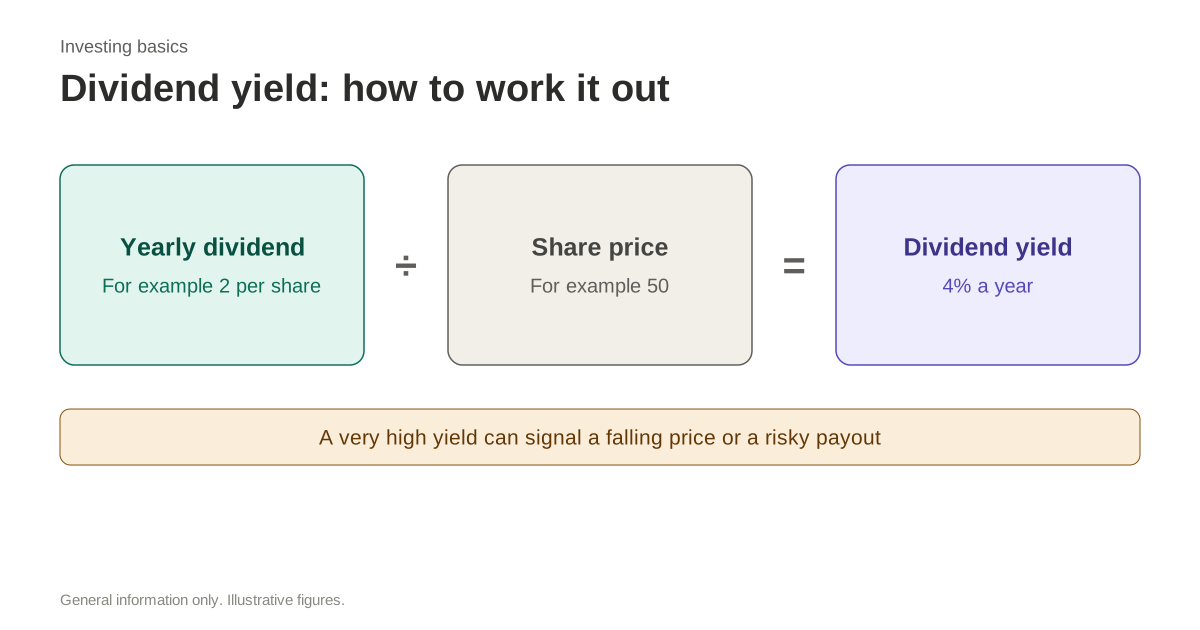
The dividend yield is the annual dividend per share divided by the share price, expressed as a percentage. A share priced at 50 that pays a 2 dividend has a 4% yield. The yield rises when the price falls, if the dividend stays the same, and it falls when the price rises. A very high yield can reflect a falling share price, rather than generosity.
Our dividend yield calculator shows the yield and the income from a holding.
Payout ratio
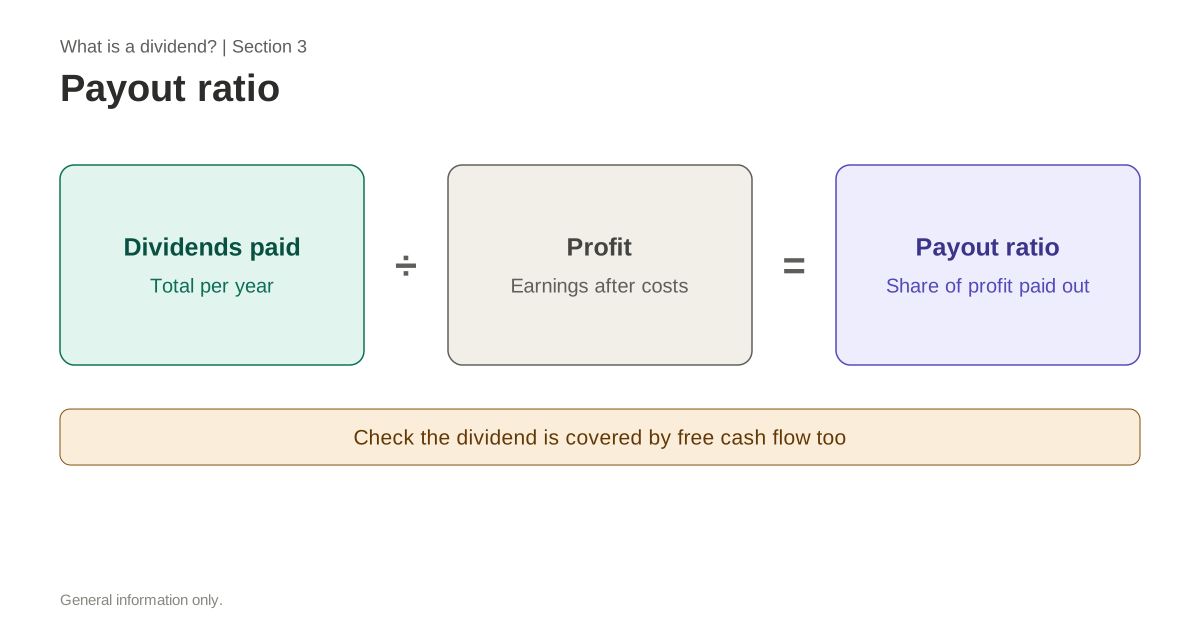
The payout ratio shows how much of a company's profit is paid out as dividends. A company that pays out most of its profit leaves little room for reinvestment or for a cushion if earnings fall. A company that pays out a small share has more room to keep its dividend stable during difficult periods.
Check whether the dividend is covered by free cash flow as well as accounting profit, because cash is what funds the payment. A dividend that is larger than the company's cash generation is a warning sign.
Tax
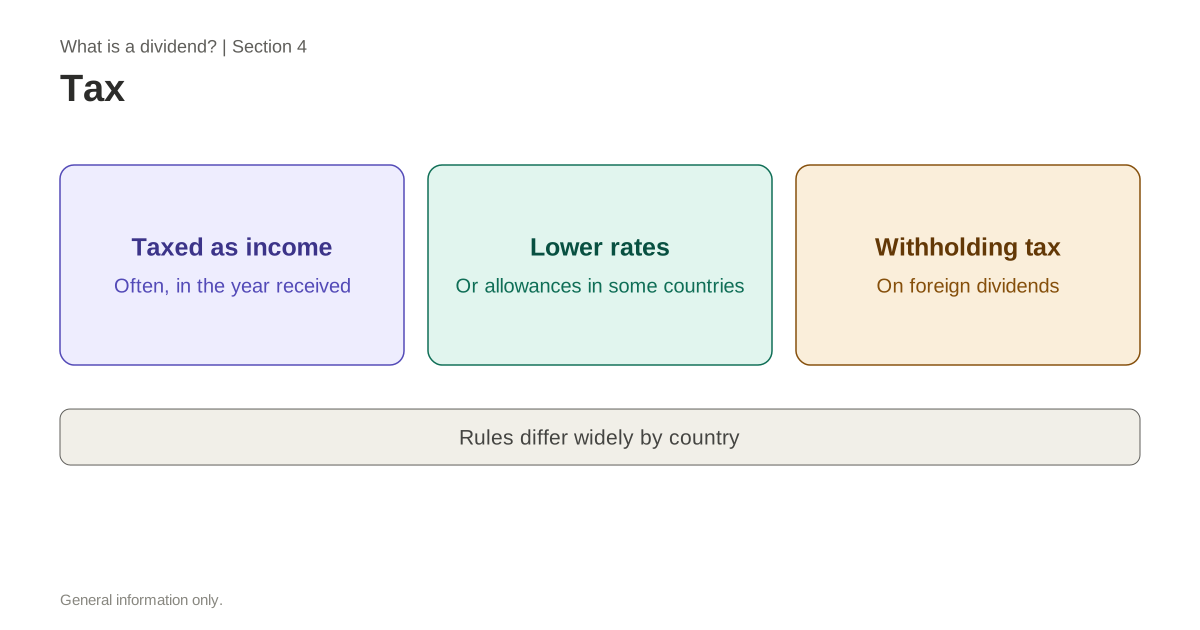
Dividends are often taxed as income in the year they are received, although the rules differ widely between countries. Some countries offer lower rates or allowances for dividends, and some tax-advantaged accounts shelter them. Check the rules that apply to you, and keep records of the payments you receive.
Withholding tax may apply to dividends from companies in other countries, and some countries allow you to reclaim part of it. The rules are complicated, so check them with a tax adviser if you hold foreign shares.
What to watch for
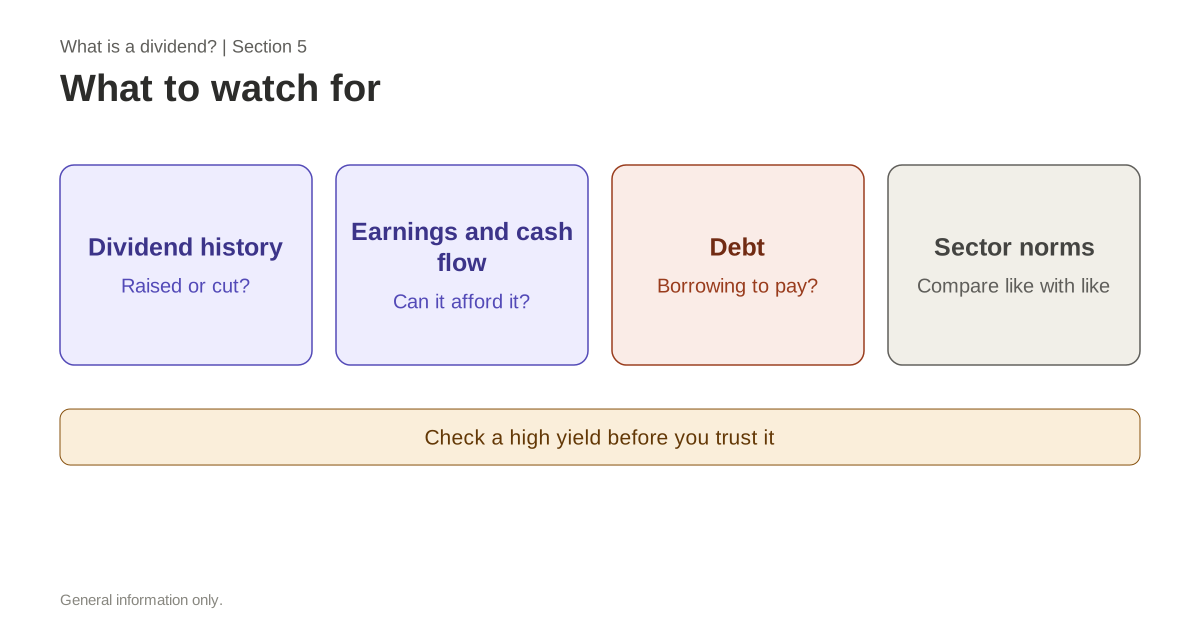
A high yield should be checked before you trust it. Look at the company's history of dividends, its earnings and cash flow, its debt, and whether the dividend has been increased or cut in recent years. A company with rising debt that continues to pay a large dividend may be borrowing to do so, which is not sustainable.
Also consider the sector. Some industries, such as utilities and consumer staples, traditionally pay higher dividends because their cash flows are steady. Comparing a company only with companies in other sectors can give a misleading picture.
Dividends and total return
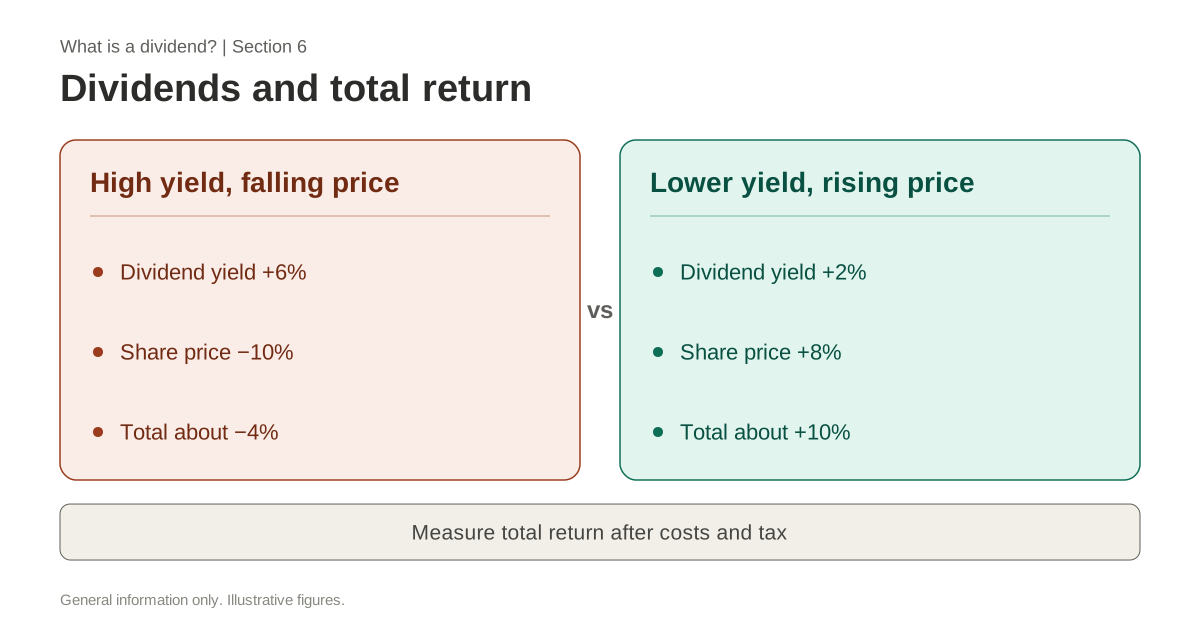
A dividend is only part of the return from owning shares. The total return also includes the change in the share price. A share with a high yield that falls sharply can produce a poor total return, while a share with a lower yield that rises in value can produce a better one.
Measure your investment by its total return after costs and tax, rather than focusing only on the income it pays.
Dividends and diversification
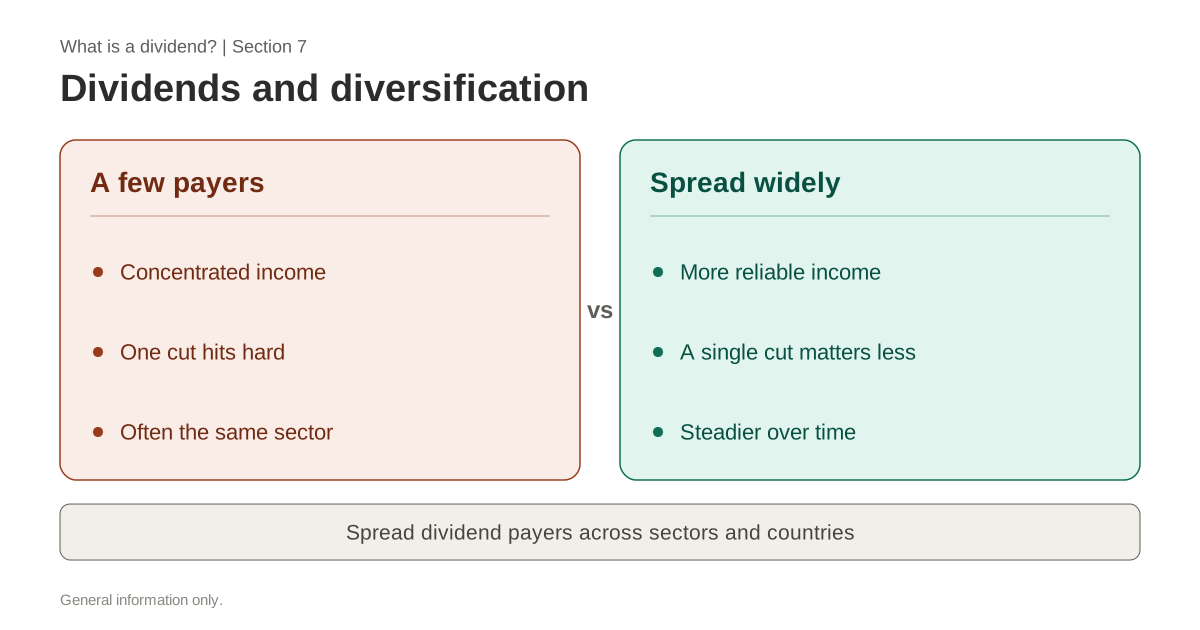
Relying on dividends from only a few companies concentrates both your income and your risk. A company can cut its dividend suddenly, and a portfolio built on a handful of payers may lose much of its income at once. Spreading dividend-paying holdings across sectors and countries makes the income stream more reliable over time.
Income and the rest of your plan
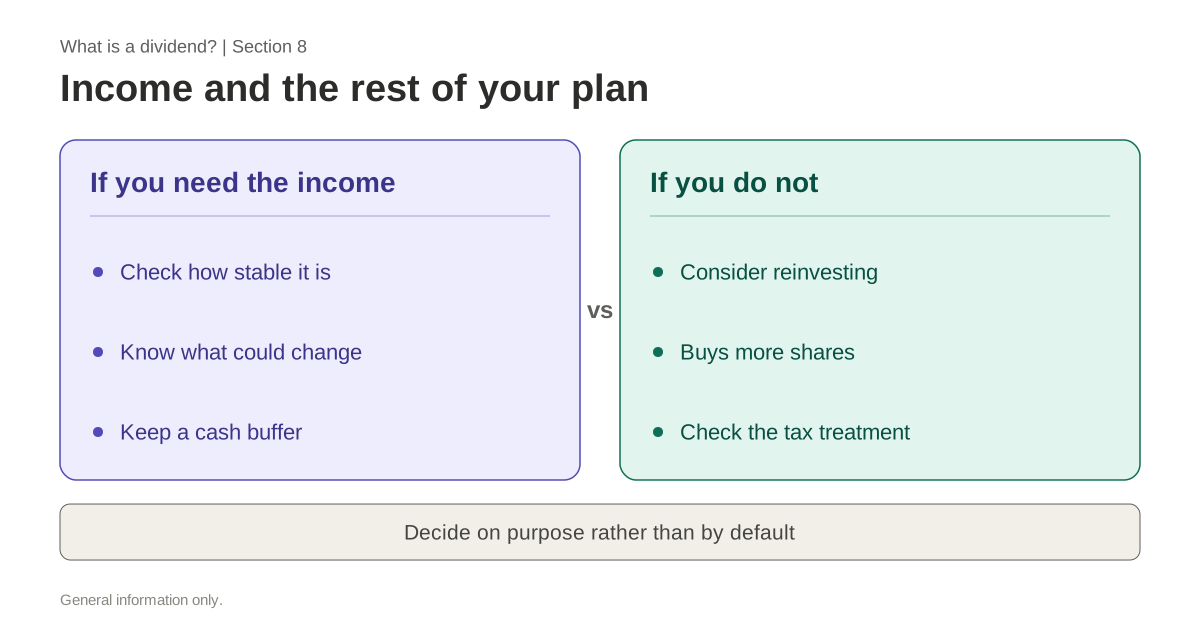
Think about dividend income in the context of your whole plan. If you rely on it for spending, check how much of the income is stable and how much could change. If you do not need it, reinvesting it may suit your goals better. Either way, decide on purpose rather than by default.
Dividend growth
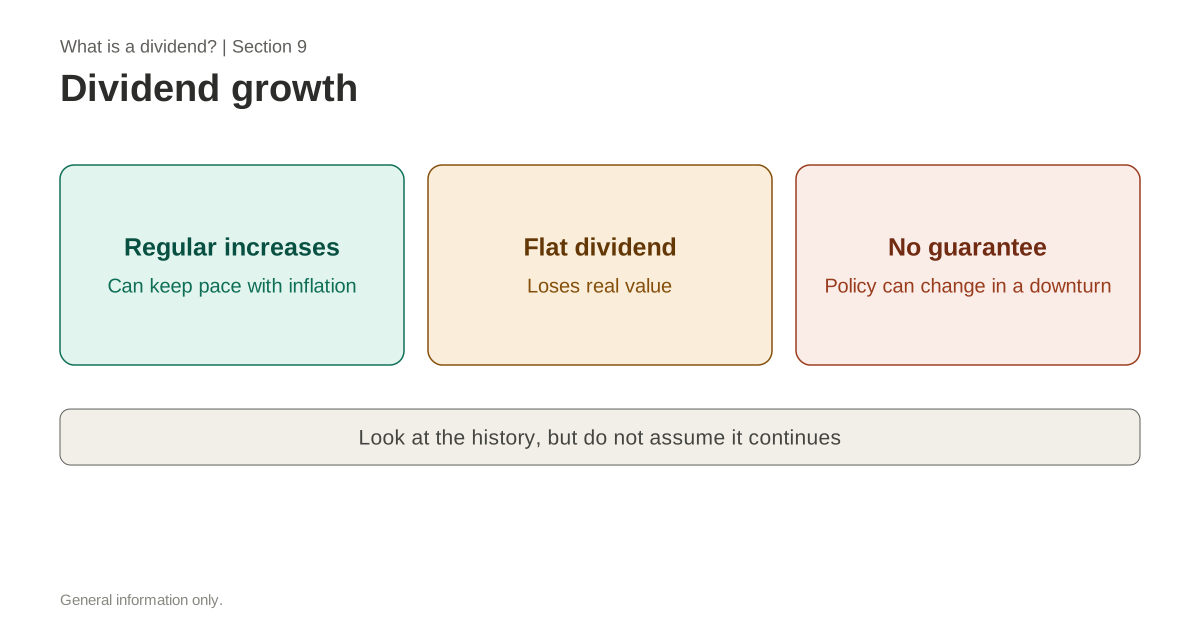
Some companies raise their dividends regularly, which can be an attractive feature for long-term income. A rising dividend can keep pace with inflation, while a flat one loses real value over time. Look at the history of increases, but do not assume they will continue, since the company may need to slow down or change its policy in a downturn.
Dividends in a tax-advantaged account
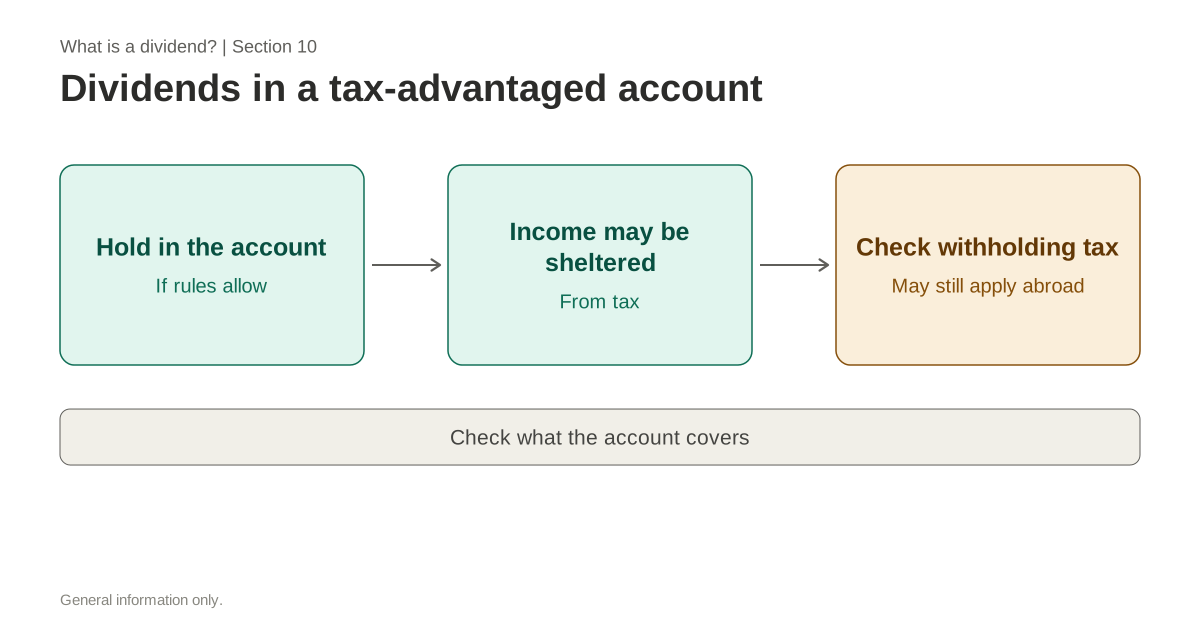
If you hold dividend-paying shares in a tax-advantaged account, the income may be sheltered from tax, depending on the rules in your country. This can make a noticeable difference over time. Check the rules on what the account covers and whether any withholding tax still applies to foreign dividends.
The bottom line
A dividend is a share of a company's profits paid to its owners. It can provide income and, if reinvested, growth. Check its sustainability through payout ratio, cash flow and debt, and remember that the total return includes the share price. Treat a dividend as a decision that can change, not a guaranteed income.
Frequently asked questions
Are dividends guaranteed?
No. The board can reduce, suspend or cancel a dividend at any time. A long history of payments is helpful, but it does not guarantee future payments.
Why does the share price fall after a dividend?
The company pays out cash, so the value of the business falls by about the amount of the dividend. This adjustment happens on the ex-dividend date, which is why the yield alone does not show the full return.
What is an ex-dividend date?
It is the date from which a share trades without the right to the next dividend. You must hold the share before that date to receive the payment.
Should I reinvest dividends?
Many long-term investors do, because reinvesting buys more shares that can earn future dividends and growth. Whether it suits you depends on your goals, your cash needs and the tax treatment.