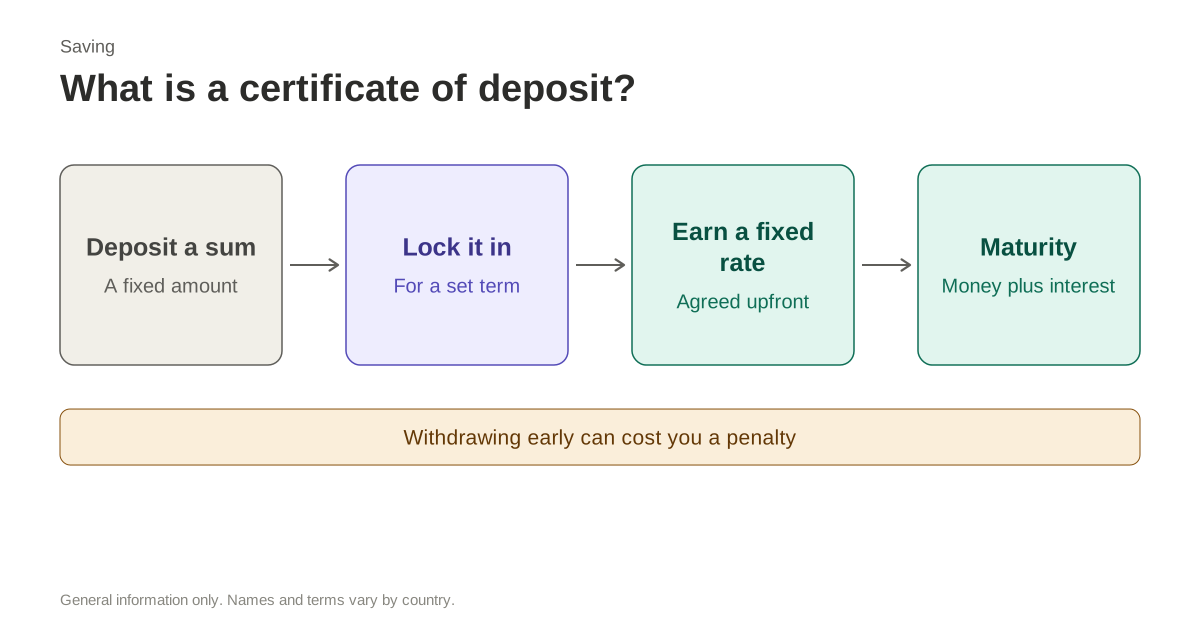
A certificate of deposit, usually called a CD in some countries and a term deposit in others, is a savings product in which you deposit a sum for a fixed period at a fixed interest rate. In return for locking the money away, you usually receive a higher rate than an easy-access account. At the end of the term, you receive the original amount plus the interest.
This article explains how a certificate of deposit works, how its return is calculated, what the trade-offs are and how to decide whether it suits your needs. Names, rules and protection vary by country, so check the terms offered by your bank.
How it works
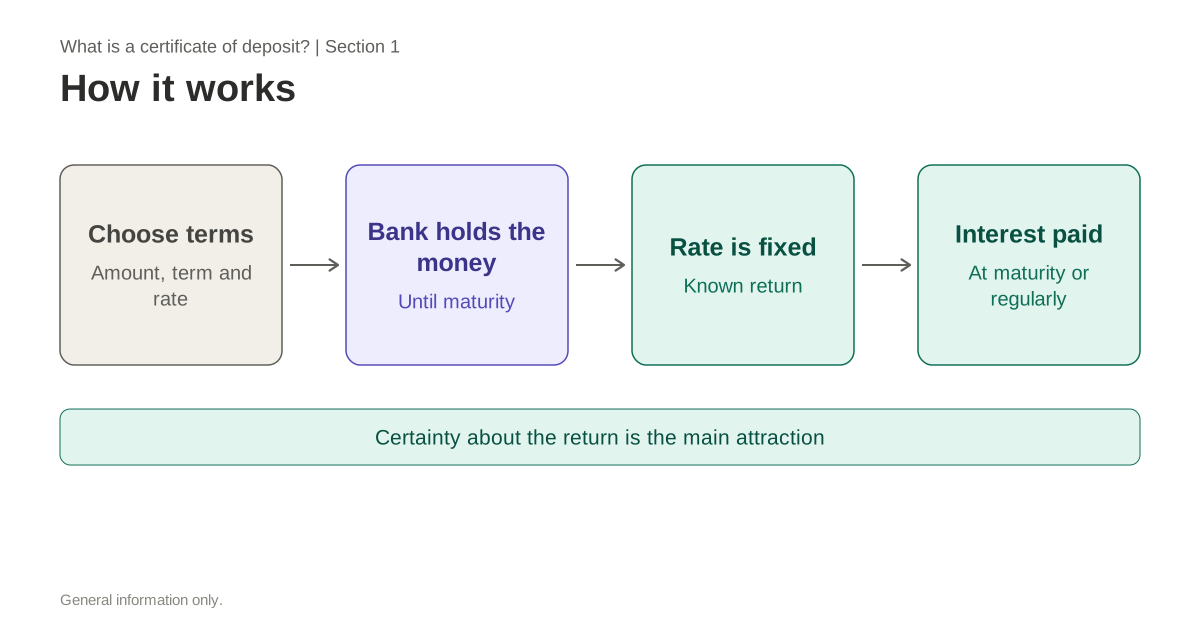
You choose an amount, a term and a rate. The bank holds the money for the term, and you cannot normally withdraw it without penalty before the end. Terms can range from a few months to several years. Some products pay interest at maturity, while others pay it regularly during the term.
The rate is fixed when you open the account, which gives you certainty about the return. That certainty is the main attraction, because it lets you plan with a known figure.
Calculating the return
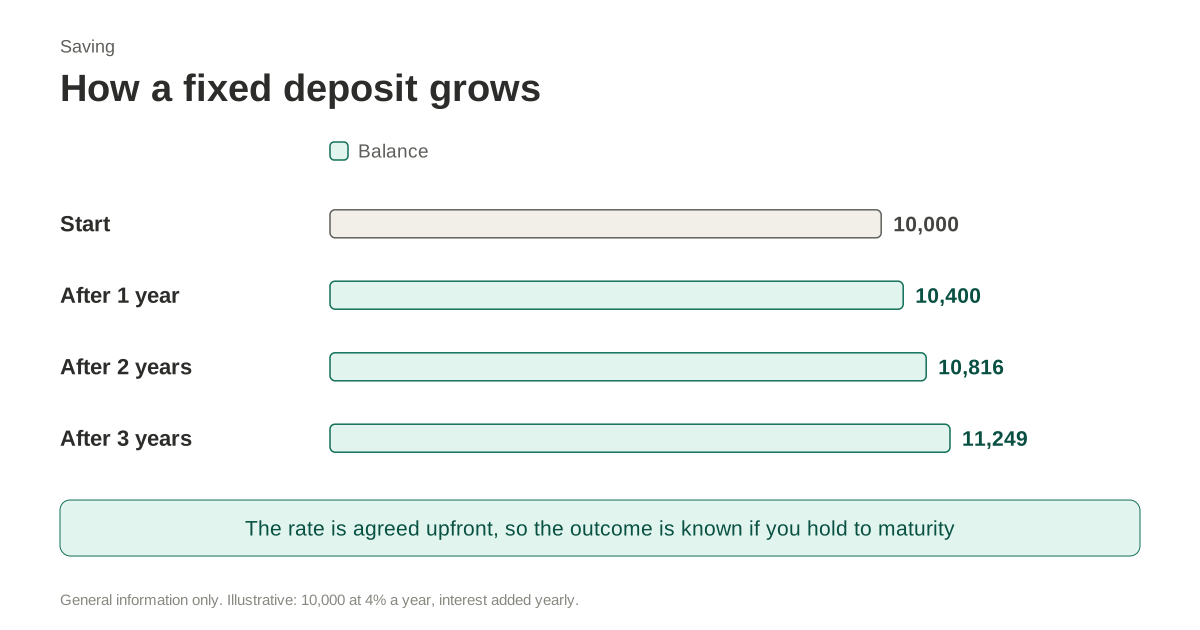
The interest earned depends on the rate, the term and how often interest is compounded. The annual percentage yield, which includes the effect of compounding over a year, is the best figure for comparing products. A simple example: a deposit of 10,000 at 4% APY for two years grows to about 10,816, because the second year earns interest on the first year's interest.
Use a savings calculator to test different amounts, rates and terms. Check the final amount, the interest earned and any tax due.
Early withdrawal penalties
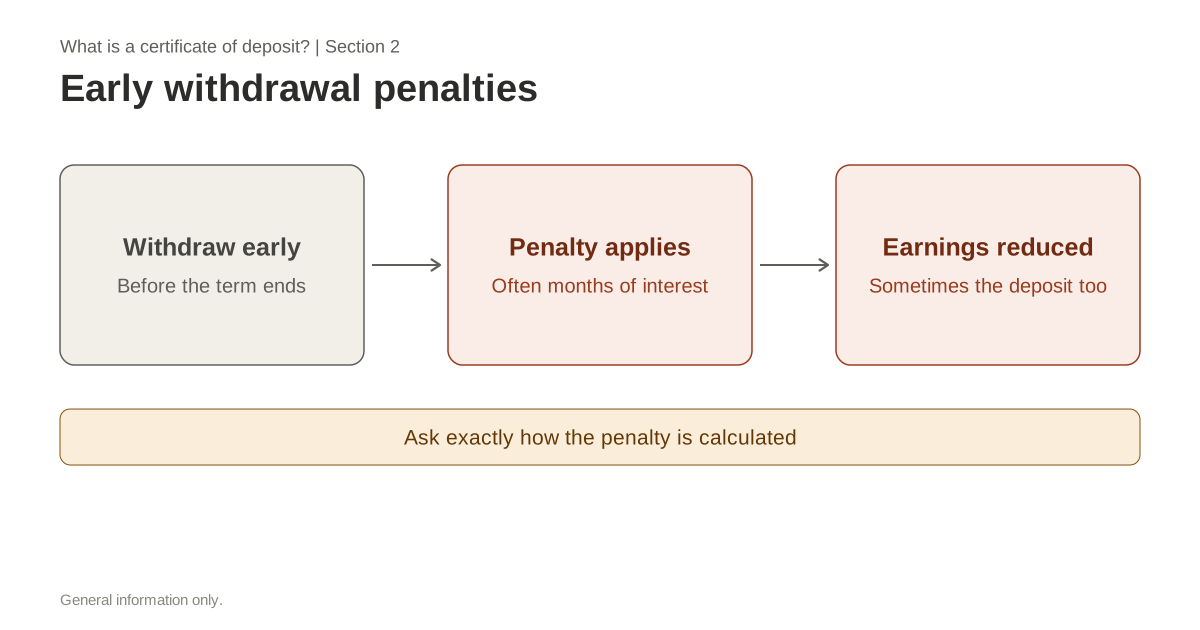
Most certificates of deposit charge a penalty if you withdraw early. The penalty is often a number of months of interest, and it can reduce your earnings or, in some products, the original deposit. Some banks offer products that allow partial withdrawals or early exit without penalty, but these usually pay a lower rate.
Before opening an account, ask exactly what the penalty is and how it is calculated. If there is any chance you may need the money early, consider a shorter term or an account that allows withdrawals.
Comparing terms
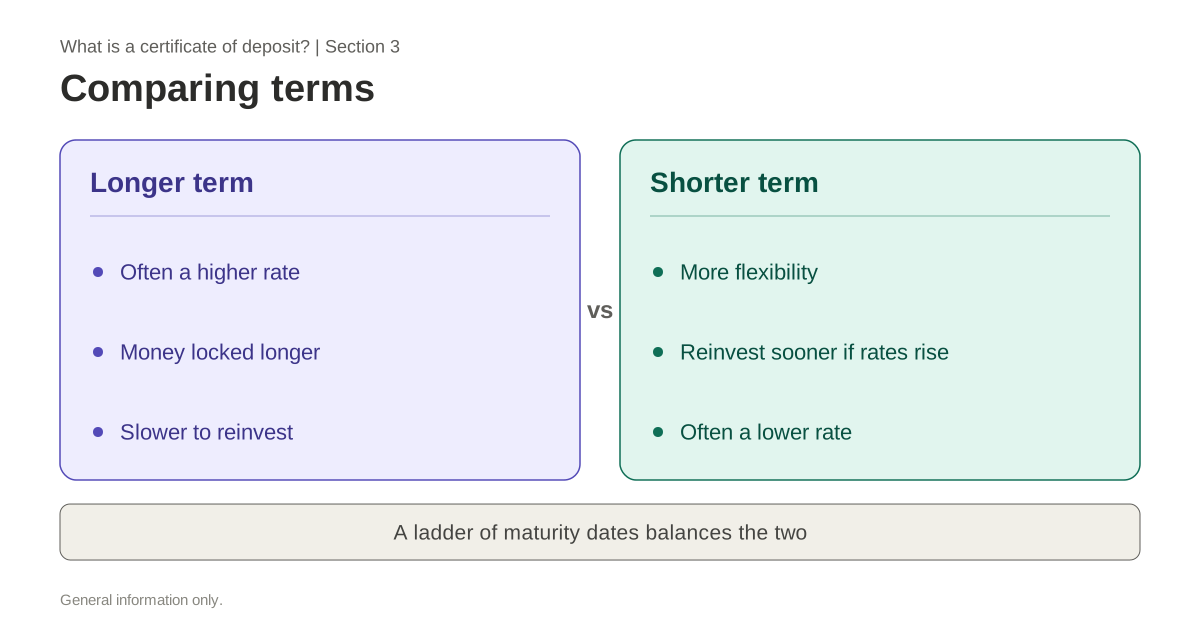
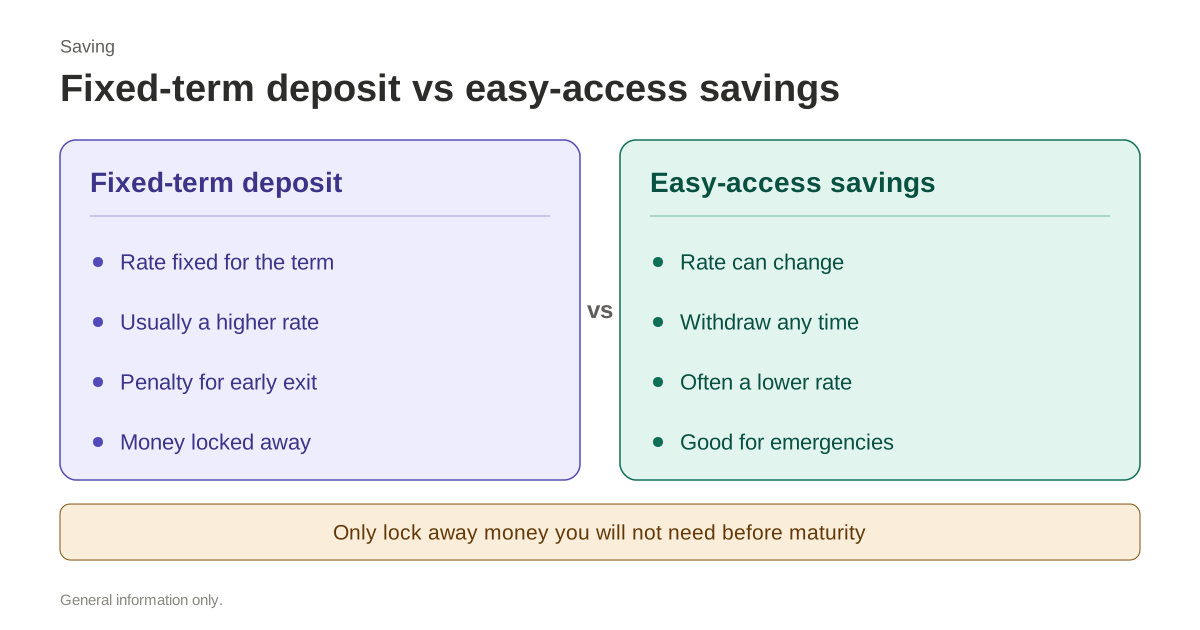
Longer terms often pay higher rates, but they lock your money away for longer. A short term gives you flexibility and lets you reinvest sooner if rates rise. Some savers use a ladder, opening several deposits with staggered maturity dates. This gives regular access to part of the money and allows reinvestment at the current rate.
Compare the rate for each term, and consider how likely you are to need the money before it matures.
Protection
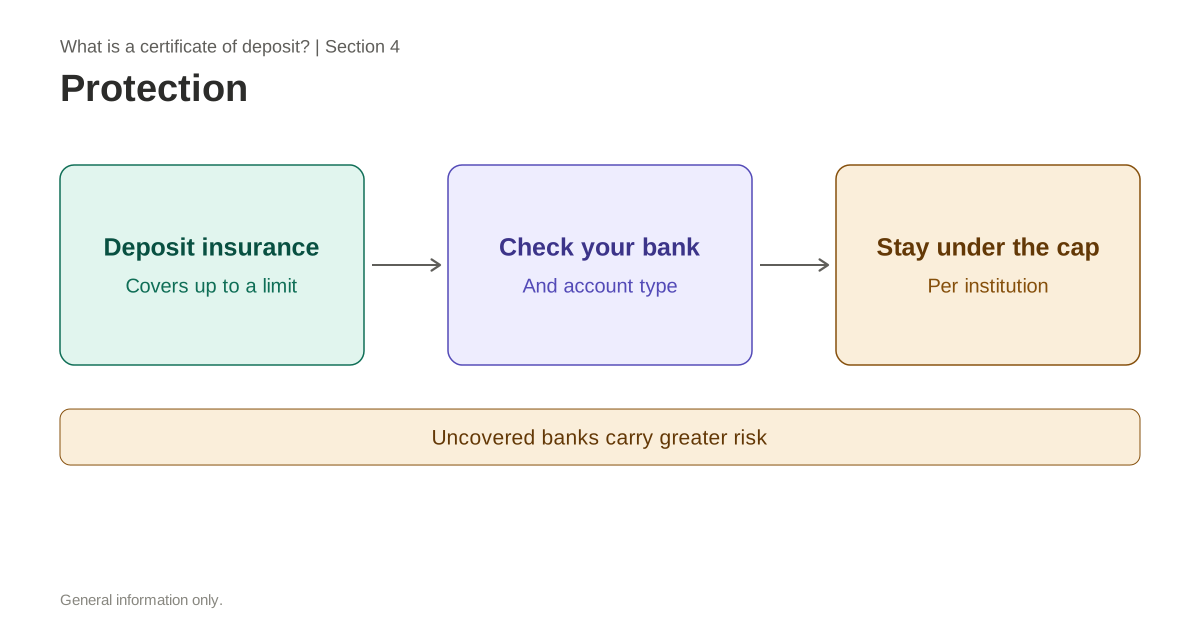
Many countries protect bank deposits up to a set limit per depositor, under a deposit insurance scheme. The limit and the rules differ, so check the protection that applies to your bank and to the type of account. Deposits with a bank that is not covered by such a scheme carry greater risk.
Keep a record of the bank's protection status, and do not place more than the covered limit with a single institution if protection is capped.
Tax
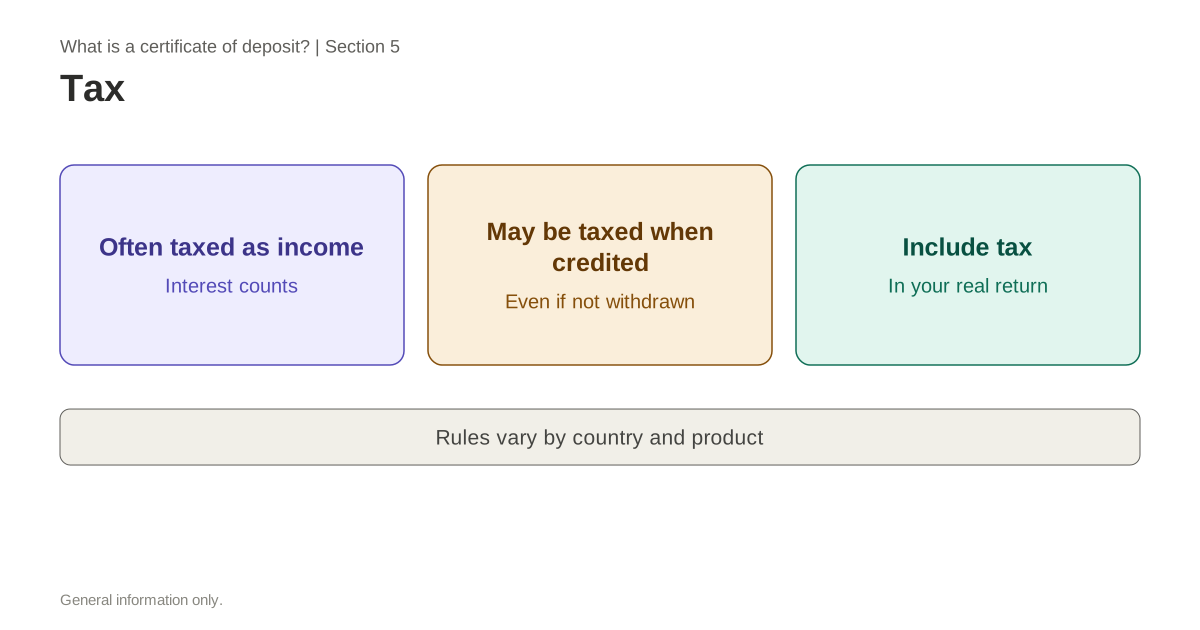
Interest on a certificate of deposit may be taxed as income, sometimes in the year it is credited even if it is not withdrawn. Tax rules vary, and some countries have special treatment for certain savings products. Check the rules where you live, and include tax in your calculation of the real return.
Inflation and purchasing power
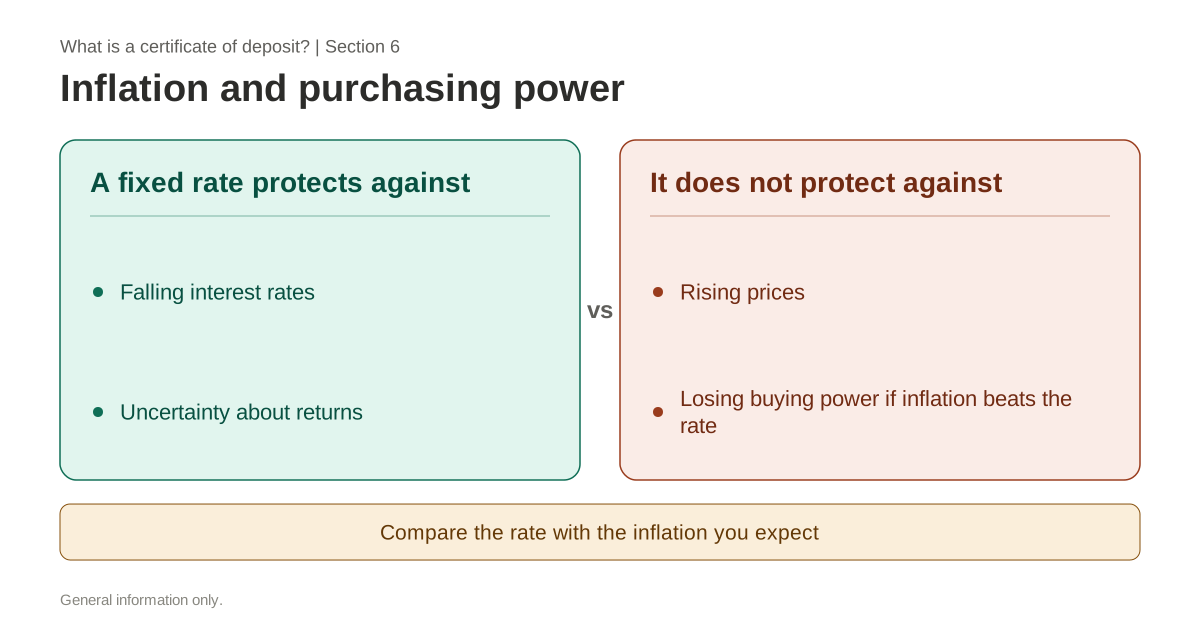
A fixed rate protects you from falls in interest rates, but it does not protect you from inflation. If prices rise faster than the rate you receive, the real value of your money falls. Compare the return with the inflation rate you expect, to judge whether the deposit preserves your purchasing power.
When it makes sense
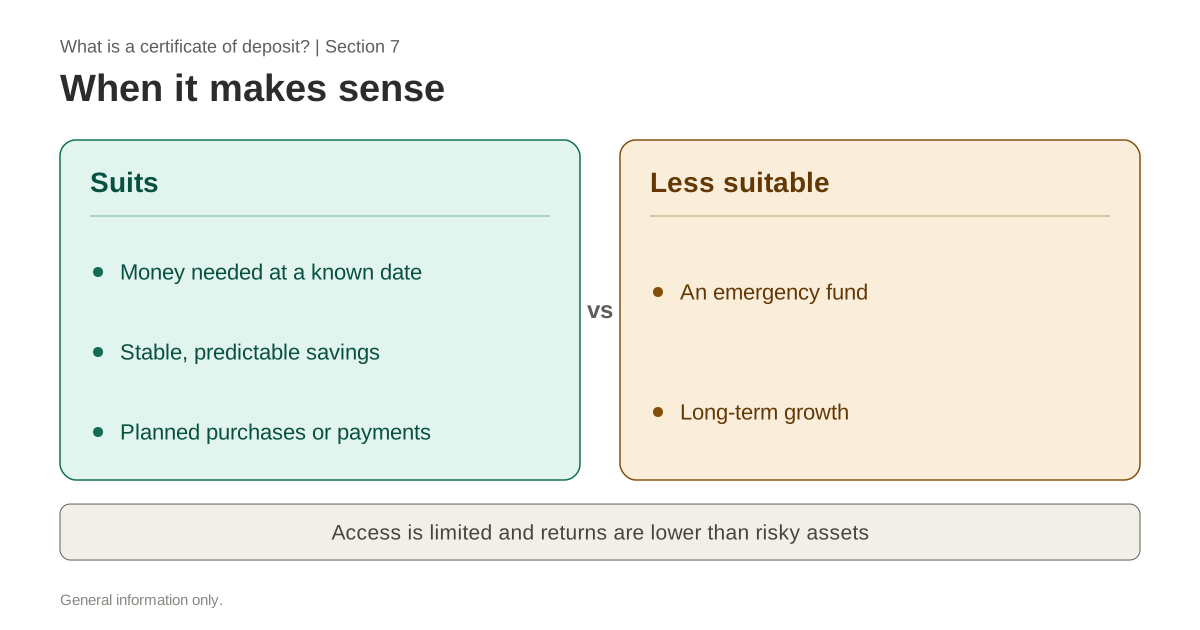
A certificate of deposit suits money you do not need until a known date, such as a planned purchase or a payment due. It is also a sensible place for a portion of a savings plan that you want to keep stable and predictable. It is less suitable for an emergency fund, because access is limited, or for long-term growth, because returns are generally lower than investments that carry risk.
Deposits and total cash planning
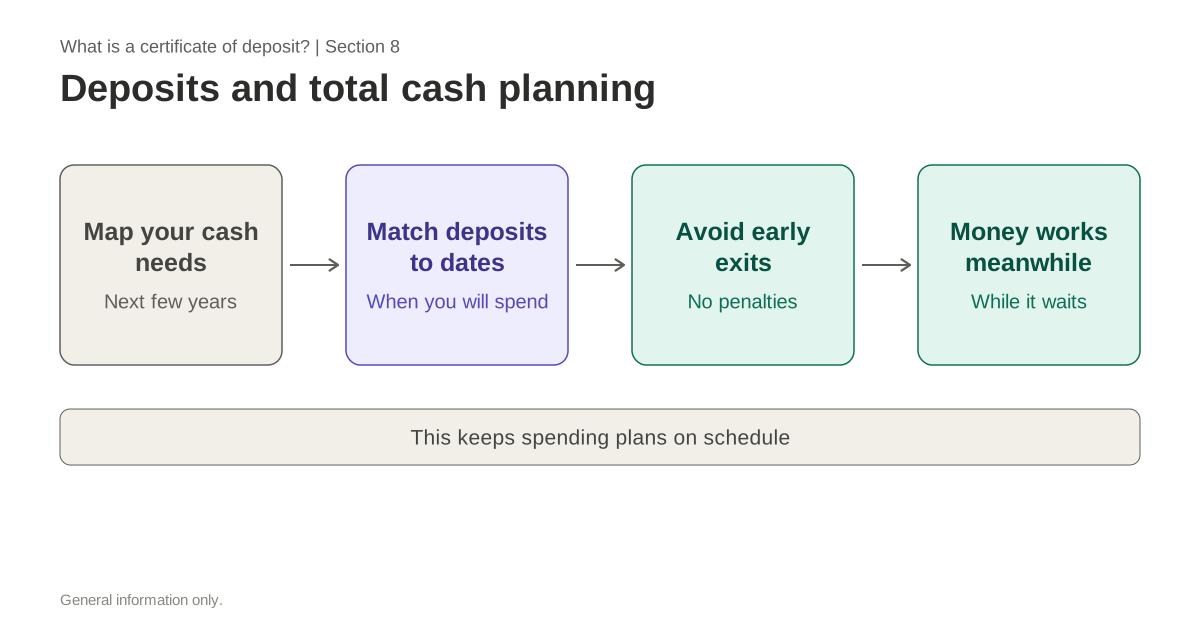
A fixed-term deposit can sit within a broader cash plan. Map out when you will need cash over the next few years, and match deposits to those dates. This approach reduces the need for early withdrawals, keeps your spending plans on schedule and ensures that money is working for you while it waits to be used.
Checking the terms before you sign
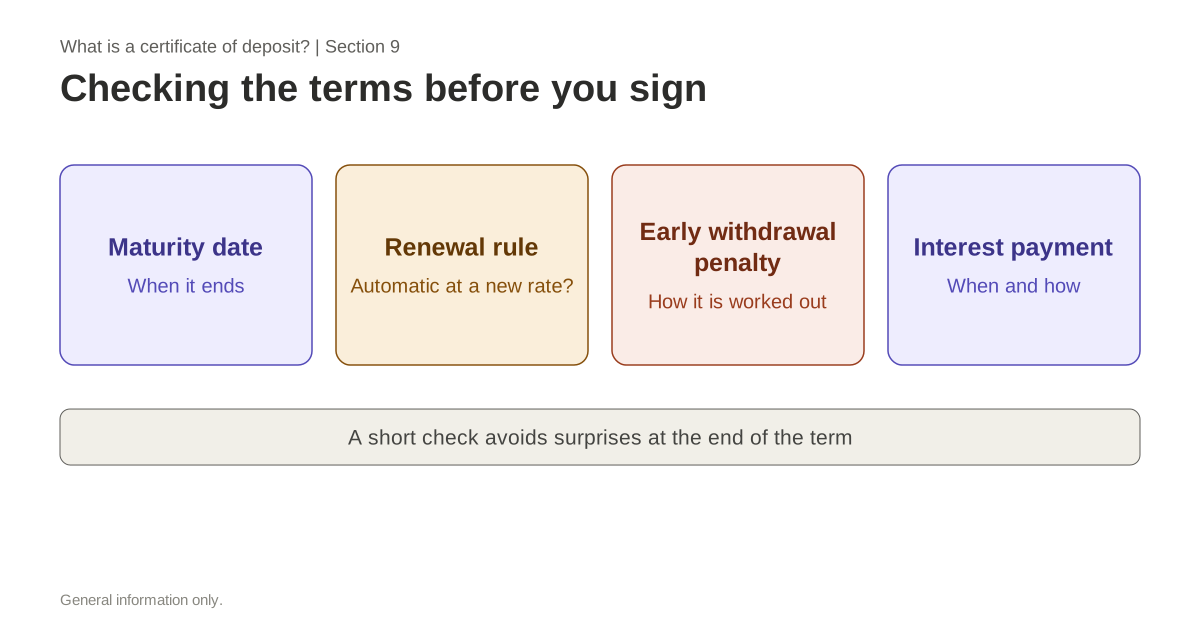
Read the terms before opening a deposit, including the maturity date, the renewal rule, the penalty for early withdrawal and how interest is paid. A short check now avoids surprises at the end of the term, when the account may renew automatically at a rate you did not choose.
Using a deposit as part of a plan
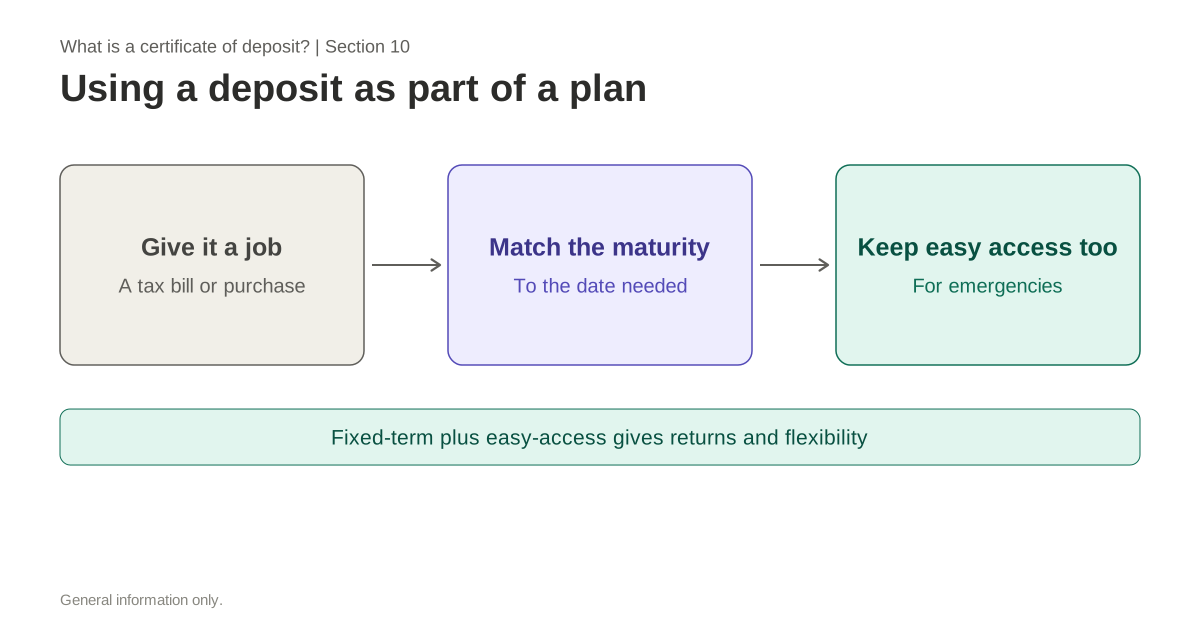
A deposit works best when it has a clear job. For example, you might use a series of fixed-term deposits to hold money for a tax bill, a planned purchase or a known expense. Matching each deposit to a date you will need the money means you rarely face an early withdrawal penalty.
Keep the rest of your savings in accounts that offer access when you need it. Combining a fixed-term deposit for predictable needs with an easy-access account for emergencies gives both returns and flexibility.
Rate changes and reinvestment
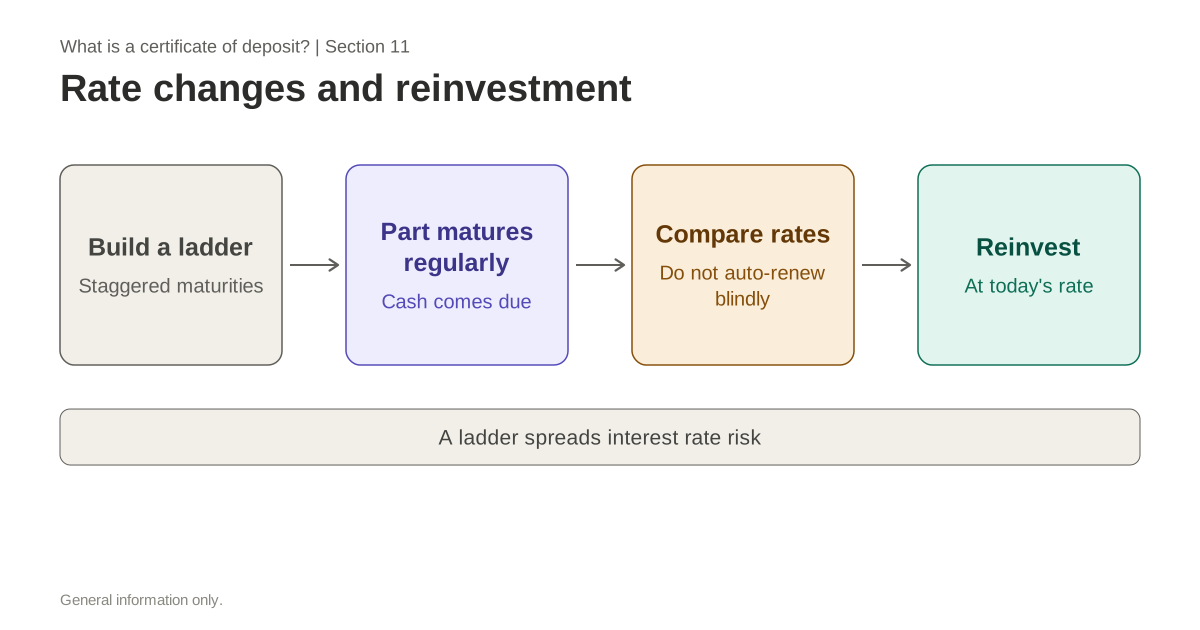
Interest rates change over time, and the rate you lock in today may look high or low later. A ladder of deposits with different maturity dates spreads that risk, because part of the money is always coming due and can be reinvested at prevailing rates. Check each rate against what is available when a deposit matures, and do not renew automatically without comparing options.
The bottom line
A certificate of deposit trades flexibility for a fixed, known return. Check the rate and the annual percentage yield, understand the early withdrawal penalty, confirm the deposit protection, and consider tax and inflation. Match the term to when you will need the money, and it can be a simple, dependable part of your savings.
Frequently asked questions
Is a certificate of deposit the same as a savings account?
Not quite. A certificate of deposit locks your money for a fixed term at a fixed rate, while a savings account usually allows withdrawals at any time, often at a variable rate.
What happens when a certificate of deposit matures?
You receive the original amount plus the interest earned. Some banks renew the deposit automatically at the current rate, so check the terms and decide in advance what you want to do.
Can I lose money in a certificate of deposit?
Usually you will not lose the original deposit if the bank is protected by a deposit insurance scheme and the amount is within the covered limit. Early withdrawal penalties can reduce the amount you receive, though.
How do I compare CD rates?
Compare the annual percentage yield for the same term, and check the early withdrawal rules, the protection status of the bank and the tax treatment of the interest.