Risk is one of the most used words in investing and one of the least precisely understood. In everyday conversation it can mean the chance of losing money, the size of price swings, or the chance of not reaching a goal. Volatility is one common way to measure risk, but it is not the whole story. Understanding the difference helps you choose investments you can actually stick with.
This article explains what volatility measures, why it matters, and how to think about the risk you can accept. It is general information, not personal advice.
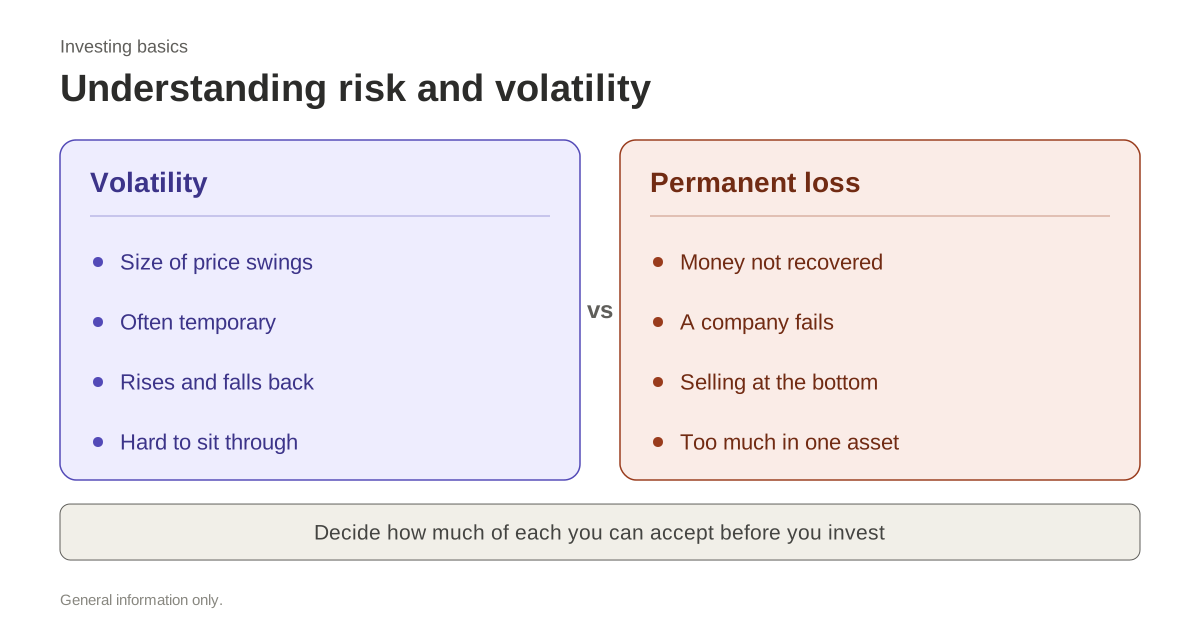
What volatility measures
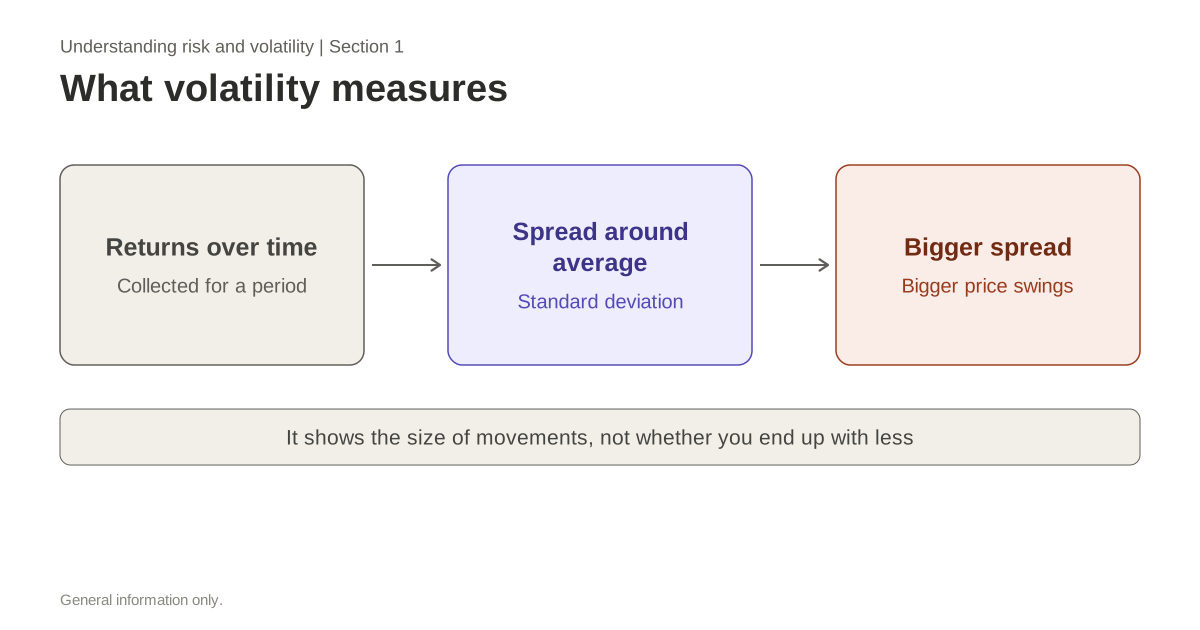
Volatility measures how much an investment's value moves up and down over a period. It is usually expressed as the standard deviation of returns, which tells you how widely the returns are spread around their average. A volatile investment can rise or fall sharply in a short time. A stable investment moves more gently.
Volatility is easy to measure, which is one reason it is widely used. But it describes the size of movements, not whether you will end up with less money in the long run.
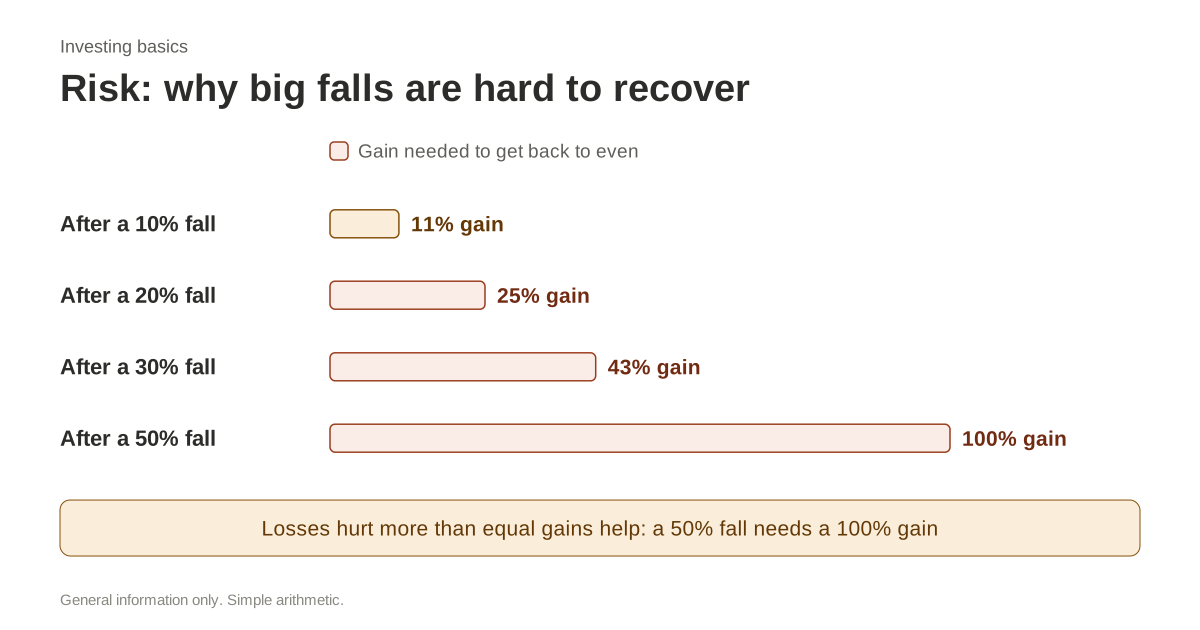
Volatility is not the same as permanent loss
A portfolio that falls 30% and then recovers has been volatile, but it has not permanently lost money if it returns to its previous value. A portfolio that falls and never recovers, because the underlying business failed or the investment was poorly chosen, has suffered a permanent loss. The second type of risk matters far more for long-term outcomes.
Many investors confuse these two ideas. They sell during a fall, which turns a temporary decline into a permanent loss, and they miss the recovery. Understanding the difference helps you hold through normal volatility, while still watching for signs of real trouble.
Risk of loss versus risk of shortfall
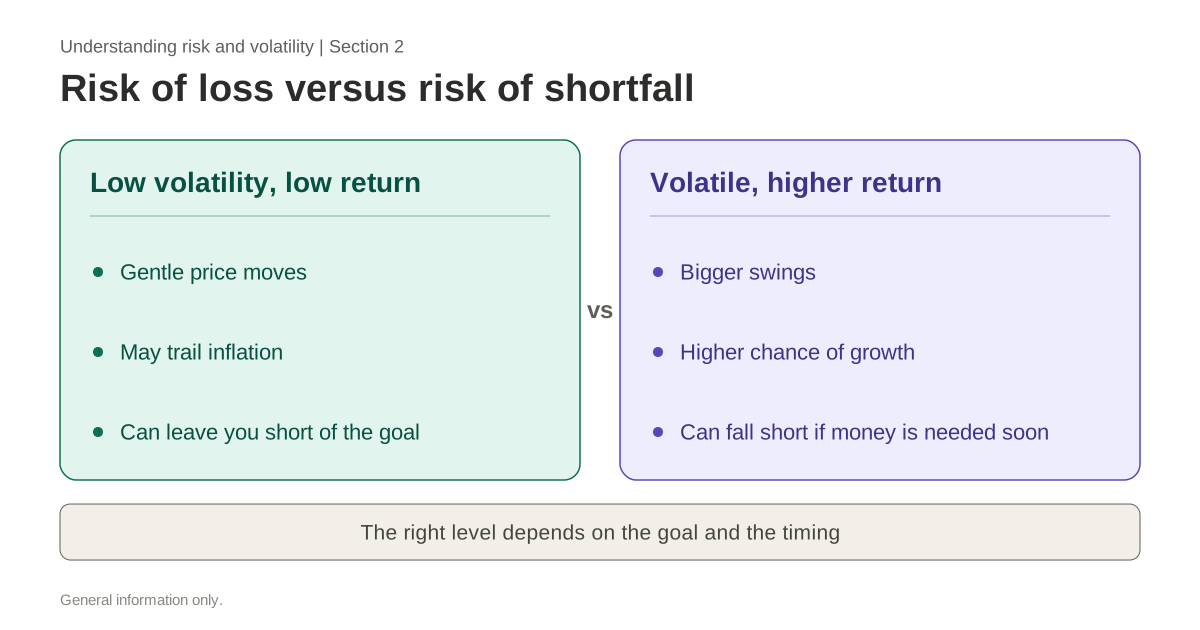
Another way to think about risk is as the chance that you will not reach a goal. A cautious investment may have low volatility, but if it returns less than inflation, it can leave you short of what you need. A volatile investment may produce a higher return, but it can also leave you short at the wrong moment, particularly if you need the money soon.
The right level of risk depends on the goal and the timing. Money needed in a year should be in a stable place. Money needed in thirty years can usually accept more volatility, because there is time to recover from setbacks.
Your capacity and your tolerance
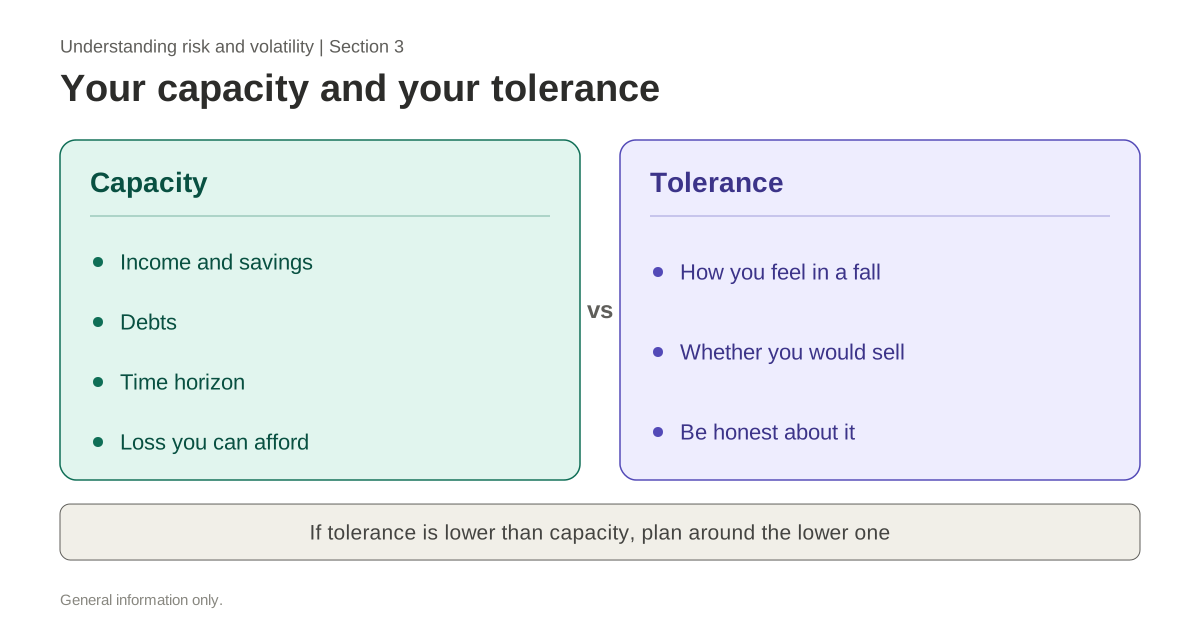
Two questions help you decide how much risk to take. The first is capacity: how much loss can you afford without damaging your finances or your plans? This depends on your income, savings, debts and time horizon. The second is tolerance: how much loss can you live with emotionally? A portfolio that you cannot hold through a fall will not deliver its long-term return.
Be honest about both. A high-risk plan that you abandon at the bottom of a fall is worse than a moderate plan that you keep. Many investors overestimate their tolerance when markets are rising.
Diversification and risk
Spreading money across different investments reduces the risk tied to any single holding. It does not remove market risk, which affects the whole market, but it can lower the chance of a single event causing a severe loss. The article on diversification explains how this works in more detail.
Combining assets with different behaviour can also reduce overall volatility, although correlations can rise in a crisis.
Measuring risk in practice
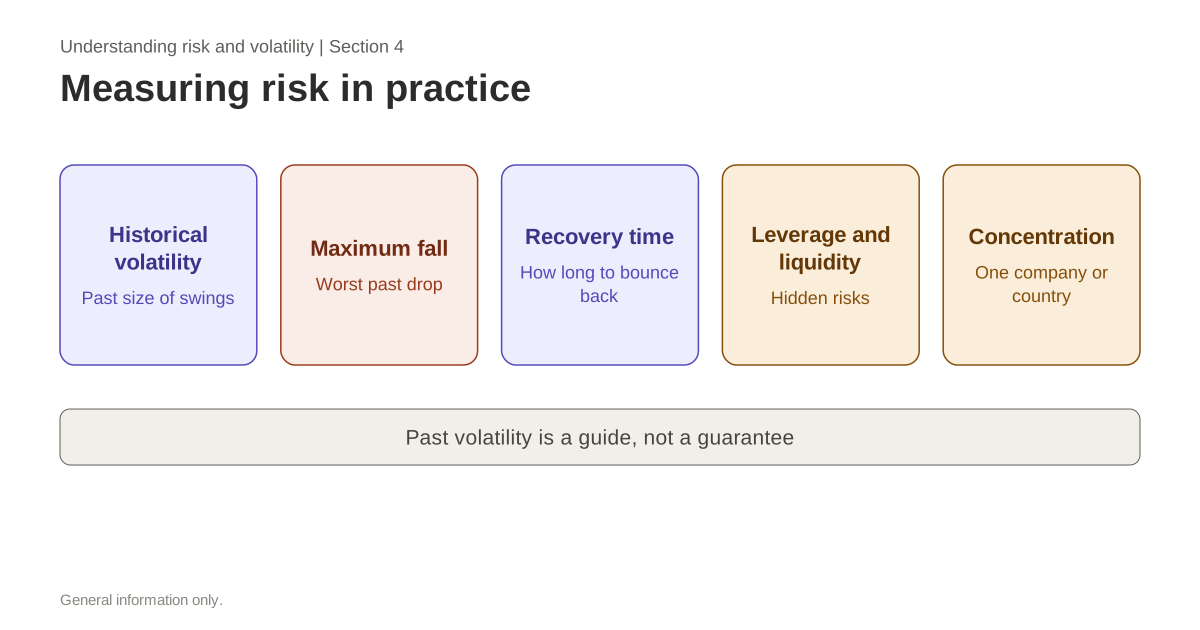
When you look at an investment, check its historical volatility, its maximum fall in past downturns, and how long it took to recover. Also consider the risks that numbers do not capture, such as leverage, liquidity, concentration in one company or country, and the quality of the management.
Past volatility is a guide, not a guarantee. A future crisis can be worse than anything in the historical record, so build in a margin of safety.
Planning for falls
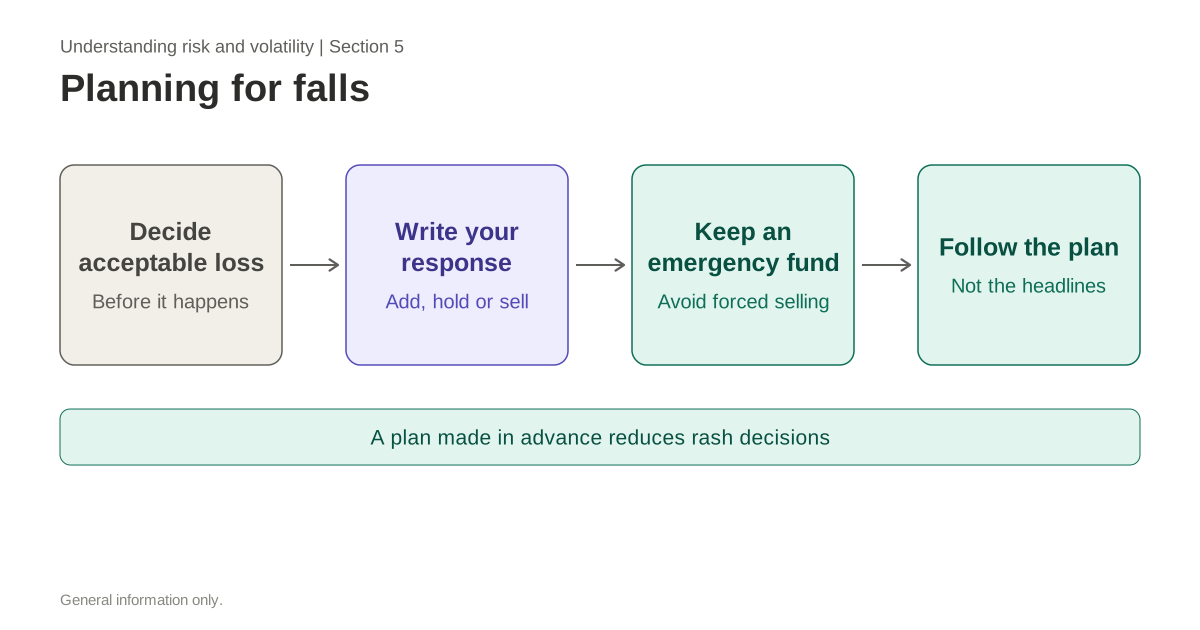
Decide before a fall how you will respond. Write down the level of loss you could accept, what you would do if the investment fell by that amount, and whether you would add money, hold, or sell. Having a plan in advance reduces the chance of making a rash decision under stress.
Keeping an emergency fund also helps. If you do not have to sell investments to meet an unexpected bill, you can wait for recovery.
Matching risk to a goal
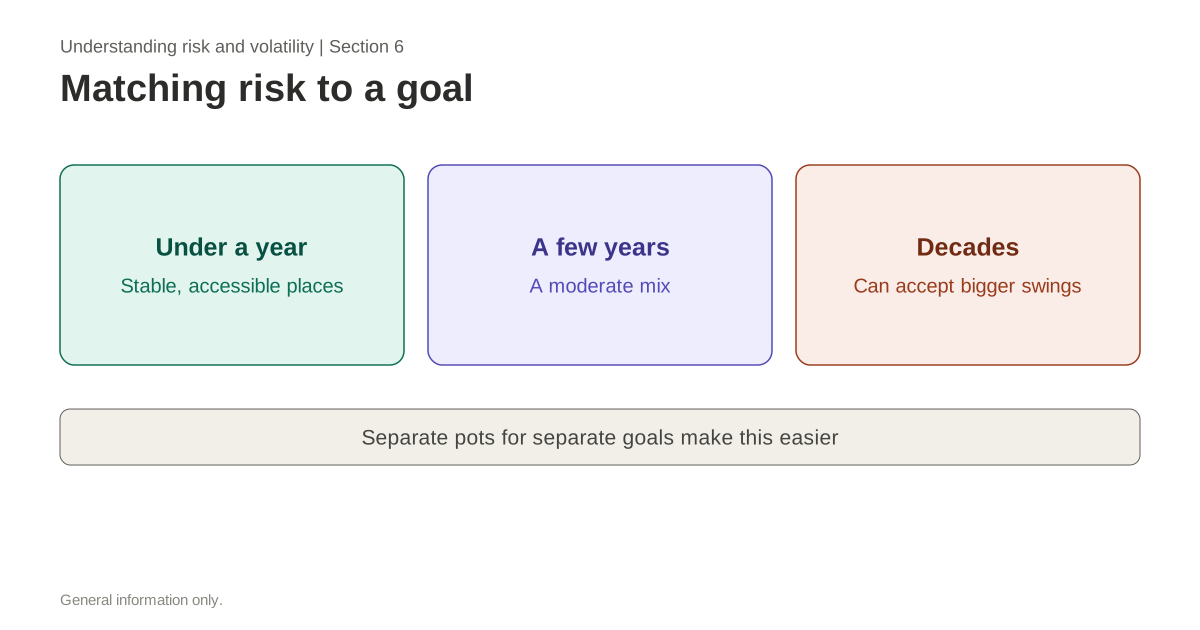
A helpful exercise is to match each goal to a level of risk. Money for a near-term purchase should sit in stable, accessible places. Money for a goal decades away can accept greater swings in return for the chance of higher growth. Keeping separate pots for separate goals makes it easier to accept volatility where it is appropriate and avoid it where it is not.
When volatility is a signal
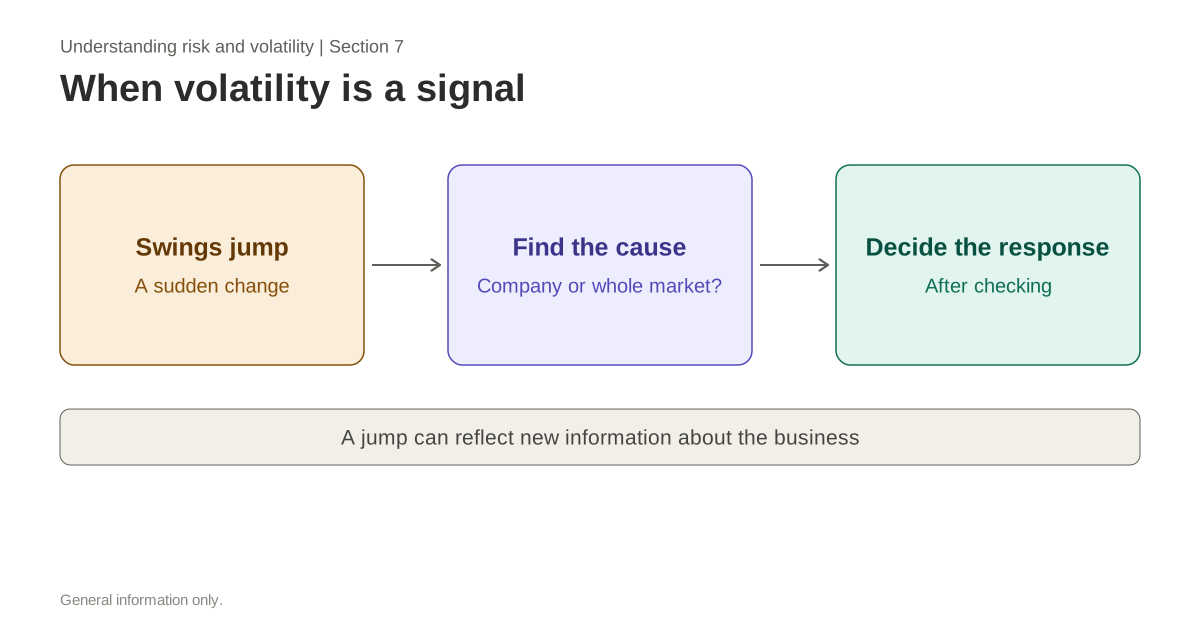
Sometimes volatility is a signal worth investigating. A sudden jump in the swings of a holding may reflect new information about the business, a change in its debt or a shift in its market. Check whether the cause is company specific or part of a broader market move before deciding how to respond.
Time and volatility
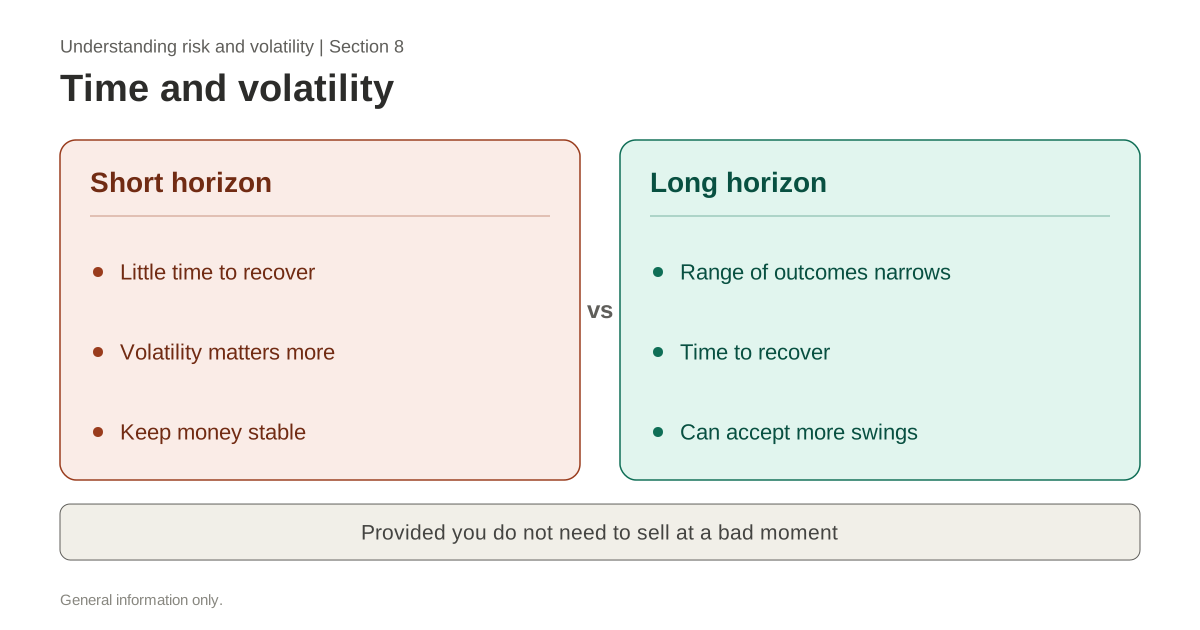
Volatility tends to matter less the longer you hold an investment, provided you do not need to sell at a bad moment. Over long periods, the range of possible outcomes narrows for diversified portfolios, although it never disappears. This is why time horizon is central to deciding how much volatility to accept.
Using risk measures wisely
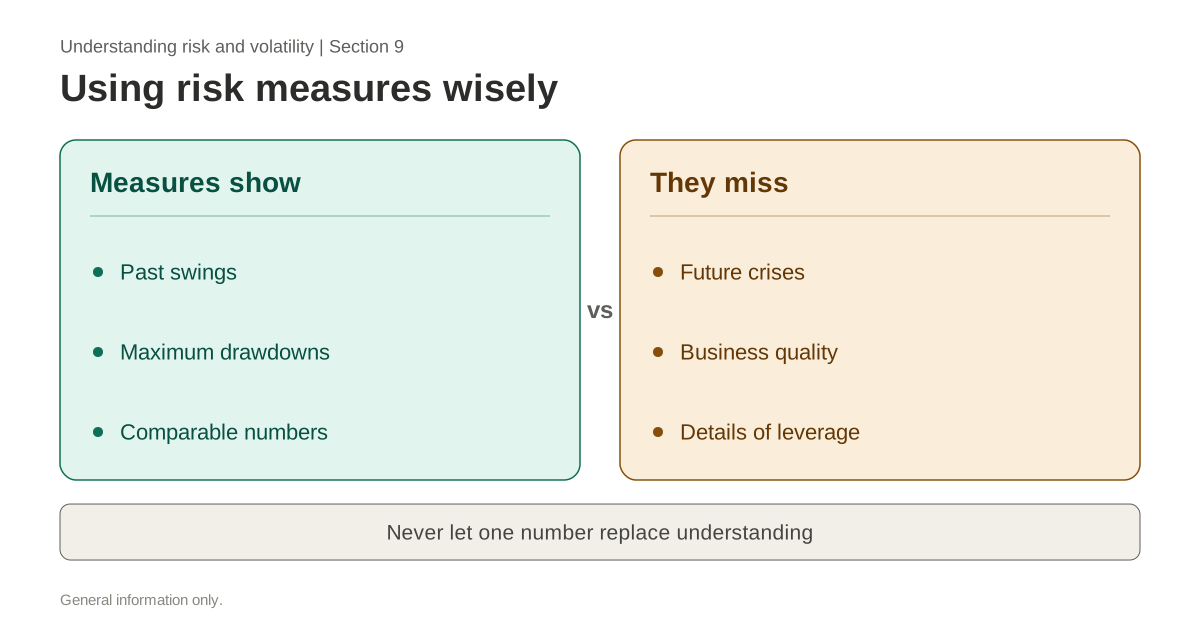
Risk measures such as volatility and maximum drawdown are useful, but they are based on past data. Use them to compare options, and combine them with judgement about the business, the sector and the economic environment. A single number should never replace a full understanding of what you own.
The bottom line
Volatility measures how much values move, but risk is about whether you will reach your goals and whether losses become permanent. Match your investments to your time horizon, be honest about how much loss you can afford and tolerate, and decide in advance how you will act in a fall. A risk level you can live with is more useful than one that looks impressive on paper.
Frequently asked questions
Is volatility the same as risk?
Not exactly. Volatility measures how much value moves up and down. Risk also includes the chance of permanent loss and the chance of not reaching a goal, which volatility alone does not show.
Is high volatility always bad?
Not for a long-term goal, where you can wait for a recovery. It becomes a problem when you need the money soon or when you sell during a fall and lock in the loss.
How do I know my risk tolerance?
Consider how you would feel and act if your investments fell sharply, and how much loss you could afford without harming your finances. Honest answers matter more than the level you hope to accept.
Can I reduce volatility without giving up growth entirely?
Diversifying across assets that behave differently can reduce volatility, though it may also reduce returns. The right balance depends on your goals and how long you can leave the money invested.