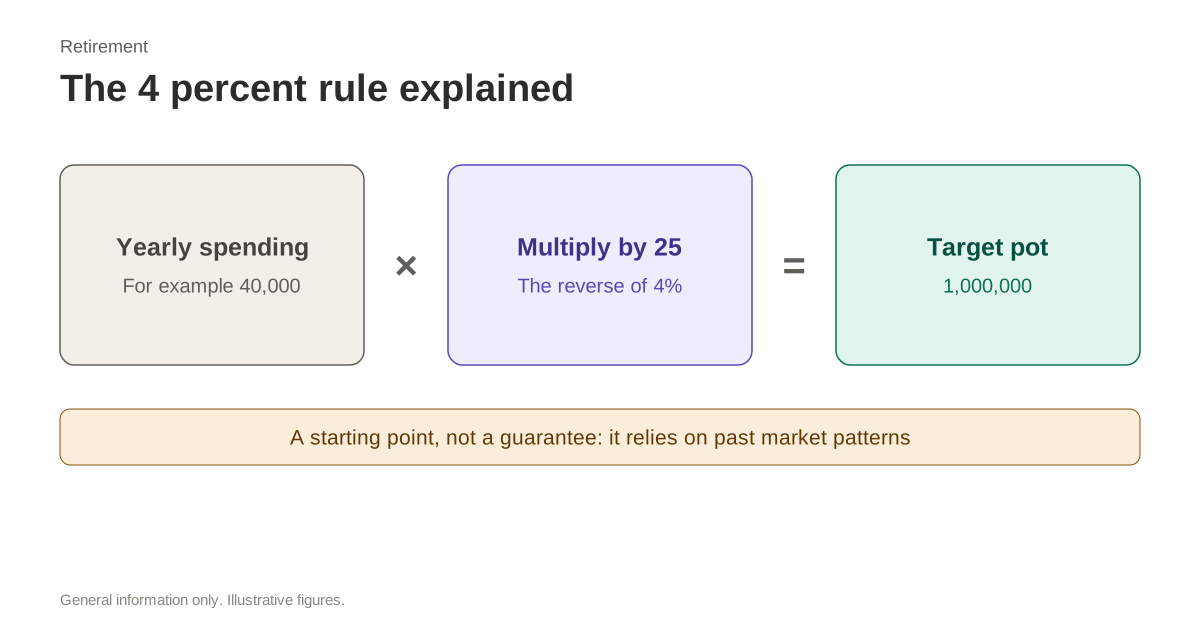
The 4 percent rule is a widely quoted guideline for how much a retiree can withdraw from an investment portfolio each year. In its simplest form, it suggests withdrawing four per cent of the starting portfolio in the first year, then adjusting that amount for inflation each year after. It became popular because it offers a simple way to turn a pot of savings into a planned income.
This article explains the origin of the rule, what it assumes and where it can fail. It is a planning reference, not a guarantee, and it should be tested against your own circumstances.
Where the rule comes from
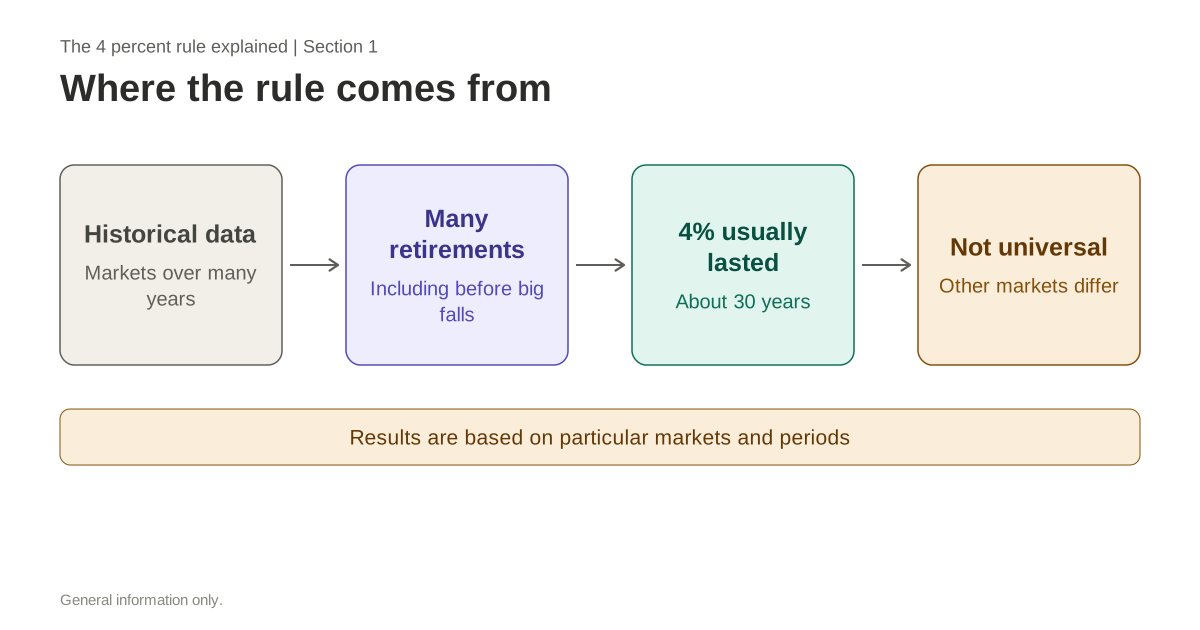
The rule grew out of research that tested historical market data to see how long different withdrawal rates lasted for portfolios that held a mix of shares and bonds. The researchers looked at many retirement periods, including those that started just before major market falls. The four per cent rate was a level that, in the periods studied, usually lasted around thirty years.
The results were based on particular markets and historical periods, so the figure should not be read as universal. Different countries, different asset mixes and different market histories can produce different results.
What it assumes
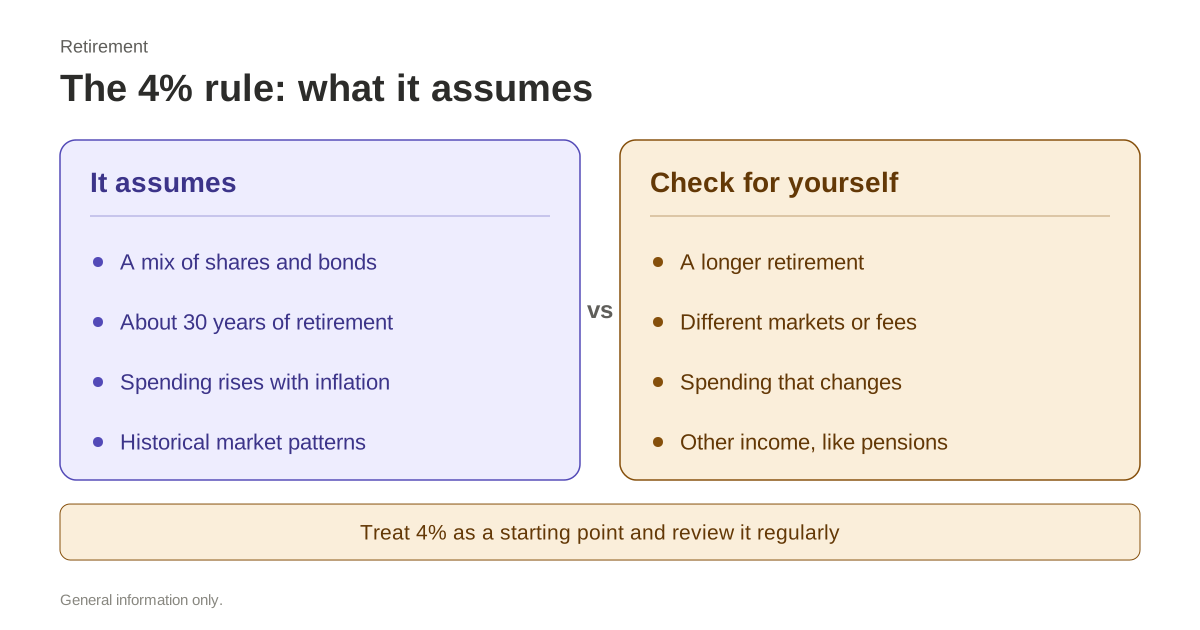
The rule makes several assumptions. It assumes a portfolio with a specific mix of assets, usually a substantial share in shares and the rest in bonds. It assumes that the withdrawal is adjusted for inflation each year, so the real value of the income stays constant. It assumes a retirement of roughly thirty years, and that the portfolio is not topped up after retirement begins.
If any of these assumptions change, the result changes too. A longer retirement, a more conservative mix or a period of very low returns can all reduce the sustainable withdrawal.
Sequence risk
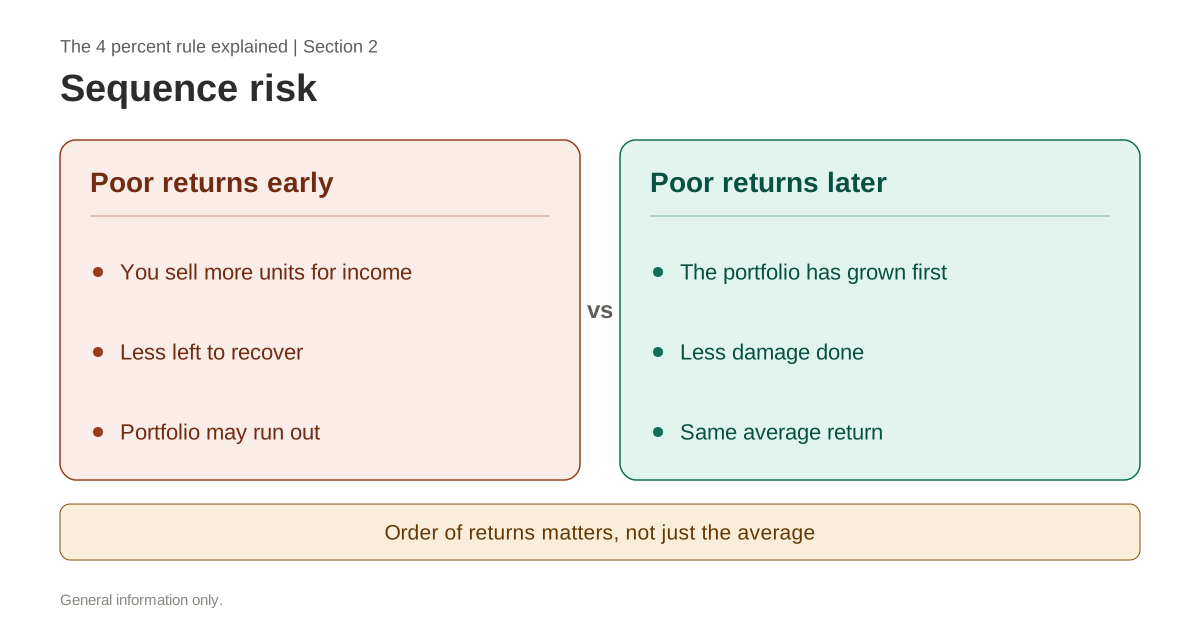
The main danger for a retiree is sequence risk, which is the risk that poor returns arrive early in retirement. When you are withdrawing money, a fall in the early years forces you to sell more units to meet the same income, leaving less to recover when markets rise. Two retirees with the same average return can end up in very different positions depending on the order of those returns.
This is why the rule is sensitive to the first years of retirement, and why many planners suggest holding a cash reserve or flexing spending during a downturn.
Flexibility helps
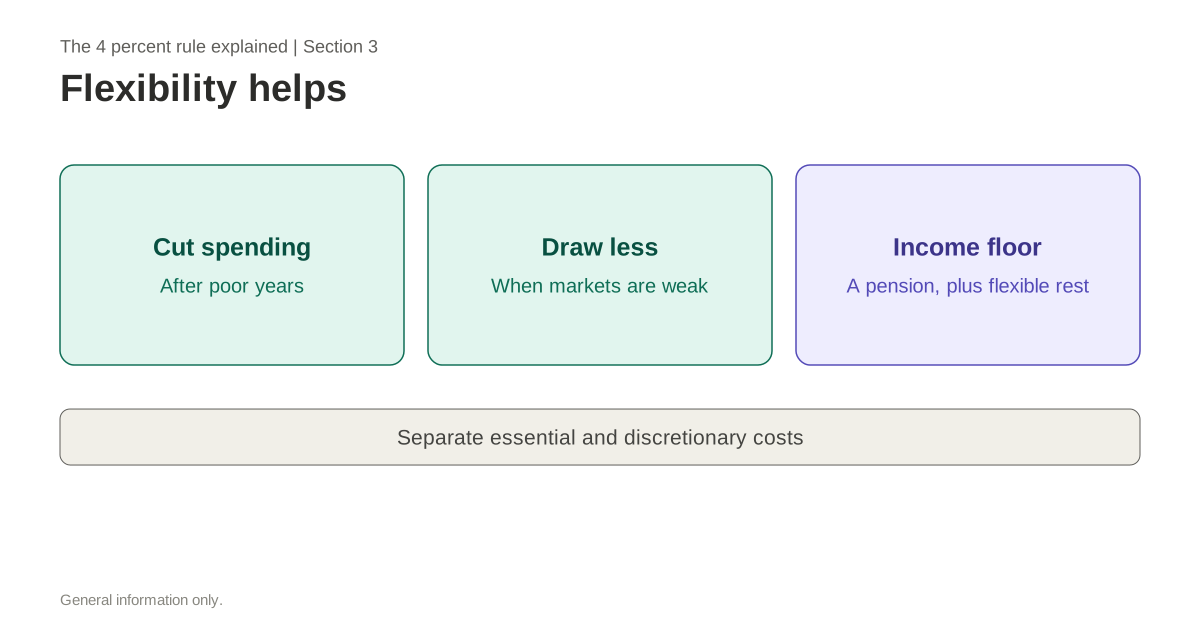
A fixed withdrawal, adjusted for inflation, is one approach, but flexible withdrawals can improve the chance of lasting. A retiree who reduces spending after a poor year, or who draws less from the portfolio when markets are weak, reduces the damage of sequence risk. Some retirees also use a floor of guaranteed income, such as a pension, and invest the rest more flexibly.
Consider which costs are essential and which are discretionary. Flexibility is valuable because it lets you respond to conditions rather than being locked into a single number.
Costs and taxes
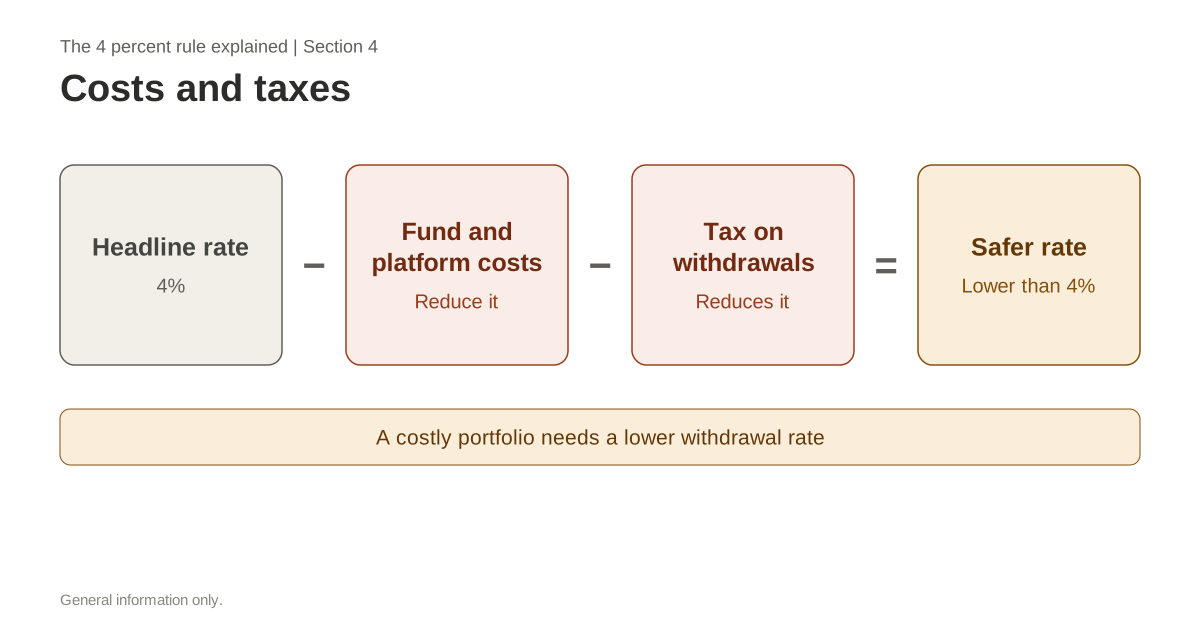
The rule is usually described before costs and taxes. Fund charges, platform fees and taxes on income or gains all reduce the amount you can safely withdraw. A portfolio with high costs needs a lower withdrawal rate to achieve the same security. Build the costs into your calculation, rather than assuming the headline four per cent is what you will keep.
Using the rule as a starting point
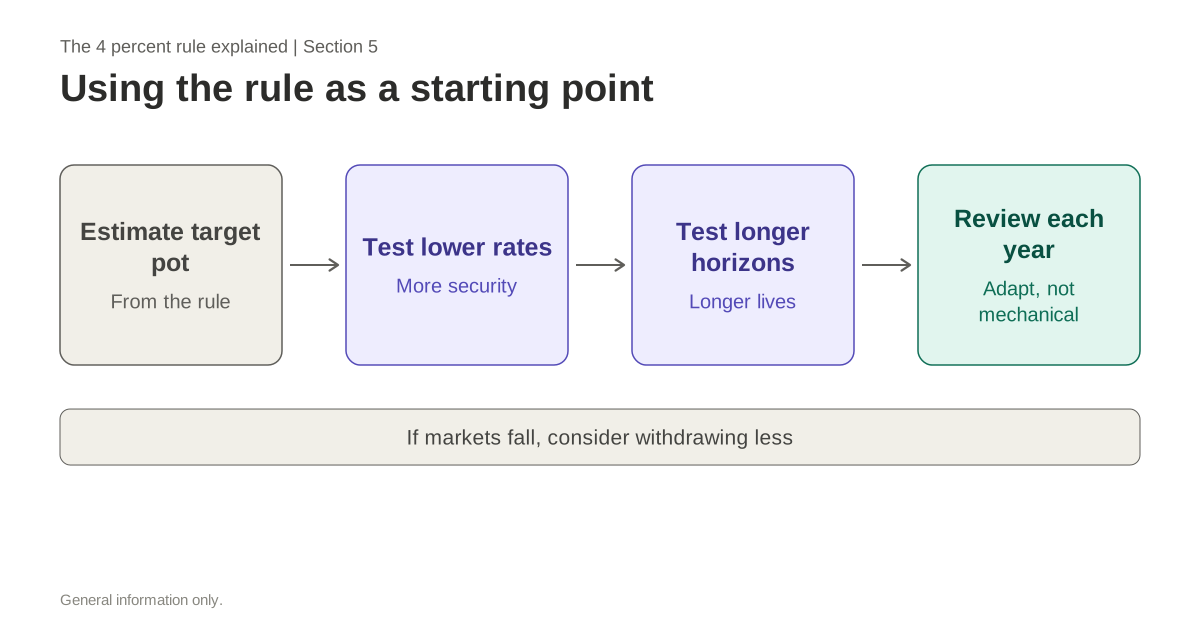
Use the rule to estimate your target pot, not to set your spending in stone. If you need an income of 20,000 a year and use four per cent, you would need about 500,000. Then test lower rates, longer horizons and lower returns to see how sensitive the answer is.
Review your withdrawal each year. If markets have fallen, consider reducing the withdrawal. If markets have risen strongly and your needs are met, you may have room to take a little more. The point is to adapt rather than apply a fixed number mechanically.
Limits of the rule
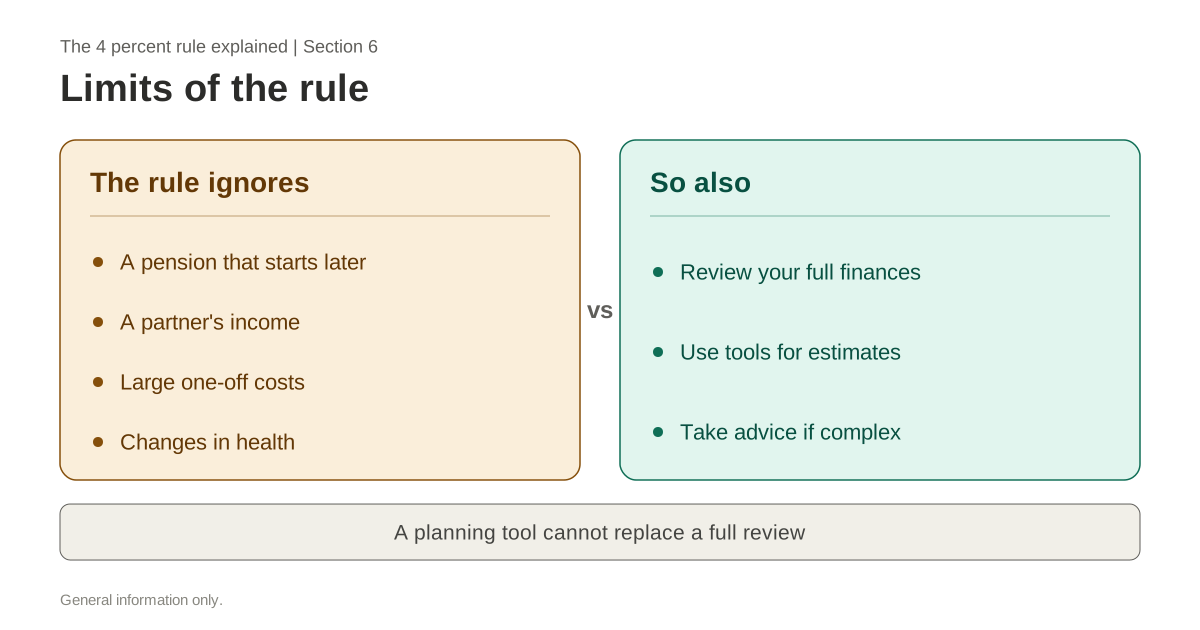
The rule does not account for the specifics of your situation, such as a pension that begins later, a partner's income, or large one-off expenses. It also does not cover the risk that your health or costs change in unexpected ways. A planning tool can estimate outcomes, but it cannot replace a full review of your finances.
Taxes and the withdrawal
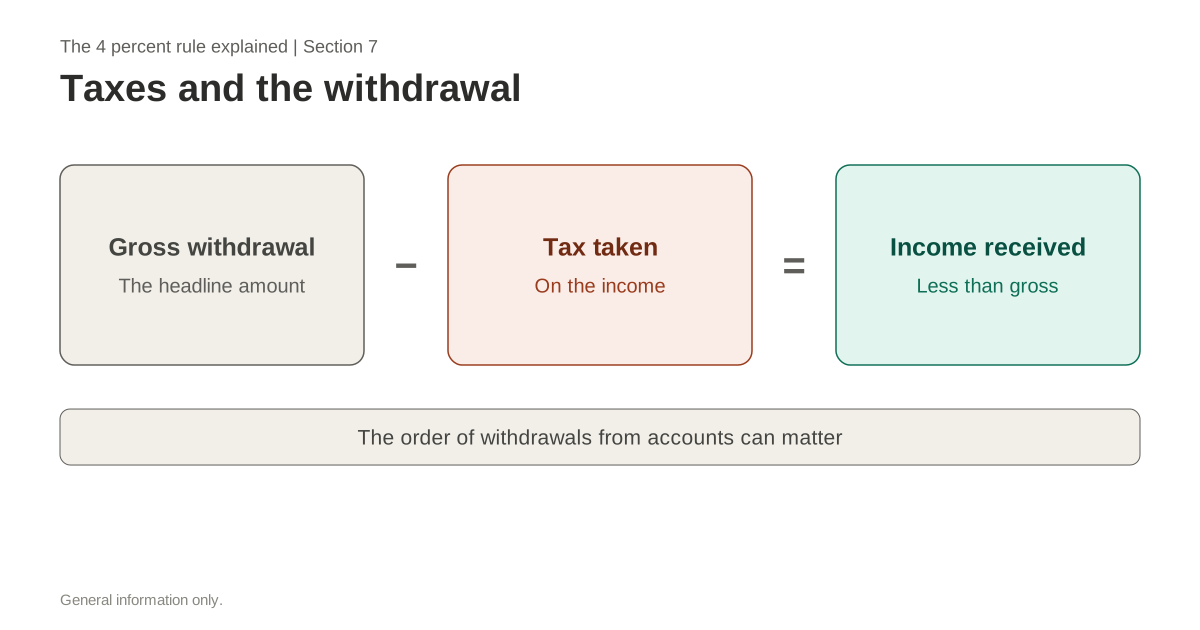
Withdrawals from many retirement accounts are taxed, which reduces the income you actually receive. A pot that supports a gross withdrawal of four per cent may provide less after tax. Include the tax treatment of your accounts in the calculation, and consider how withdrawals from different accounts are taxed, since the order can make a difference.
Using the rule as a conversation starter
The rule is useful for starting a conversation with a financial adviser, a partner or family members about retirement income. It gives everyone a common reference point. From there, the discussion can move to the details that matter for your situation, such as tax, health and the support you expect from other sources.
Variations of the rule
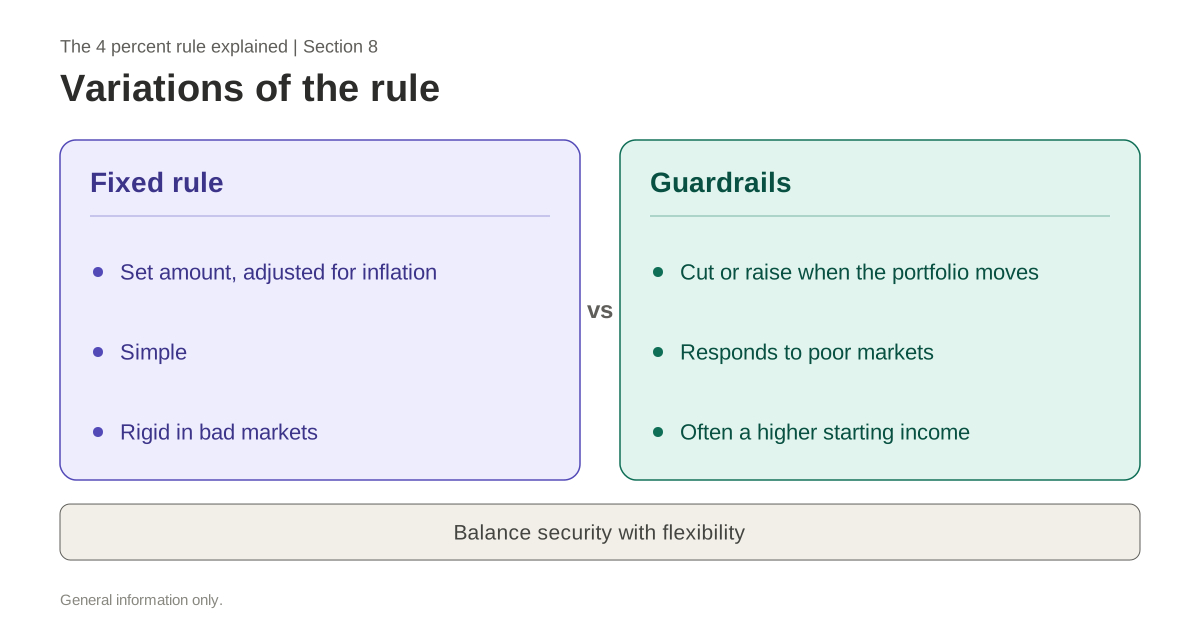
Researchers and planners have proposed variations, such as lower starting rates for longer retirements, or guardrails that increase or decrease withdrawals when the portfolio moves above or below set levels. These approaches aim to balance security with flexibility, and they often allow a higher starting income than a fixed rule while still responding to poor markets.
Checking the rule against your own numbers
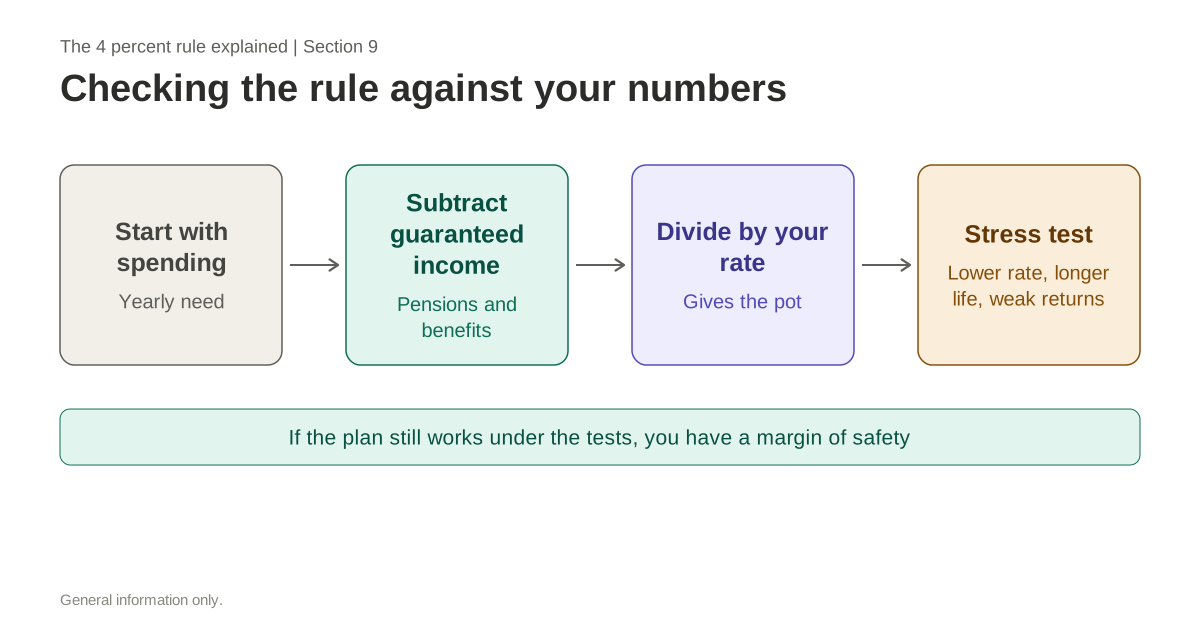
Start with your expected spending, subtract guaranteed income and divide the gap by your chosen rate. Then test a lower rate, a longer horizon and a period of weak returns. If your plan still works under those tests, you have a margin of safety. If it fails, the rate or the spending needs to change.
The bottom line
The 4 percent rule is a useful starting point for estimating how much you need to retire, and it highlights the importance of sequence risk and inflation. It rests on historical assumptions that may not hold, so treat it as one input among several. Test your plan against lower returns, longer lives and higher costs, and keep the flexibility to adjust as conditions change.
Frequently asked questions
Is the 4 percent rule guaranteed?
No. It is a guideline based on historical data and specific assumptions. Future returns, costs, taxes and retirement length can all produce different results.
What does sequence risk mean?
It is the danger that poor returns happen early in retirement, when you are withdrawing money. Selling during a fall to meet income needs can reduce the portfolio's ability to recover.
Should the withdrawal increase with inflation?
The original rule assumes it does, so the income keeps its real value. Many retirees adjust withdrawals more flexibly, reducing them after poor years and increasing them only when the plan allows.
Does the rule work outside the country where it was studied?
Not necessarily. Market histories, inflation and tax rules differ between countries. Test the rule against the returns and costs in your own situation before relying on it.