Many people believe they need a large sum before investing is worth the effort. In reality, the habit of investing regularly matters more than the size of the first deposit. Small amounts invested consistently can grow into a meaningful sum over time, and they give you experience of how markets behave without risking money you cannot afford to lose.
This article explains how to start with modest amounts, what to watch out for and how to build a simple routine. It is general information, not a recommendation of any particular product.
Begin with the basics
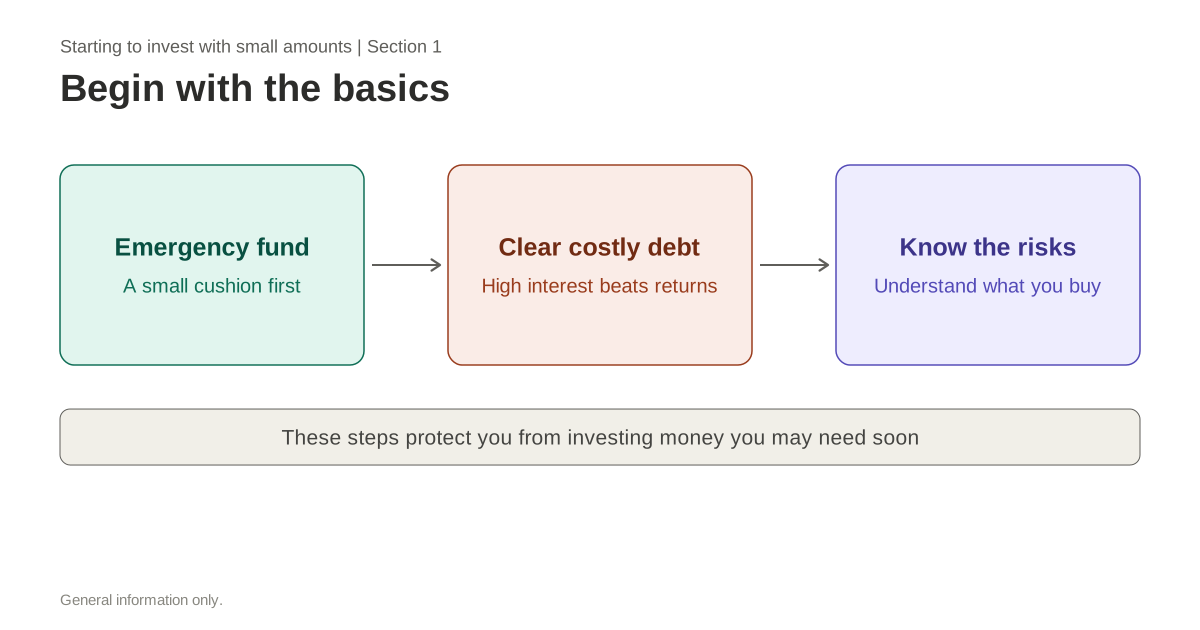
Before you invest, make sure your foundations are in place. Build a small emergency fund so that you do not have to sell investments for an unexpected bill. Pay off any high-interest debt, because the interest you pay on it is likely to exceed the return you can expect from investing. Understand what you are investing in, and what the risks are.
These steps are not a rigid rule, but they protect you from the most common mistake: investing money you may need soon, at a time when prices are low.
Choose a low-cost way in
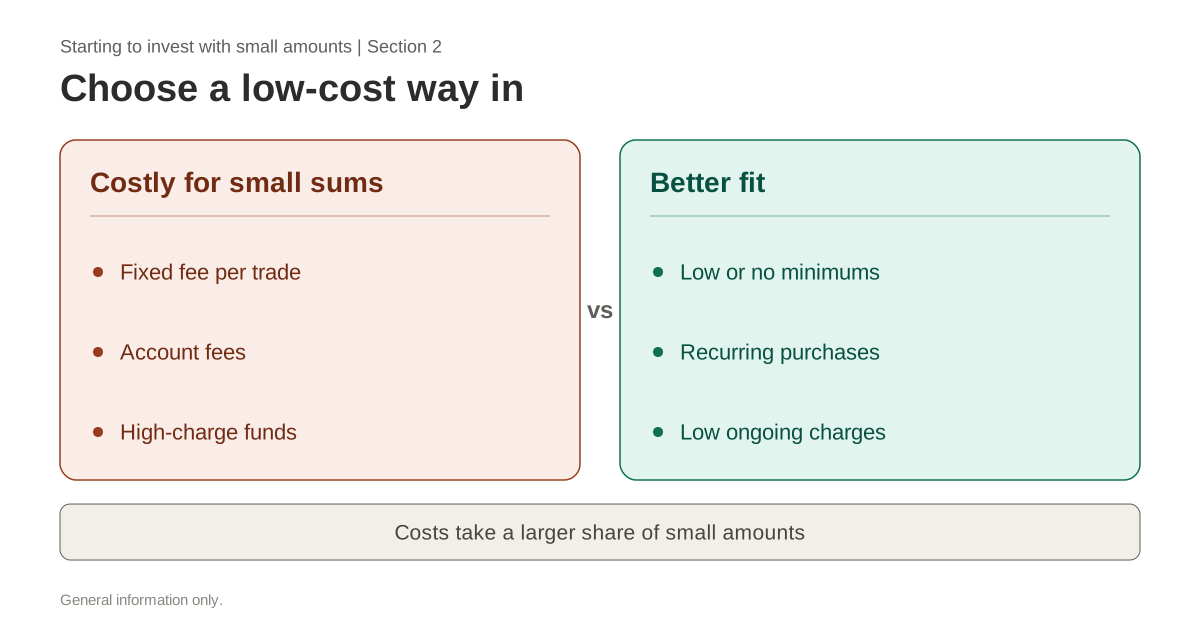
With small amounts, costs take a larger share of your money. A fixed charge per trade or an account fee can absorb a significant part of a small investment. Look for a platform that charges little for small, regular purchases, and check whether it offers funds with low ongoing charges.
Some platforms allow you to invest small sums into funds without a minimum, or to set up a recurring purchase of a fixed amount. Check the minimum investment and the frequency of dealing charges before you choose.
Keep it simple
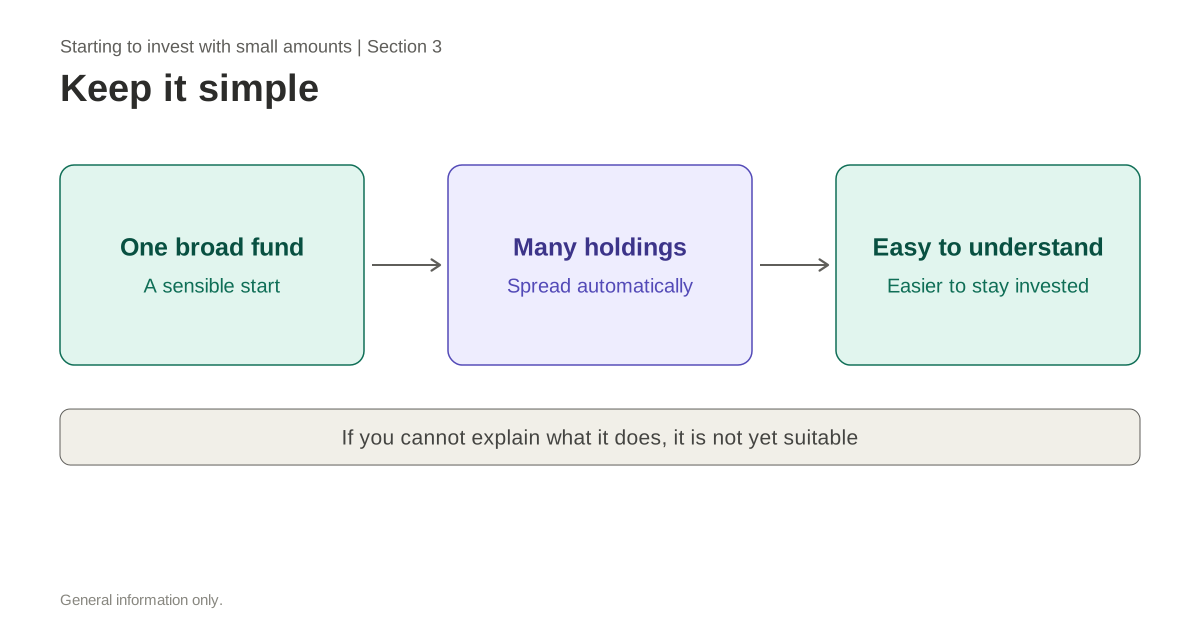
For a beginner, a single broad, diversified fund can be a sensible starting point. It spreads your money across many companies or bonds, so you are not depending on a single investment. Simplicity makes it easier to understand what you own and to stay invested through changes in the market.
Avoid chasing products that promise quick returns, or that seem complicated to explain. If you cannot describe what an investment does and what could go wrong, it is not yet suitable for you.
Set up a regular habit
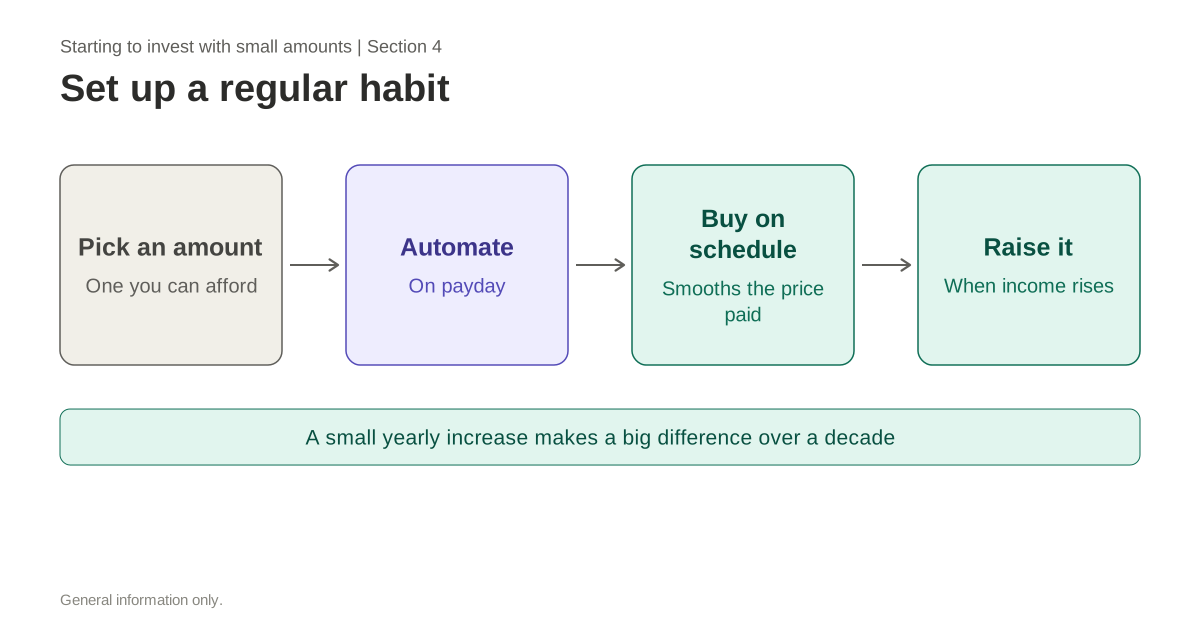
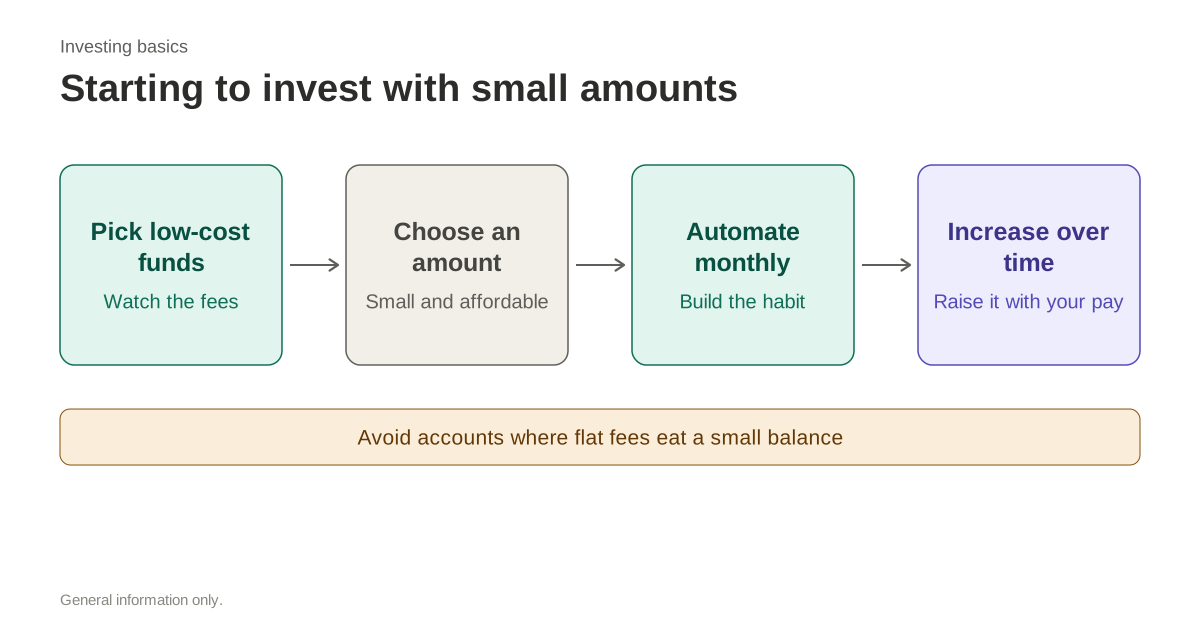
The most useful thing you can do is to invest on a schedule. Choose an amount you can afford each month, and set up an automatic transfer on the day you are paid. Investing regularly spreads your purchases over time, which smooths the price you pay, and it turns investing into a routine rather than a decision you must keep making.
Increase the amount when your income rises. A small increase each year can make a large difference over a decade.
Understand what can go wrong
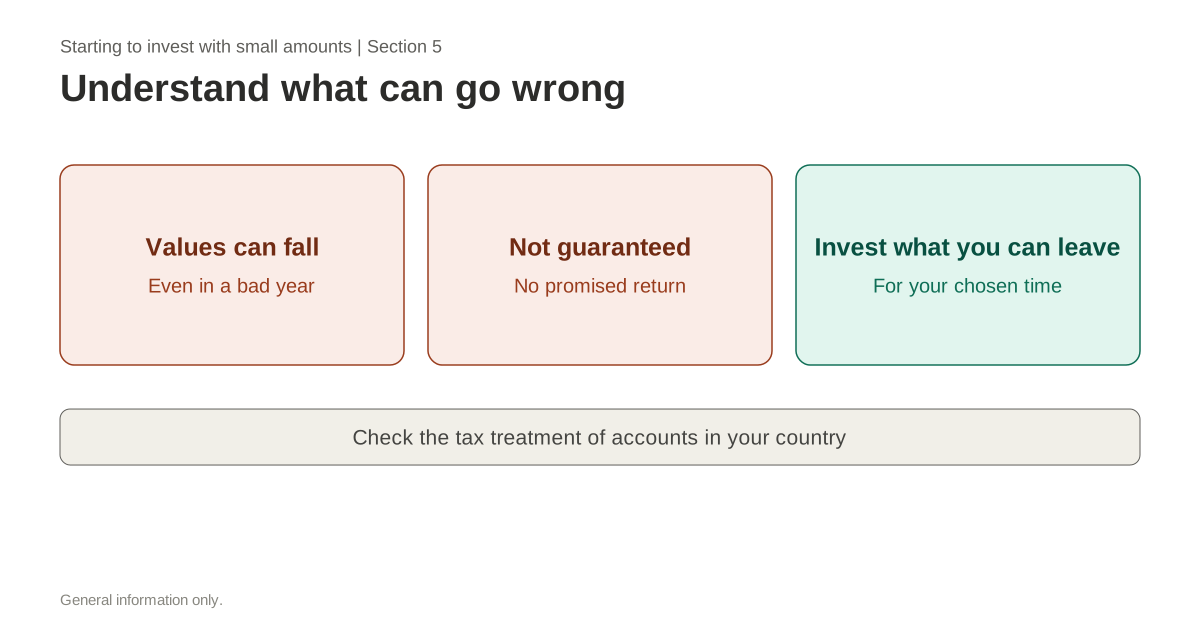
Investments can fall as well as rise. You may see your balance drop in a bad year, and that can be uncomfortable when the sums are small. Remember that the money you invest is not guaranteed, and you should only invest what you can leave untouched for the time you have chosen.
Check the tax treatment in your country, because some accounts offer advantages that can make a real difference to small, regular savings.
Track progress without obsessing
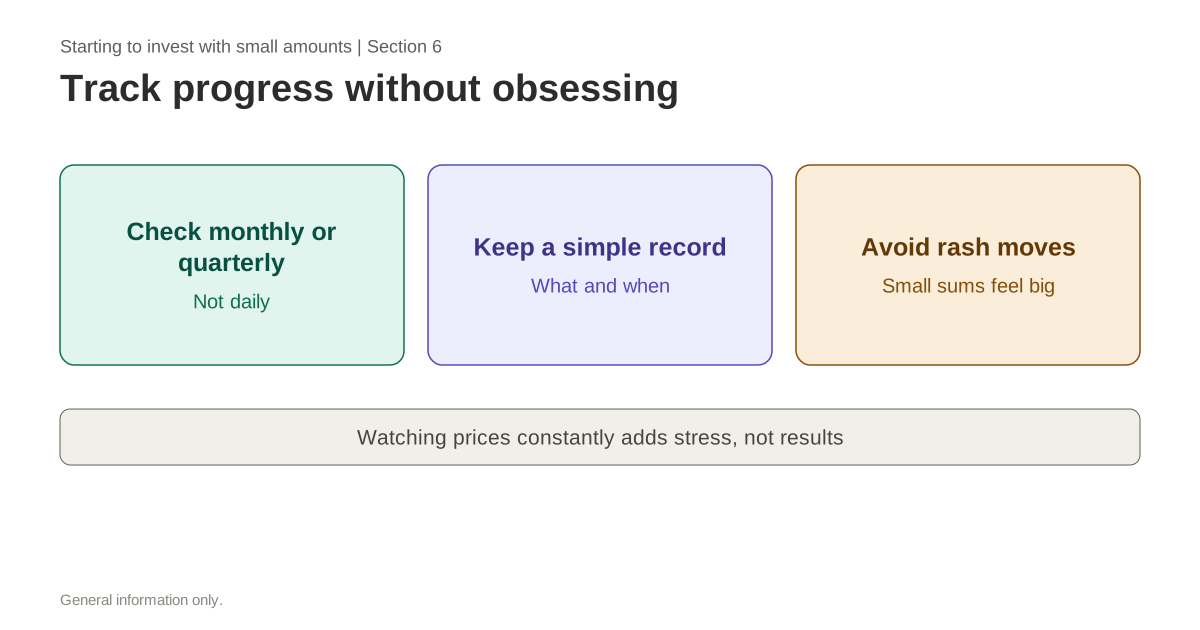
Review your investments once a month or once a quarter, not every day. Check that your contributions are going in as planned, that the charges are as expected and that the mix still matches your goal. Watching prices constantly can lead to rash decisions, particularly when the amounts are small and the movements feel large.
Keep a simple record of what you invest and when. Seeing the total grow, even slowly, can be a strong motivator.
Avoid common mistakes
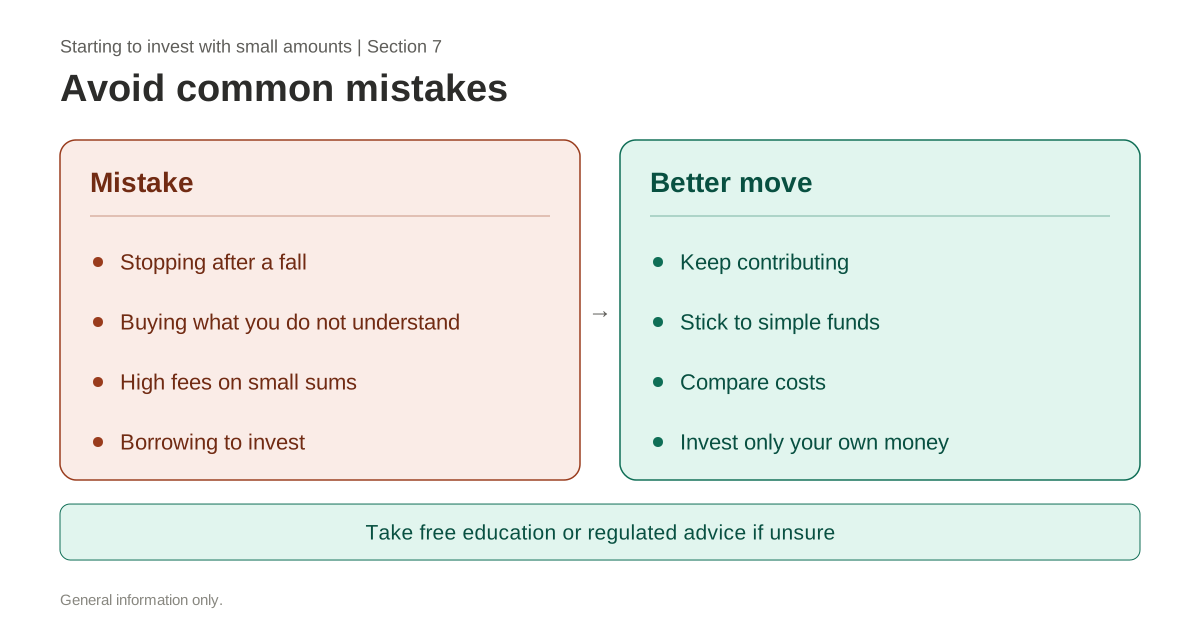
Common mistakes include stopping contributions after a fall, buying products you do not understand, paying high fees for small amounts and borrowing to invest. Each of these can undo the progress you have made. Another mistake is to keep too much in cash for too long, which can lose value to inflation.
If you are unsure, take free education from reputable sources, or seek advice from a qualified and regulated adviser.
Building a financial habit around investing
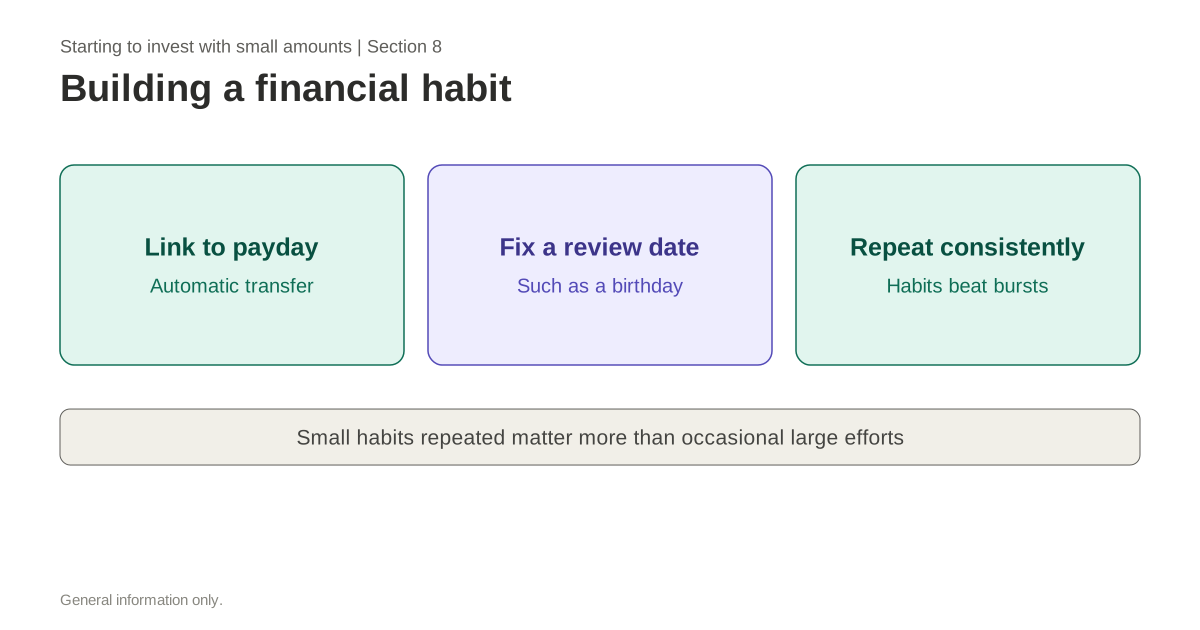
Investing becomes easier when it is connected to other routines. Linking a monthly transfer to a pay day, or a yearly review to a fixed date such as a birthday, keeps the activity regular without relying on memory. Small habits repeated consistently usually matter more than occasional large efforts.
When to increase the amount
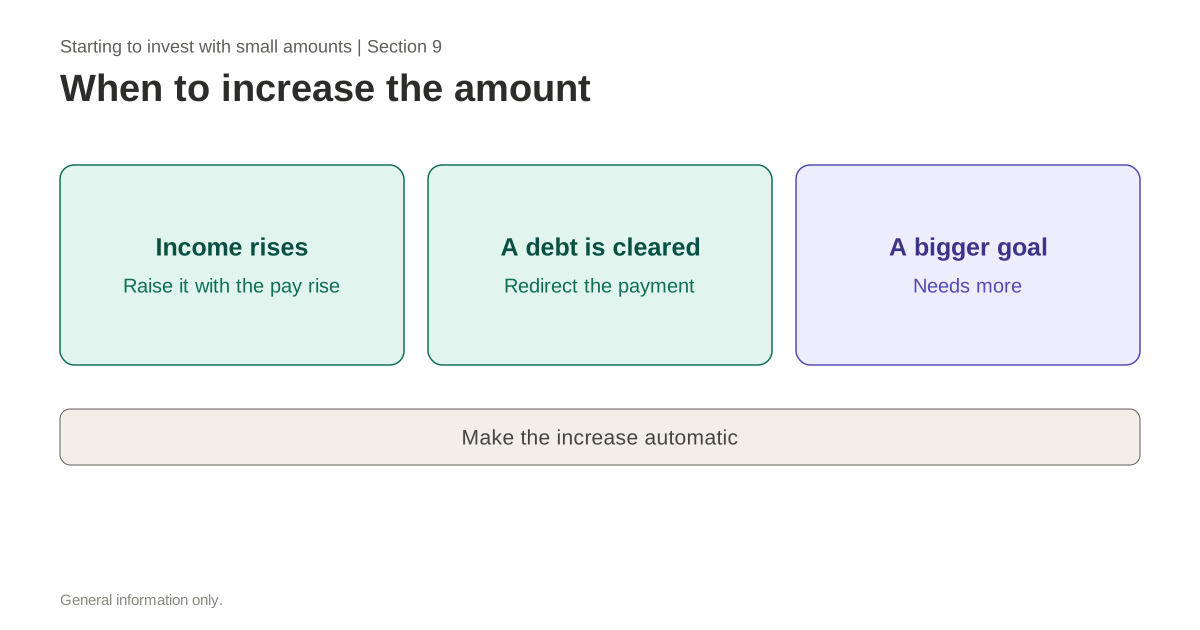
Increase your regular investment when your income rises, when a debt is cleared, or when a larger goal becomes a priority. Making the increase automatic, at the same time as a pay rise, avoids the feeling of giving up money you were already used to spending.
Starting is the hardest step
The first investment often feels the most uncertain. Once it is made, the next purchase is easier, and the routine becomes familiar. Measure your progress by the habit you are building as well as the amount in the account, because the habit is what lasts.
Using a long time horizon
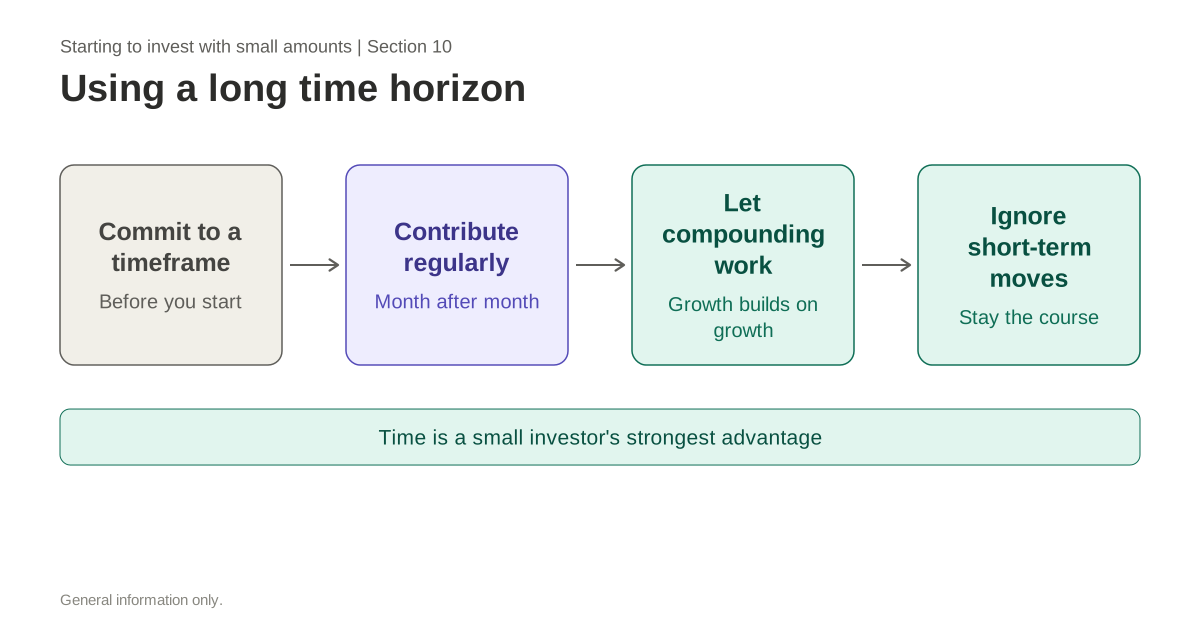
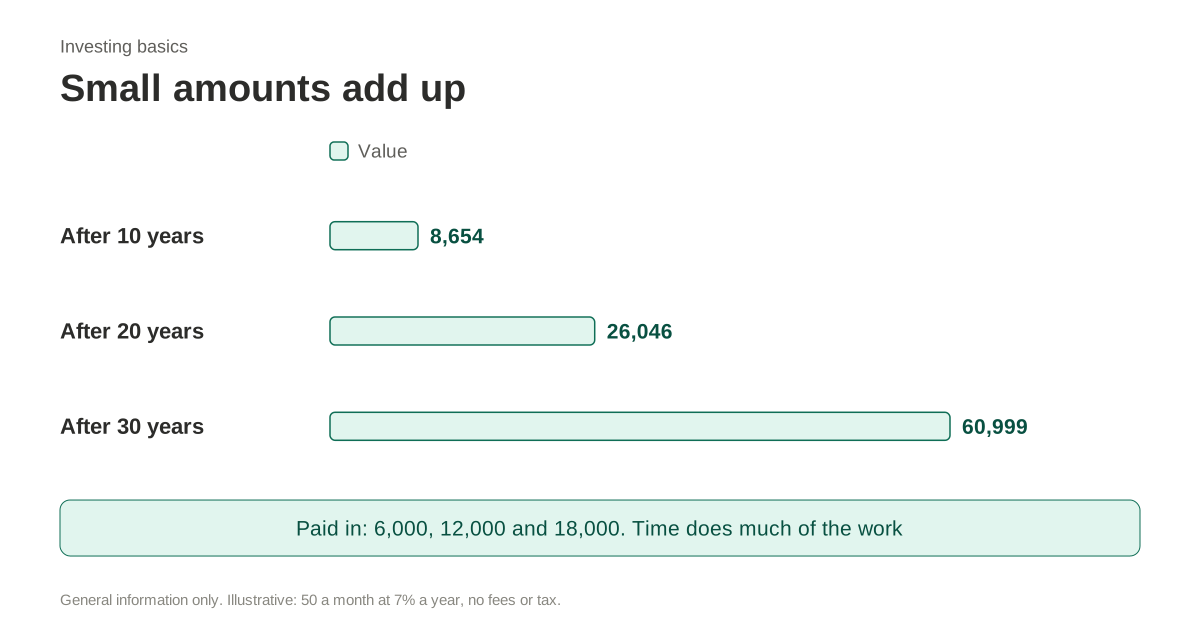
A long time horizon is one of the strongest advantages a small investor has. Over many years, regular contributions and compound growth can produce results that look disproportionate to the amounts invested at the start. The key is to commit to a time frame before you begin, so that short-term movements do not push you into selling.
Avoiding the temptation to over-trade
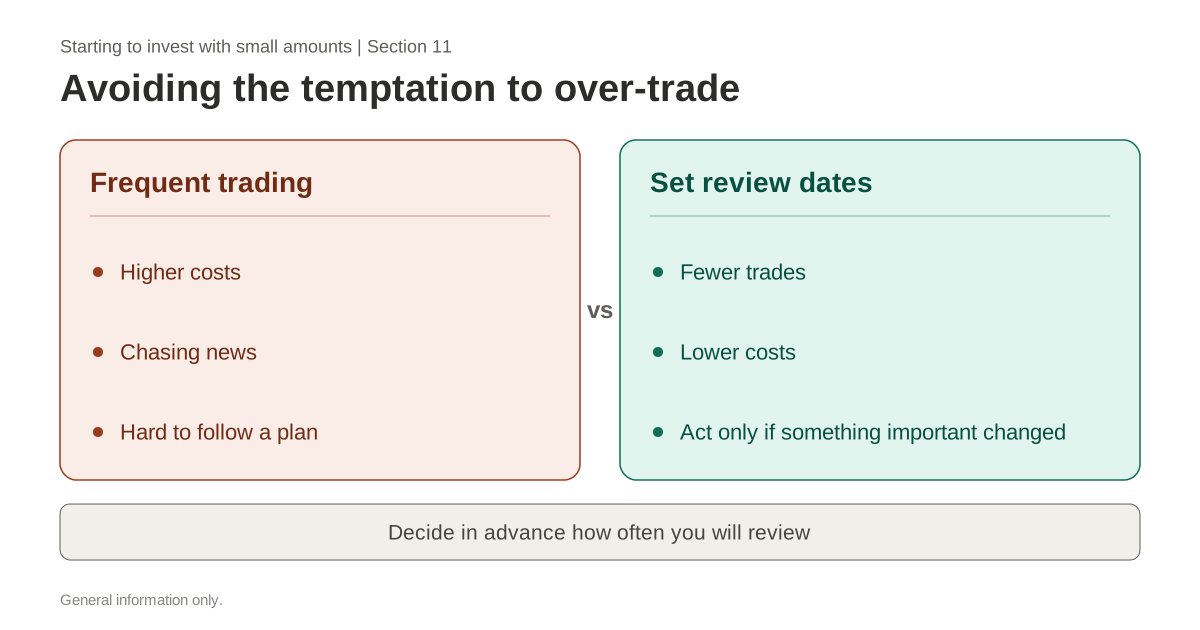
Small investors sometimes trade frequently, chasing news or short-term movements. Frequent trading increases costs and makes it harder to stick to a plan. Decide in advance how often you will review your holdings, and resist the urge to act between reviews unless something important has changed.
Starting is the hardest step
The first investment often feels the most uncertain. Once it is made, the next purchase is easier, and the routine becomes familiar. Measure your progress by the habit you are building as well as the amount in the account, because the habit is what lasts.
The bottom line
You do not need a large sum to start investing. Build your foundations, choose a low-cost, simple, diversified option, invest regularly and review your progress calmly. Over time, consistent small contributions can become a meaningful part of your financial future.
Frequently asked questions
What is the minimum I need to start investing?
It depends on the platform and the product. Some funds and platforms allow very small amounts. Check the minimum and the dealing costs, because charges can be large relative to a small investment.
Should I invest or pay off my debt first?
If the debt has a high interest rate, paying it off usually comes first. Low-interest debt may be less of a priority, depending on your situation and your goals.
How often should I invest small amounts?
Monthly is common because it matches most incomes. The best frequency depends on your budget and on the trading costs, since frequent small purchases can be expensive on some platforms.
What if I lose money at the start?
Losses are possible, especially in the short term. Investing only money you do not need soon, and keeping a long time horizon, gives your investments time to recover from falls.