Retirement savings are money set aside to support you when you stop earning a regular income. Because retirement can last decades, the earlier you start and the more consistently you save, the more time your money has to grow. The rules, schemes and tax benefits differ widely by country, but the principles are the same almost everywhere.
This article introduces the main ideas behind retirement saving, the types of account you may meet and the first steps to take. It is general information, and you should check the rules that apply where you live.
Why start early
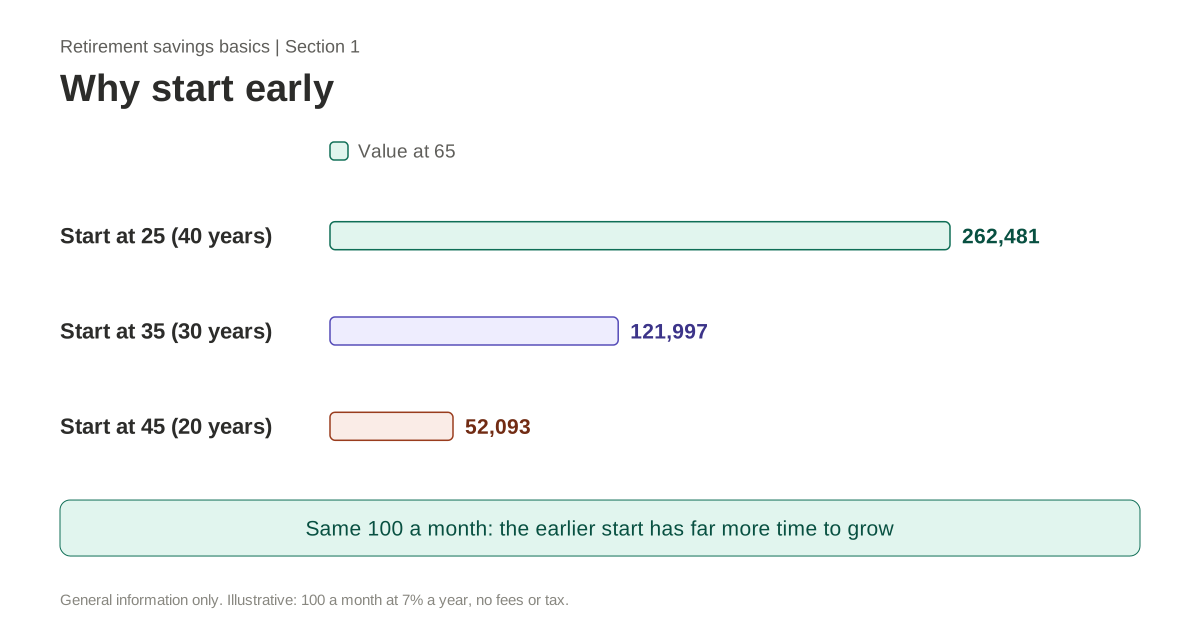
Compound growth rewards time. Money saved in your twenties has decades to grow, while money saved in your fifties has far less time. Starting early can therefore matter more than saving a large amount later. Even small regular contributions, started early, can build a meaningful sum by retirement.
The trade-off is that early saving competes with other goals, such as education, a home or an emergency fund. A balanced plan usually sets an emergency fund first, then a regular retirement contribution.
How much you will need
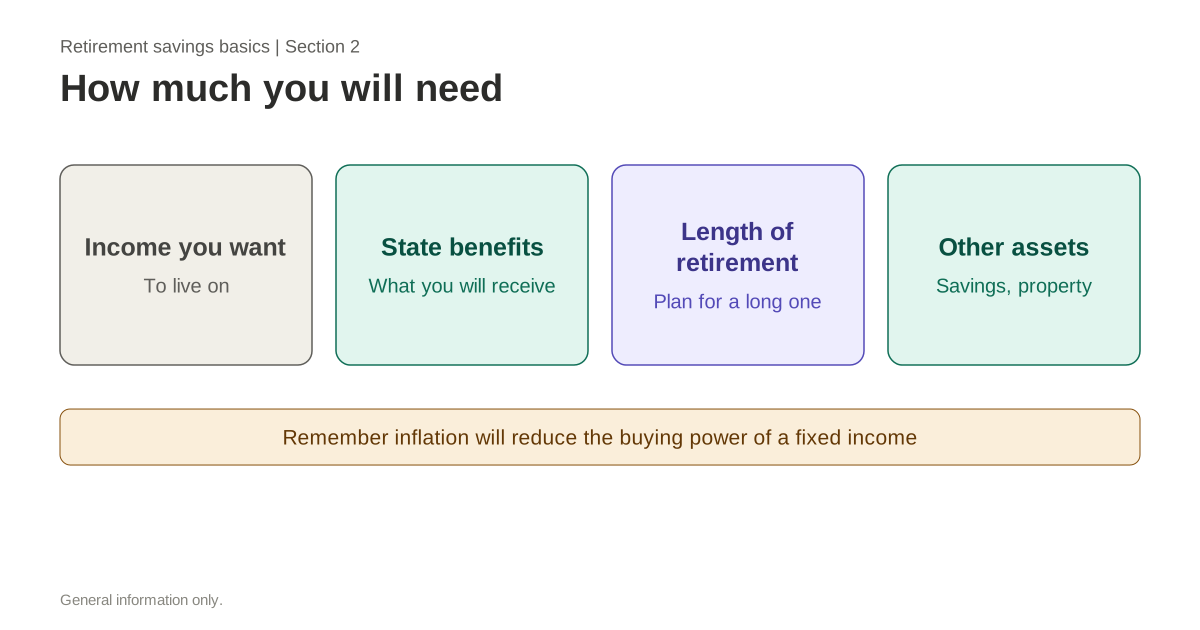
The amount you need depends on the income you expect to live on, the state or public benefits you will receive, your expected length of retirement, and your other assets. Many people plan to replace a share of their pre-retirement income, but the right figure depends on how you expect to live. Our pension calculator gives a rough estimate using your own inputs.
Plan for a long retirement, because living longer is one of the largest risks to a savings plan. Consider also the effect of inflation, which will reduce the buying power of a fixed income over time.
Types of retirement account
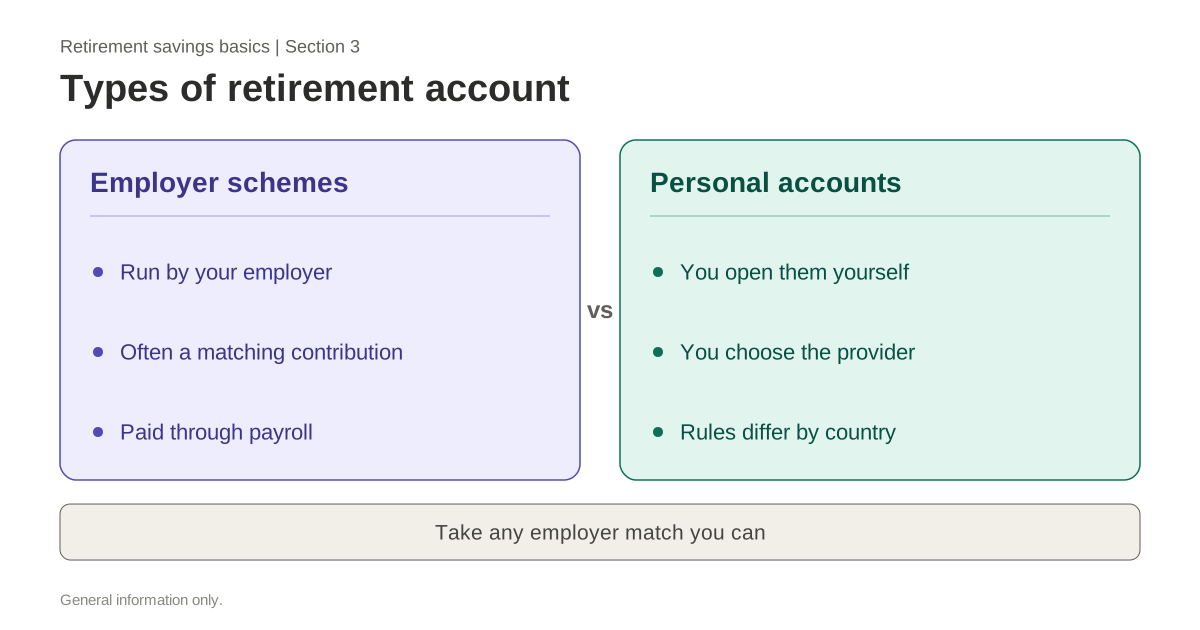
Many countries offer special accounts that encourage retirement saving, often with tax advantages. They may allow contributions to grow free of tax, or they may give tax relief on the money paid in. Some schemes are run by employers, and others are personal accounts that you open yourself. Rules on withdrawals, age limits and contribution caps differ widely.
Employer schemes often include matching contributions, which can be a valuable benefit. Check whether your employer offers a match, and make sure you contribute enough to receive the full amount.
Investment choices
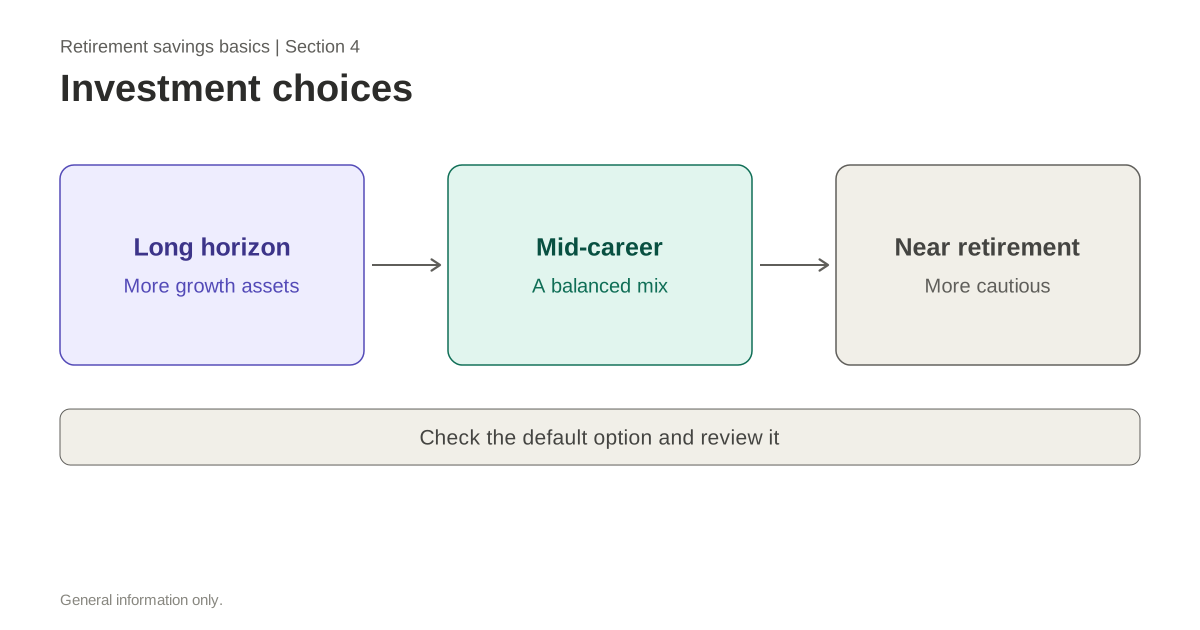
Retirement accounts usually hold investments, such as funds or shares. The asset mix should reflect your time horizon and your tolerance for volatility. For a long horizon, a larger share of growth assets is common, becoming more cautious as retirement approaches. Diversified, low-cost funds are often used, because costs compound against you over decades.
Check the default investment option if your scheme provides one. Defaults are designed to be reasonable, but they may not match your circumstances, so review them.
Fees and charges
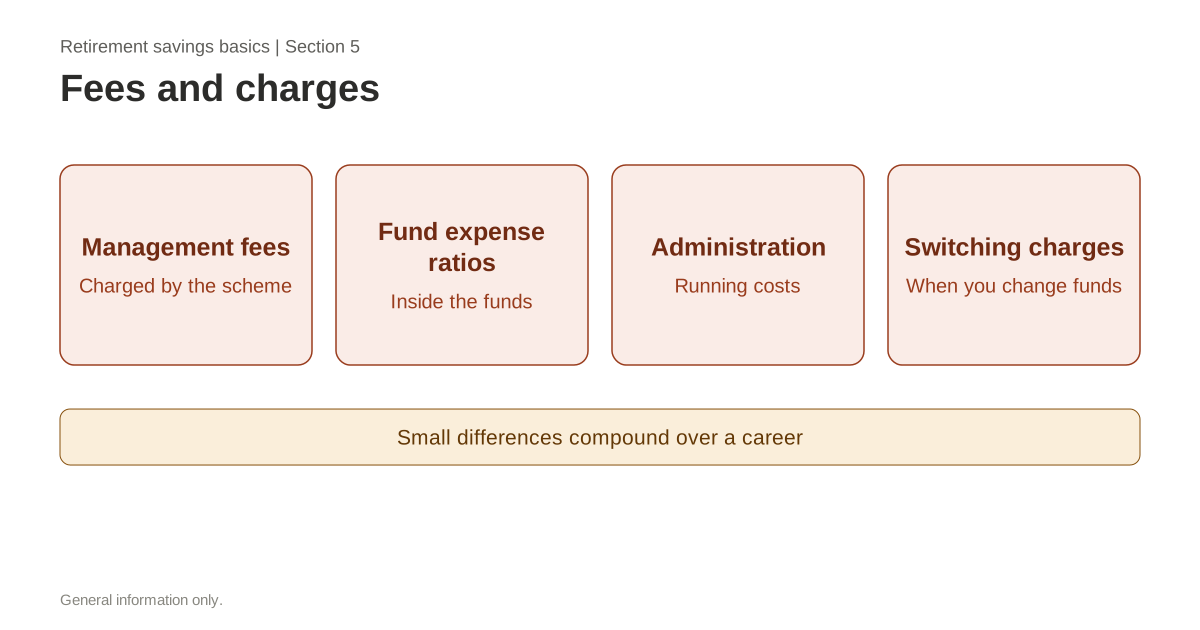
Retirement accounts can carry several charges, including management fees, fund expense ratios, administration costs and sometimes switching charges. Over a long career, a small difference in charges can produce a large difference in the final pot. Compare the total cost when you choose or review a scheme.
Ask for a clear statement of charges each year. If something is unclear, ask the provider to explain it in writing.
Withdrawals and tax
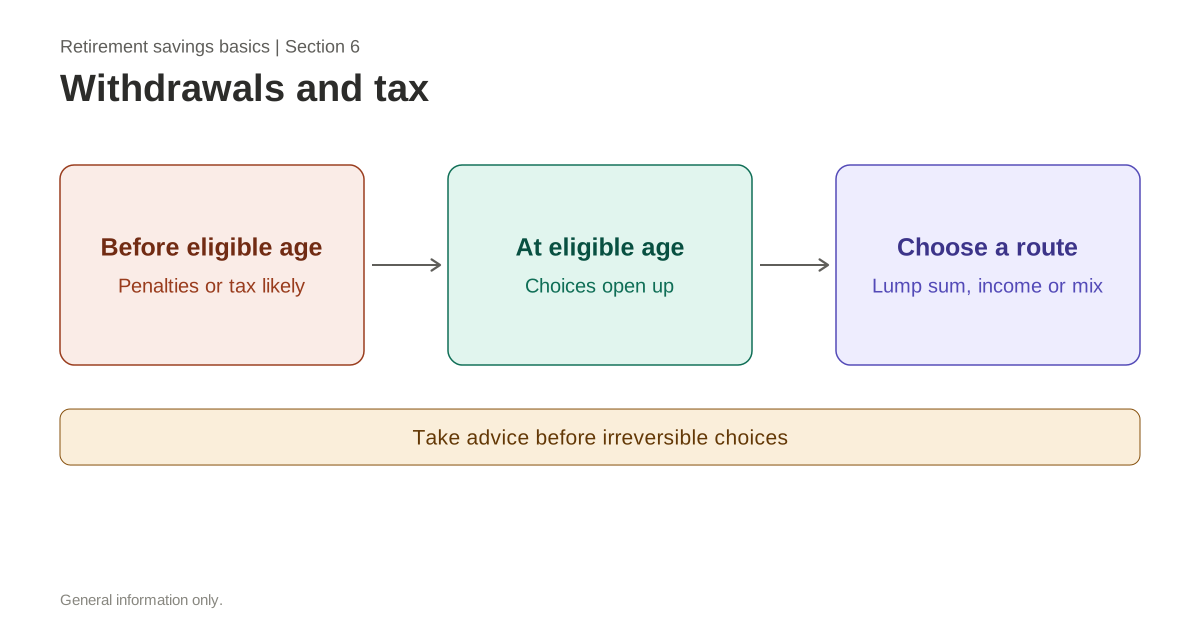
Retirement accounts usually have rules about when and how you can take money out. Withdrawing early may trigger penalties or tax. Once you reach the eligible age, you may have choices about taking a lump sum, a regular income or a combination. Each option has tax and longevity implications, so take advice before deciding.
Some countries tax withdrawals as income, while others tax them differently. Check the rules for your situation.
Keep track
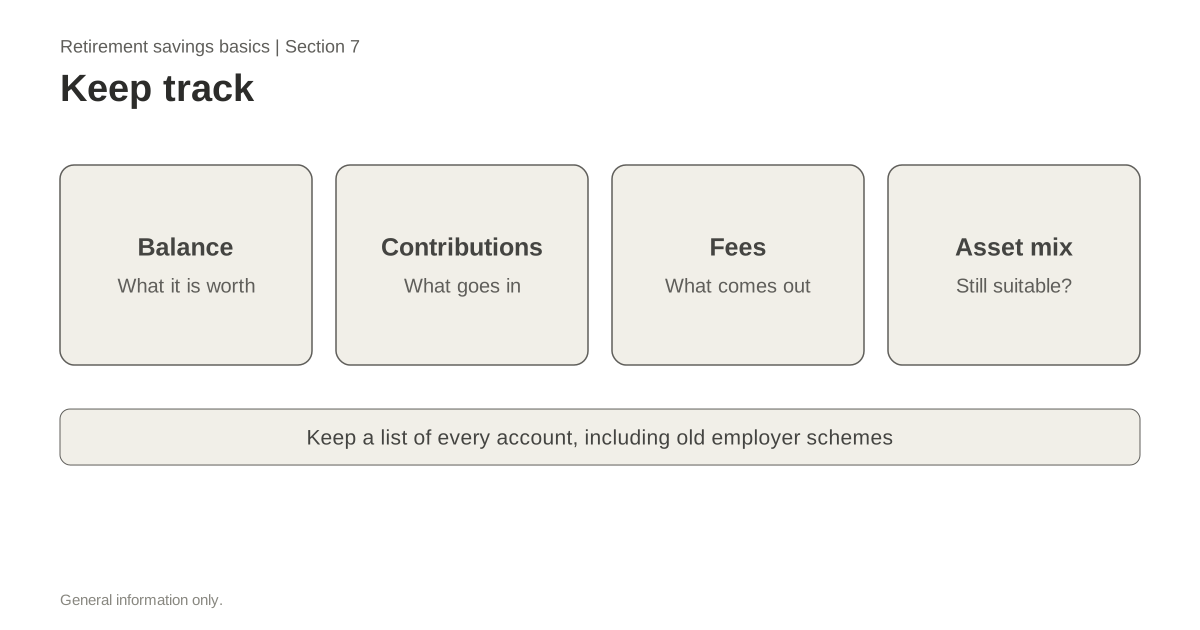
Review your retirement savings at least once a year. Check the balance, the contributions, the fees and the asset mix. Update your estimate of the income you will need, because costs and goals change. Keep records of every account, including old employer schemes, which are easy to lose track of when you change jobs.
First steps
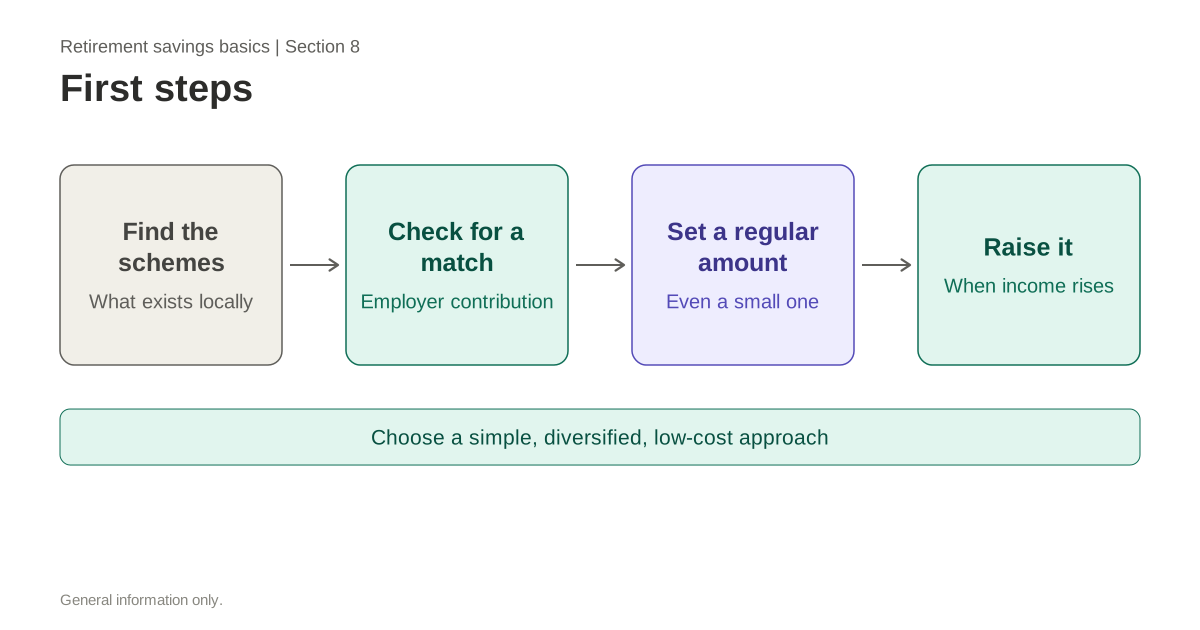
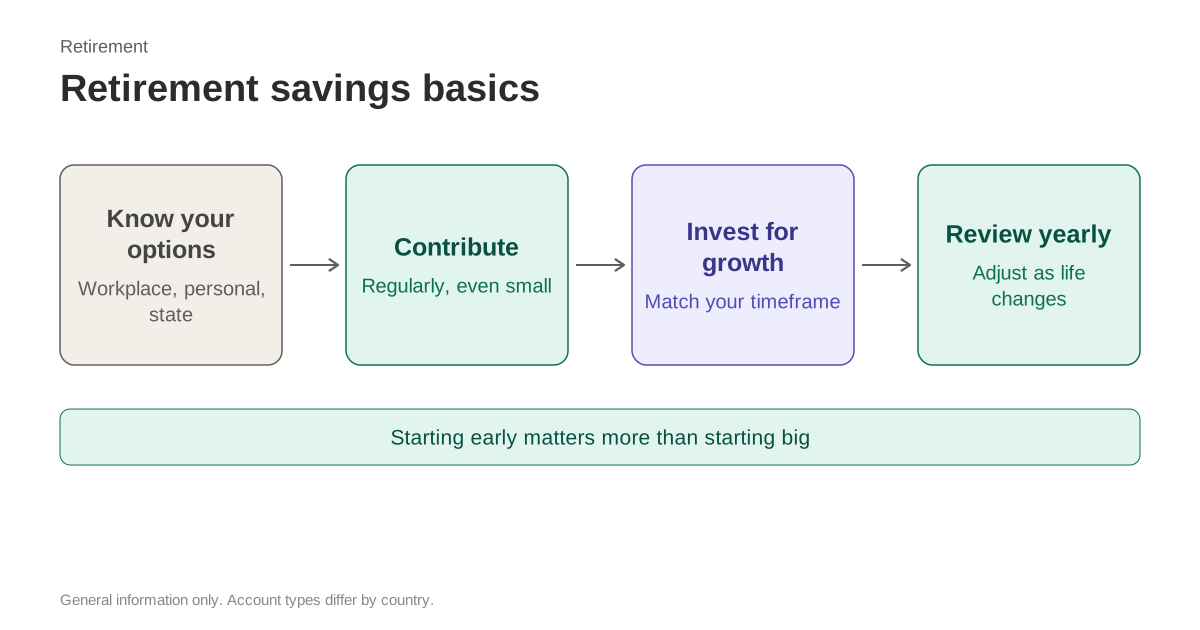
Start by finding out what retirement accounts and schemes exist where you live. Check whether your employer offers a contribution match. Set a regular amount you can keep up, even if it is small, and increase it when your income rises. Choose a simple, diversified, low-cost approach, and write down your plan.
Inflation and the retirement budget
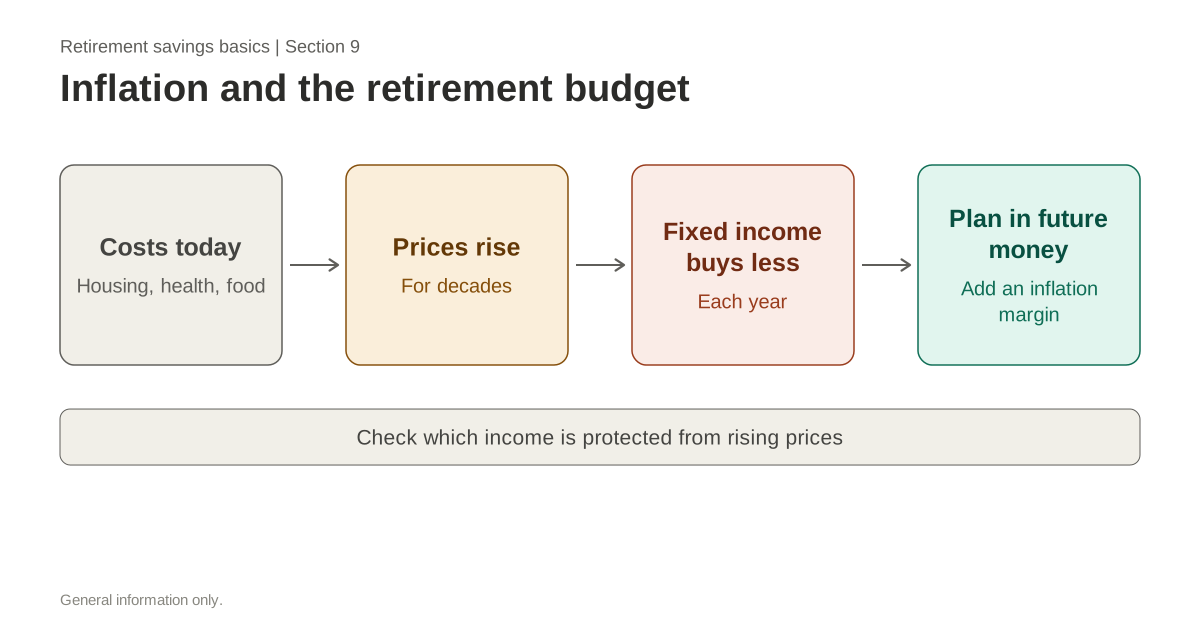
A retirement budget should be planned in future money. Costs for housing, healthcare and food will rise over decades, and a fixed pension or savings withdrawal will buy less each year. Build an inflation assumption into your projections, and consider how much of your income is protected from rising prices, such as indexed pensions.
Keeping retirement on track
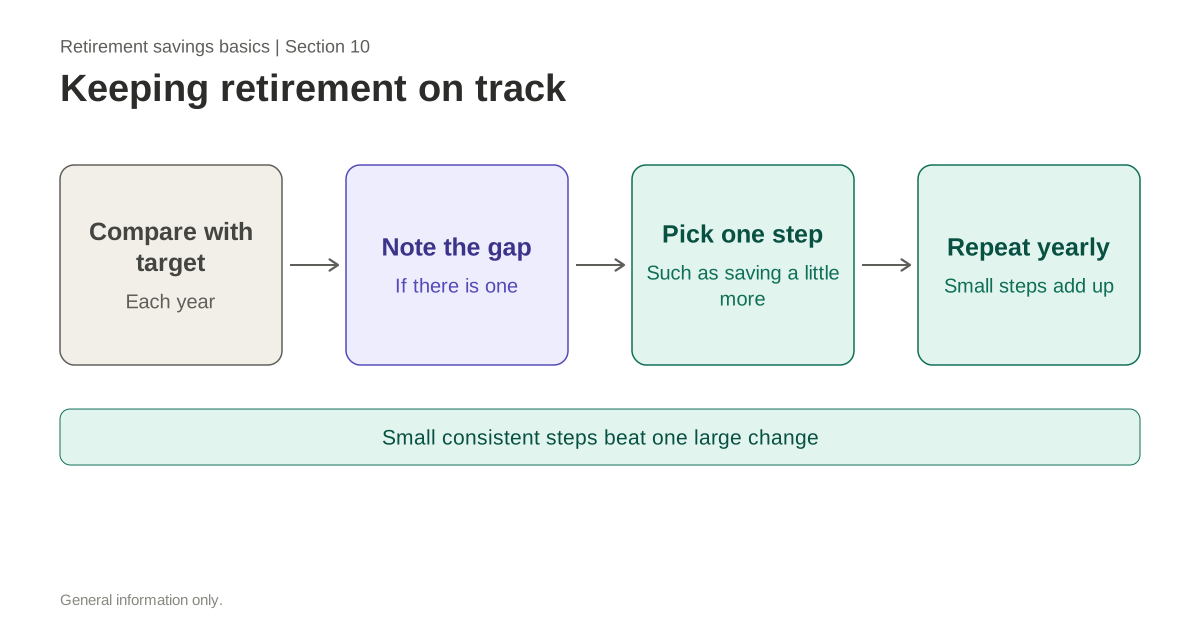
Retirement planning is easier when you check progress against a clear target at regular intervals. Each year, compare your savings with the figure you need, note any gap and decide on one specific step, such as a small increase in contributions. Small steps taken consistently usually close gaps more reliably than one large change.
Retirement income sources
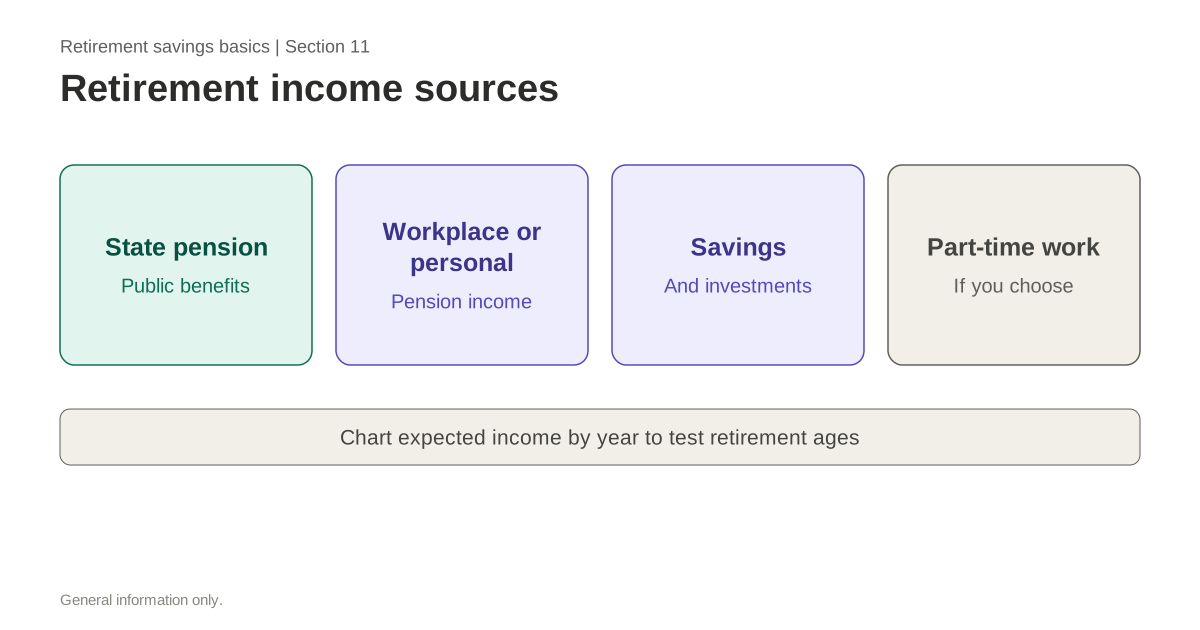
Retirement income often comes from several sources: a state or public pension, a workplace or personal pension, savings and investments, and sometimes earnings from part-time work. Knowing what each source will provide, and when it starts, helps you see the gap that your own savings must fill. Create a simple table of expected income by year, so you can test different retirement ages.
Protecting retirement savings
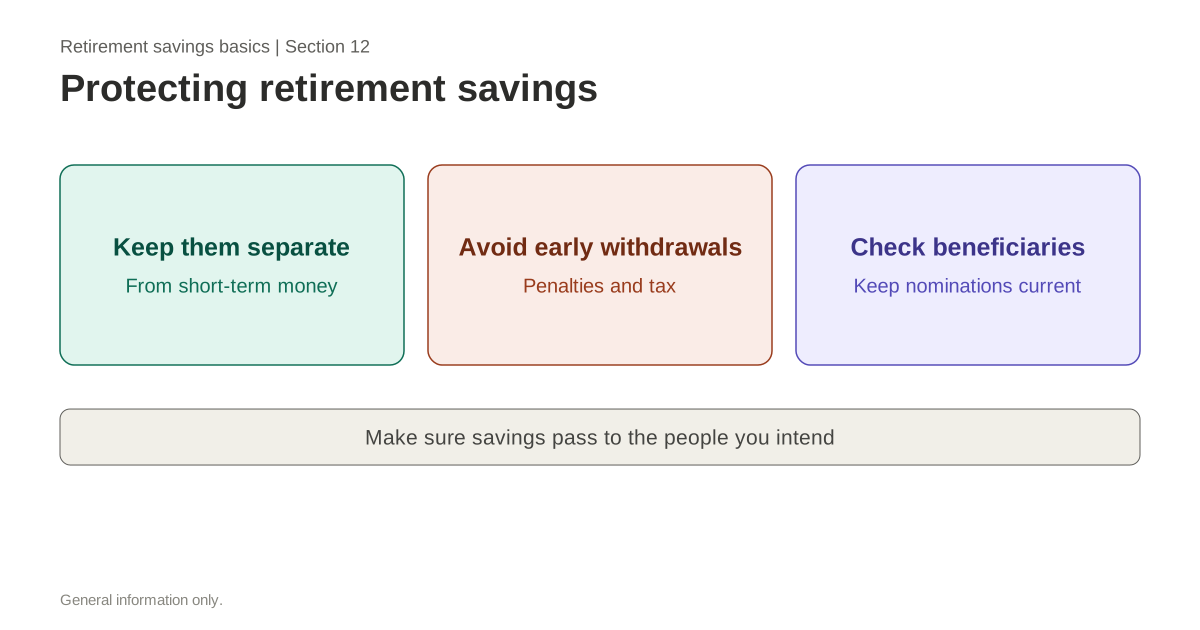
Keep retirement savings separate from short-term money, so that you are not tempted to spend them. Avoid early withdrawals unless you have no alternative, because penalties and tax can take a large share. Review the beneficiary nominations on your accounts, so that your savings pass to the people you intend.
The bottom line
Retirement saving is a long project that benefits from starting early, keeping costs low and staying consistent. Learn the accounts available where you live, take any employer match, invest in a way that suits your time horizon, and review the plan each year. The best time to start was earlier, but the next best time is now.
Frequently asked questions
How early should I start saving for retirement?
As early as you can. Compound growth gives early savings the most time to grow, so even small regular contributions can matter a great deal over decades.
What if my employer offers a contribution match?
Check the match and contribute enough to receive the full amount if you can. A match is effectively extra money added to your savings, which makes it one of the most valuable benefits to use.
Should I pay off debt or save for retirement first?
It depends on the interest rates and whether you have an emergency fund. High-interest debt is often a priority, but an employer match is usually worth capturing even while you repay debt.
How much should I save each month?
There is no single answer. Estimate the income you will need, the benefits you will receive and the years you have to save, then use a pension calculator to see what contribution would reach your target.