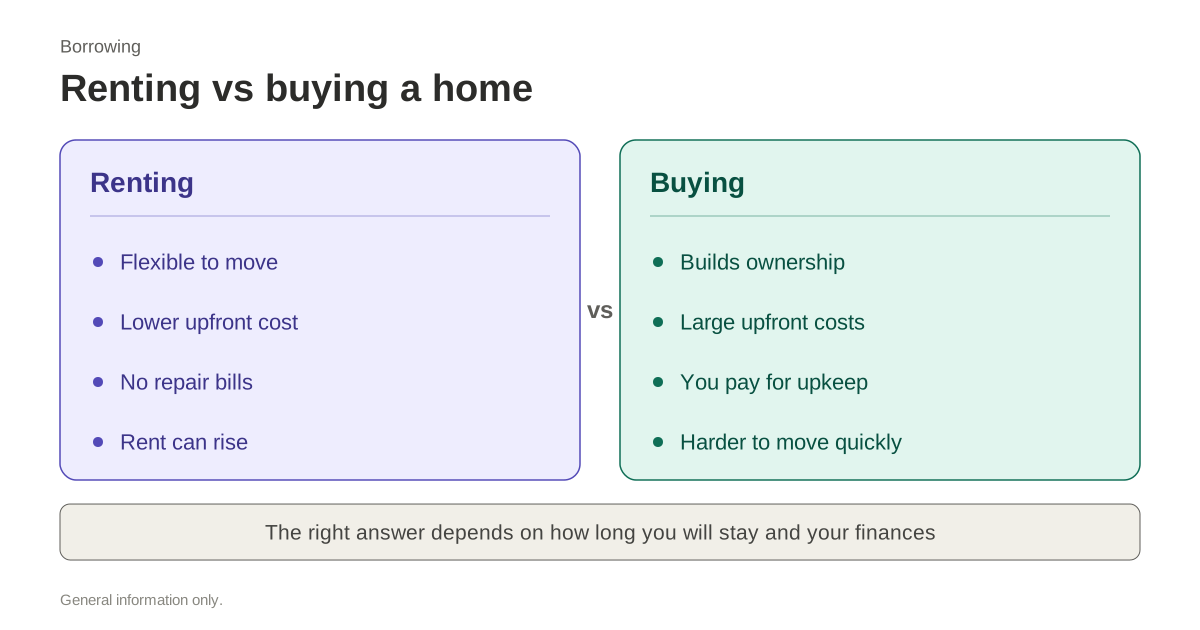
Whether to rent or buy a home is one of the biggest financial decisions most people make. It affects your monthly budget, your savings, your flexibility to move and, for many, your long-term wealth. There is no universal answer. Buying is not always better than renting, and renting is not always wasted money. The right choice depends on your finances, your plans and the market where you live.
This article sets out the main factors to weigh, so you can compare the two options on the same basis and make a decision that fits your life.
What renting costs
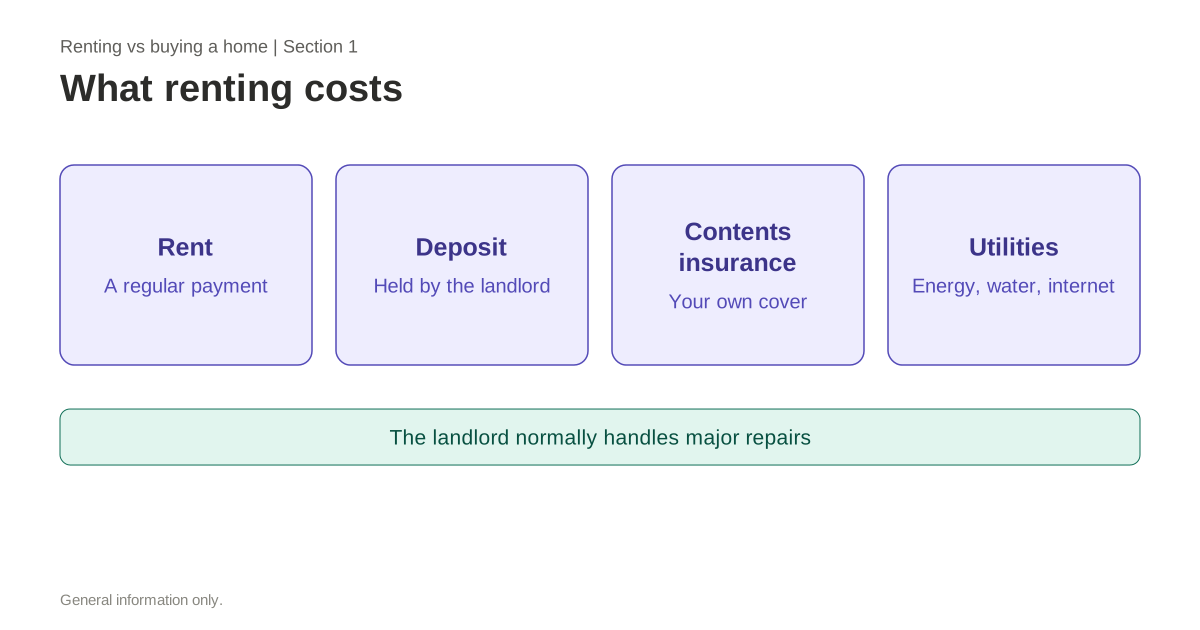
Renting is a regular payment for the right to live in a home. The rent is usually fixed for a lease period, then reviewed. Landlords may also require a deposit, and renters pay for their own contents insurance and utilities. The advantage is that the landlord normally handles major repairs and maintenance, and the costs are predictable over the lease.
The main drawback is that you do not build equity. The rent you pay does not reduce any debt or add to an asset you own. Rents can also rise over time, and a landlord may decide not to renew your lease.
What buying costs
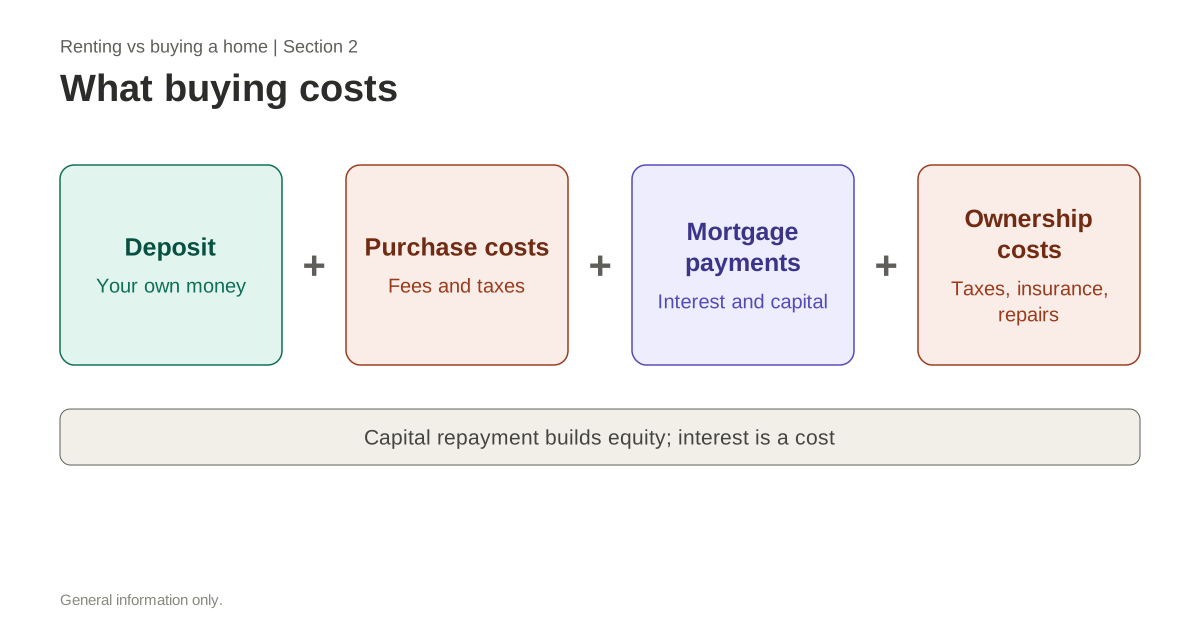
Buying involves a deposit, the costs of purchase, a mortgage payment and the ongoing costs of owning, such as property taxes, insurance and repairs. The mortgage payment includes interest, which is a cost, and capital repayment, which builds equity. Over time, if the property holds or increases in value, you can build wealth.
Buying also gives stability. You can decorate and change the home as you wish, and you are not dependent on a landlord's decision to renew. The drawbacks are the large upfront costs, the illiquidity of property and the risk that prices fall.
Compare the monthly cost
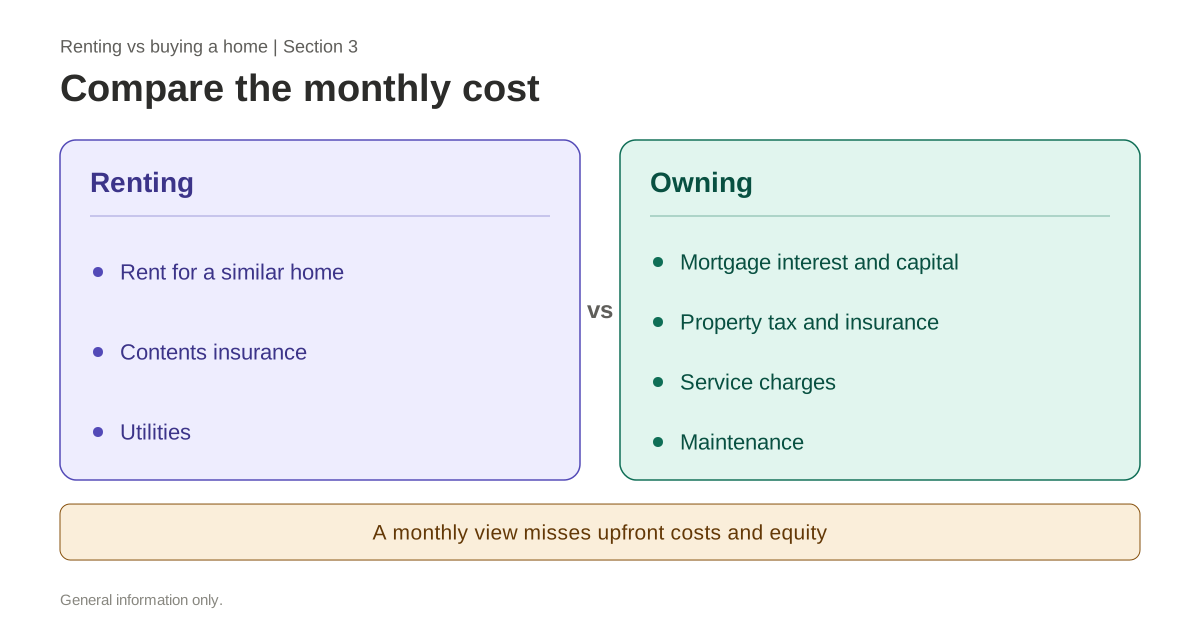
A simple comparison is to set the monthly cost of renting a similar home against the monthly cost of owning, including mortgage interest, taxes, insurance, service charges and maintenance. Owning often looks more expensive on a monthly basis at the start, because the mortgage interest is high and the costs of ownership are included.
The monthly comparison is useful but incomplete. It leaves out the upfront costs of buying, the opportunity cost of the deposit and the value of the equity you build. It also assumes the rent and the house price move in certain ways.
Think about the deposit
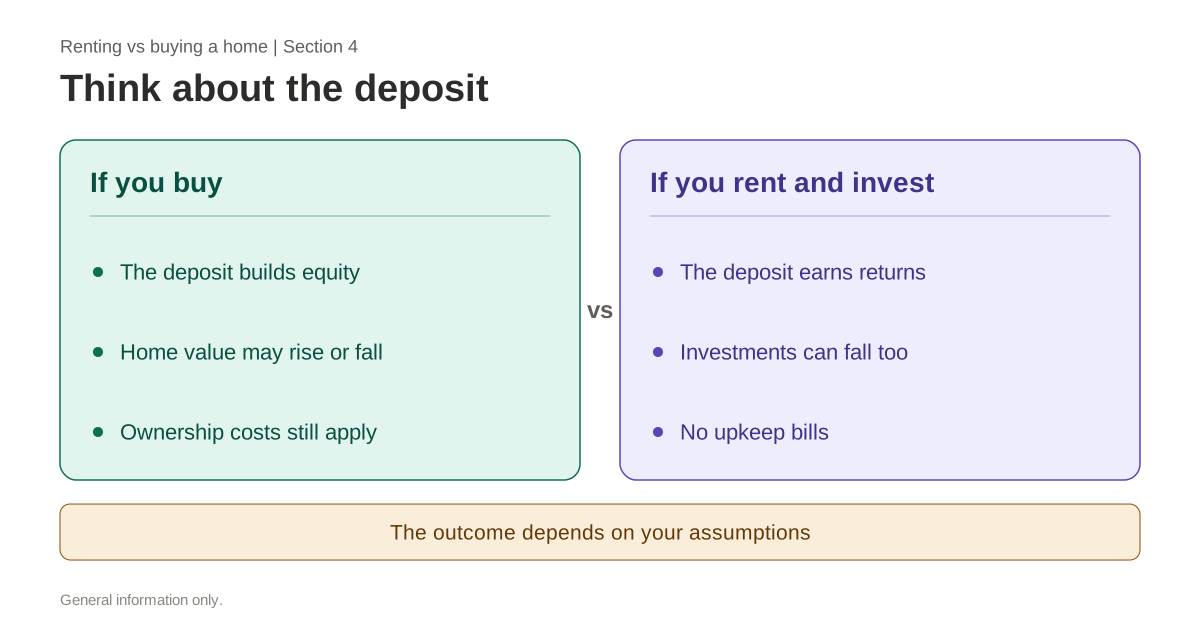
The deposit for buying can be a large sum. If that money could otherwise be invested, the return you give up is a real cost of buying. Compare the expected return on your savings with the expected change in the value of the home, after allowing for all the costs of owning it.
Renters who save the difference between renting and buying can build a substantial pot over time. Whether this beats owning depends on the assumptions you make about returns and house prices.
Flexibility and life plans
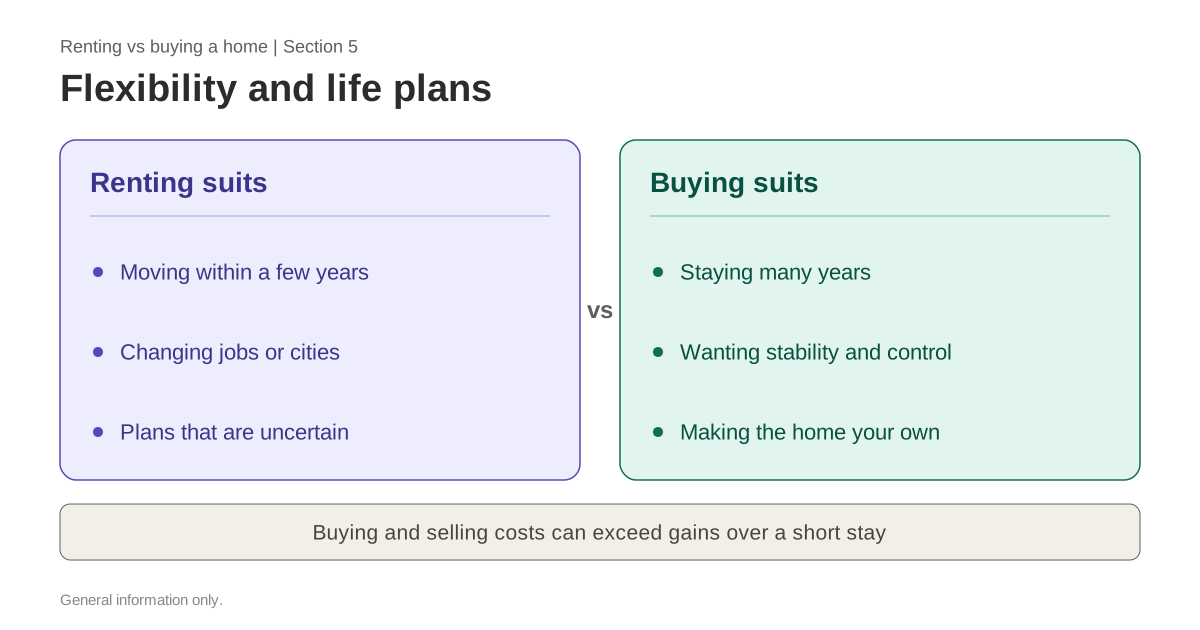
Renting gives flexibility. It is easier to move for work, study or family reasons, and you can leave with a few months' notice when the lease ends. Owning ties you to a location, and selling takes time and cost. If you expect to move within a few years, renting is often the more practical choice, because the costs of buying and selling can exceed any gain in value over a short period.
If you plan to stay in one place for a long time, owning gives more stability and control. Consider your work, your family plans and your willingness to be tied to one area before deciding.
Risks on both sides
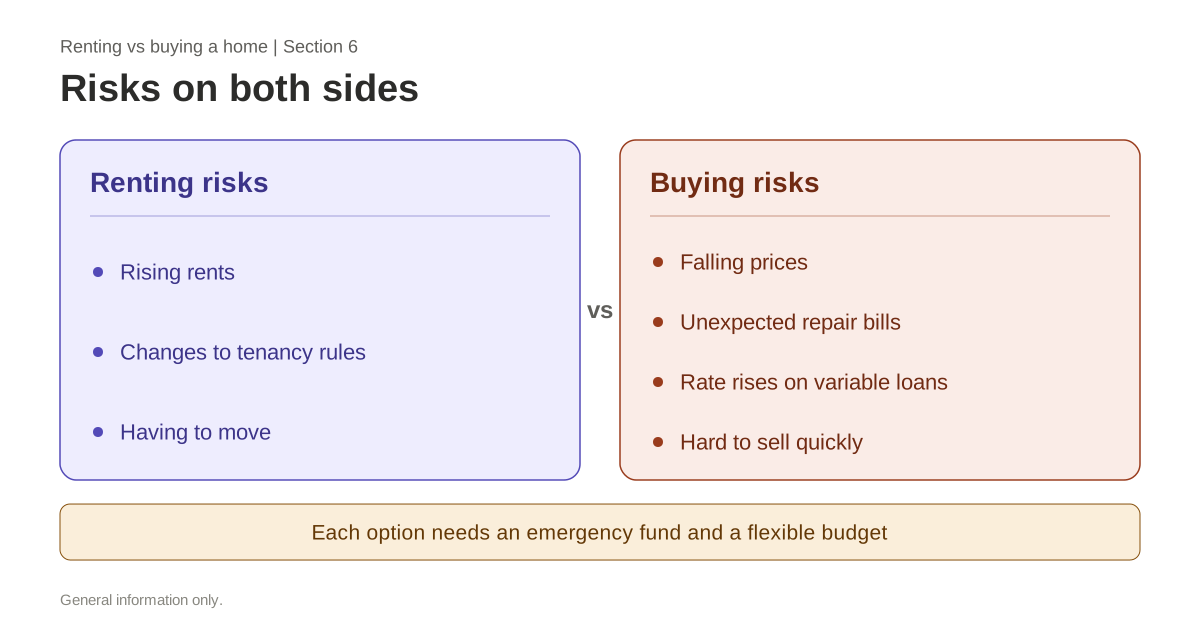
Renting carries the risk of rising rents, changes to tenancy rules and the need to move. Buying carries the risk of falling prices, unexpected repair bills, higher interest rates if the mortgage is variable, and the illiquidity of property. Both options can be sound, but each requires its own protection, such as an emergency fund and a budget that allows for change.
Test the decision
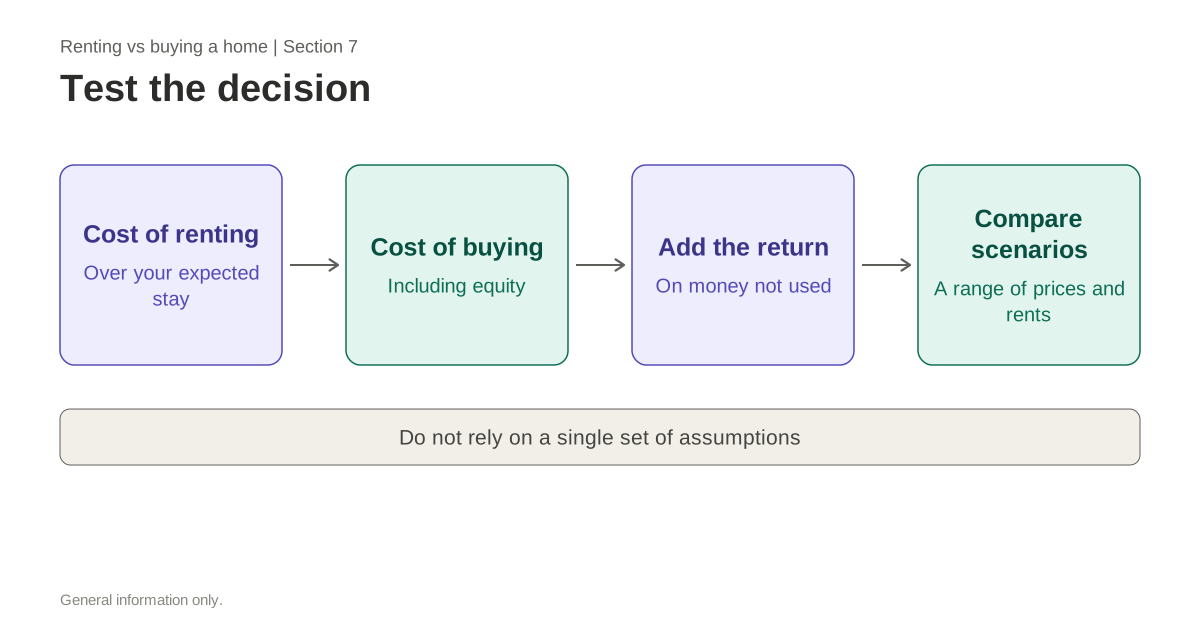
Work through a simple test. Estimate the total cost of renting for the period you expect to stay, and the total cost of buying over the same period, including all upfront and ongoing costs and the value of any equity. Then add the return you could earn on the money you would otherwise use. Compare the outcomes under a range of house price and rent assumptions, not just one.
Use our rent calculator to see how much rent is affordable against your income, and our mortgage and loan calculators to test the cost of buying.
Decide with your situation in mind
Renting may suit people who value flexibility, have uncertain income, expect to move soon, or live in a market where buying is very expensive compared with renting. Buying may suit people who plan to stay for many years, have a stable income and a sufficient deposit, and want the stability of owning their home.
Hidden costs of each option
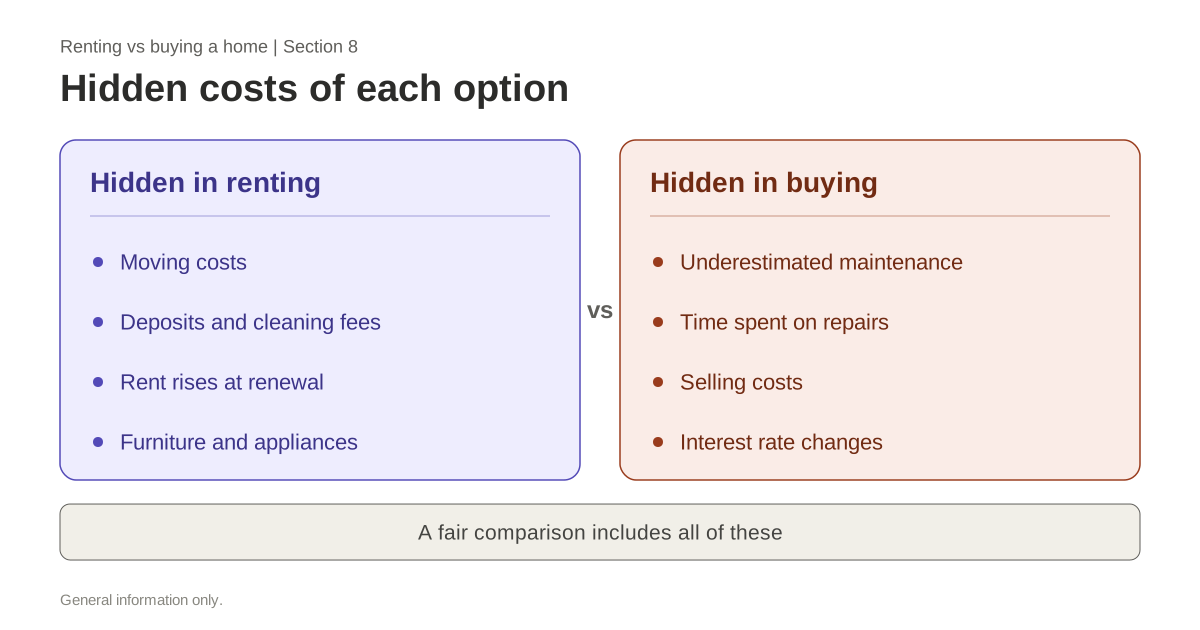
Renting has hidden costs too. Moving costs, deposits, cleaning fees and rent increases at renewal add up over time. A tenant may also pay for furniture and appliances that a landlord supplies in another arrangement. If you rent for many years, these costs can match a meaningful share of the ownership costs you were comparing.
Buying hides costs as well. Maintenance is often underestimated, and the time spent managing repairs has its own value. Selling costs are easy to forget when the decision is made, yet they can reduce the net gain on a property considerably. A fair comparison includes all of these items, not only the obvious monthly payment.
Revisit the decision over time
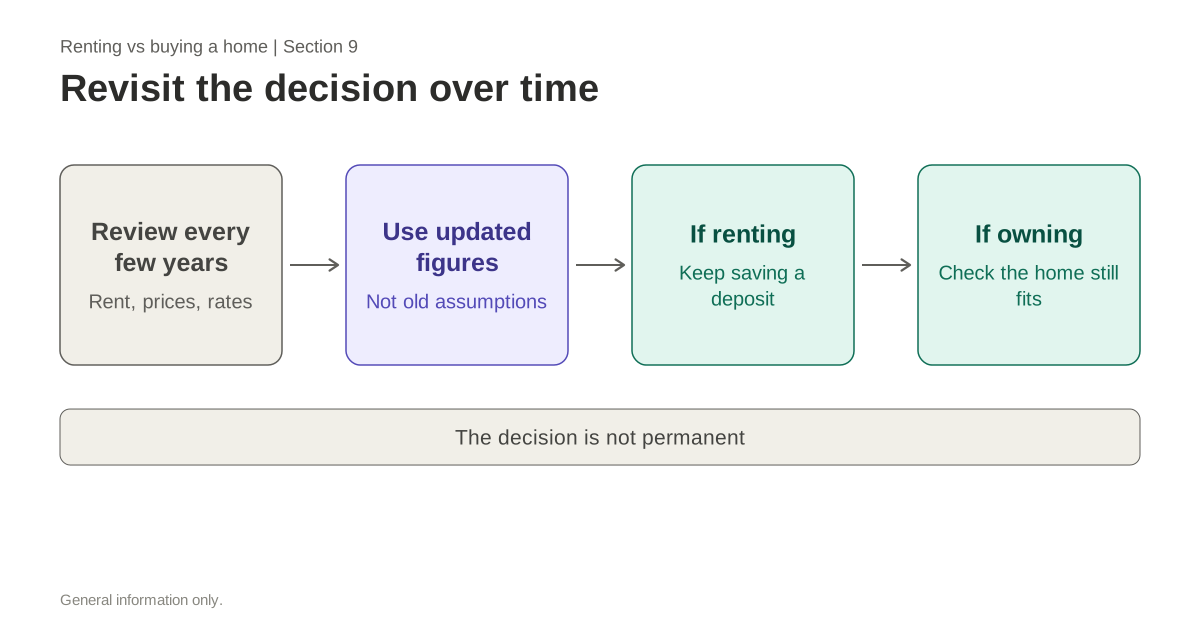
The rent-or-buy decision is not permanent. Your income, family situation and local market will change, and a choice that was right at one point may no longer be right later. Review the comparison every few years, using updated figures for rent, house prices and mortgage rates.
If you rent, keep the money you would have spent on a deposit and running costs in savings or investments. That habit lets you buy later with a larger deposit if you decide to. If you own, review whether the home still suits your needs, and whether selling and moving would improve your position.
The bottom line
Renting and buying are different ways of paying for a home, and neither is always the right choice. Compare the full costs over the period you expect to stay, consider your flexibility and risks, and make sure the option you choose fits your budget with room to spare.
Frequently asked questions
Is renting money down the drain?
Not necessarily. Rent pays for a home you use, and it does not build equity. Whether renting or buying works out better depends on the full costs, the period you stay and what you do with money you do not spend on a deposit.
How long do I need to stay for buying to make sense?
It depends on the costs of buying and selling and on the market. Short stays often do not cover those costs, so many people look at a period of several years or more before deciding.
Should I always buy if I can afford the mortgage?
Not always. Being able to afford the payment is only one factor. You also need an emergency fund, room for repairs and a plan for the years you stay in the home.
Can I compare renting and buying using a calculator?
Yes. Enter the monthly costs of each option, the upfront costs and your expected time in the home. A range of assumptions about prices and returns gives a more reliable comparison than one set of figures.