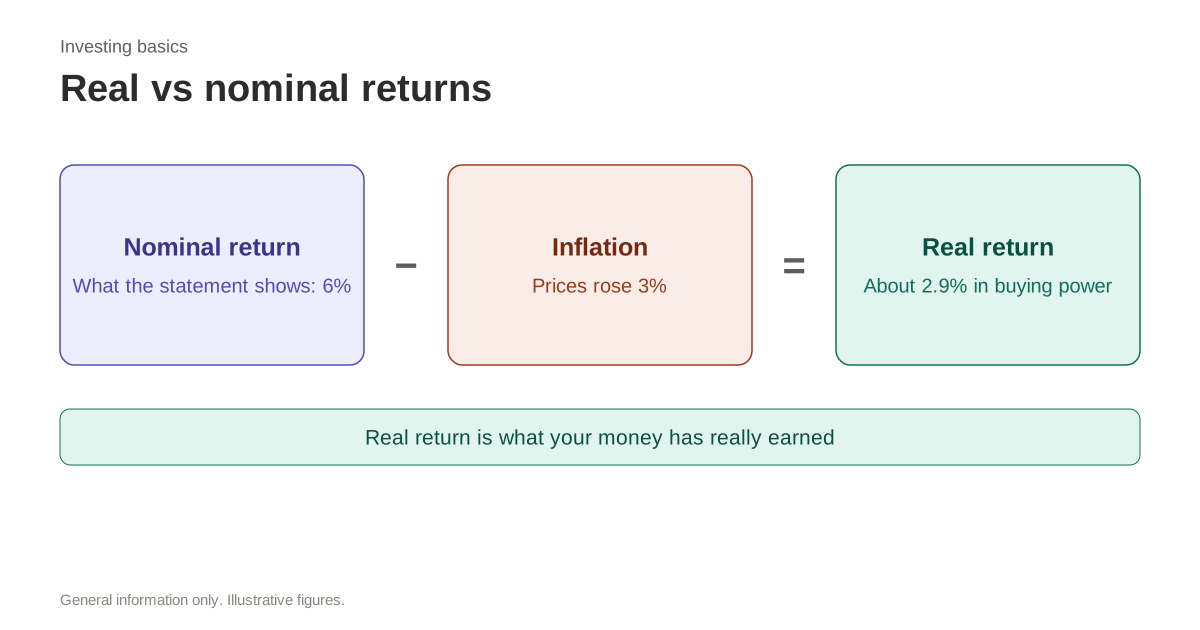
When you check an investment, the return you see is usually the nominal return. It is the percentage gain in the money you hold, without any adjustment for the effect of rising prices. The real return takes inflation into account and shows how much your purchasing power has grown. Comparing the two is one of the most useful habits an investor can develop.
This article explains the difference, how to calculate real returns, and why the distinction matters for savings, investing and long-term planning.
Nominal return
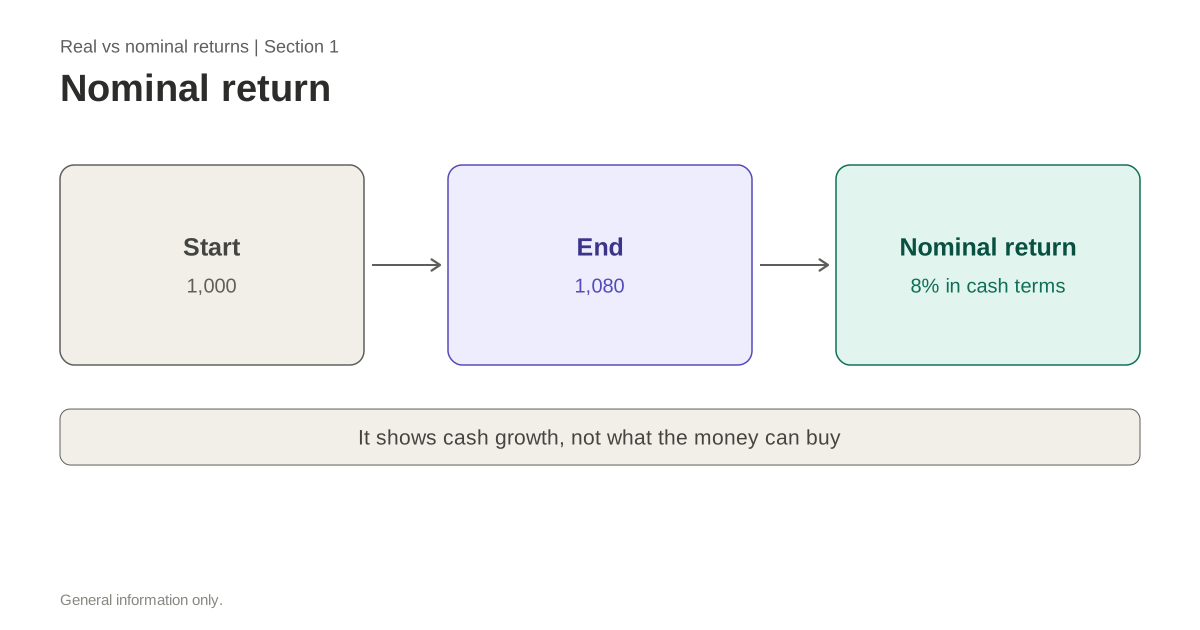
The nominal return is the simple growth in value. If an investment rises from 1,000 to 1,080 in a year, the nominal return is 8%. That figure is what most statements, websites and fund factsheets show. It is accurate as a measure of cash growth, but it does not show what the money can buy.
Nominal returns can be misleading in periods of high inflation. A return of 8% sounds good, but if prices rose 6% over the same year, the gain in purchasing power is much smaller.
Real return
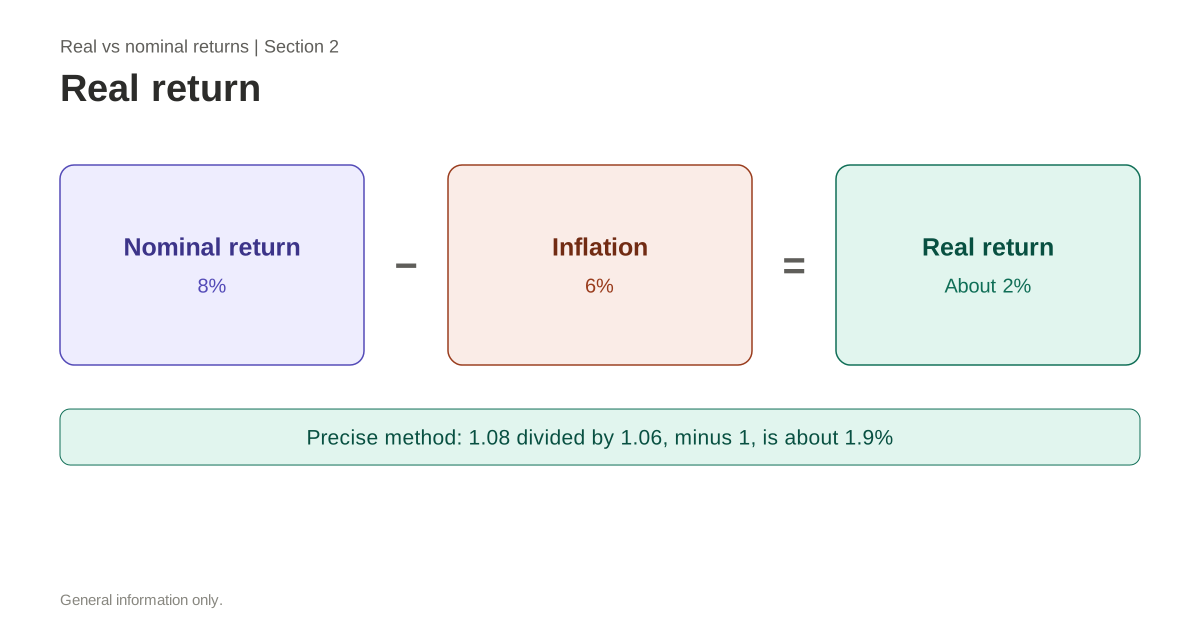
The real return adjusts the nominal figure for inflation. A simple approximation is to subtract the inflation rate from the nominal return, so an 8% nominal return with 6% inflation gives an approximate real return of 2%. A more precise calculation divides one plus the nominal return by one plus inflation, then subtracts one. In this example, that gives about 1.9%.
The real return tells you how much more you can buy at the end of the period than at the start. It is the measure that matters when you plan for future costs, such as retirement, education or a home.
Why the difference matters
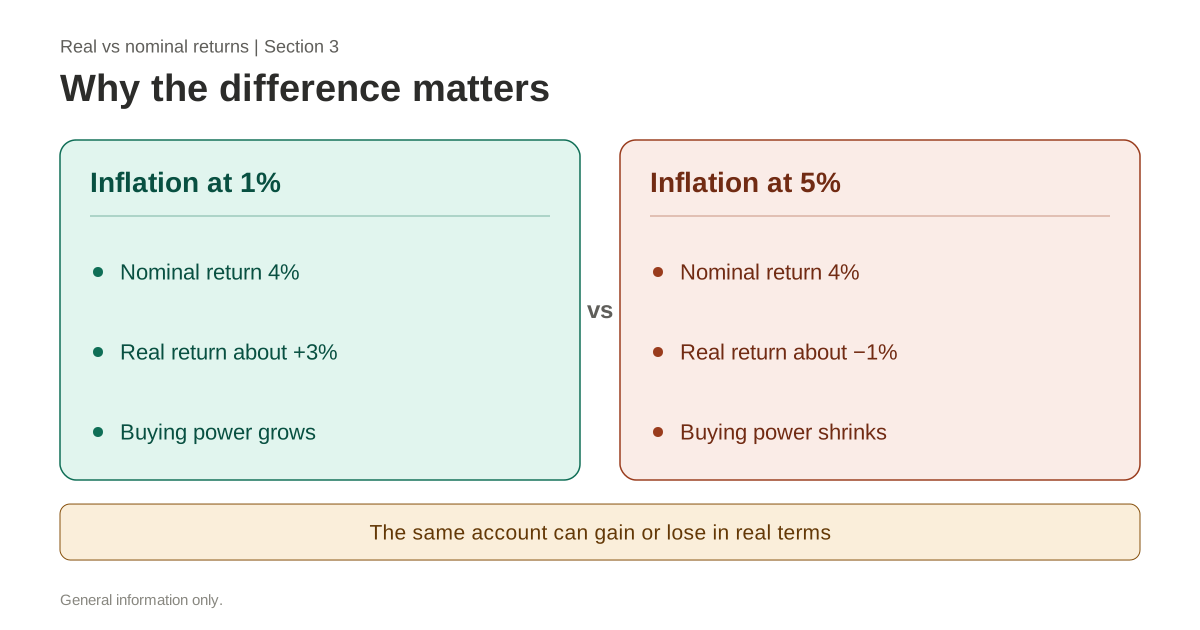
Consider two savings accounts, both paying 4% a year. If inflation is 1%, the real return is about 3%, and your money grows in purchasing power. If inflation is 5%, the real return is negative, and your money buys less each year, even though the balance rises.
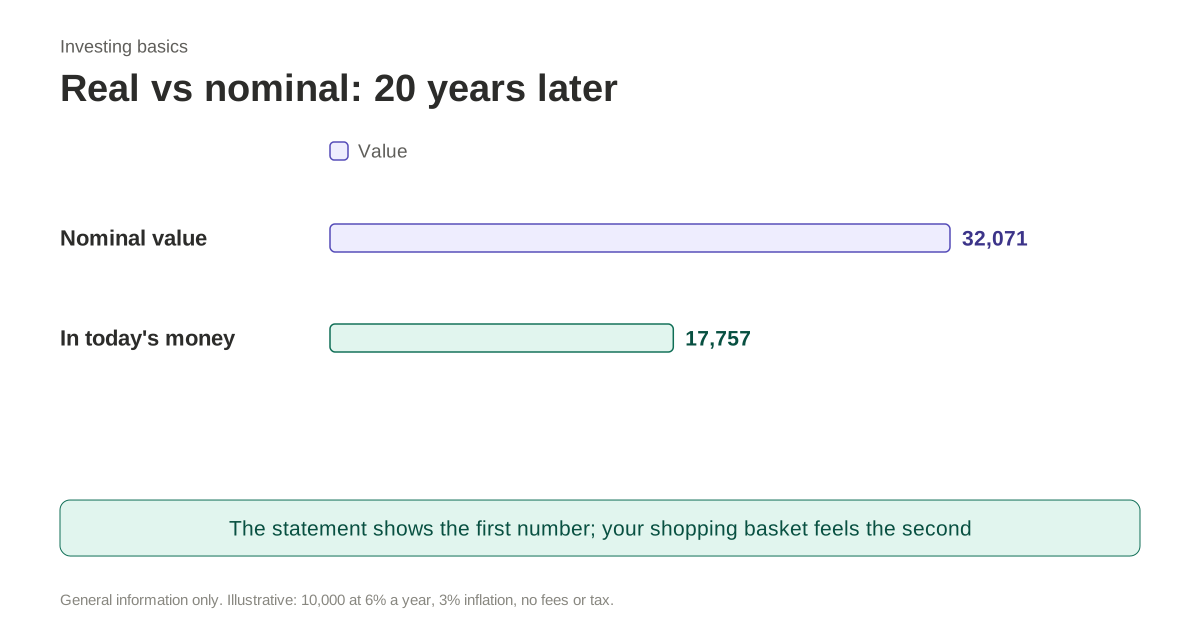
The same logic applies to investments. A portfolio that gains 7% a year looks strong in cash terms. But after inflation at 3%, the real gain is about 4%. Over many years, this difference compounds, and it can change whether a goal is reachable.
Taxes and fees
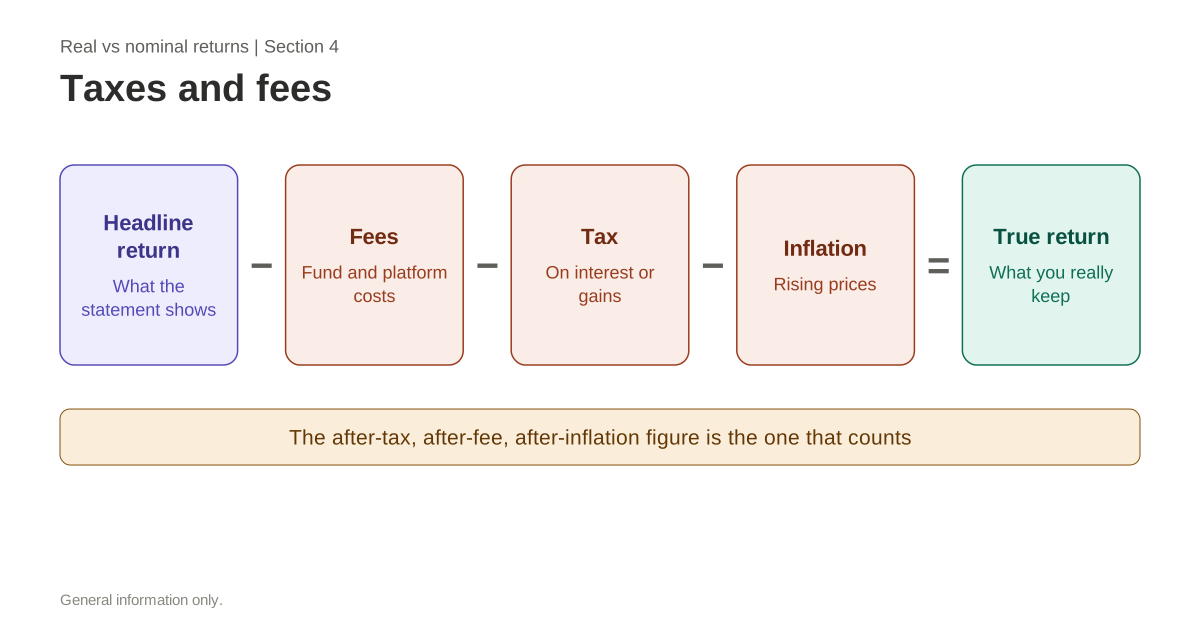
Real returns can be reduced further by taxes and fees. Tax on interest, dividends or gains lowers the amount you keep. Fund charges, platform fees and trading costs also reduce the return. For a complete picture, consider the after-tax, after-fee, after-inflation return, which is the true measure of what your money has earned.
Many investors overlook this. A return of 6% before fees and tax may leave much less after those costs, and the real return can be small or even negative once inflation is included.
Compare like with like
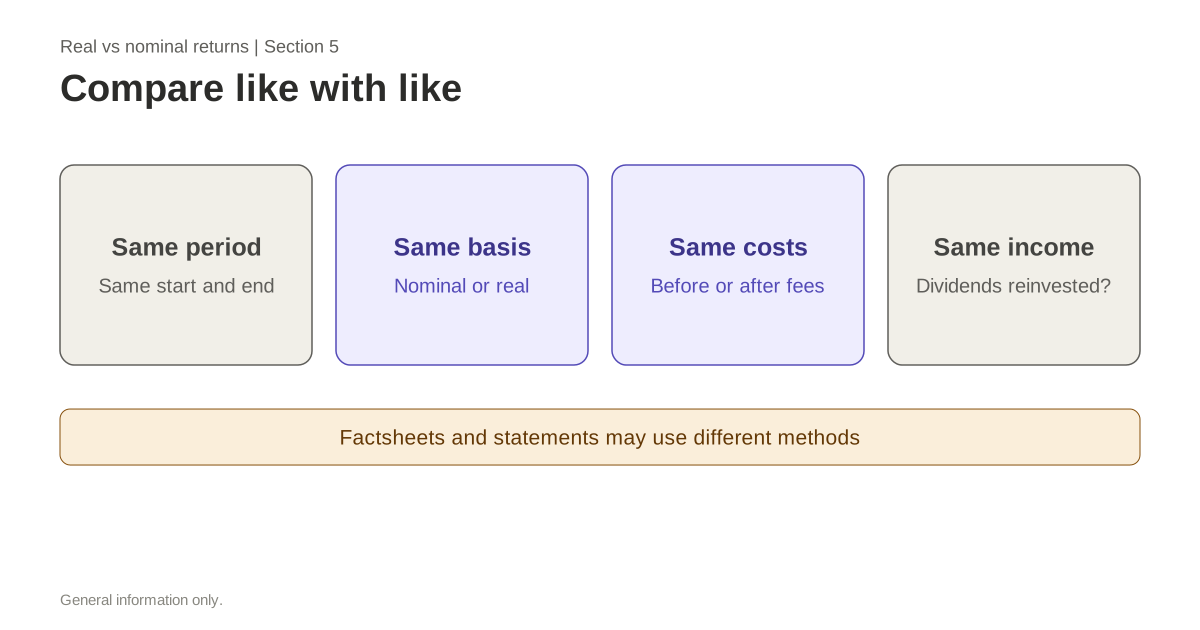
When comparing investments, use returns over the same period and on the same basis. Check whether the figures are nominal or real, before or after fees, and whether dividends were reinvested. A fund factsheet and a savings account statement may use different methods, so a direct comparison can be misleading.
For long-term goals, comparing real returns across options makes the choice clearer. A savings product that pays a high nominal rate but barely beats inflation may be less useful than an investment with a higher expected real return and a suitable level of risk.
Using real returns in planning
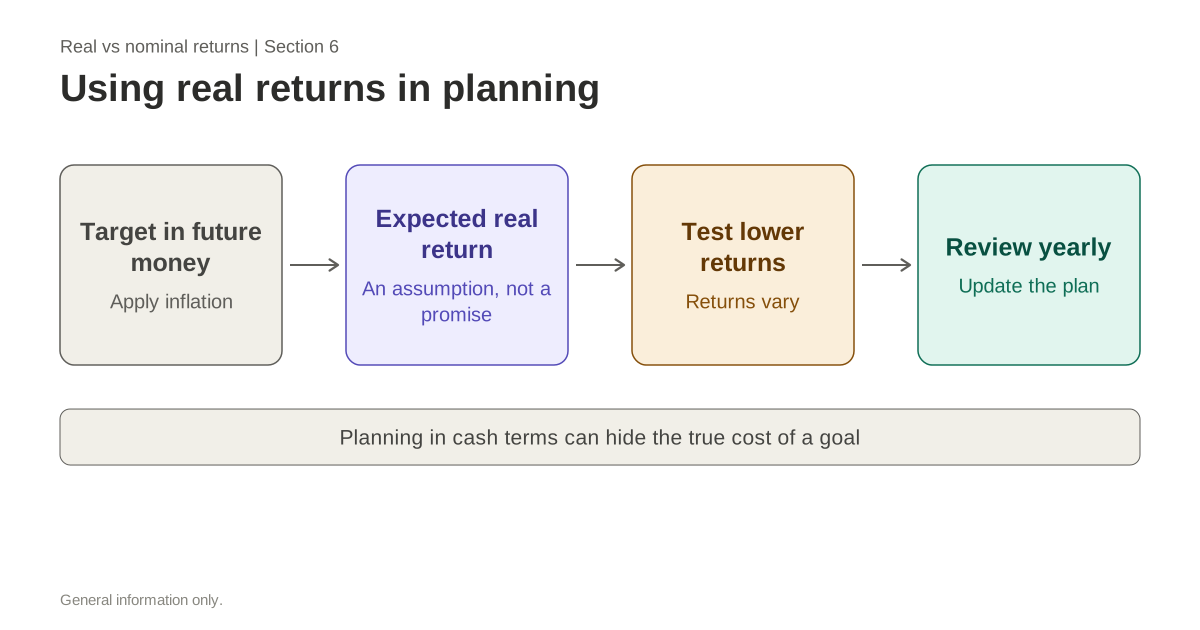
To plan a goal, estimate the target in future money and the expected real return of your savings. The future value calculator and the inflation calculator help with these steps. Using real returns avoids the common mistake of planning in cash terms and then finding that the goal costs much more than expected.
Be careful with the assumptions. A real return of 3% a year is an assumption, not a guarantee. Test lower returns as well, and remember that actual returns vary from year to year and in sequence.
Watch for the illusion of growth
A rising balance can feel like progress even when the real value is flat or falling. This illusion is strongest in periods of high inflation, low interest rates or heavy fees. Checking your returns against inflation at least once a year helps you see the true position.
Why real returns guide better decisions
Comparing options on a real basis keeps your decisions honest. A savings product that pays a high headline rate may still leave you worse off than a cheaper-looking alternative once inflation and tax are counted. Real figures also make it easier to set goals in the money you will actually need, which avoids the common shock of finding that a target has become much more expensive than planned.
Calculating over several years
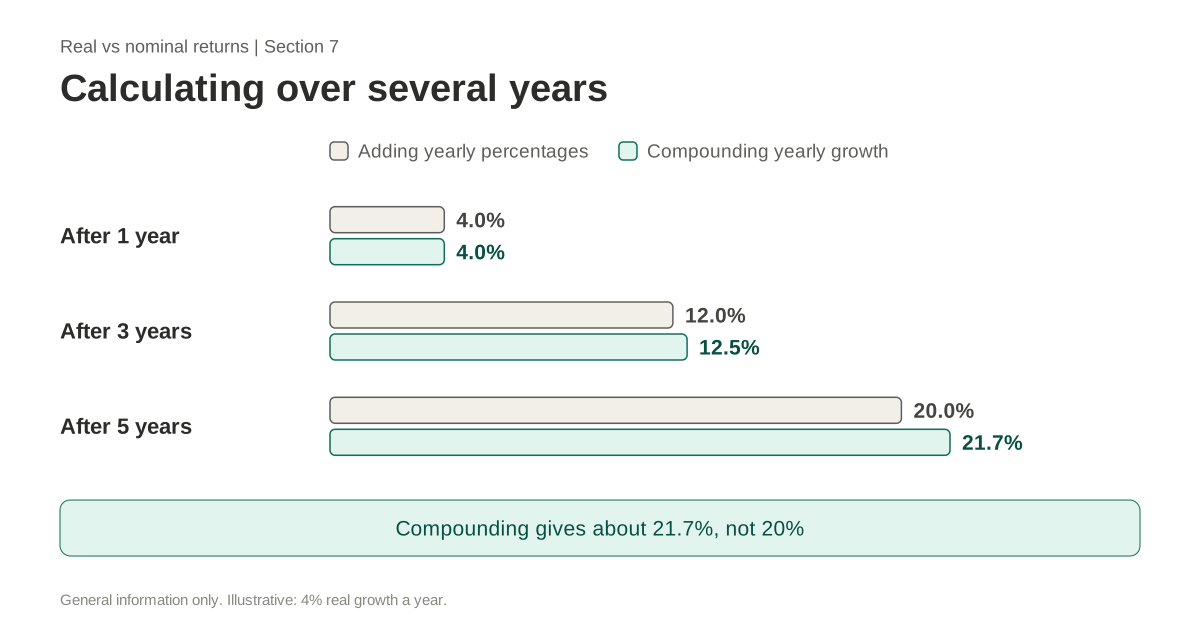
Over several years, returns compound, and the real return compounds too. If an investment grows 4% a year real for five years, its real value rises by about 21.7%, not 20%. Working out the cumulative effect helps you see the true result of a long period, and it avoids the mistake of simply adding annual percentages together.
To calculate a multi-year real return, multiply the annual growth factors together, adjust for inflation over the same period, and then convert the result back to an annual rate. A spreadsheet or the compound interest calculator on this site can do this quickly.
Common errors
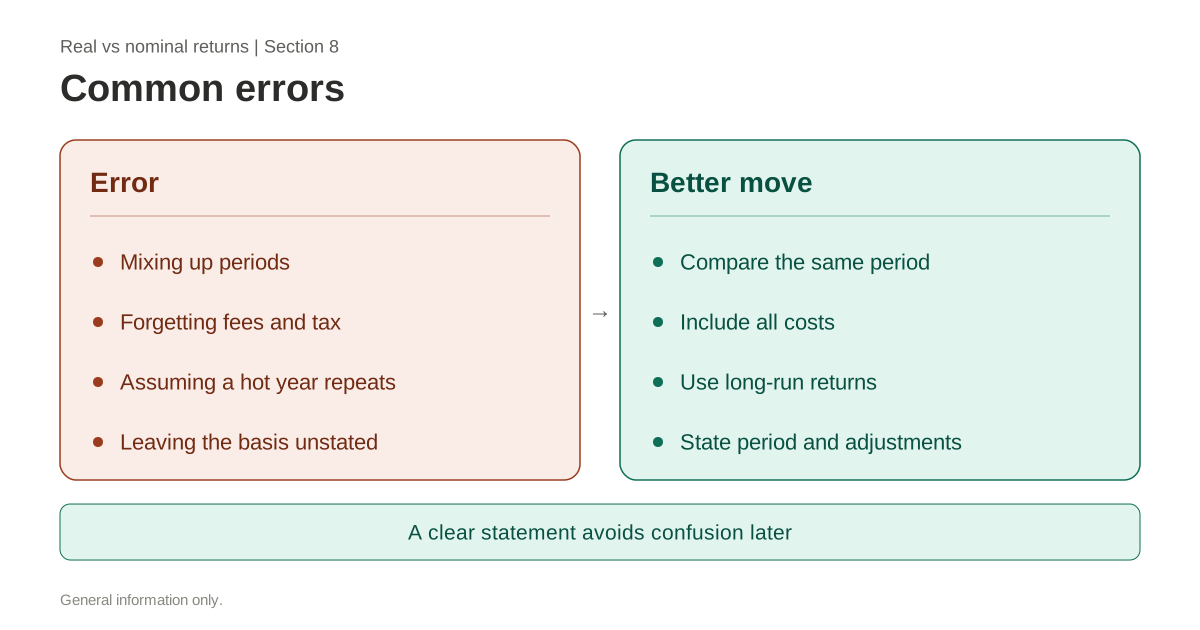
One error is to mix up periods, comparing a nominal return for one year with an inflation rate for another. Another is to forget fees and taxes, which reduce the real figure further. A third is to assume that a high recent return will repeat, when the long-run real return may be much lower.
Always state the period, the basis and the adjustments you have made. A clear statement prevents confusion when you return to the figures later or share them with someone else.
The bottom line
Nominal returns show how much your money has grown in cash. Real returns show how much it has grown in purchasing power, after inflation, fees and tax. Look at both, compare investments on the same basis, and plan using real figures. That habit keeps your expectations honest and your goals realistic.
Frequently asked questions
What is the simplest way to estimate a real return?
Subtract the inflation rate from the nominal return. For example, an 8% return with 6% inflation gives an approximate real return of 2%. For precision, use the division method.
Why does the real return matter more than the nominal return?
Because it shows how much your purchasing power has grown. Costs in the future are affected by inflation, so a real return is the figure that tells you whether your money will buy more or less.
Can the real return be negative?
Yes. If inflation is higher than the nominal return, your money buys less over the period, even though the balance may have grown in cash terms.
Should I include taxes and fees in the real return?
For a complete picture, yes. Tax and fees reduce what you keep, so the after-tax, after-fee, after-inflation return is the most accurate measure of what your money has earned.