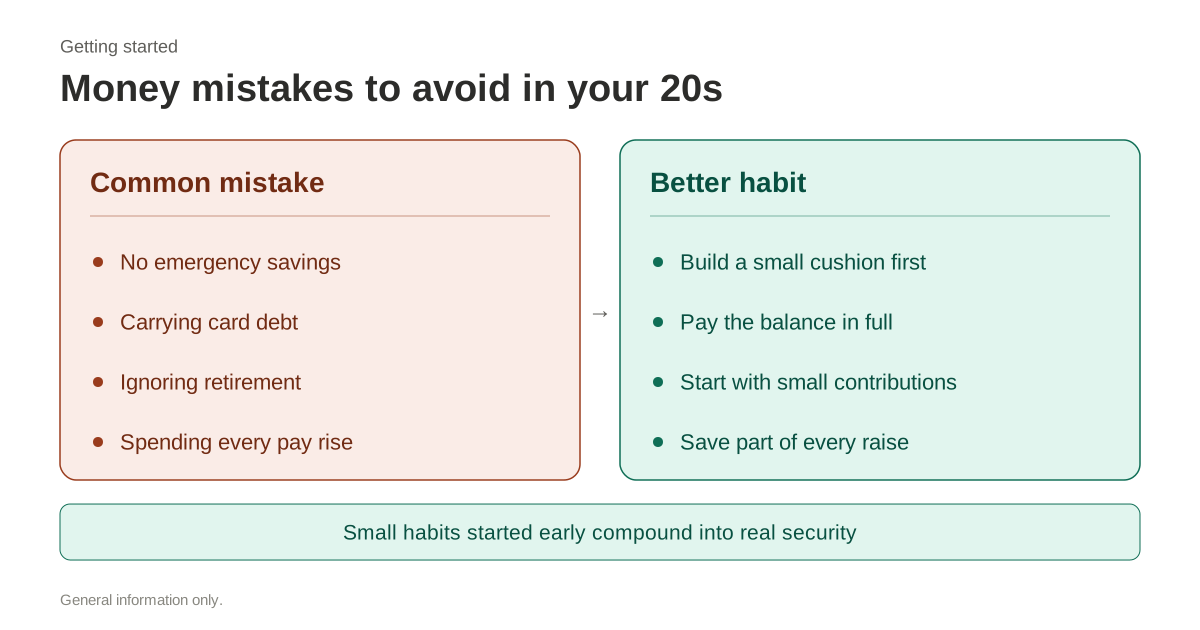
Your twenties are often the years when you first earn a steady income, take on responsibilities and make decisions that shape your finances for decades. Many of the mistakes made at this stage are easy to avoid if you know what to watch for. Others are hard to undo, because their effects compound over time. Recognising them early gives you a head start.
This article covers common money mistakes for young adults and the habits that help avoid them. The advice is general, and it applies whatever your country or income.
Ignoring the budget
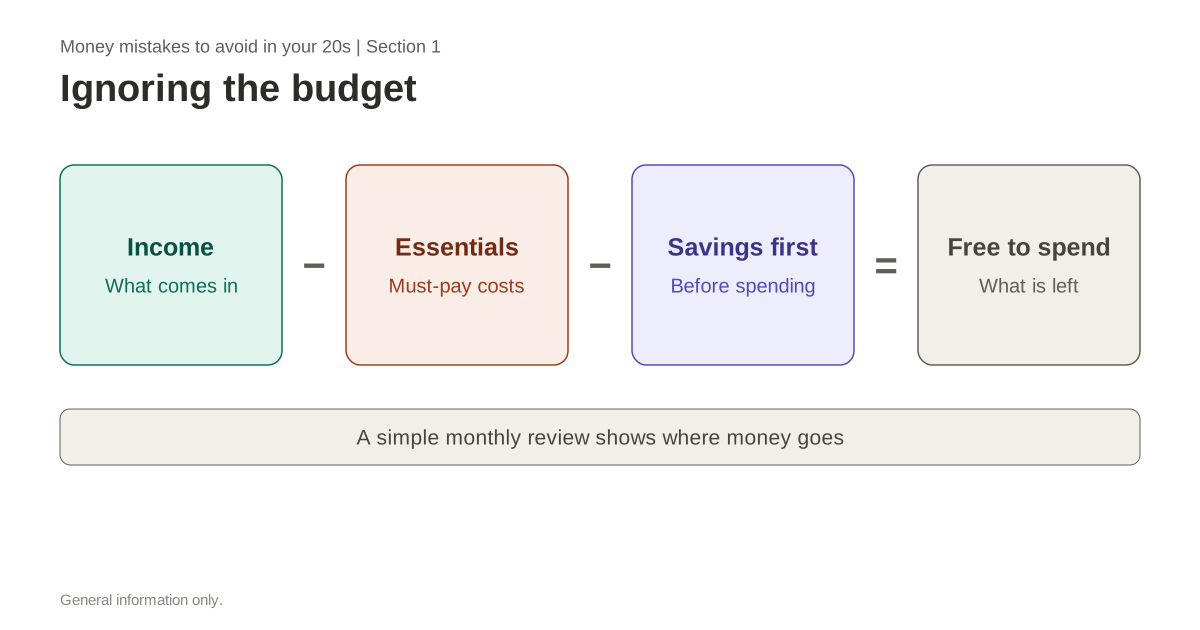
Many people in their twenties spend what they earn without a plan. Income rises, but so do expenses, and money disappears on subscriptions, takeaways and impulse purchases. A simple budget, reviewed each month, shows where your money goes and gives you control. It does not need to be detailed to be useful.
Start with income and essential costs, then decide how much you will save before you spend on anything else. The budgeting article in this series compares several methods.
Skipping an emergency fund
Without a cushion, a single unexpected bill can lead to credit card debt or expensive short-term borrowing. Building an emergency fund, even a small one, is one of the most protective steps you can take. The emergency fund article explains how to set a target and where to keep the money.
Carrying high-interest debt
Credit card balances and some personal loans charge high interest, and the cost grows quickly when balances are not cleared each month. Paying the minimum keeps the account in good standing but leaves most of the debt in place. Where possible, pay the full statement balance, and avoid using credit for everyday spending you cannot afford.
Waiting too long to invest
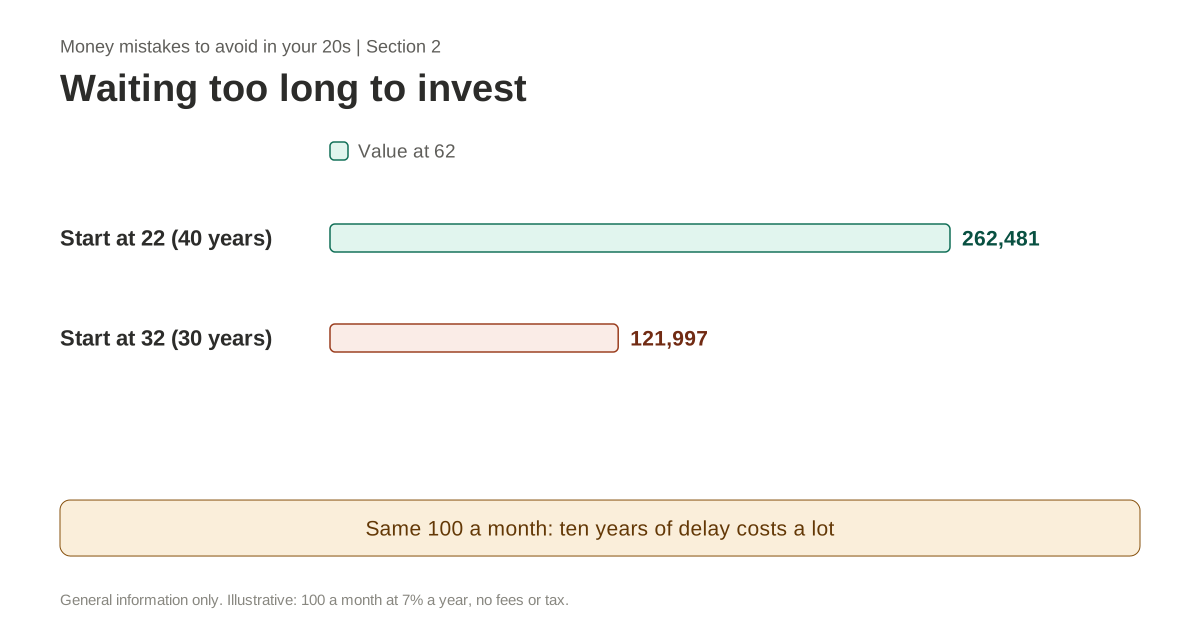
It is tempting to wait until you earn more or feel more confident. But time is the most powerful ally of an investor. Starting early, with a modest amount, usually produces a better result than starting late with a larger one. The key is to begin with a low-cost, diversified option and to invest regularly.
Neglecting retirement
Retirement can feel very far away in your twenties, which makes it easy to ignore. Yet contributions made early have the longest time to grow. If your employer offers a contribution match, use it, because it is effectively free money. Check the rules for retirement accounts in your country and make the most of any tax advantages.
Overspending on a lifestyle
Earning more often leads to spending more, a pattern sometimes called lifestyle creep. Cars, housing and other costs can rise quickly, and they lock you into commitments that are hard to reduce. Before taking on a large recurring cost, check whether you could still save comfortably if your income fell.
Not understanding credit
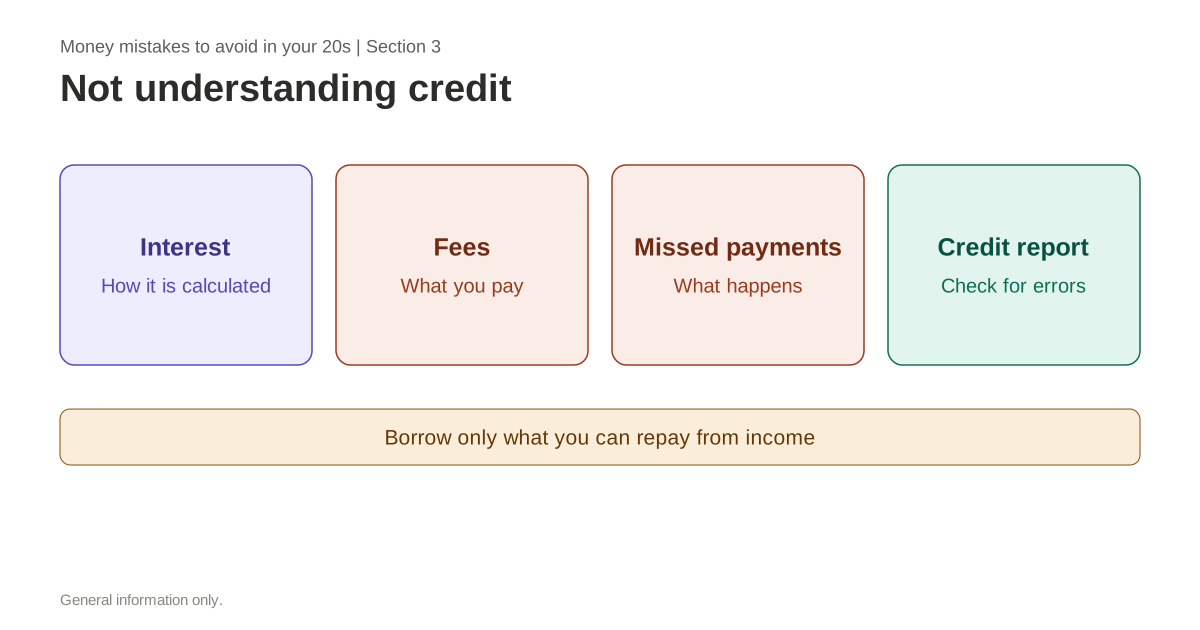
Credit can help you build a record, but it can also trap you. Understand how interest is calculated, what the fees are, and what happens when you miss a payment. Check your credit report if your country provides one, and correct any errors. Borrow only what you can repay from income, not from future hopes.
Falling for scams and pressure sales
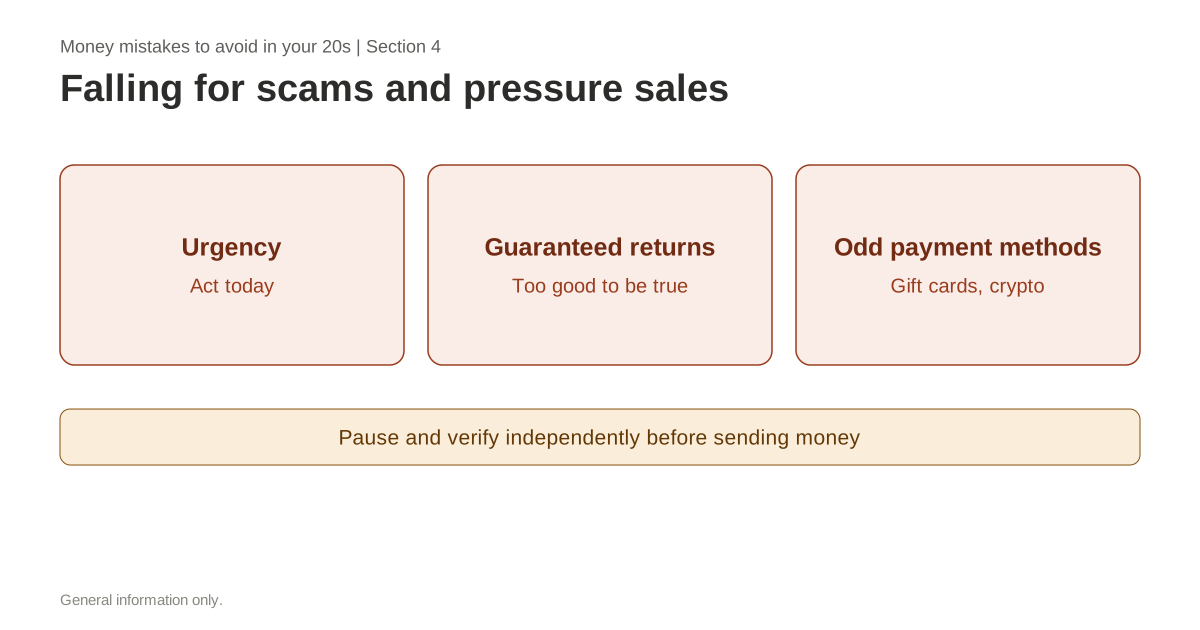
Young adults are often targeted by scams and by high-pressure sales of products that promise quick returns. Be wary of offers that create urgency, guarantee high returns or ask for payment in unusual ways. If something sounds too good to be true, pause and check it independently before committing any money.
Ignoring insurance
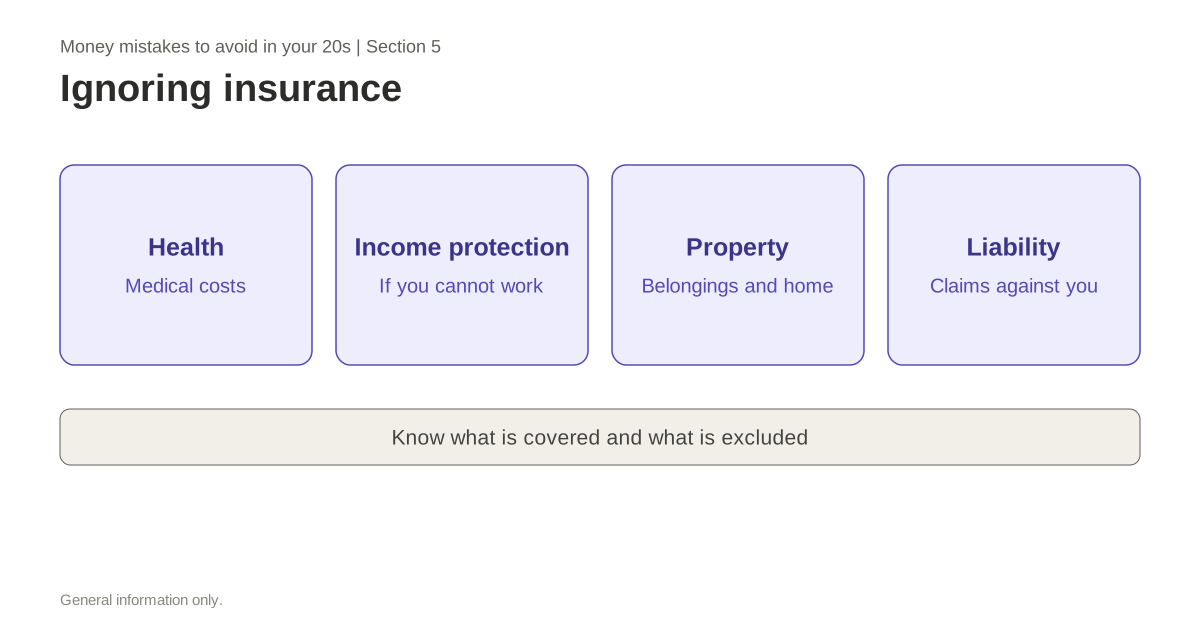
Insurance protects you from costs that could otherwise wipe out your savings. Depending on your country and circumstances, health, income protection, property and liability cover may matter. Compare options carefully, and understand what is covered and what is excluded.
Not reviewing your progress
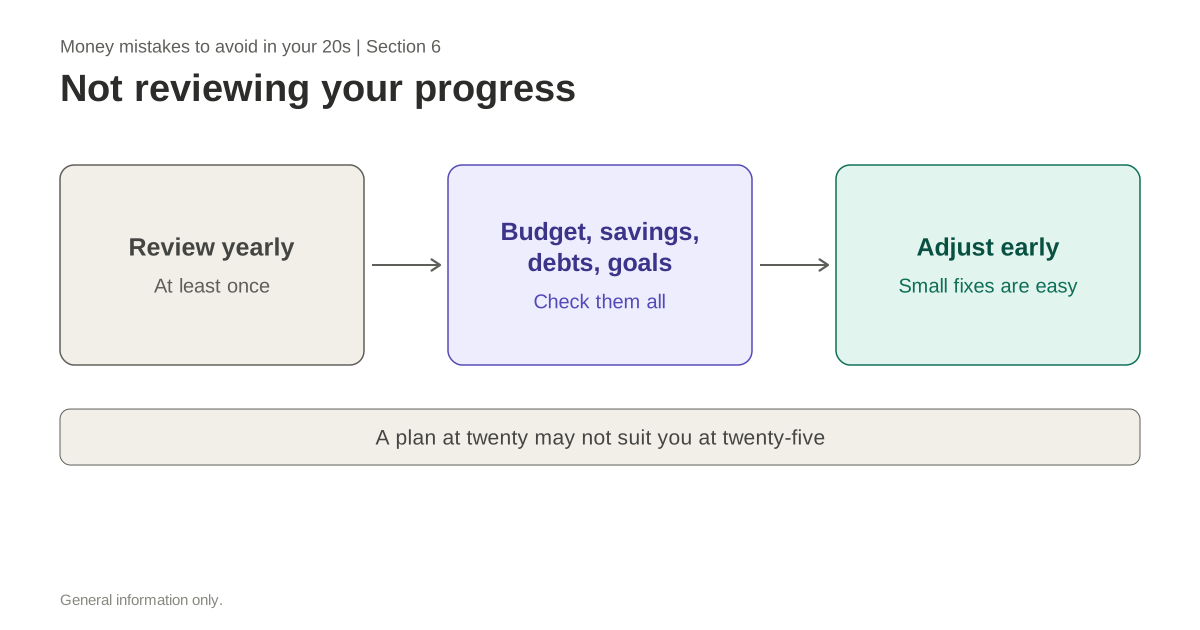
Finances change, and a plan that suited you at twenty may not suit you at twenty-five. Review your budget, savings, debts and goals at least once a year. Small adjustments made early are much easier than large corrections made later.
Building good habits
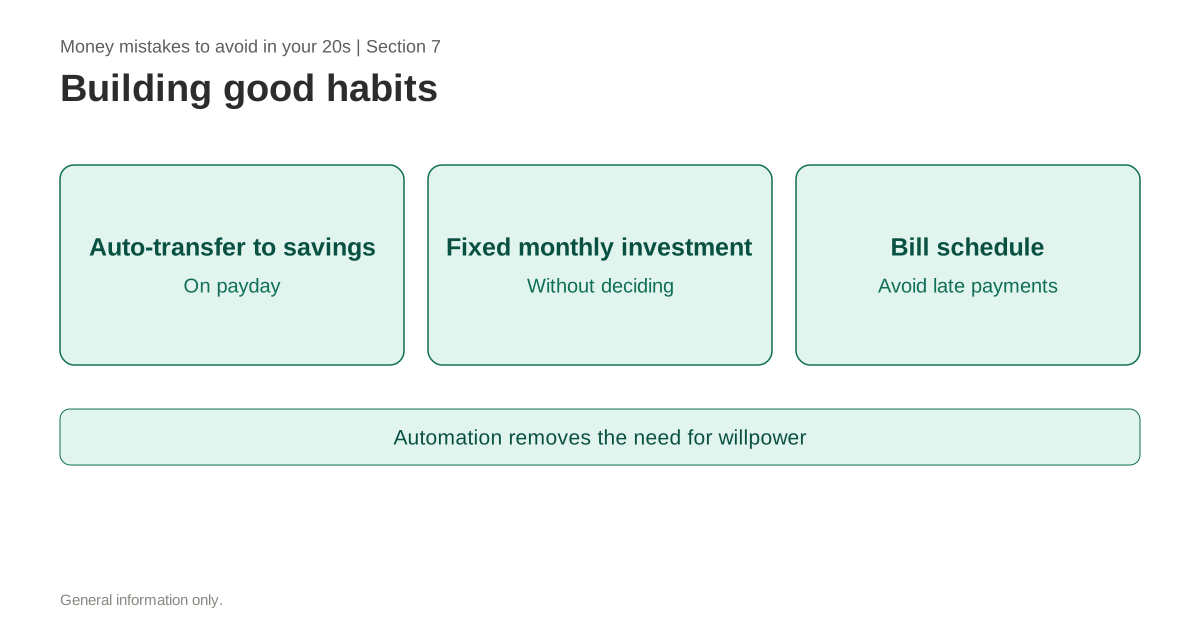
The most effective protection against these mistakes is to automate the basics: a regular transfer to savings, a fixed monthly investment, and a bill schedule that avoids late payments. Automation removes the need for willpower on every decision, and it keeps you on track during busy periods.
Money and relationships
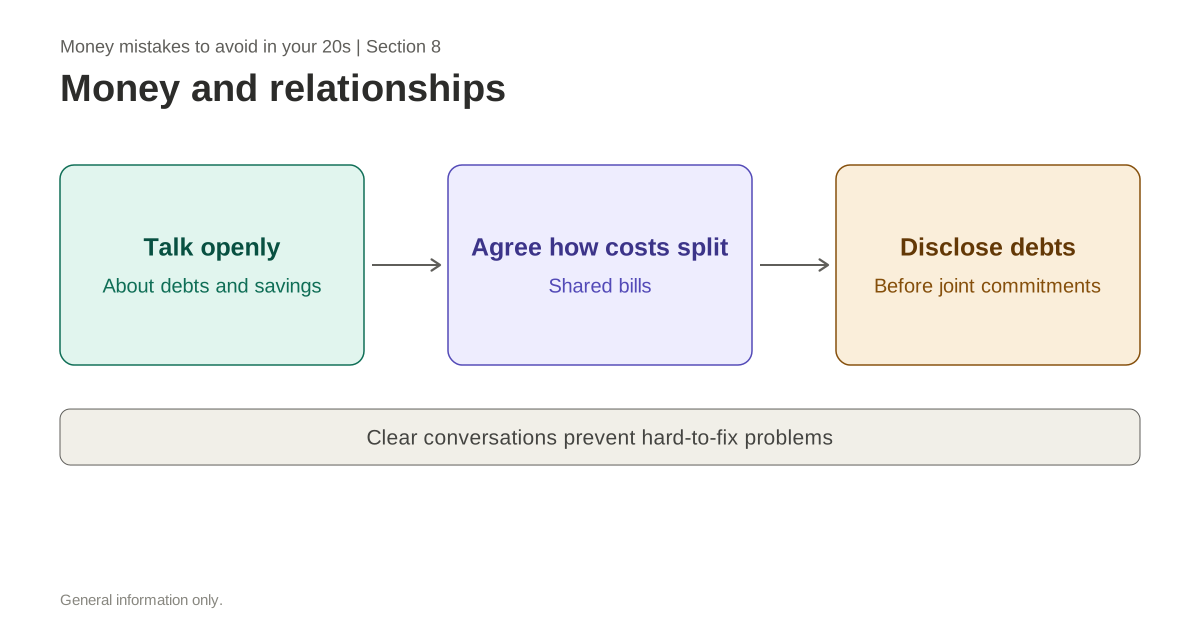
Money decisions are often shared with partners, family or friends. Talking openly about debts, savings and spending early avoids many later conflicts. Agree on how shared costs are split, and be honest about any debts before making joint commitments such as a lease or a loan. Clear conversations prevent problems that are far harder to fix later.
Asking for help early
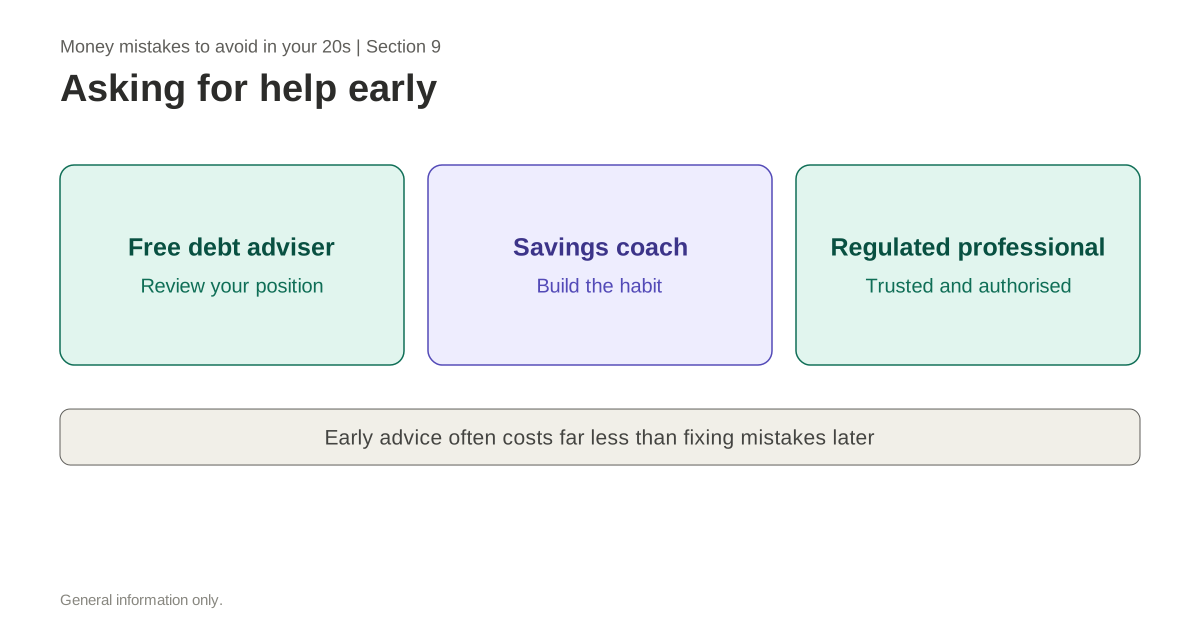
If you are unsure about a money decision, ask for help before committing. A free debt adviser, a savings coach or a trusted and regulated professional can review your position. Early advice often costs far less than correcting a mistake years later.
Forgiving yourself and moving on
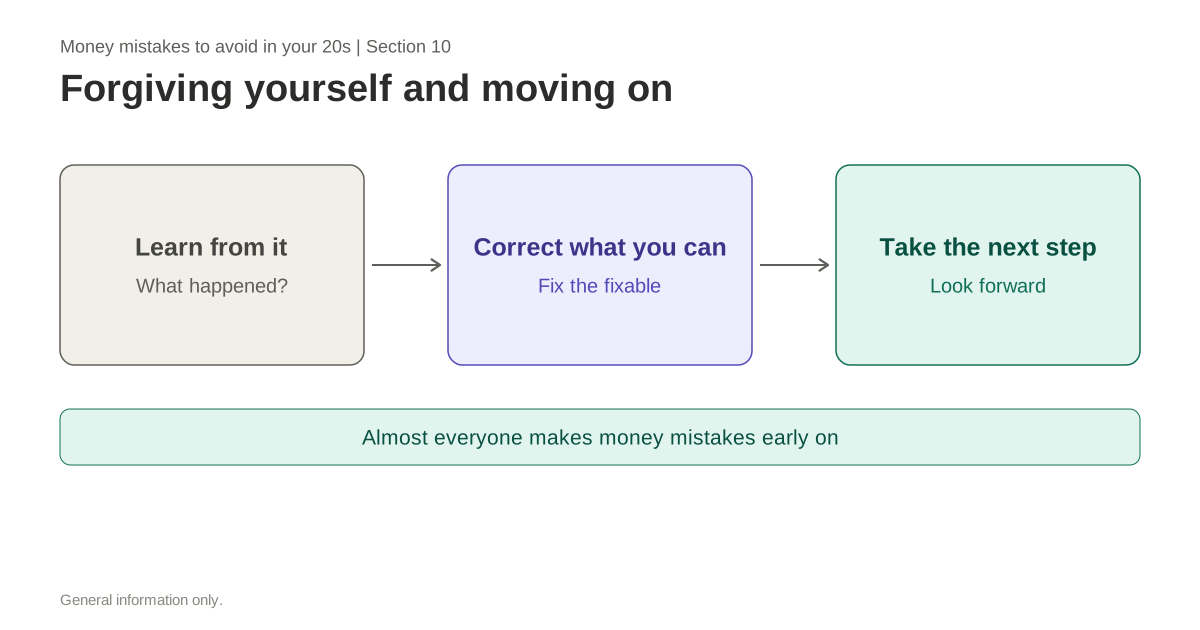
Almost everyone makes money mistakes early on. The useful response is to learn from them, correct what can be corrected and move forward. Dwelling on past decisions rarely helps, while a clear next step almost always does.
Mistakes that are easy to repair
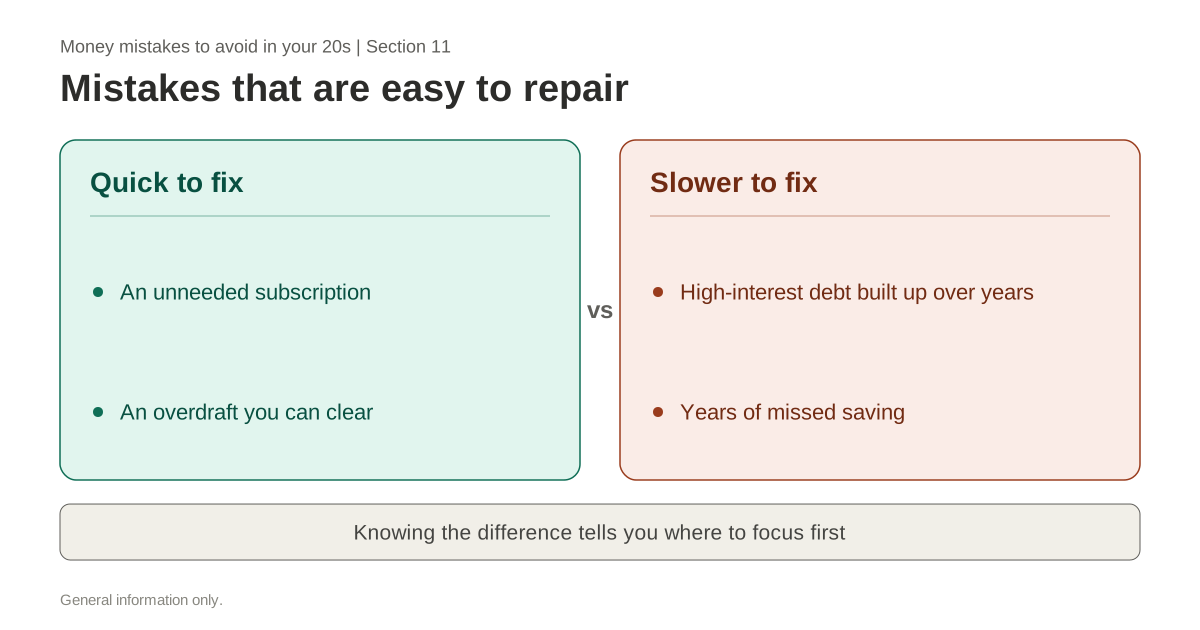
Some money mistakes can be repaired quickly, such as an unnecessary subscription or an overdraft that can be cleared. Others take longer, like high-interest debt that has built up over years. Knowing which mistakes are reversible helps you decide where to focus first, and it stops small errors from becoming habits.
Learning from money decisions
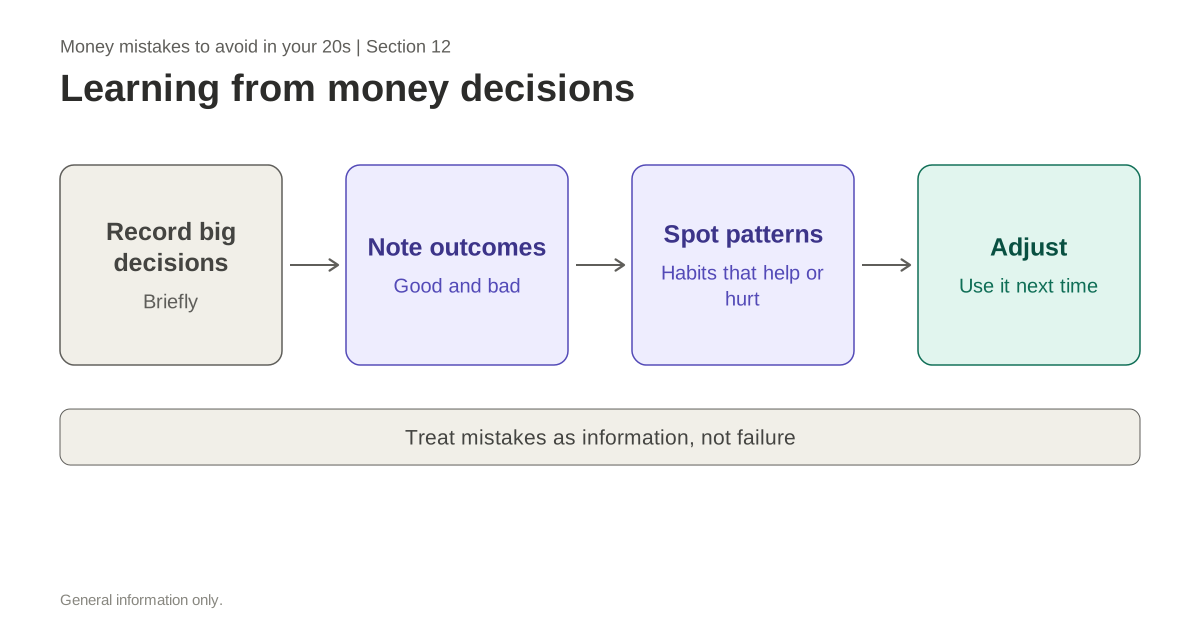
Keep a short record of significant money decisions and their outcomes. Over time, the record shows which habits serve you well and which need to change. Treat mistakes as information rather than failure, and make the next decision with that knowledge in mind.
Forgiving yourself and moving on
Almost everyone makes money mistakes early on. The useful response is to learn from them, correct what can be corrected and move forward. Dwelling on past decisions rarely helps, while a clear next step almost always does.
The bottom line
Your twenties are a time to build foundations rather than to be perfect. Avoid high-interest debt, build an emergency fund, start investing early, take any retirement benefits offered, watch your lifestyle costs and stay alert to scams. A few sound habits, started now, can make a substantial difference to the rest of your financial life.
Frequently asked questions
What is the single most important money habit for someone in their twenties?
Living within your means while saving regularly. That habit supports every other goal, from an emergency fund to retirement, and it becomes easier to maintain when it is automated.
Should I pay off student debt or invest first?
It depends on the interest rate and the terms of the debt. High-interest debt is usually a priority, but an employer retirement match is often worth capturing while you repay lower-interest loans.
Is it too late to start if I have made mistakes?
No. Mistakes can be corrected, and starting now gives you more time than starting later. Focus on the next step rather than the past decisions.
How do I avoid lifestyle creep?
Decide in advance how much of any pay rise will go to savings, and keep your core costs stable when your income increases. Review large recurring commitments before you take them on.