A financial adviser can help with complex decisions, such as planning for retirement, managing a large inheritance or structuring investments in a tax-efficient way. The right adviser can save you time, avoid costly mistakes and give you confidence in your plan. The wrong one can cost you money through high fees, unsuitable products or conflicts of interest. Knowing how to choose and what to ask makes the difference.
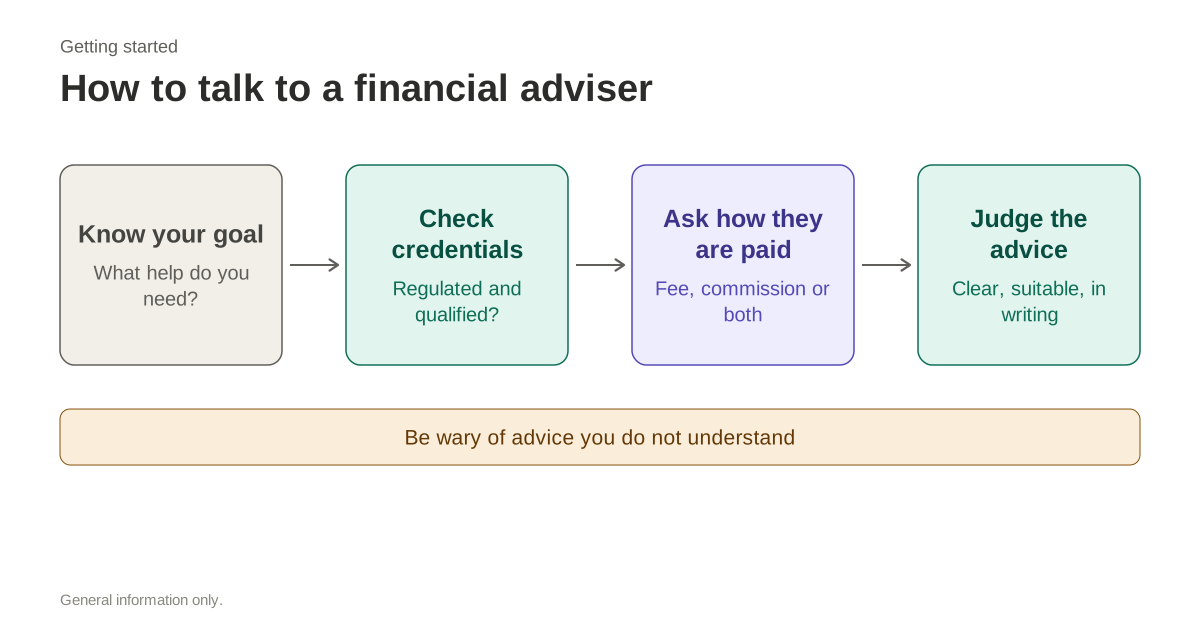
This article explains what advisers do, how they are paid, what questions to ask and how to judge the advice you receive. It is general information, and rules for advisers differ by country.
What an adviser does
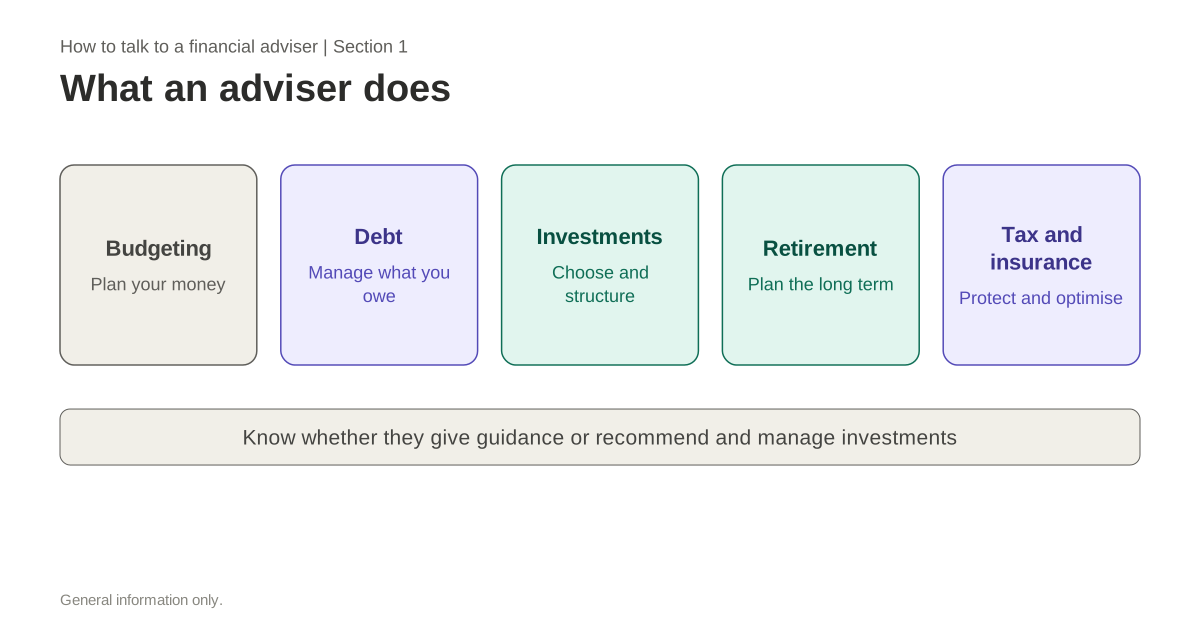
A financial adviser looks at your whole financial position, sets goals with you, and recommends ways to reach them. This can include budgeting, debt management, investment choices, retirement planning, tax planning and insurance. A good adviser explains the reasons for each recommendation and the risks involved, rather than simply selling a product.
Advisers differ in what they can do. Some give general guidance, while others are authorised to recommend specific investments or to manage money on your behalf. Know which type you are speaking to.
Check the adviser is regulated
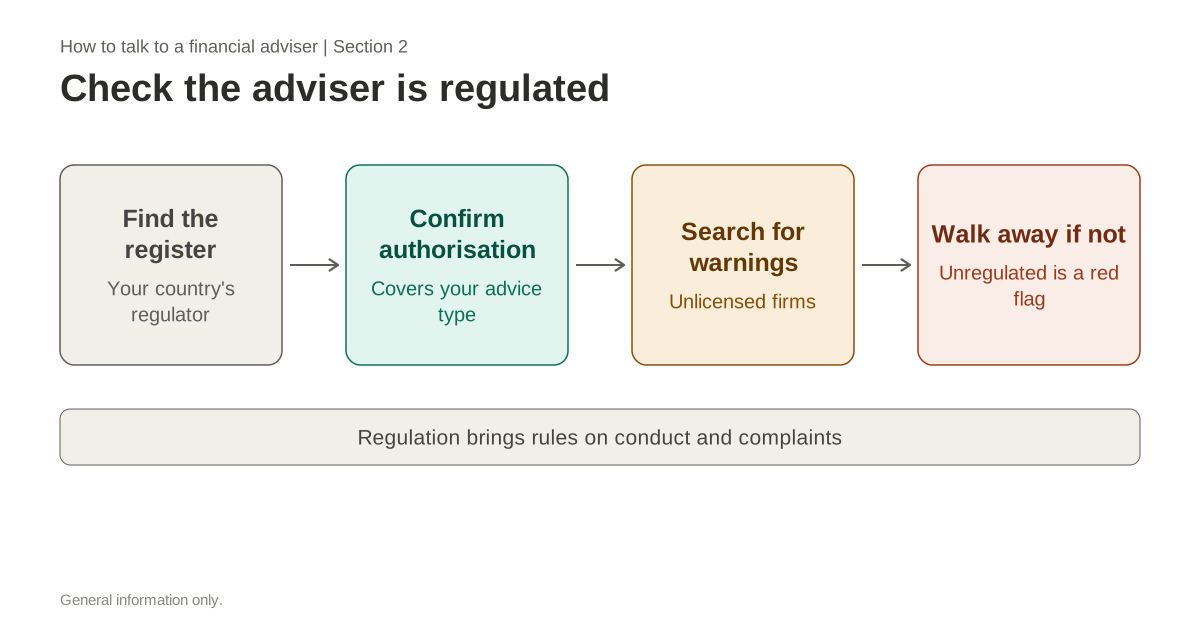
In most countries, financial advisers must be authorised or registered by a regulator. Check the register before you agree to anything, and confirm that the adviser is allowed to give the type of advice you need. Regulators also publish warnings about unlicensed firms, so search for any concerns before you proceed.
Regulation provides protection, including rules on conduct, disclosure and complaints. An unregulated person offering financial advice is a serious warning sign.
Ask how they are paid
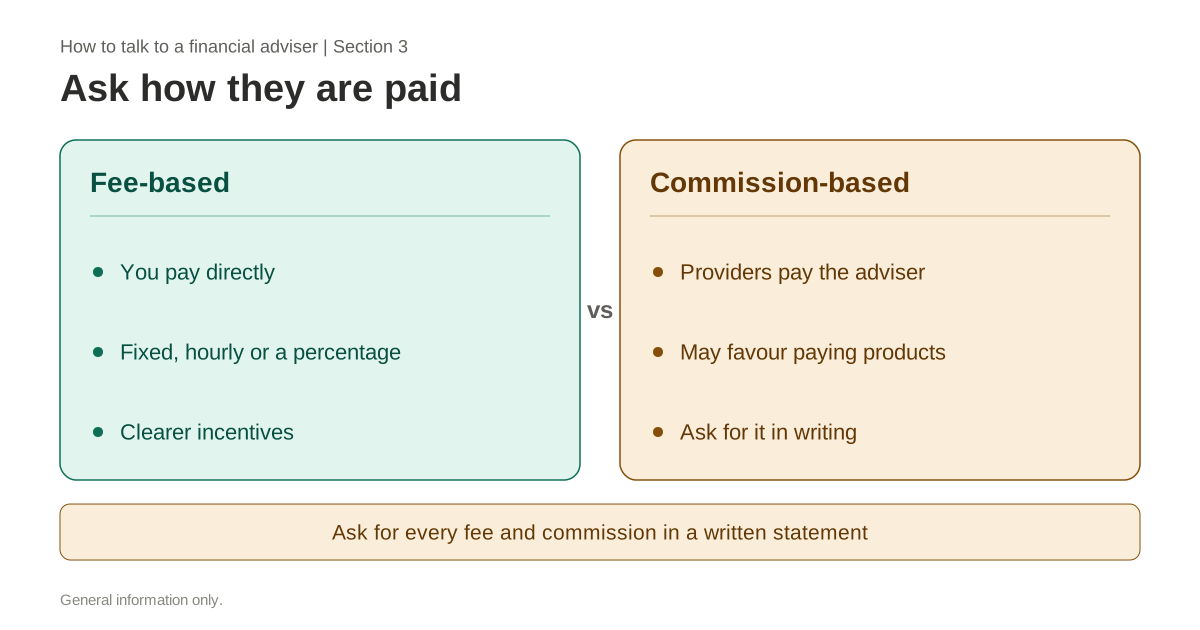
Advisers are paid in several ways. Some charge a fixed or hourly fee, some charge a percentage of the assets they manage, and some earn commission on the products they recommend. Each model can create different incentives. Commission-based advice may lead to a product being recommended because it pays the adviser, rather than because it suits you best.
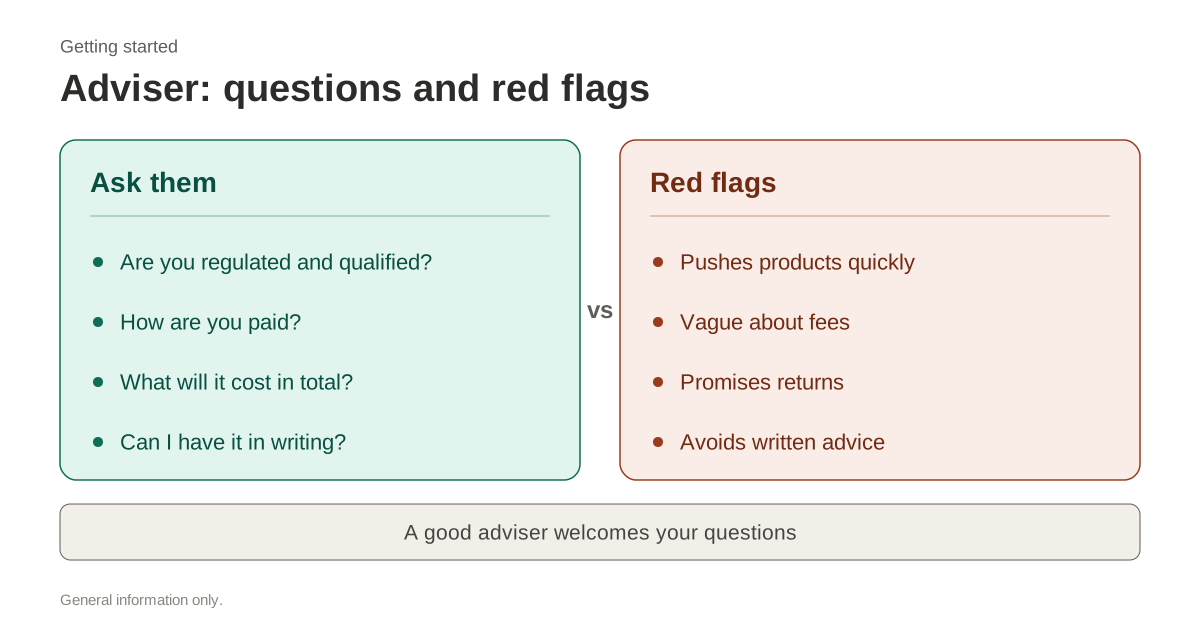
Ask for a clear, written statement of all fees and any commissions. Ask whether they receive payments from providers, and how those payments could affect their recommendations.
Ask about suitability
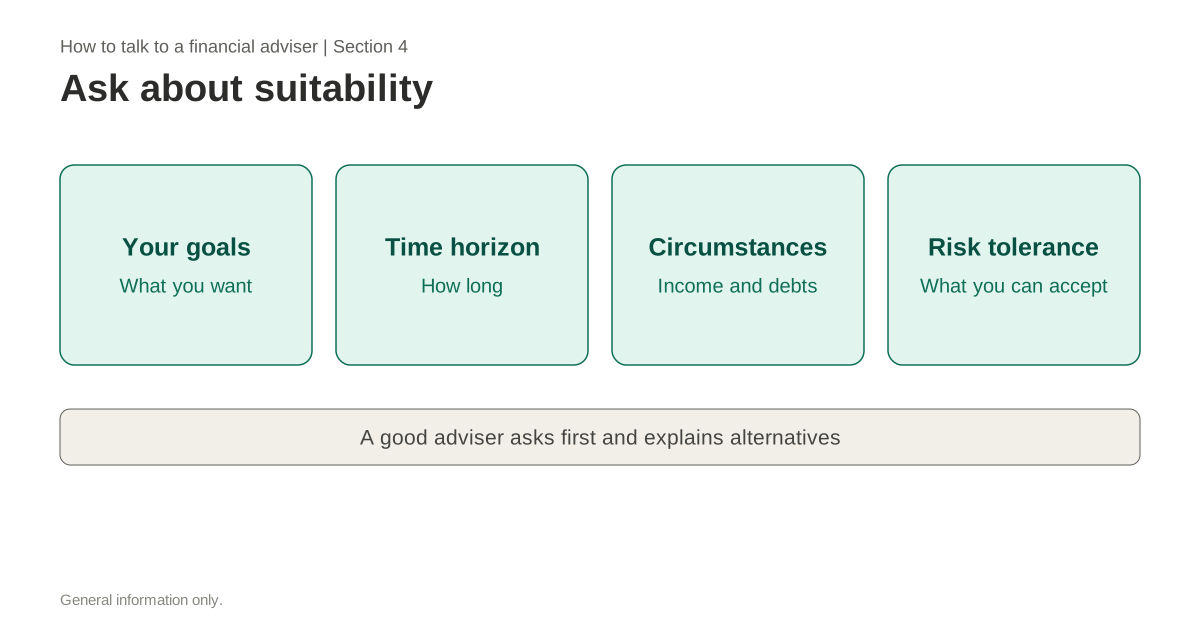
A suitable recommendation fits your goals, time horizon, circumstances and risk tolerance. Ask the adviser to explain why a particular product suits you, and what the alternatives are. A good adviser will ask you questions before making any recommendation, and will be willing to say when a product is not appropriate.
Be wary of pressure to decide quickly, and of recommendations that come before the adviser has understood your situation.
Ask about costs
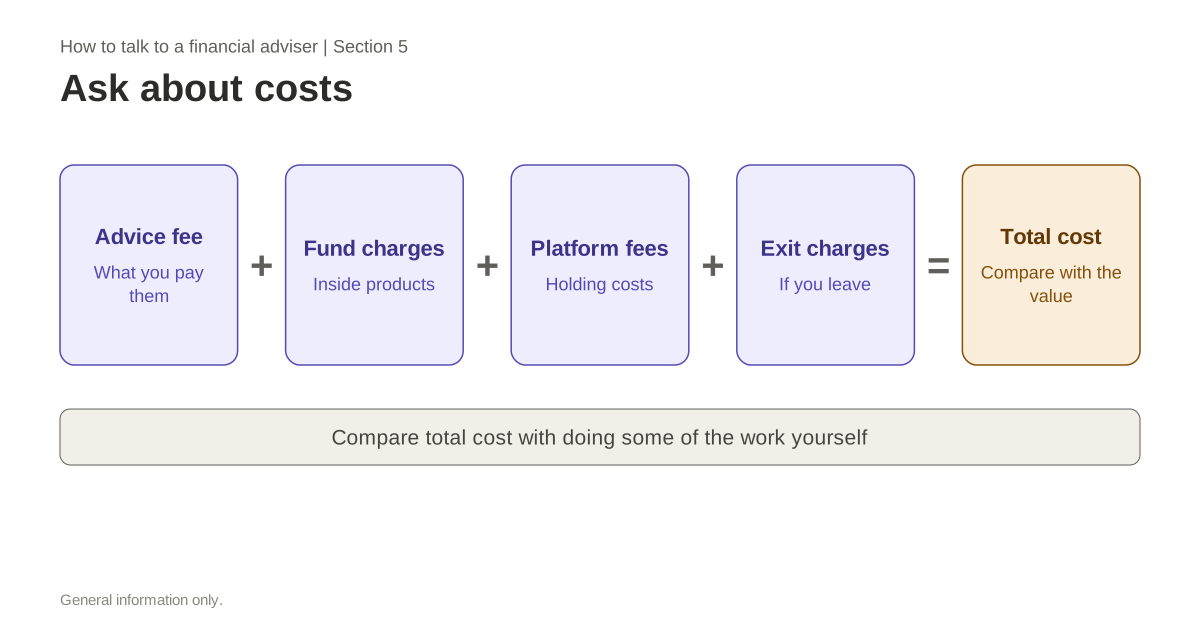
Costs are the most reliable predictor of long-term returns that you can control. Ask for the total cost of the advice and the products, including fund charges, platform fees and any exit charges. Compare that figure with the value of the service you are receiving, and with the cost of doing some of the work yourself.
Prepare for the meeting
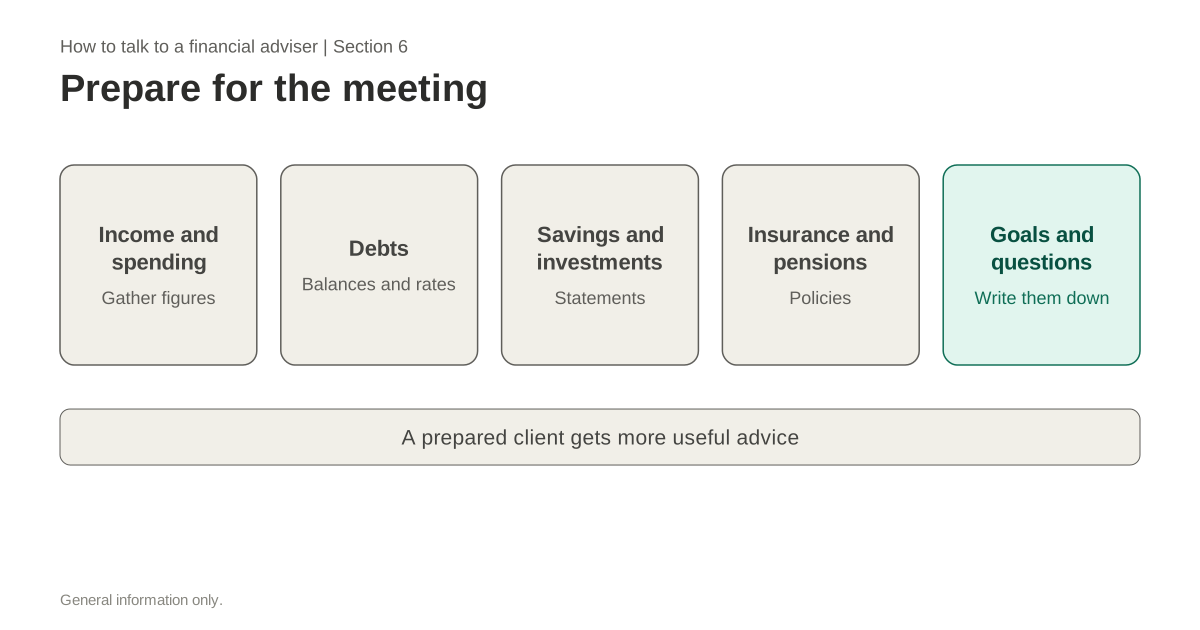
Before the first meeting, gather your income, expenses, debts, savings, investments, insurance policies and pensions. List your goals and your concerns, and write down the questions you want answered. A prepared client gets more useful advice, and it saves the adviser time as well as your money.
Judge the advice
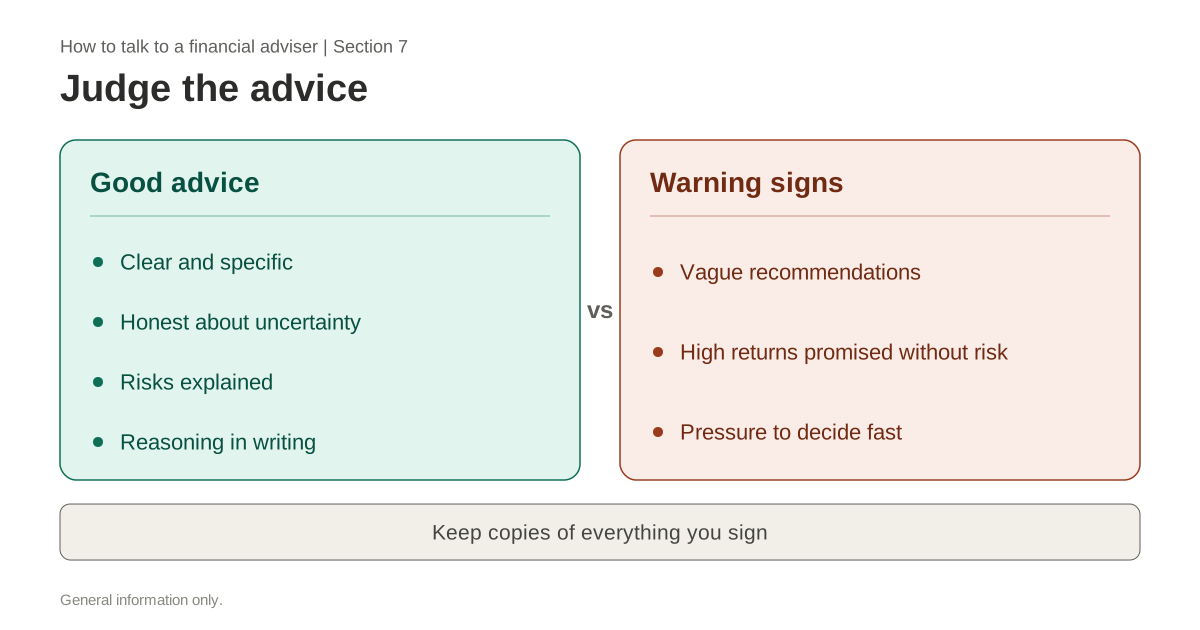
Good advice is clear, specific and honest about uncertainty. It explains the assumptions behind any projection, the risks of each option and what happens if things go wrong. It should also be consistent with your stated goals. If the advice is vague, or if it promises high returns without risk, look elsewhere.
Ask for the reasoning behind each recommendation in writing, and keep copies of everything you sign.
Know your rights
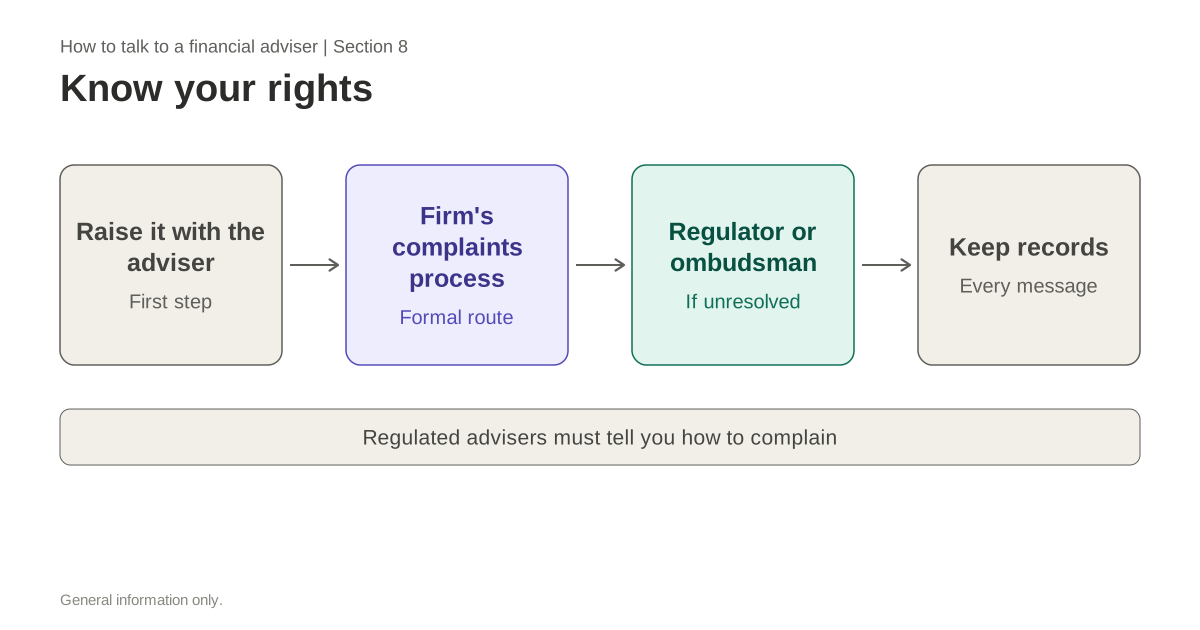
Most regulated advisers must tell you how to complain and which body handles disputes. If you are unhappy with the advice, raise the issue with the adviser first, then with the complaints process of the firm, and then with the regulator or ombudsman where available. Keep records of your communications.
Using advice wisely
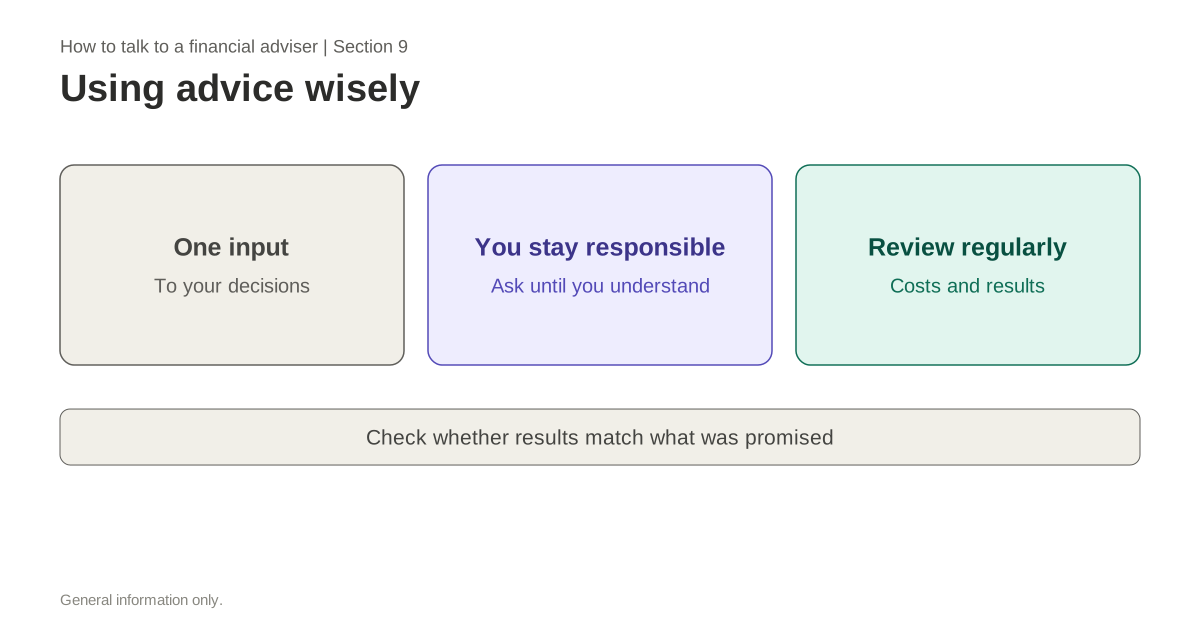
Advice is most useful as one input to your own decisions. You remain responsible for the choices you make, so ask questions until you understand the plan. Review the plan with your adviser regularly, and check whether the costs and results match what was promised.
When to change adviser
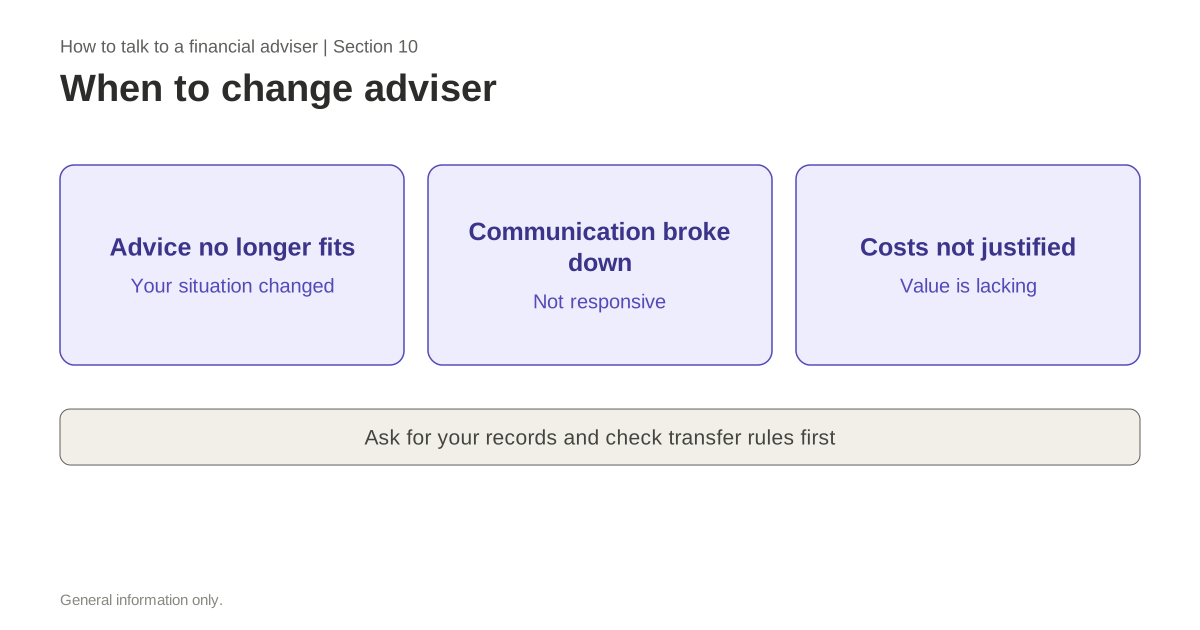
A change of adviser may be sensible if the advice no longer fits your situation, if communication has broken down, or if the costs are no longer justified by the service. Ask for your records before you leave, and check the rules on transferring investments or pensions. Changing adviser is a normal part of managing your finances, not a failure.
Keeping control of the decision
You remain responsible for your money. Keep a clear record of what you agreed, why you agreed it and how you can change it. If something does not feel right, pause the process. A good adviser respects your right to take time and to ask questions.
Preparing questions in advance
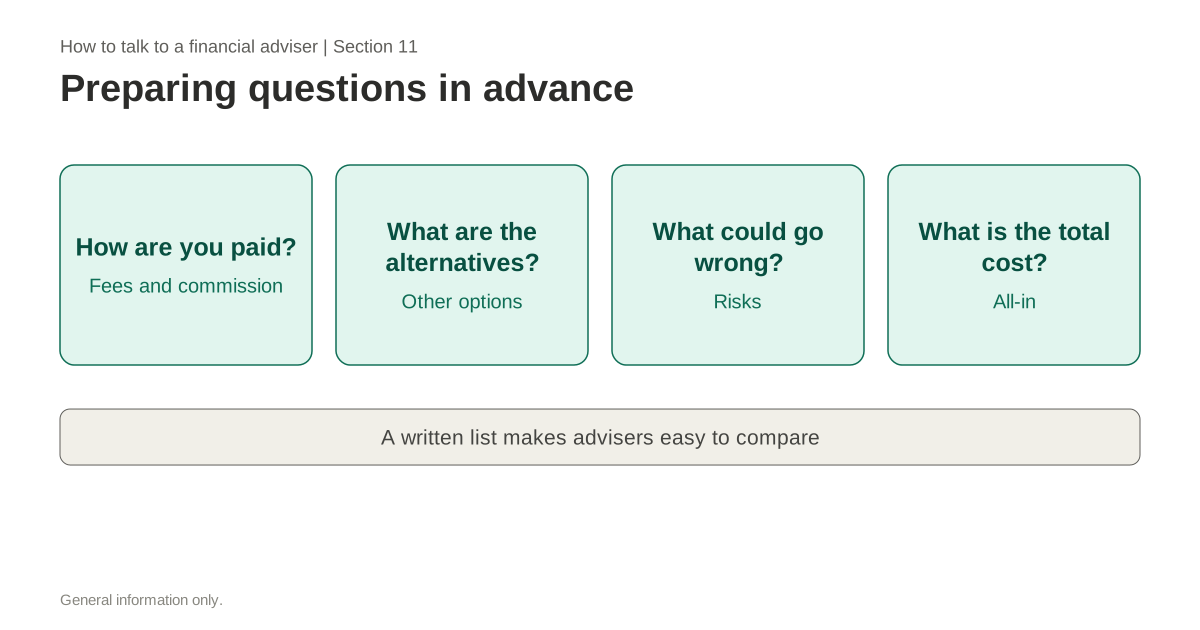
Write your questions down before the meeting, and bring the list. Useful questions include how the adviser is paid, what alternatives exist, what could go wrong, what the total cost is and how the plan will be reviewed. A written list keeps the conversation focused, and it makes it easier to compare different advisers on the same points.
Making a decision
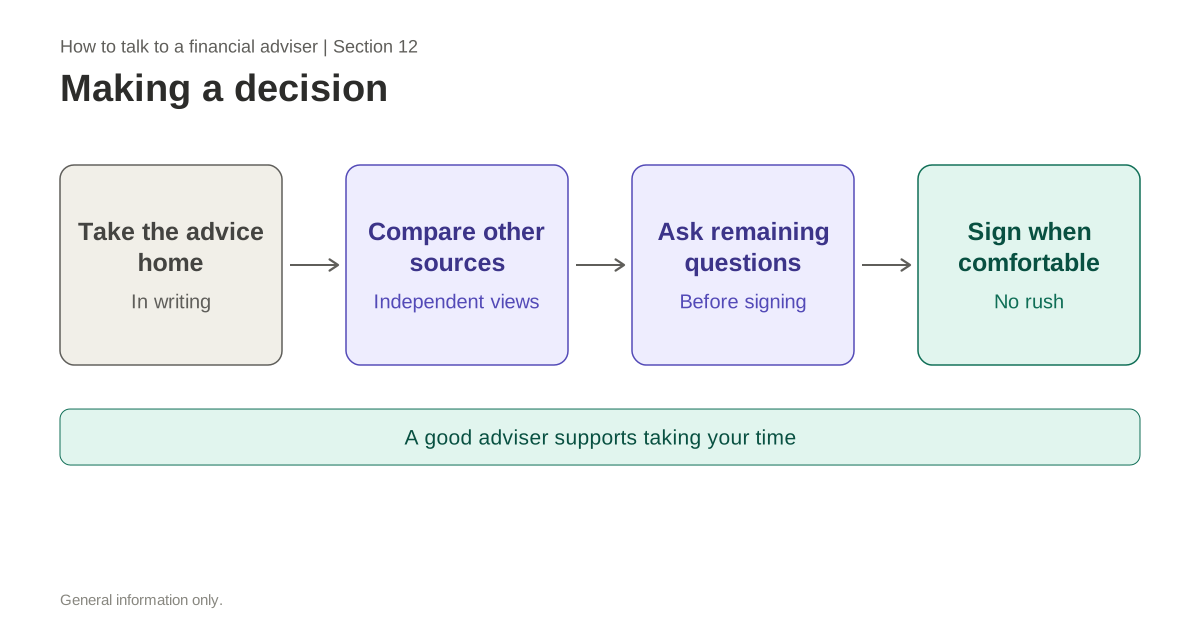
Do not make a decision on the day of the first meeting unless you are completely comfortable. Take the written advice home, compare it with other sources, and ask any remaining questions before you sign. A good adviser will support this approach and will not pressure you to commit quickly.
The bottom line
A good financial adviser is regulated, transparent about fees and conflicts, and focused on your goals. Prepare for the meeting, ask how they are paid and why each recommendation suits you, and keep a written record. The best advice leaves you better informed, not simply dependent on someone else's decisions.
Frequently asked questions
Do I need a financial adviser?
Not always. Simple finances can often be managed alone with good information. An adviser is most useful for complex situations, such as retirement planning across several accounts, tax issues or a large change in circumstances.
How can I check an adviser is legitimate?
Search the regulator's public register in your country, confirm the adviser's authorisation covers the advice you need, and look for any warnings or complaints. Never send money to someone who is not regulated.
What is the difference between fee-based and commission-based advice?
Fee-based advice is paid directly by you, usually as a fixed or percentage fee. Commission-based advice is paid by product providers, which can create a conflict of interest if it influences the recommendation.
What should I do if I am unhappy with the advice?
Raise the concern with the adviser and the firm first, keep written records, and use the complaints process. If unresolved, contact the regulator or the ombudsman in your country.