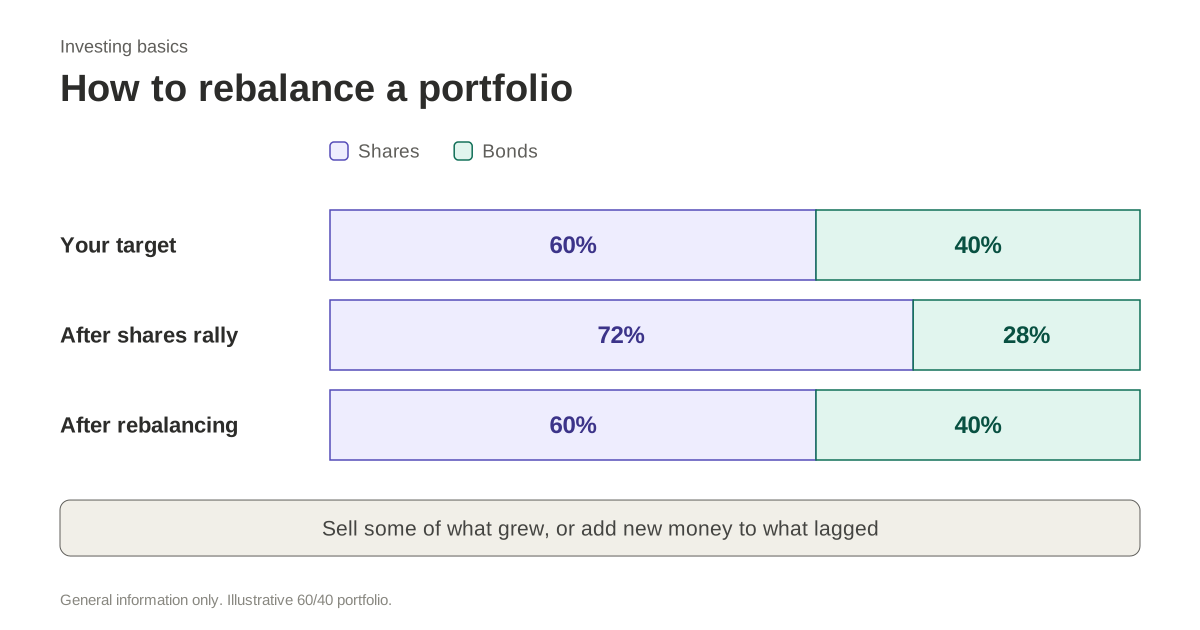
Rebalancing means bringing a portfolio back to its target mix after markets have moved it away. If shares have risen strongly, they may now make up a larger share of your money than you intended, which means you carry more risk than you planned. Rebalancing restores the balance you chose, usually by selling some of what has grown and adding to what has lagged.
This article explains why drift happens, how to decide when to rebalance and how to do it efficiently. It is general information, not personal advice.
Why portfolios drift
Different investments grow at different speeds. Over a year in which shares rise and bonds stay flat, the share of your portfolio in shares increases, even if you did nothing. Over several years, this drift can change the risk profile considerably. A portfolio that began at sixty per cent shares may be seventy-five per cent shares after a long rise, and it will fall further in a downturn.
Drift is not a mistake, but it is a change in risk that you may not have chosen. Rebalancing keeps your plan in control.
Two ways to decide when
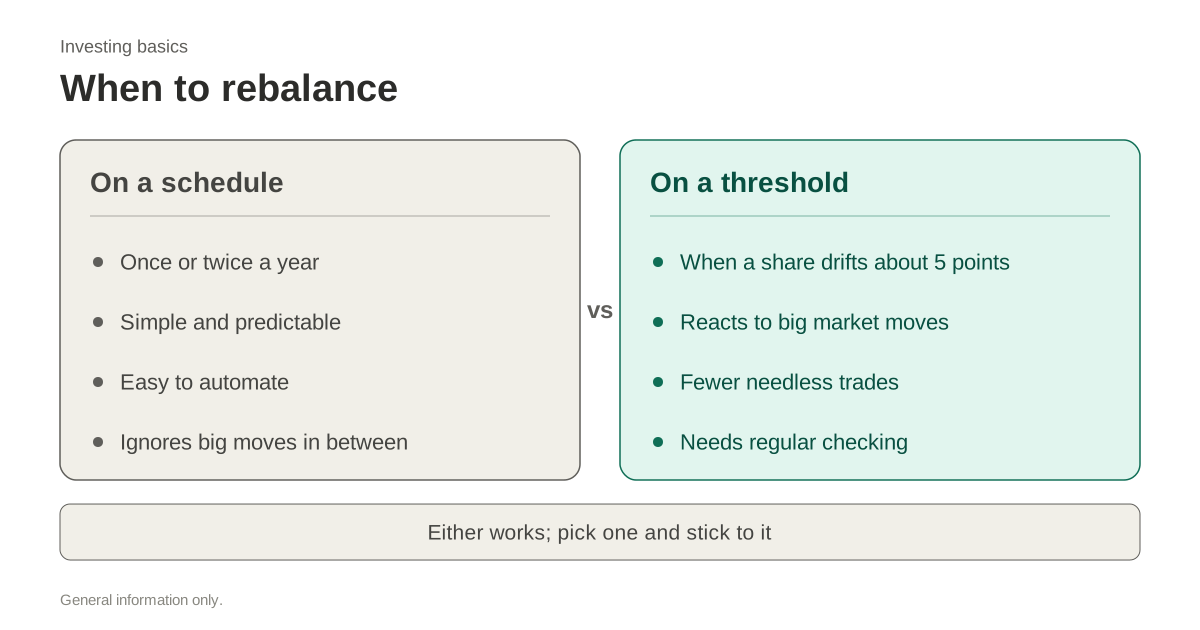
The calendar method rebalances at fixed intervals, such as once a year. It is simple and predictable, and it requires little monitoring. Its weakness is that it may trigger trades even when the portfolio has barely moved, and it may miss large drifts that occur between reviews.
The threshold method rebalances when an asset class moves a set distance from its target, such as five percentage points. It responds to meaningful drift and trades less when markets are calm, but it requires more monitoring. Many investors combine the two, checking on a schedule and acting only if a threshold has been breached.
Rebalance with new money first
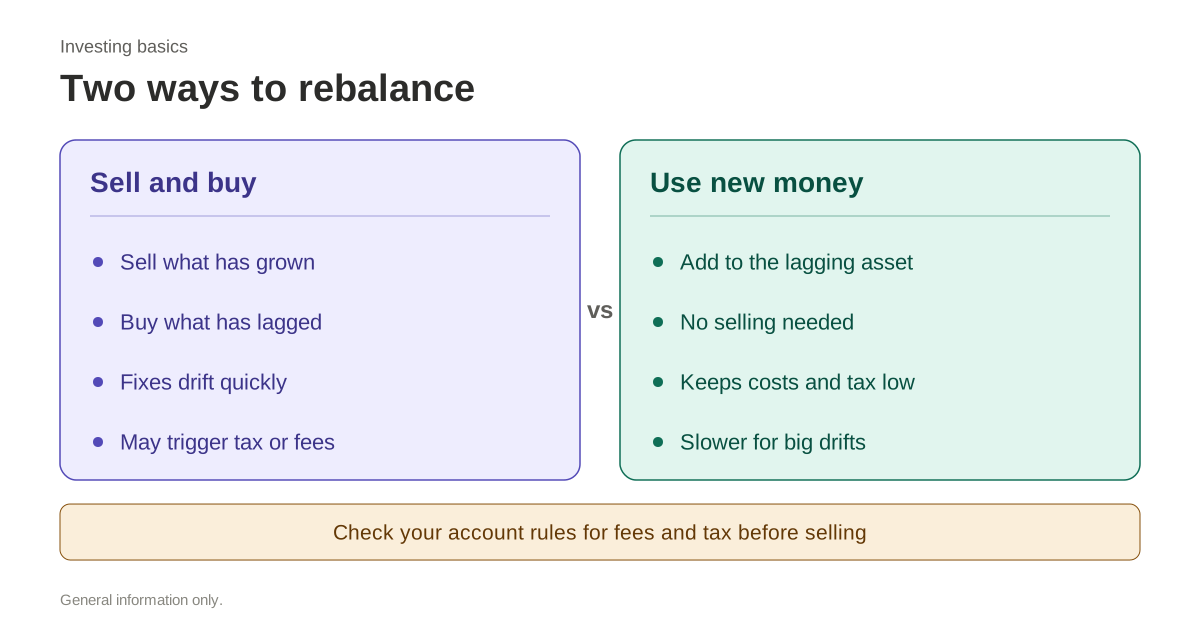
Before selling anything, consider directing new contributions to the asset classes that are below target. This brings the portfolio back towards its mix without triggering sales, and it avoids any costs or taxes that selling would create. It works best when contributions are large enough to make a difference, and when the drift is moderate.
If new money alone cannot restore the target, you will need to sell some holdings. A useful approach is to sell from the overweight asset class and use the proceeds to buy the underweight one, keeping the total invested amount unchanged.
Costs and taxes
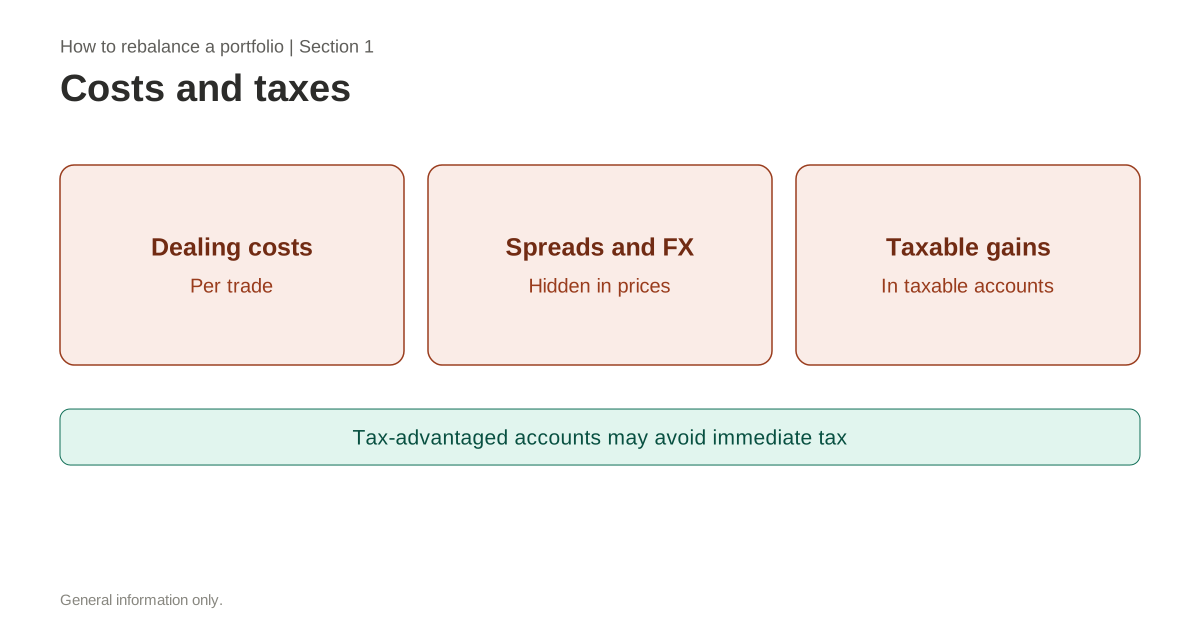
Each trade can carry dealing costs, spreads and currency conversion charges. In taxable accounts, selling a holding may also create a taxable gain. These costs reduce the benefit of rebalancing, so weigh them against the risk reduction you gain.
In some tax-advantaged accounts, trading creates no immediate tax, which makes rebalancing easier. Check the rules where you live, and consider holding the most actively rebalanced assets in those accounts where possible.
Avoid timing the market
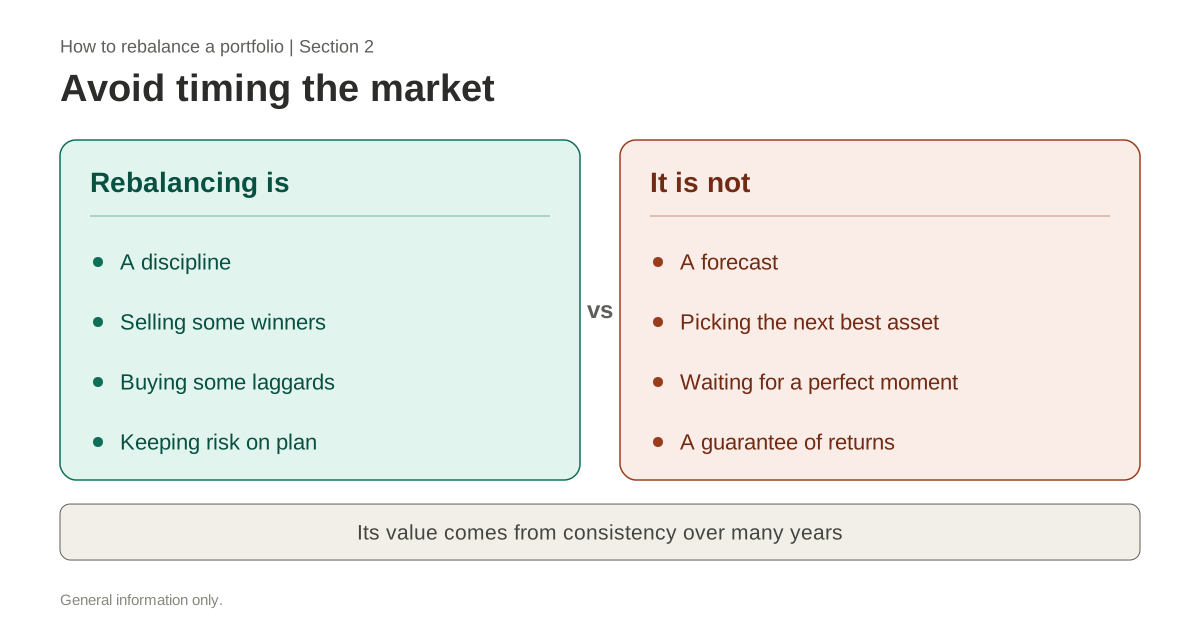
Rebalancing is a discipline, not a forecast. It means selling some of what has done well and buying some of what has done poorly, which can feel uncomfortable. The point is to maintain the risk you chose, not to predict which asset will do best next. Rebalancing can help or hurt in any given period, and its value comes from keeping the plan consistent over many years.
Do not wait for the perfect moment, and avoid delaying a rebalance because you expect a particular asset to keep rising or falling.
A simple process
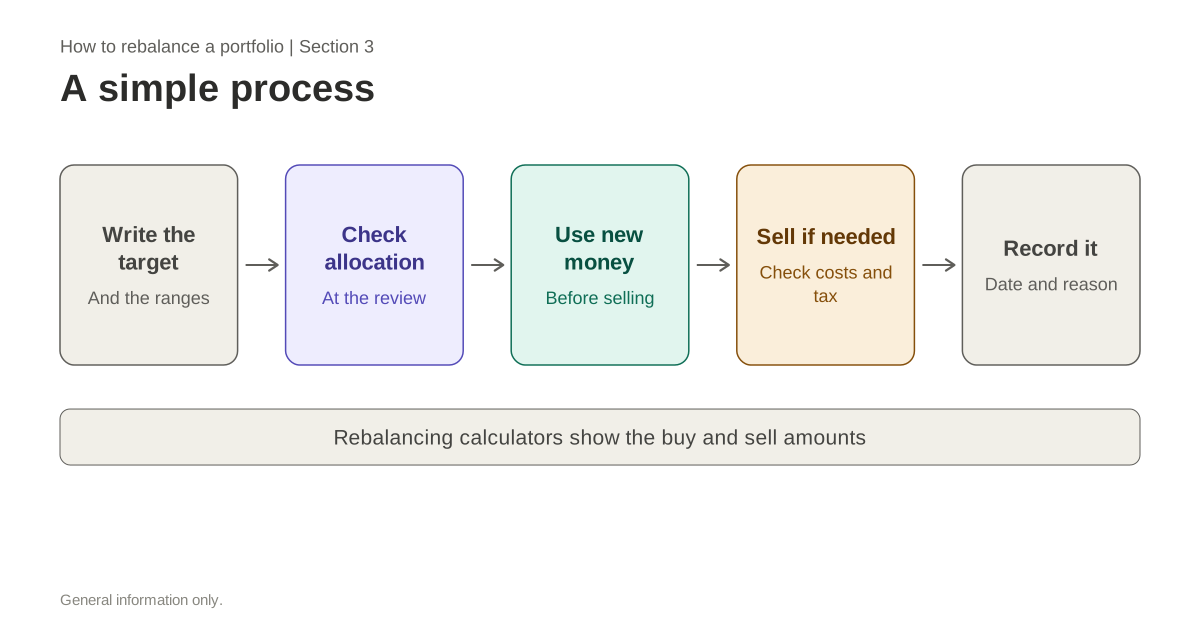
Start by writing down your target mix and acceptable ranges. Check the current allocation at your scheduled review, and calculate the trades needed to restore the target. Consider whether new contributions can close the gap first. If selling is necessary, check the costs and taxes, then place the trades and record the date and the reason.
Our portfolio rebalancing calculator shows the buy and sell amounts needed to reach a target mix.
Keep records
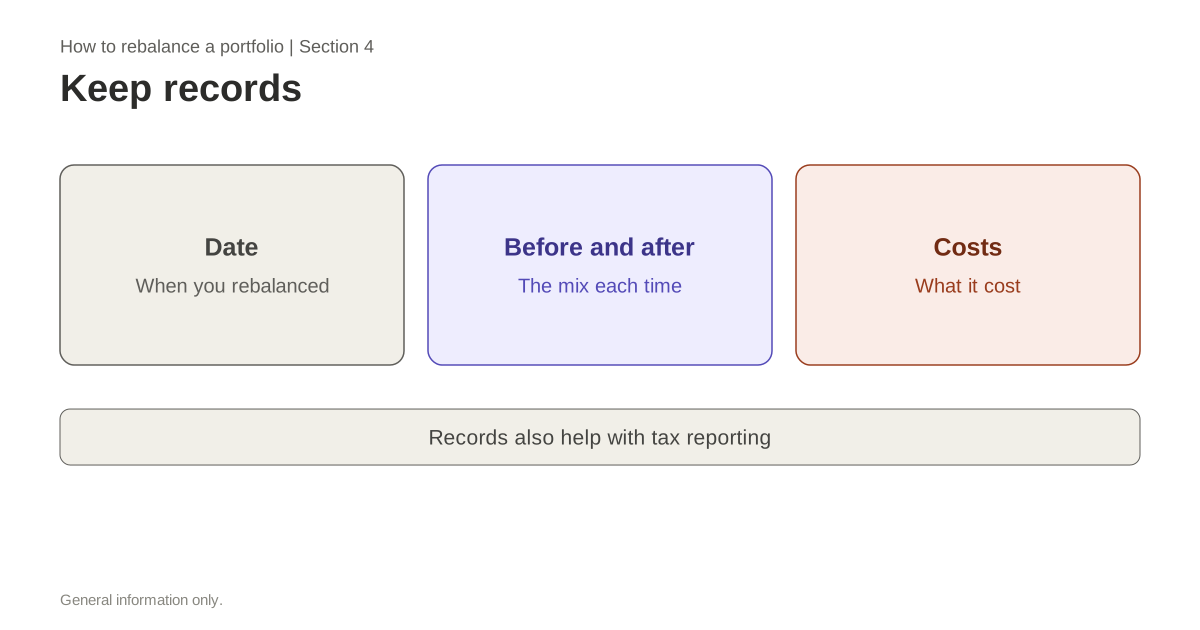
Keep a record of each rebalance, including the date, the allocation before and after, and the costs. Over time, this record shows whether your approach is working and whether your thresholds are sensible. It also helps with tax reporting.
Rebalancing with the tax year in mind
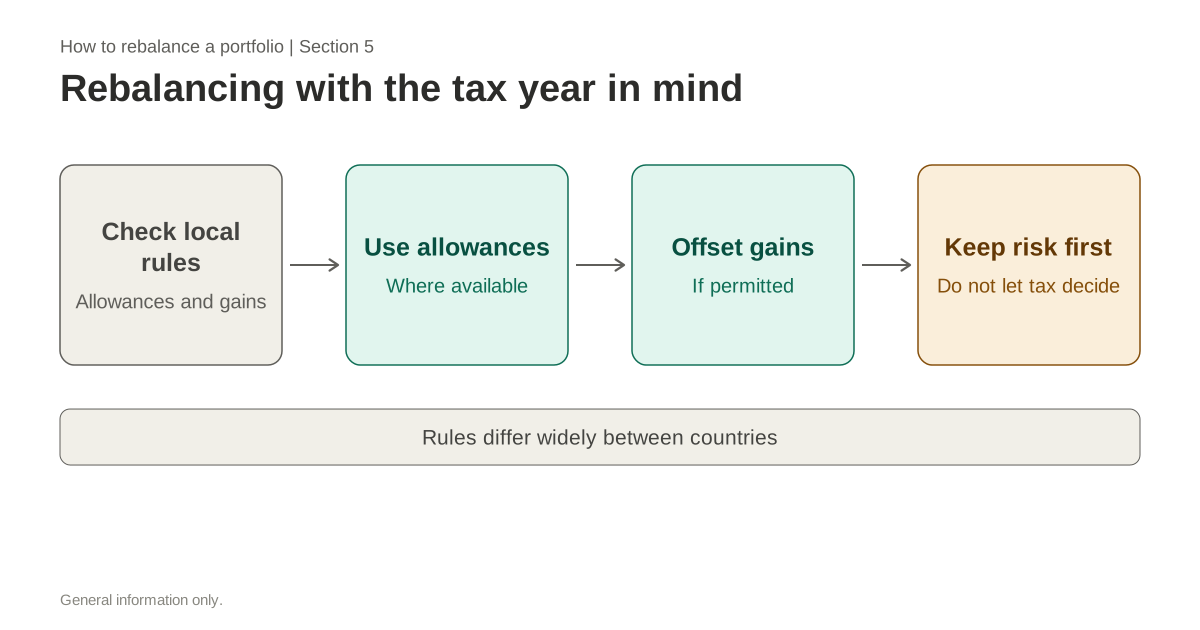
In many countries, the tax year sets a convenient point for reviewing holdings, particularly where gains are taxed. Rebalancing near the end of a tax year may let you use allowances and offset gains, but the rules differ widely. Check the local rules before timing trades around the tax calendar, and avoid letting tax considerations override the risk you are trying to control.
Writing a rebalancing rule
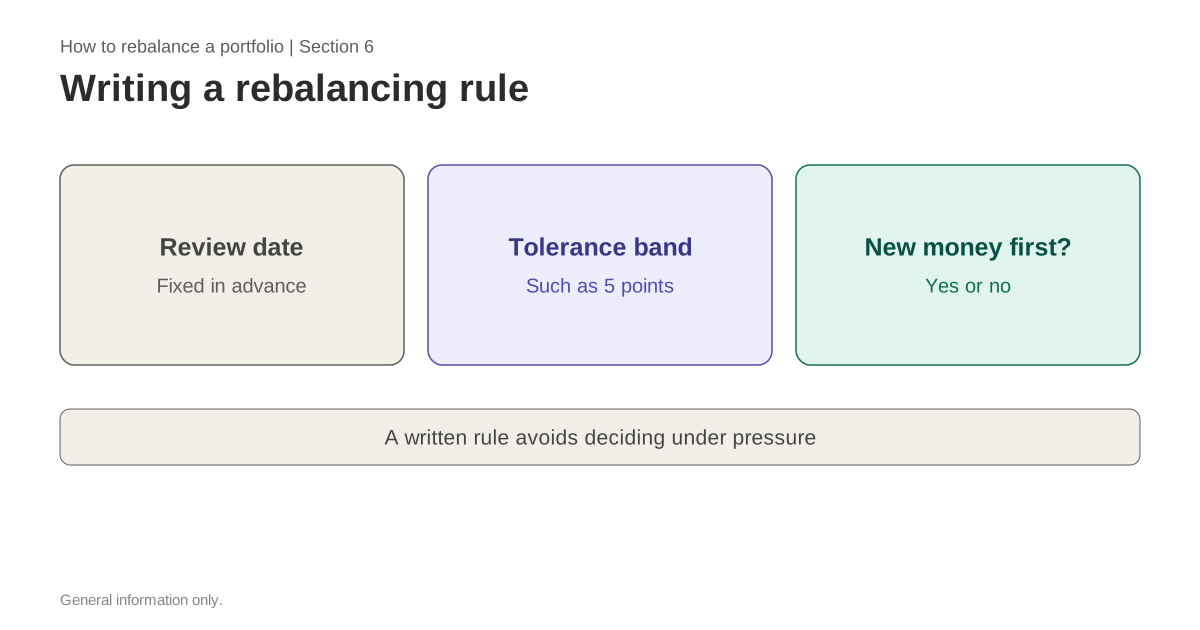
Write down your rebalancing rule before you need it: the review date, the tolerance band, and whether you will use new money first. A written rule removes the need to decide under pressure, and it keeps the process consistent in both rising and falling markets.
Rebalancing as a habit
Treat rebalancing as a routine rather than an event. The same review date, the same rule and the same record each time make the process predictable. Predictability is what keeps you from making emotional decisions when markets move sharply in either direction.
A worked example
Suppose your target is 60% shares and 40% bonds, and a portfolio worth 20,000 has drifted to 70% shares and 30% bonds. Shares are now 14,000, and the target is 12,000, so you would sell 2,000 of shares and buy 2,000 of bonds. The portfolio returns to 60/40 without changing its total value, and the trades are sized to the drift rather than to a guess.
Setting a tolerance band
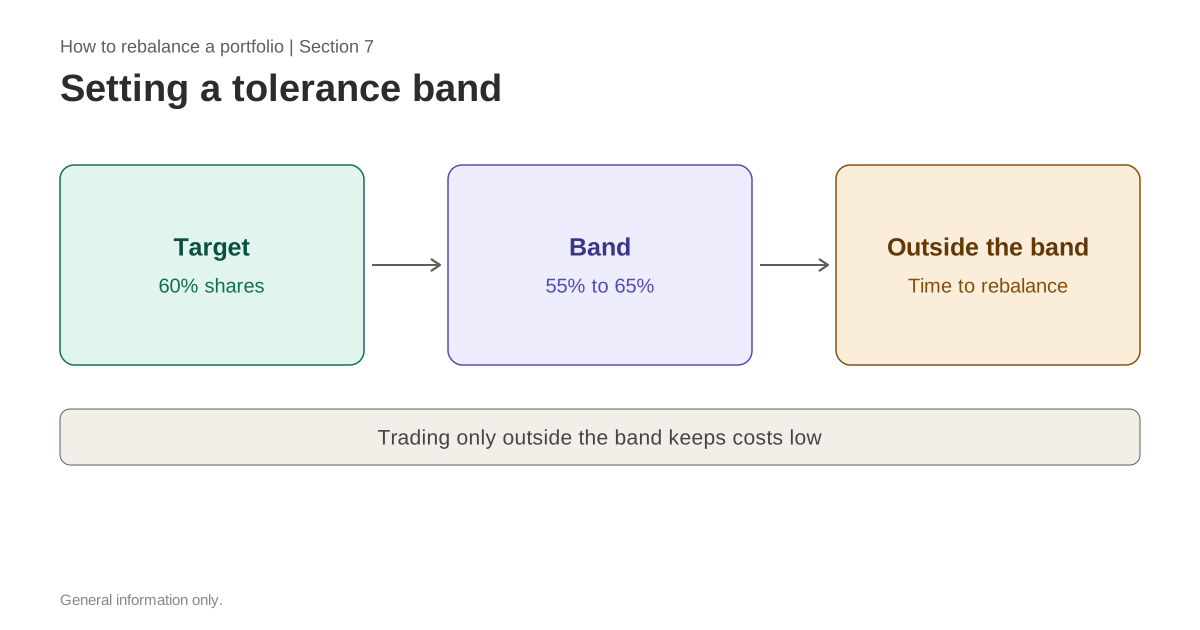
Many investors use a tolerance band, such as five percentage points either side of the target. Rebalancing only when a holding moves outside the band keeps trading low and avoids trades that add cost for little benefit. Write the band into your plan so you apply it consistently.
Rebalancing as a habit
Treat rebalancing as a routine rather than an event. The same review date, the same rule and the same record each time make the process predictable. Predictability is what keeps you from making emotional decisions when markets move sharply in either direction.
The bottom line
Rebalancing keeps your portfolio's risk aligned with your plan. Use new money where you can, choose between calendar and threshold methods, account for costs and tax, and do not try to time the market. A simple, consistent process is more valuable than a clever one that you rarely follow.
Frequently asked questions
How often should I rebalance?
Once a year is a common choice, or when an asset class moves a set distance from its target. The right frequency balances keeping risk on target against the costs of trading.
Is rebalancing the same as timing the market?
No. Rebalancing restores a chosen mix, which often means selling some of what has risen and buying some of what has fallen. It does not depend on predicting which asset will do best.
Can I rebalance without selling?
Often, yes. Directing new contributions to the underweight assets can bring the mix back towards target without triggering sales, which avoids costs and taxes.
Does rebalancing always improve returns?
No. It is mainly a way to control risk. In some periods it helps returns and in others it reduces them. Its purpose is to keep the portfolio in line with your plan over time.