Debt can feel overwhelming, especially when several balances carry interest and the minimum payments barely reduce what you owe. The good news is that most debt can be paid down with a clear plan and steady effort. The aim is to reduce the interest you pay and to free up cash each month for repayment.
This article covers practical steps that work for most people. It does not give legal or regulated advice, and if your debts are unmanageable, a free debt adviser or non-profit credit counselling service in your country can help you look at all your options.
Start with a full list
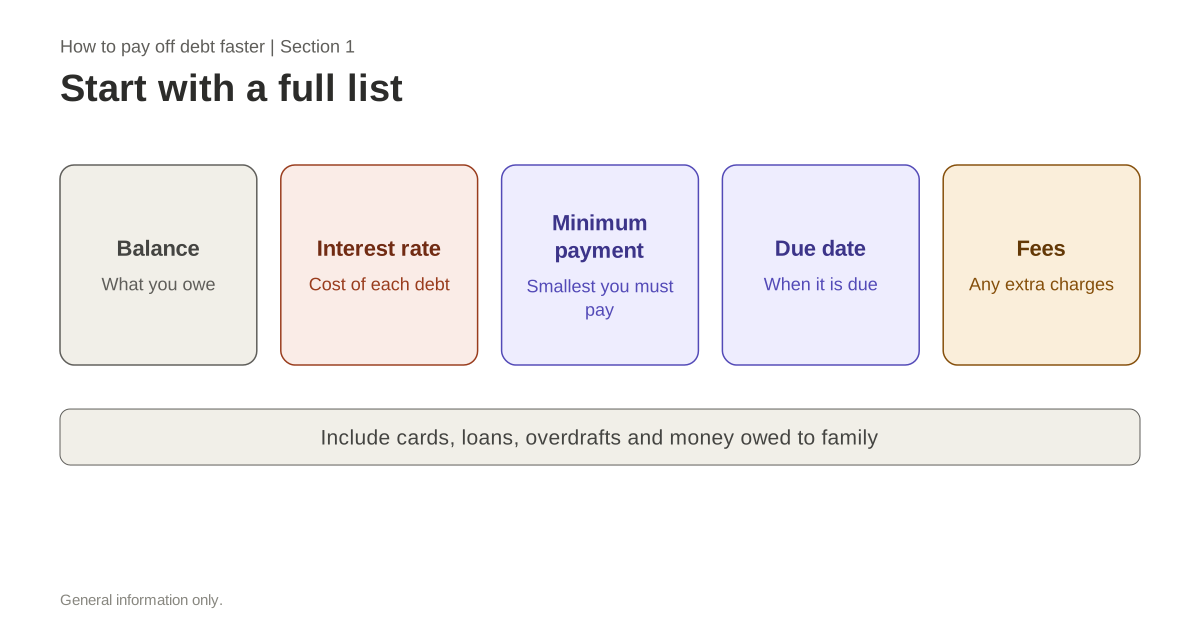
Write down every debt you owe. For each one, record the balance, the interest rate, the minimum payment, the due date and any fees. Include credit cards, personal loans, store cards, overdrafts and money owed to family or friends. A complete picture shows which debts are most costly and which payments are due first.
Keep the list up to date. Reviewing it every month reminds you of progress and helps you spot new charges early.
Make a realistic budget
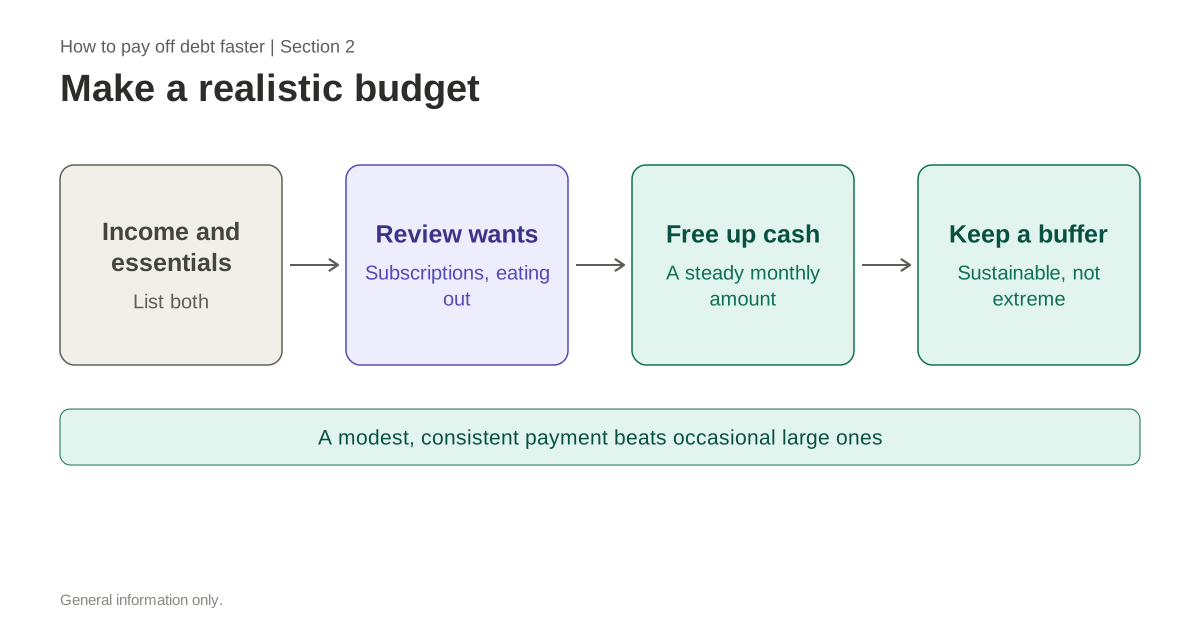
Extra repayment comes from money you can free up. Look at your income and essential costs, then review discretionary spending to find places to cut. Reducing subscriptions, eating out less, and renegotiating bills can all free up cash. Even a modest monthly amount, paid consistently, reduces debt faster than occasional large payments.
Be realistic, though. A plan that leaves no room for ordinary life tends to collapse. Build in a small buffer, and aim for a sustainable extra payment rather than an unrealistic one.
Choose a repayment method
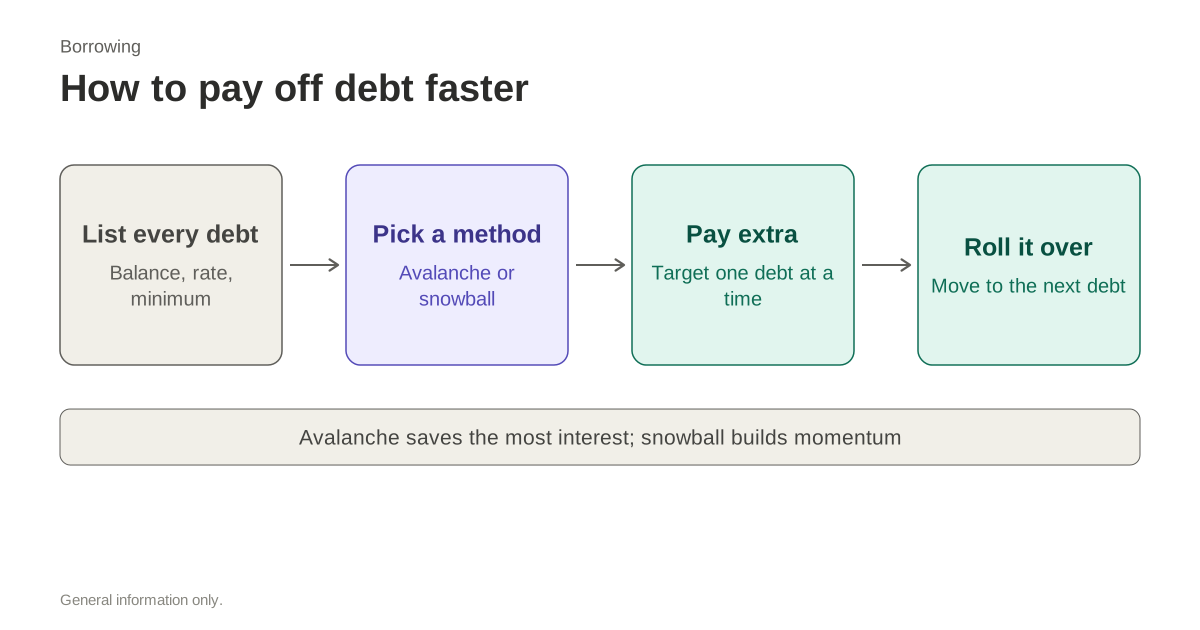
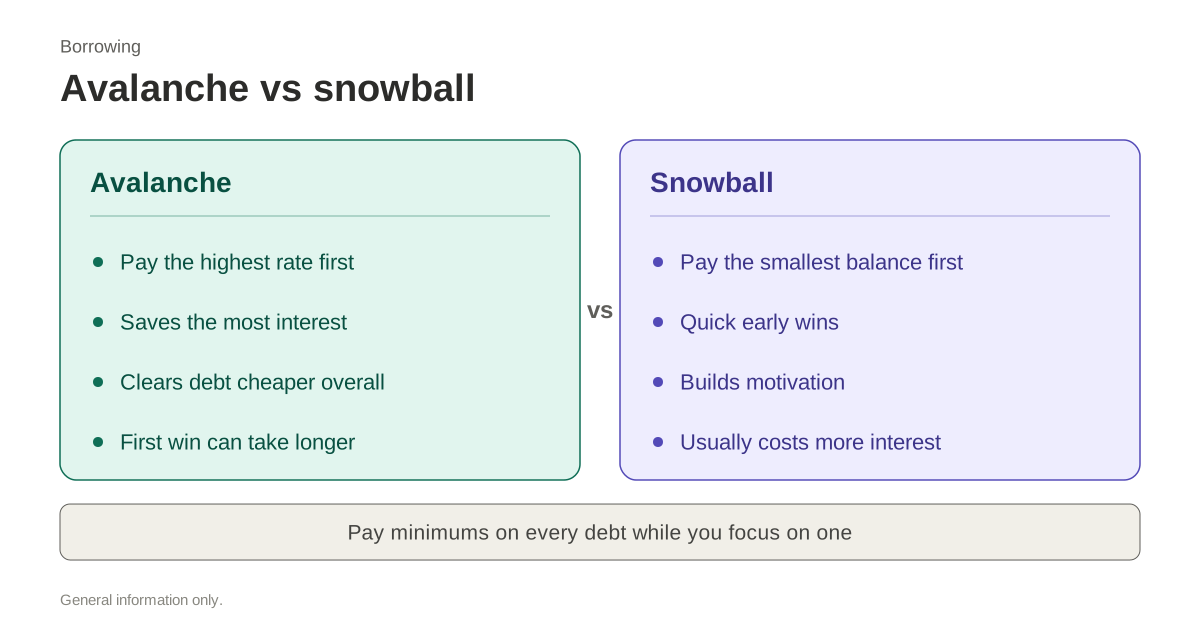
Two common methods are the snowball and the avalanche. The snowball method pays off the smallest balance first, while paying the minimum on the others. Clearing a debt quickly gives a sense of progress. The avalanche method pays off the debt with the highest interest rate first, which usually costs less in interest overall.
Choose the method you are most likely to stick with. Both work if you keep paying. Our debt payoff calculator compares the two for up to three debts and shows the time and interest for each.
Stop adding new debt
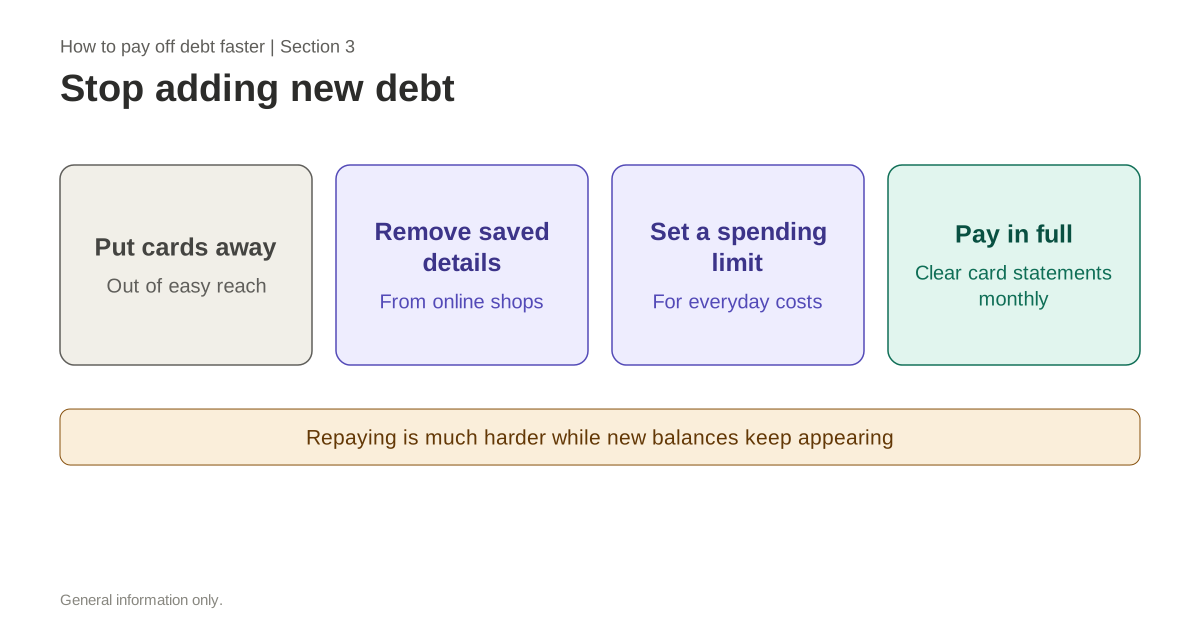
Repaying debt is much harder if new balances keep appearing. Consider putting cards away, removing stored payment details from online shops, or setting a spending limit. If you use a card for everyday purchases, pay the full statement balance each month if you can, so that no interest is charged on it.
Reduce the interest rate
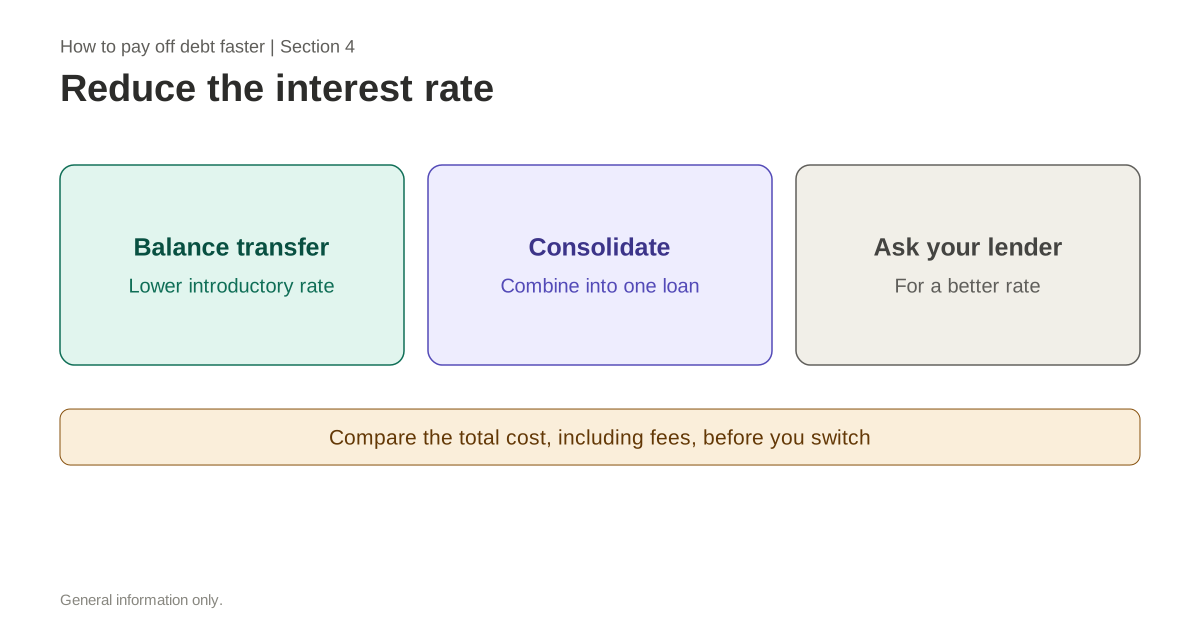
Lowering the interest rate can cut the cost of debt substantially. Some options include transferring a balance to a card with a lower introductory rate, consolidating several debts into one loan, or asking your lender for a better rate. Each option has fees and conditions, so compare the total cost before you switch.
Check the terms of any transfer. Introductory rates often end after a set period, and some transfers charge a fee on the amount moved. Plan how you will repay the balance before the promotional period ends.
Consider consolidation carefully
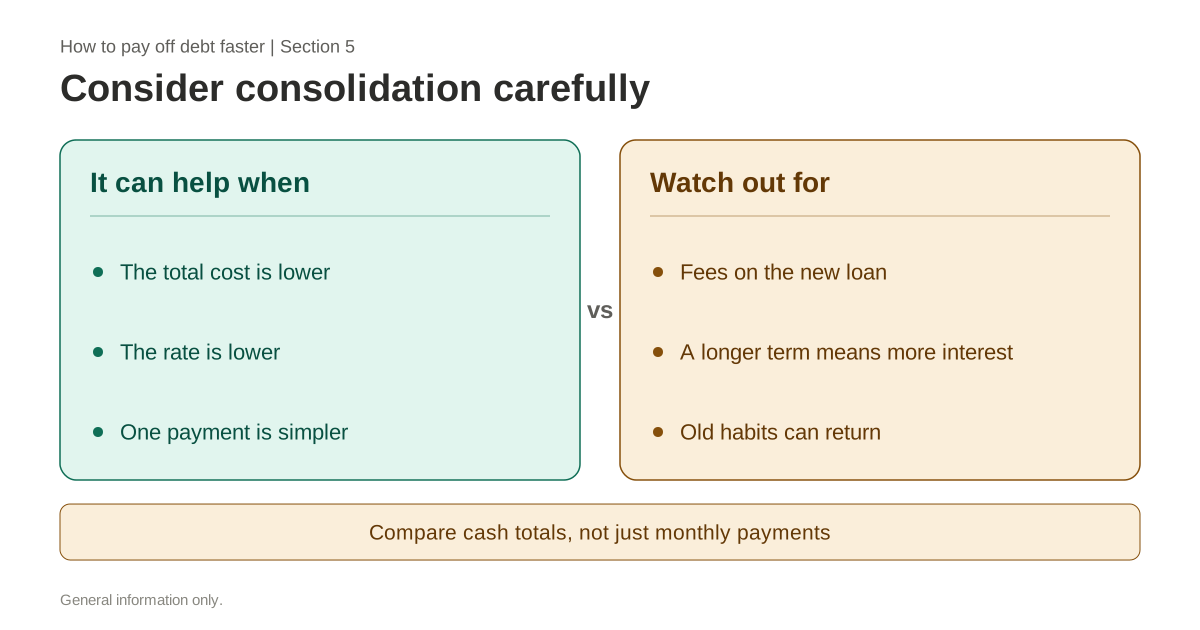
A consolidation loan combines several debts into one, which can simplify repayment and sometimes reduce the rate. It only helps if the total cost, including fees and the longer term, is lower than what you pay now. A longer term can lower the monthly payment while increasing the total interest, so compare the cash totals.
Consolidation also does nothing about the habits that created the debt. Keep the old accounts under control afterwards.
Negotiate with creditors
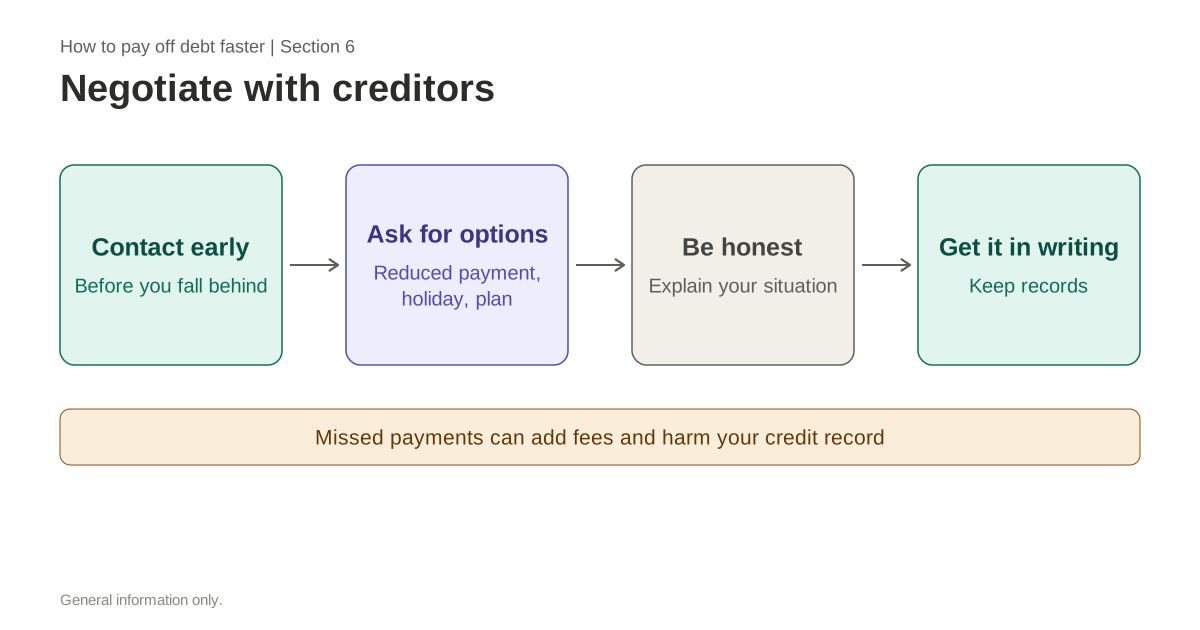
If you are struggling to make payments, contact the lender early. Many lenders offer hardship arrangements, such as a temporary reduced payment, a payment holiday or a restructured plan. Ask what options exist before you fall behind, because missed payments can increase fees and damage your credit record.
Be honest about your situation and keep records of every agreement. Get any new arrangement in writing.
Use windfalls and extra income
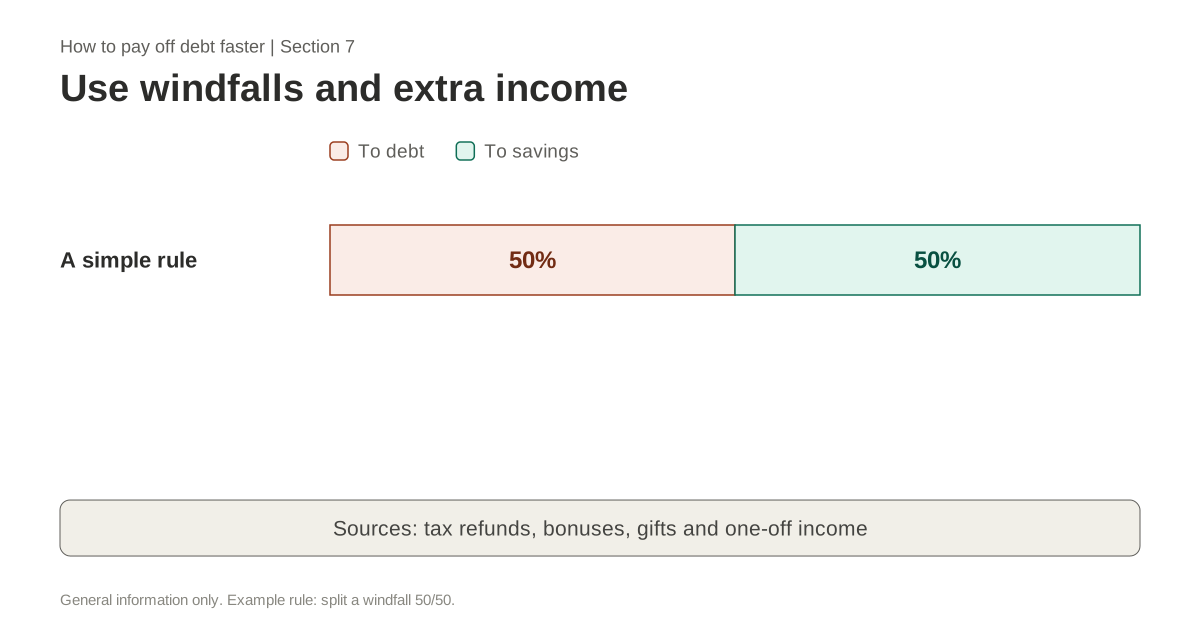
Tax refunds, bonuses, gifts and one-off income can make a large difference if you put them towards debt. A single extra payment reduces the balance and the interest on it. Consider setting a rule in advance, such as putting half of any windfall towards debt and keeping the rest for savings.
Get free help if you need it
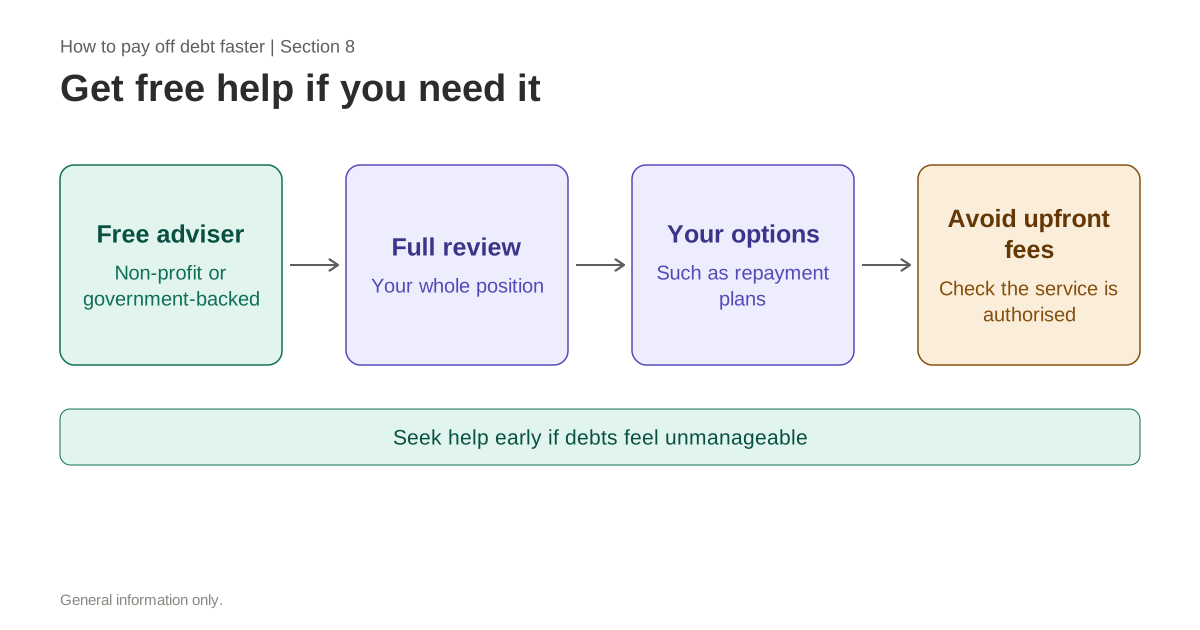
If the debts feel too large to manage, speak to a free debt adviser. Many countries have non-profit credit counselling services or government-backed debt advice. They can review your full position, explain your rights and suggest options such as formal repayment plans. Avoid firms that charge large upfront fees to deal with your debts, and check that any service is authorised.
Stay motivated
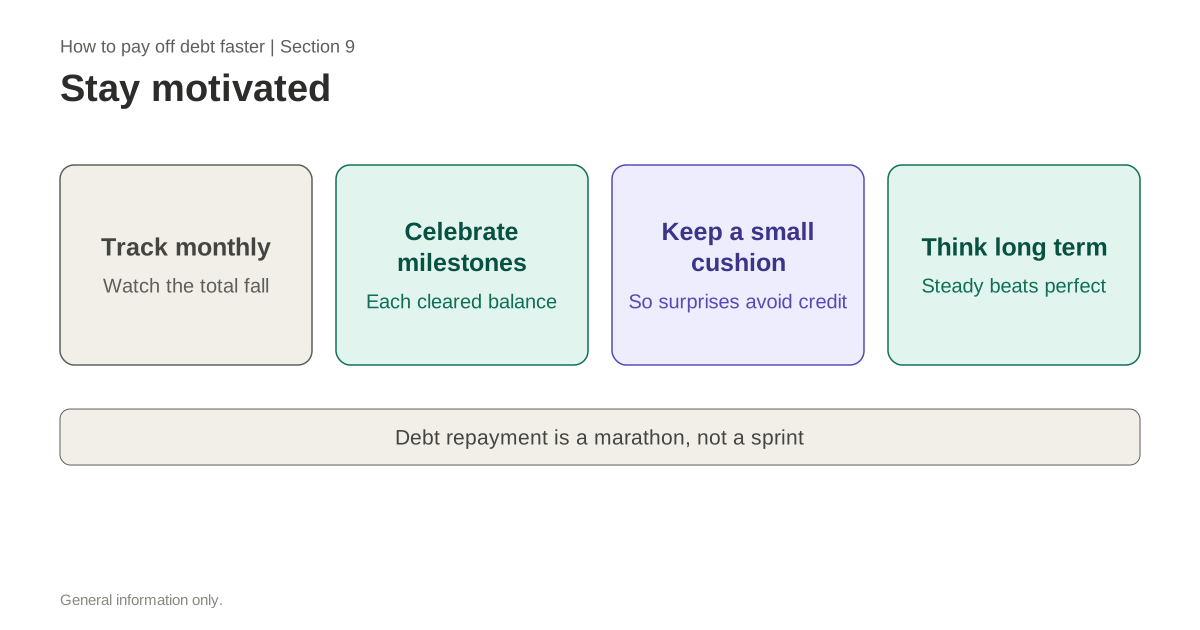
Track progress each month, and celebrate milestones such as clearing a balance. Keep your emergency fund in place, even at a small level, so that the next surprise does not force you back onto credit. Debt repayment is a marathon, and steady progress matters more than any single month.
Using a simple tracker
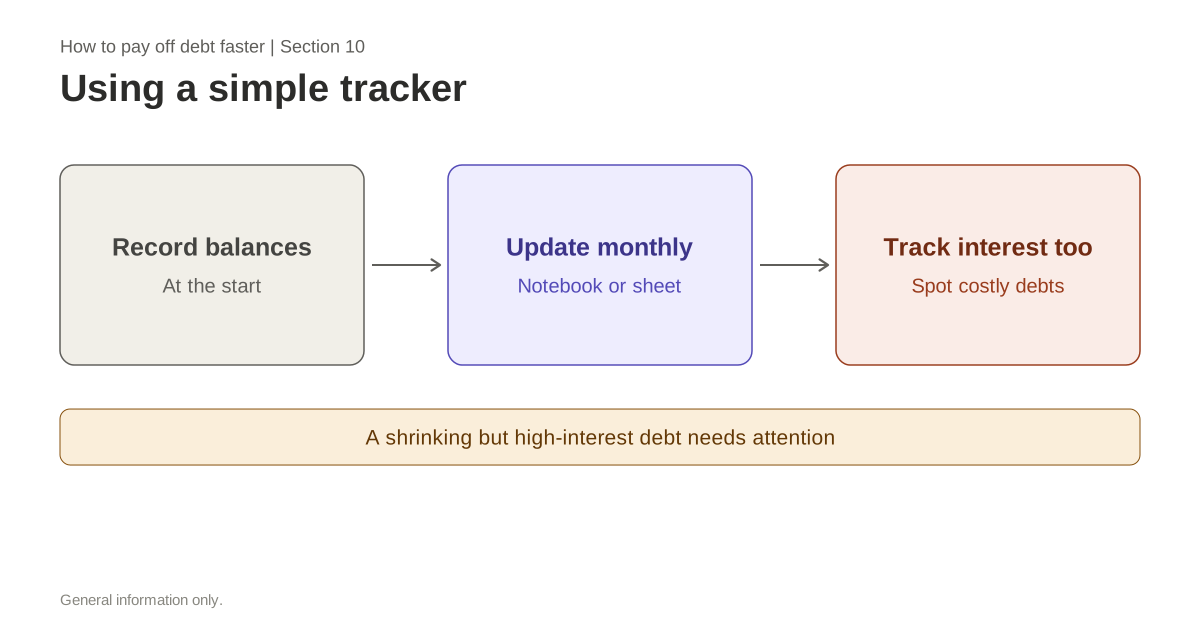
A simple tracker keeps progress visible. List each debt with its balance at the start of the plan, and update it every month. Seeing the total fall, even slowly, sustains motivation. Some people draw a chart or use a spreadsheet, while others simply tick off each balance on a card pinned to the wall. The method matters less than the habit.
Track the interest you pay as well as the balances. A debt that is shrinking but accruing high interest needs attention. Comparing the interest paid each month over time shows whether your plan is working, and it highlights whether a rate reduction or a balance transfer would make a meaningful difference.
The bottom line
Paying off debt faster comes down to a clear list, a realistic budget, a sensible repayment order, lower interest where possible and no new borrowing. Small, consistent payments make a large difference over time, and help is available if the situation becomes unmanageable.
Frequently asked questions
Should I save or pay off debt first?
Most people benefit from a small emergency fund first, then high-interest debt, and then a larger savings goal. The right order depends on the interest rates and how secure your income is.
Is consolidating debt always a good idea?
No. It helps only if the total cost, including fees and the length of the new loan, is lower than what you pay now. Compare the cash totals before you decide.
What should I do if I cannot make my payments?
Contact your lenders as early as possible and ask about hardship options. Seek free advice from a debt counselling service in your country, because missed payments can increase costs and damage your credit.
Does paying more than the minimum really make a difference?
Yes. Extra payments reduce the balance on which interest is charged, so the debt clears sooner and the total interest falls. Use a debt calculator to see the effect for your own balances.