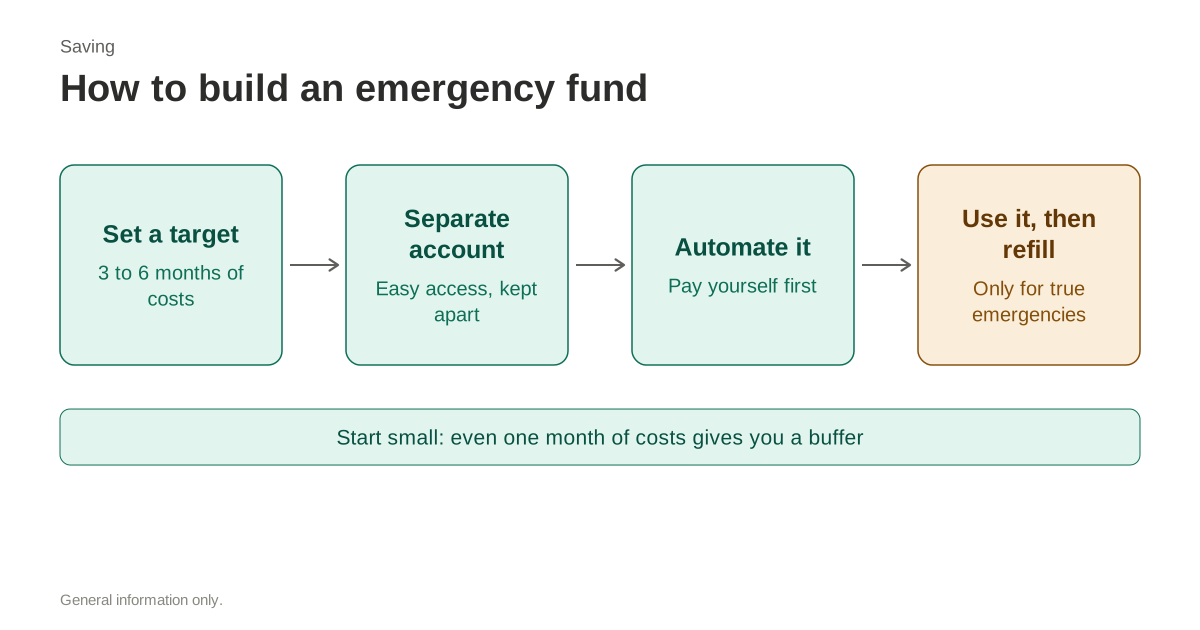
An emergency fund is money set aside for unexpected costs, such as losing your job, a medical bill, a broken appliance or an urgent trip home. It is the difference between a setback you can absorb and a crisis that forces you into expensive borrowing or into selling investments at a bad time. For most people, it is the first financial goal worth reaching.
This article explains why the fund matters, how to set a target, where to keep the money and how to build it even on a modest income.
Why it matters
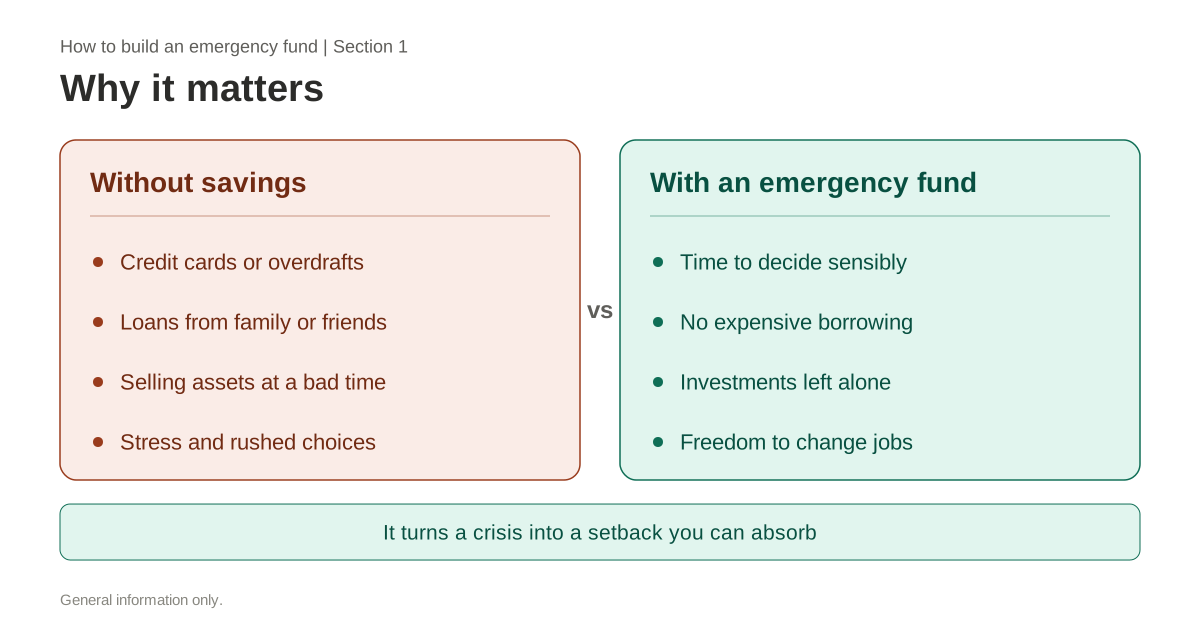
Unexpected costs arrive at unpredictable times. Without savings, the usual options are credit cards, overdrafts, loans from family or friends, or selling assets. Each option can be costly, and some can start a cycle of debt that is hard to escape. An emergency fund removes much of that pressure and gives you time to make a sensible decision.
It also reduces stress. Knowing that you can handle a surprise bill changes how you approach work, money and everyday choices, and it makes it easier to take sensible risks such as changing jobs when a better opportunity appears.
How much to save
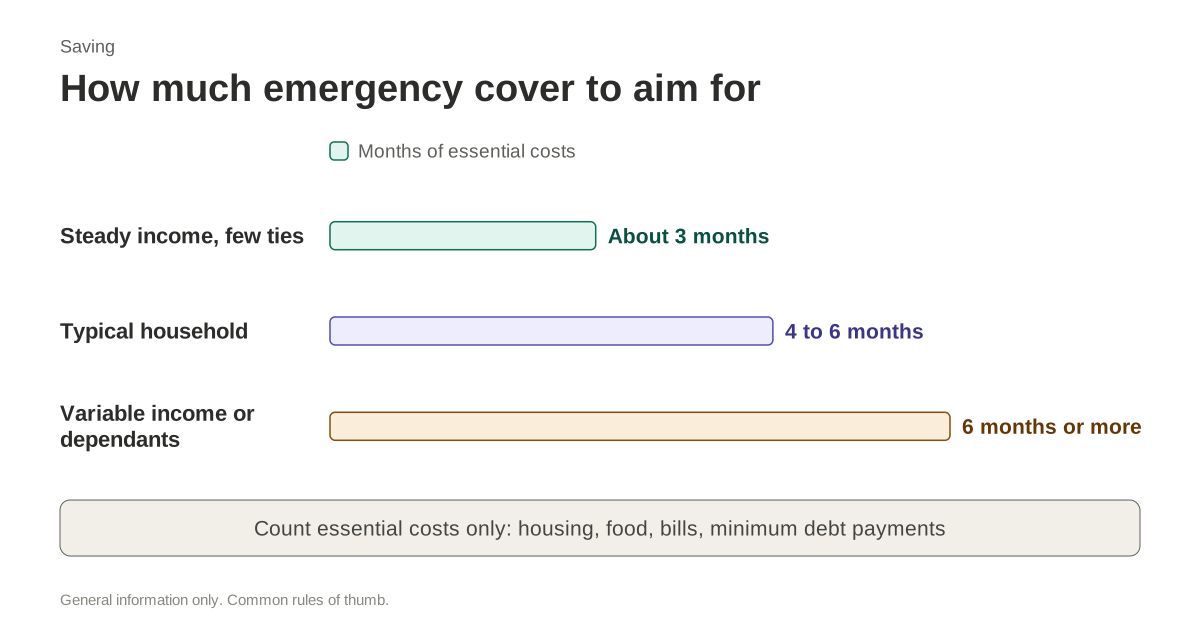
A common guideline is three to six months of essential spending. Essential spending means what you must pay to live: housing, utilities, food, transport to work, insurance and minimum debt payments. It does not include holidays, dining out or other discretionary costs.
Choose the number of months by your situation. If your income is steady and you have other support, three months may be enough. If you are self-employed, have variable income, or support other people, a longer period is safer. Our emergency fund calculator turns your monthly essentials into a target amount.
Start with a small goal
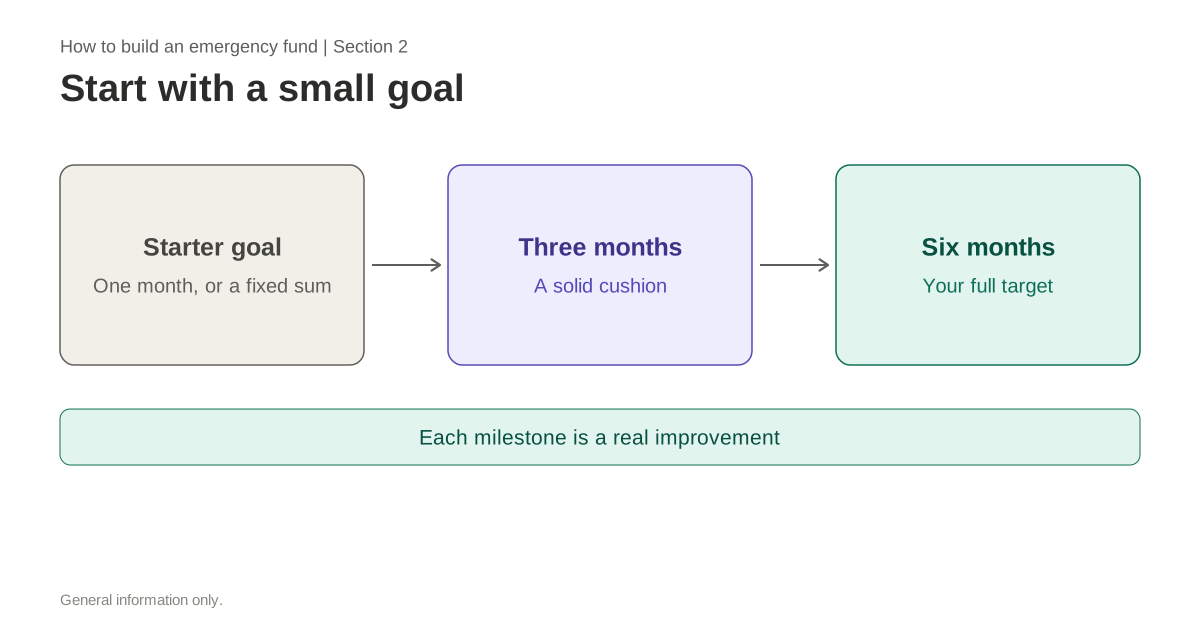
For many people, six months of essentials feels impossible at first. Start with a smaller starter goal, such as one month of essentials or a fixed sum you could cover without borrowing. Reaching a first milestone builds the habit and gives you early protection, which matters most in the early months when you have the least cushion.
Once the starter goal is reached, raise the target step by step. Each milestone is a real improvement, and it becomes easier to save as the habit grows.
Where to keep it
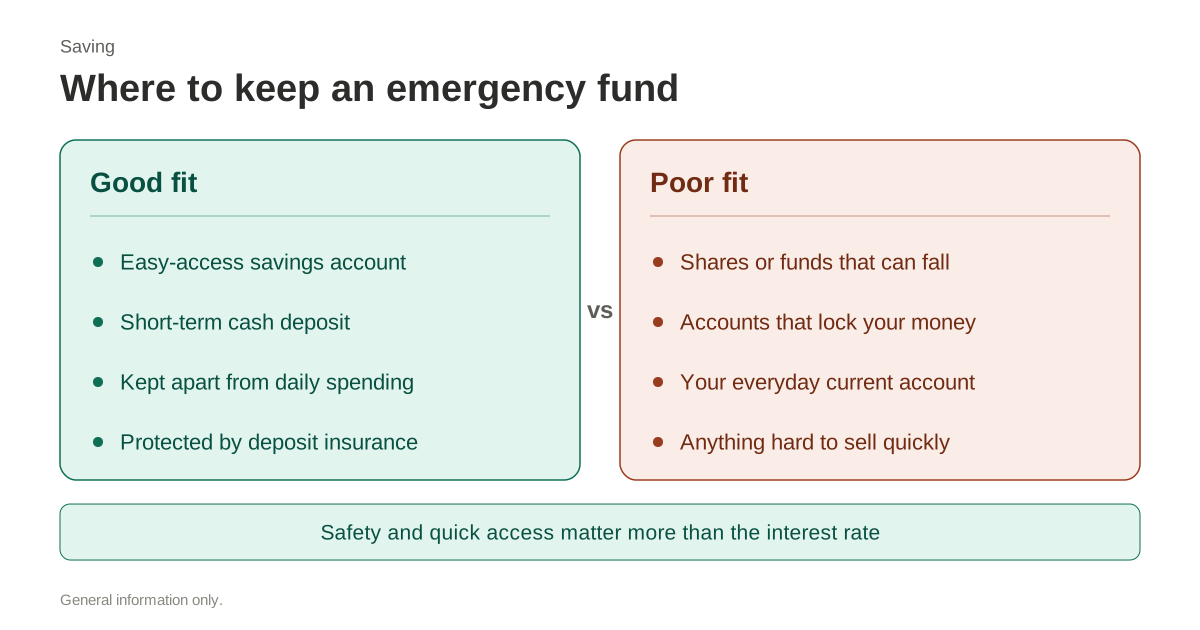
An emergency fund should be easy to reach, safe and not likely to lose value suddenly. A savings account that allows quick withdrawals is the usual choice. Some countries offer deposit protection up to a set limit, so check the protection that applies to your bank.
Investments can grow faster over long periods, but their value can fall just when you need the money. Keep the emergency fund separate from your long-term investments, so you do not have to sell them in a downturn. Keeping the money in a separate account also makes it harder to spend by accident.
Build it on a regular basis
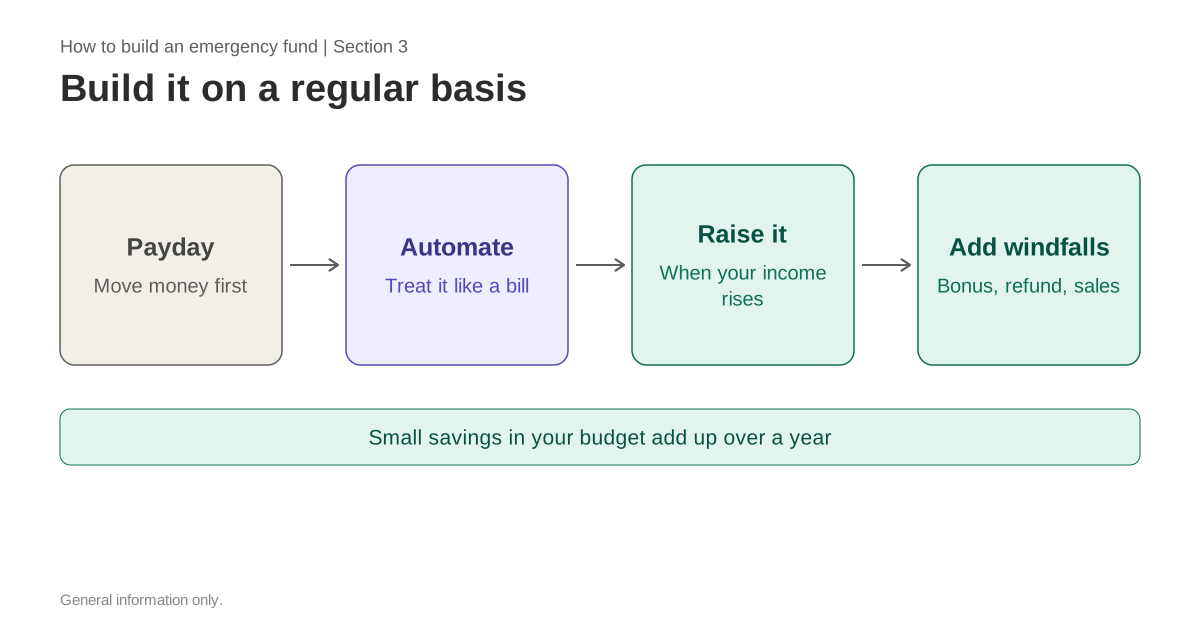
Set a fixed amount to move into the fund on the day you are paid. Treating the transfer like a bill makes saving automatic. If you can, increase the amount whenever your income rises, or put a share of any bonus or tax refund into the fund.
Look for small savings in your budget. Reviewing subscriptions, negotiating a bill, or cooking more meals at home can free up cash. Sell items you no longer use and put the proceeds straight into the fund. Each small step adds up over a year.
Decide what counts as an emergency
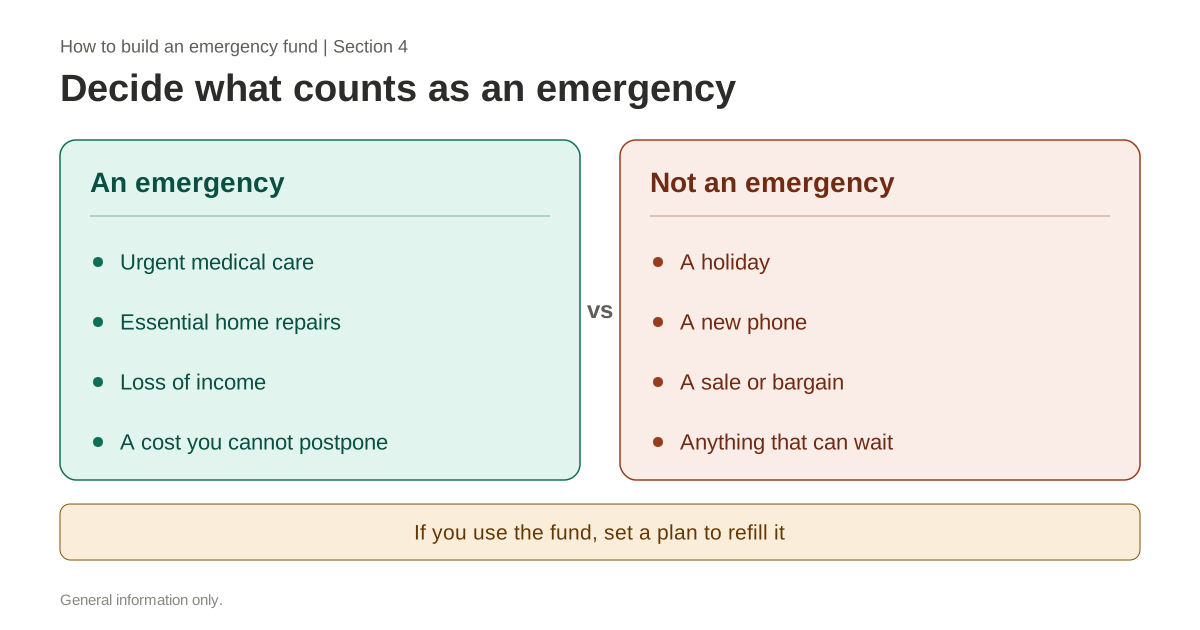
Agree in advance on what the fund is for. A genuine emergency is an unexpected cost you cannot postpone, such as urgent medical care, essential home repairs, or a loss of income. A holiday, a new phone or a sale is not an emergency, and spending on those things weakens your protection.
If you use the fund, write down what you spent it on and set a plan to rebuild it. The fund only works if it is refilled after each use.
Balance it with debt
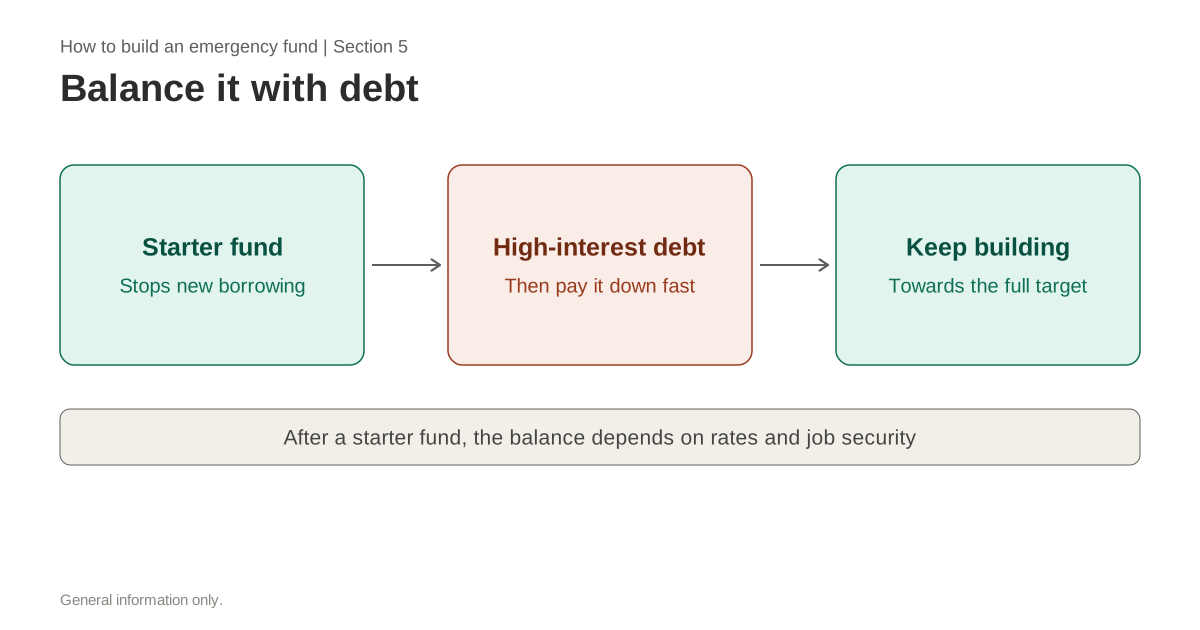
If you have high-interest debt, you may wonder whether to save or repay debt first. A small starter fund is usually sensible before you aggressively repay debt, because it stops new borrowing when a surprise arrives. After that, the balance depends on the interest rate on your debt, your stress levels, and how secure your income is.
Review it regularly
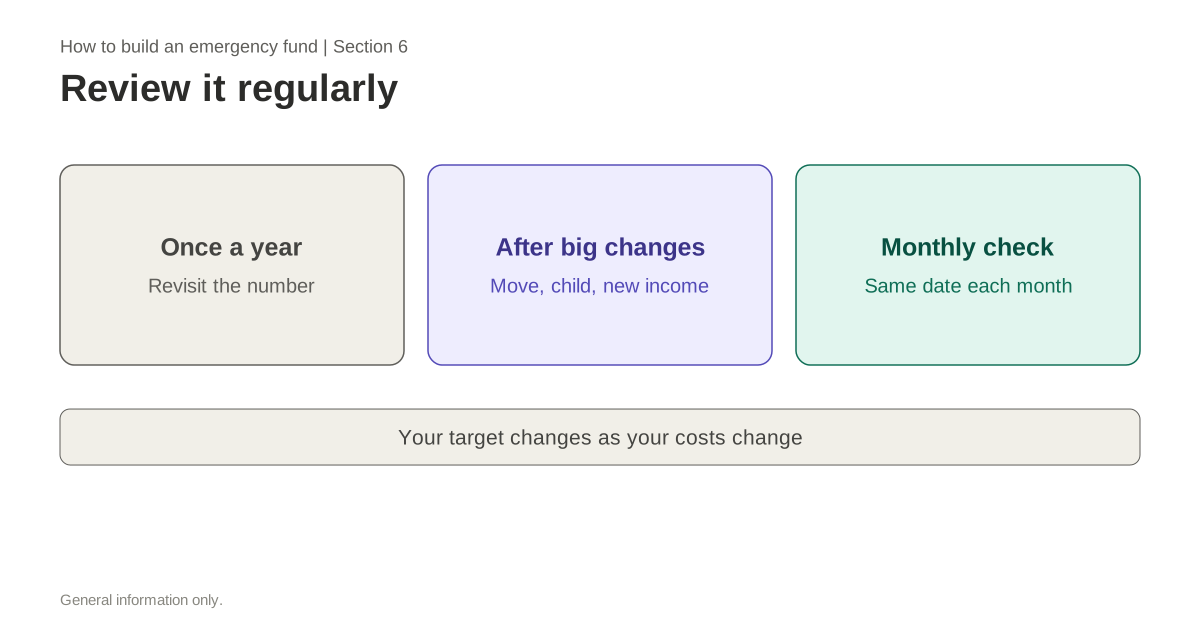
Your target changes as your costs change. Revisit the number once a year, and after any major change such as moving house, a new child, or a change in income. Keep track of the balance on the same date each month so you can see progress clearly.
Where people go wrong
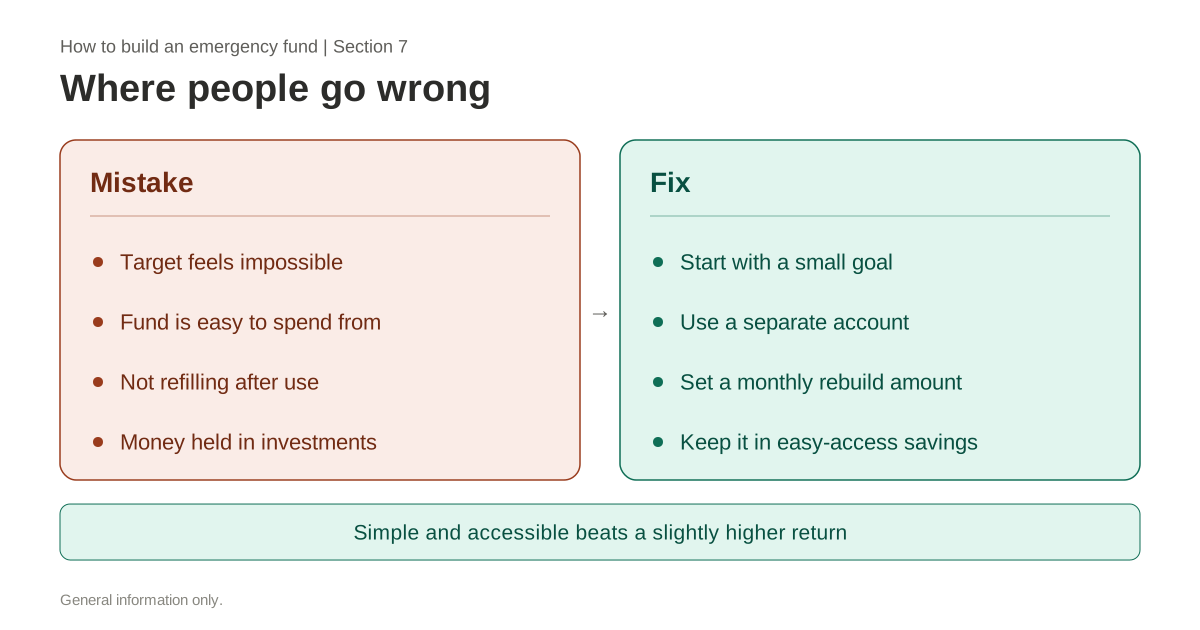
The most common problem is starting with a target that feels impossible and giving up. A second problem is keeping the fund in an account that is easy to spend from, so that money drifts away on ordinary purchases. A third is failing to refill the fund after using it, which leaves you exposed to the next surprise.
Some people also keep the fund in investments that can lose value at the wrong moment. That is a risk you do not need to take for money that must be available quickly. Keeping the fund simple and accessible is more important than earning a slightly higher return on it.
Measuring progress
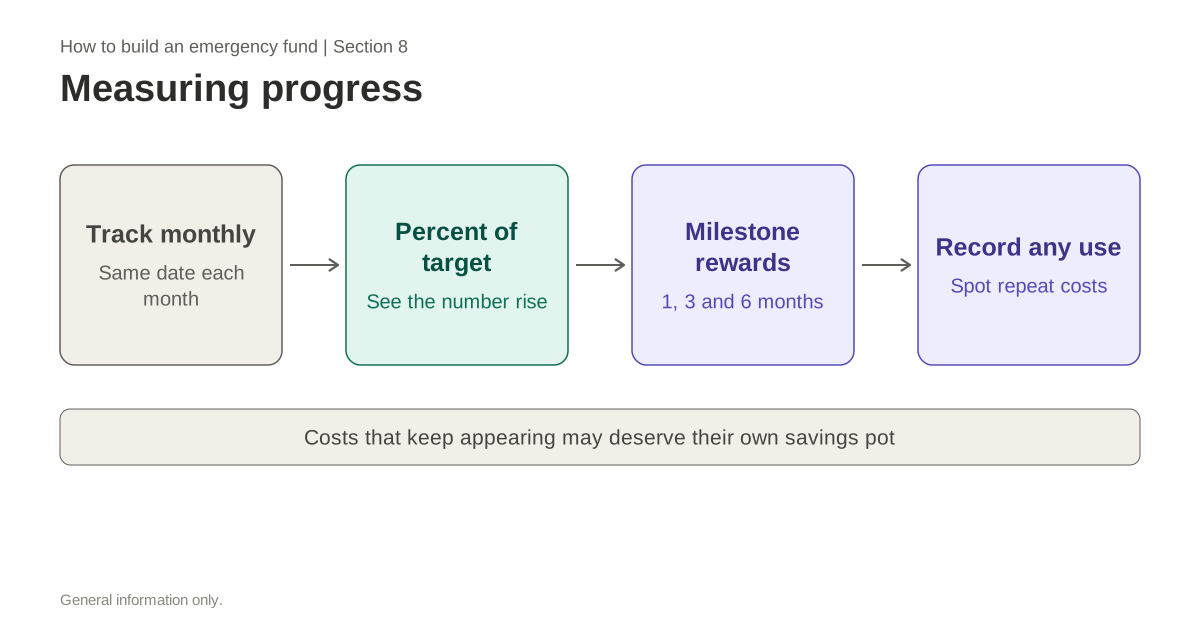
Track the balance once a month, on the same date, and note the percentage of your target that you have reached. Seeing the number rise is a strong motivator. Some people find it useful to set a reward at each milestone, such as one month, three months and six months of essentials, so the goal feels achievable.
When you do use the fund, record the reason and the amount. This record helps you spot patterns, such as a particular cost that keeps appearing, which may be worth planning for separately rather than drawing on the emergency fund each time.
The bottom line
An emergency fund is a foundation for every other financial goal. Start with a small starter amount, keep it separate and easy to reach, and build it regularly until it covers several months of essentials. Once it is in place, you can plan with more confidence and avoid many of the costly decisions that come from having no cushion.
Frequently asked questions
How much should my emergency fund be?
A common guideline is three to six months of essential spending. Use a longer period if your income is variable or you have dependants, and a shorter one if your income is very secure.
Should I invest my emergency fund?
Usually not. The fund needs to be available quickly and to hold its value. Investments can fall at the moment you need them, so most people keep this money in easy-access, low-risk savings.
Should I build the fund or repay debt first?
A small starter fund first is a sensible approach for most people. After that, prioritise high-interest debt while continuing to build the fund towards its full target.
What if I have to use my emergency fund?
That is what it is for. Write down what you used it for, then set a monthly amount to rebuild it. Keeping the fund full protects you from the next surprise.