A share price looks like a fixed number on a screen, but it is the result of millions of decisions by buyers and sellers. Each trade happens at a price that both sides agree to, and the latest trade becomes the reference point for the next one. Understanding this mechanism helps you read price movements calmly and avoid treating every fluctuation as news.
This article explains how prices are formed in a continuous market, what drives them over time, and why they can move far more than the underlying business. It is general information, not a view on any particular company.
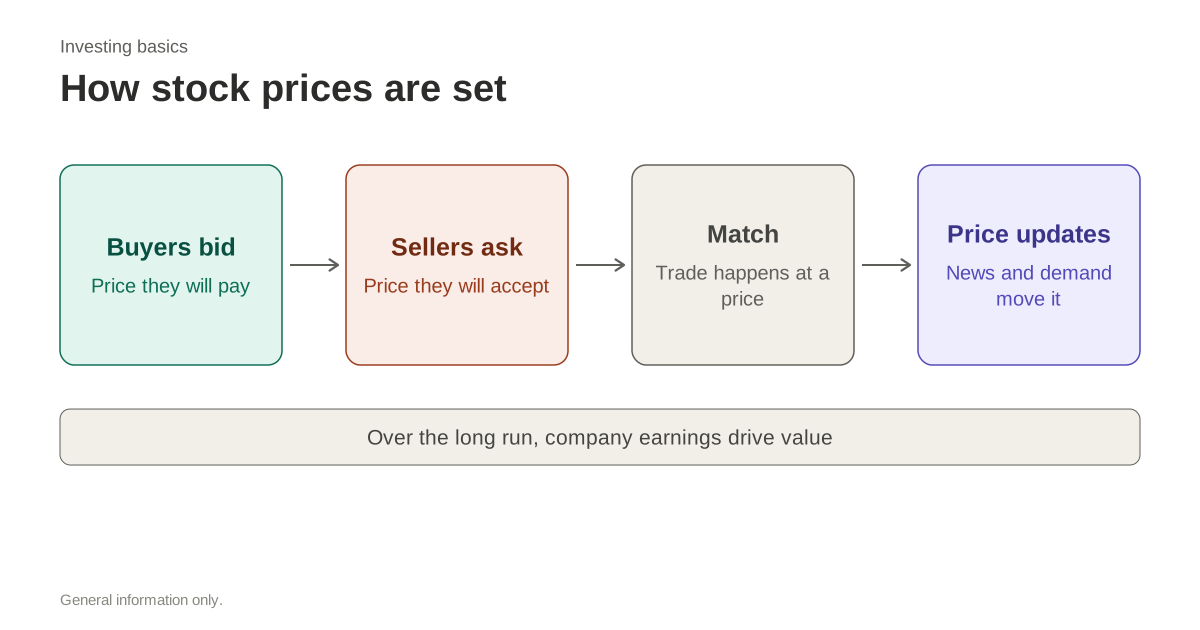
The order book
Most major exchanges match buy and sell orders through an order book. Buyers place bids, which are the prices they are willing to pay, and sellers place offers, which are the prices they will accept. When a bid and an offer meet, a trade takes place at that price. The highest bid and lowest offer are the best prices available at that moment.
The gap between the best bid and the best offer is the spread. A narrow spread means many buyers and sellers are active. A wide spread, common in small or infrequently traded shares, makes trading more expensive and can make prices less reliable.
What moves the price in the short term
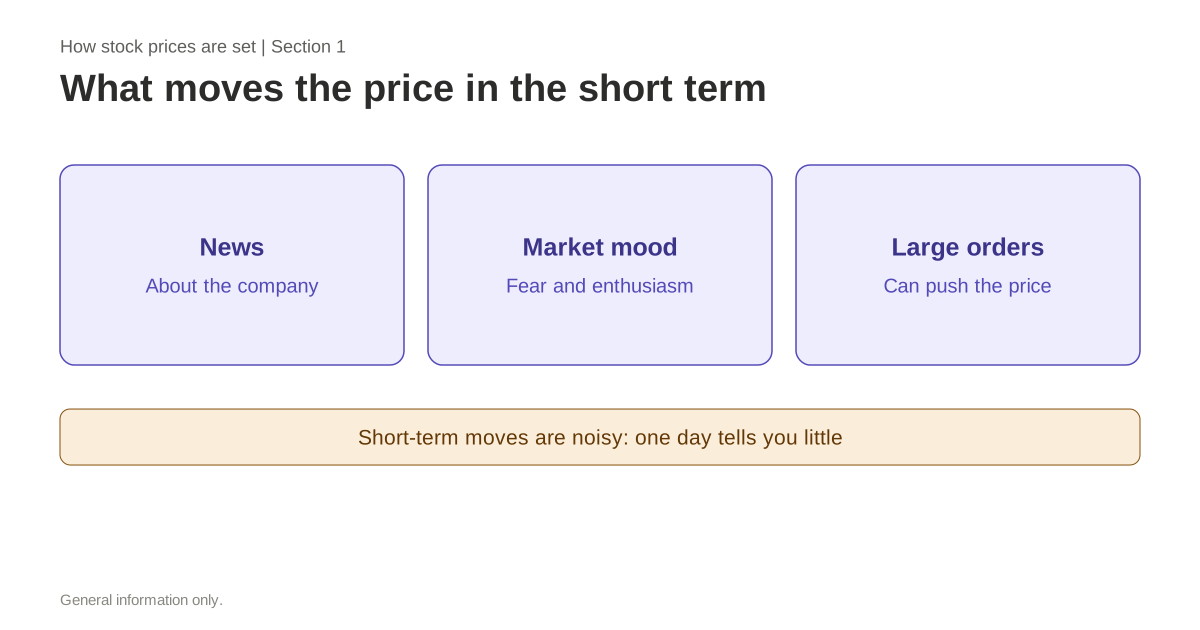
In the short run, prices respond to supply and demand from traders. News about a company, a change in the market mood, or a large order can push the price up or down. Some of this movement reflects genuine new information, but much of it reflects how many people want to buy or sell at a given moment.
Short-term movements are often noisy. A large order can move the price temporarily, and prices can overshoot in both directions before settling. This is why a single day's price tells you little about the underlying value of a business.
What drives prices over the long run
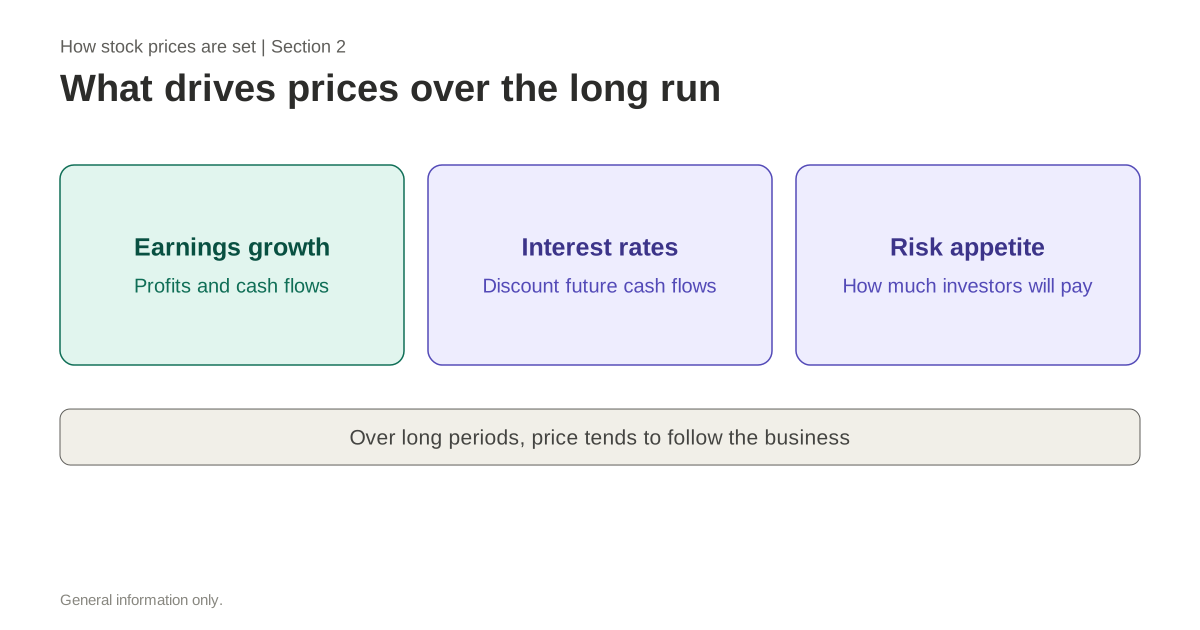
Over long periods, share prices tend to follow the expected profits and cash flows of the business, adjusted for how much risk investors feel they are taking. A company that grows its earnings steadily is more likely to see its share price rise over time, while a company whose profits shrink often sees its price fall.
The discount rate is also important. When interest rates rise, the value of future cash flows falls in today's terms, which can lower share prices even if the business is doing well. When rates fall, the reverse can happen. Sentiment, the willingness of investors to pay for growth, also changes over time.
Valuation
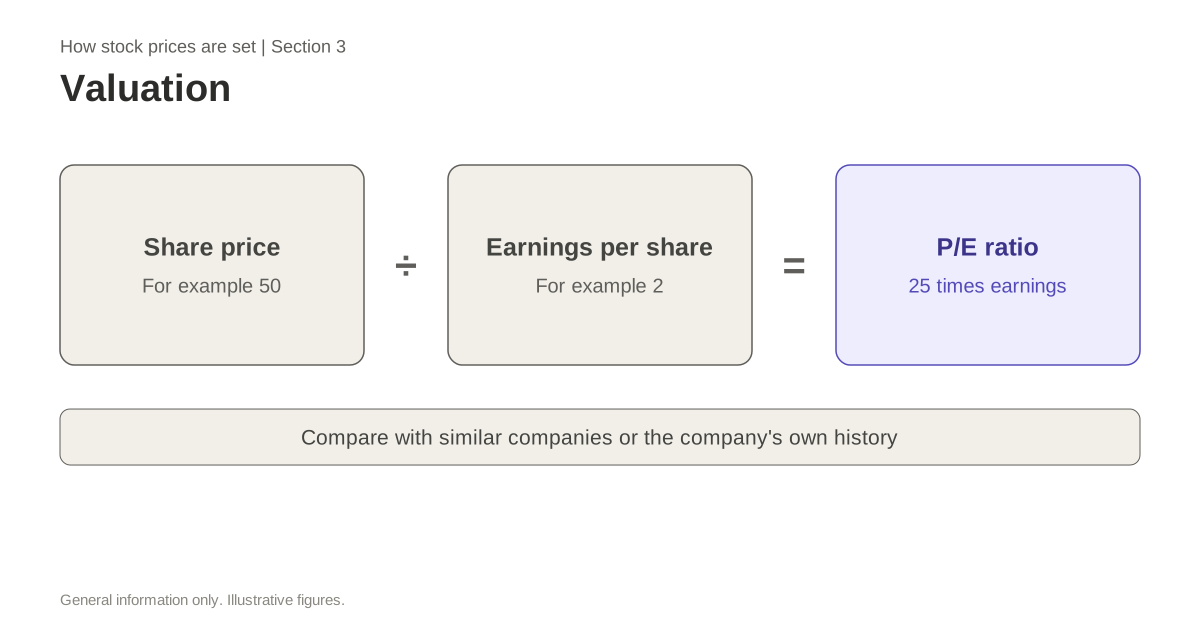
Valuation measures compare the price with a measure of the business, such as earnings, cash flow, sales or book value. The price-to-earnings ratio is the most widely used, and it divides the share price by the earnings per share. A high ratio means investors are paying a lot for each unit of profit, which usually implies high expectations for growth.
Valuation ratios are most useful when compared with similar companies or with the company's own history. A single figure in isolation tells you little, and the right level depends on the sector, the growth outlook and the level of interest rates.
Why prices move more than business value
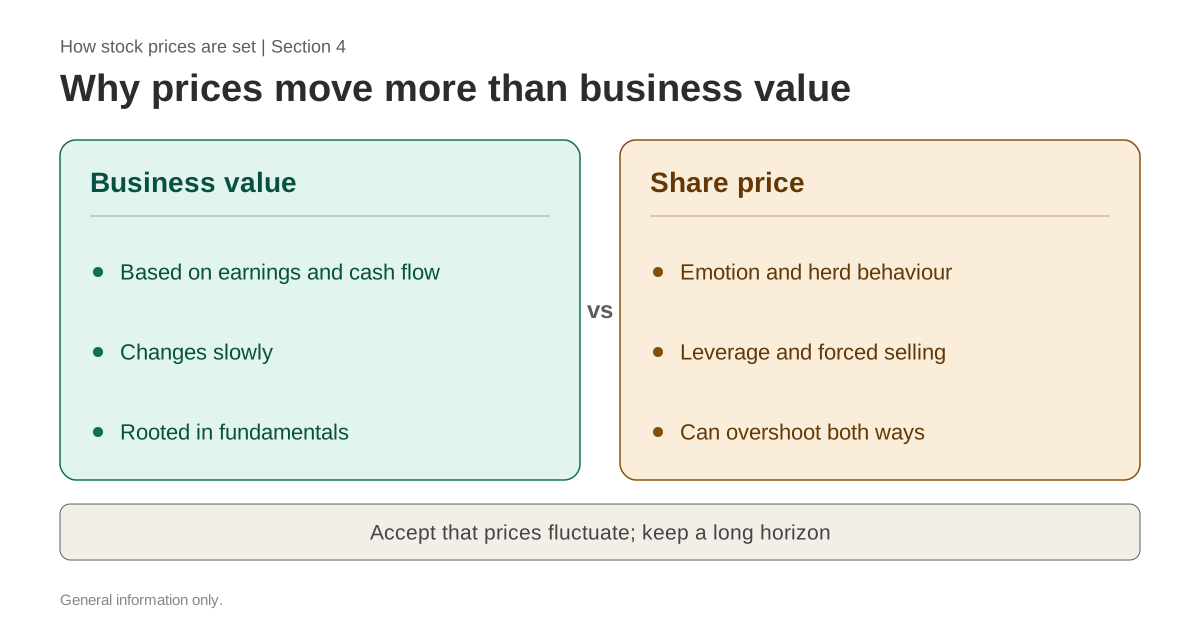
Prices can move far more than the value of the underlying business. Emotion, herd behaviour, leverage and forced selling can all push prices away from a reasonable estimate of value. A market that falls sharply may be reacting to fear more than to a real change in the company's prospects.
This gap creates both risk and opportunity, but it is hard to exploit reliably. Many investors find it more productive to accept that prices fluctuate, and to focus on a long time horizon and a diversified approach.
Company events
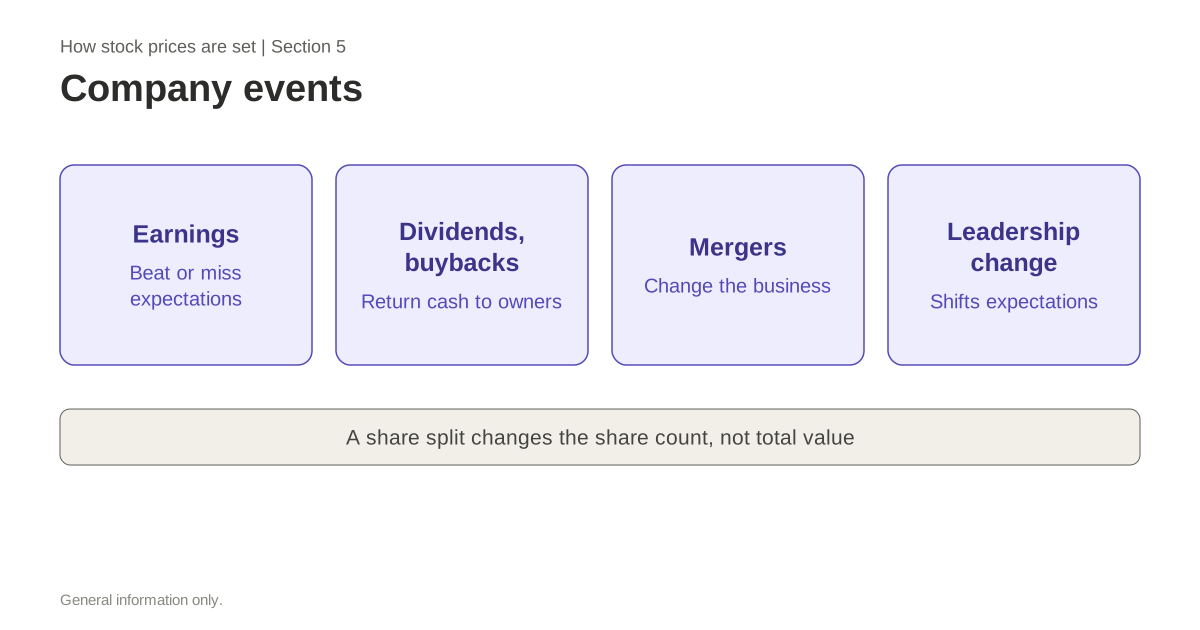
Some events move prices directly. An earnings announcement that beats or misses expectations can cause a sharp move. Dividend declarations, share buybacks, mergers and changes in leadership all affect the price. Share splits change the number of shares and the price per share, but not the total value of a holding.
Read the announcements from a company carefully, and be sceptical of headlines that exaggerate a single event. Look at the full picture, including the company's debt, cash flow and competitive position.
What this means for you
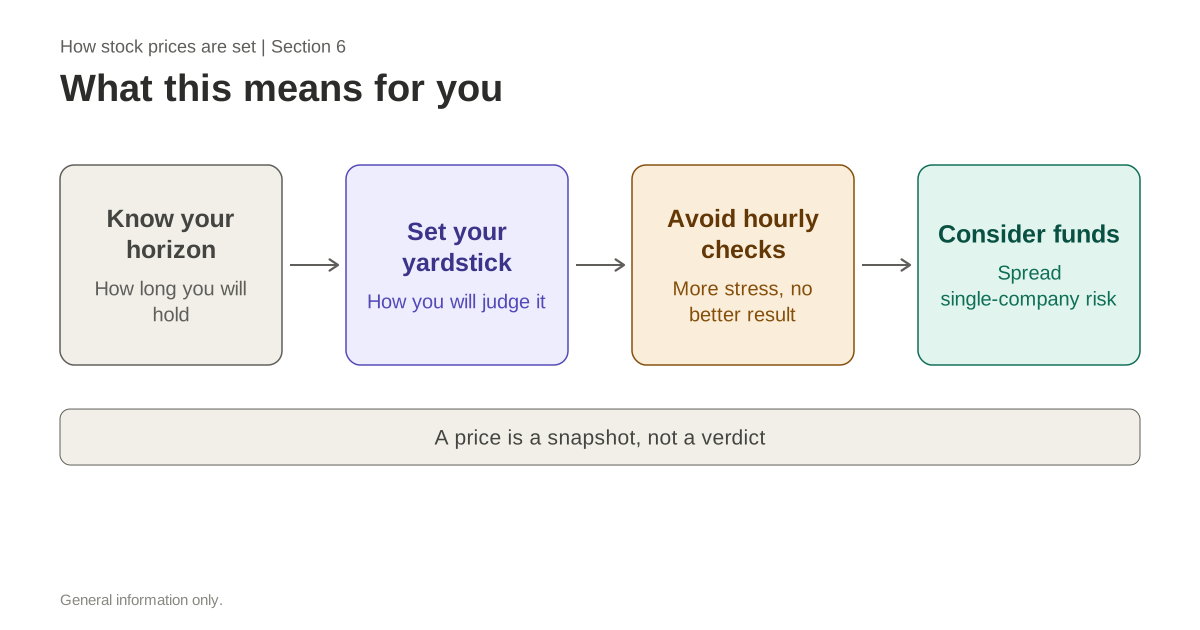
A share price is a snapshot of what buyers and sellers agreed at one moment. It is not a precise measure of what the business is worth. If you own shares, decide in advance how long you plan to hold them and how you will judge whether the investment still makes sense. Checking prices every hour can increase stress without improving results.
If you are buying, consider whether you are paying a reasonable price for the business and the risks it carries. Using a diversified fund rather than a single company can reduce the impact of one company's mispricing.
Market hours and after-hours trading
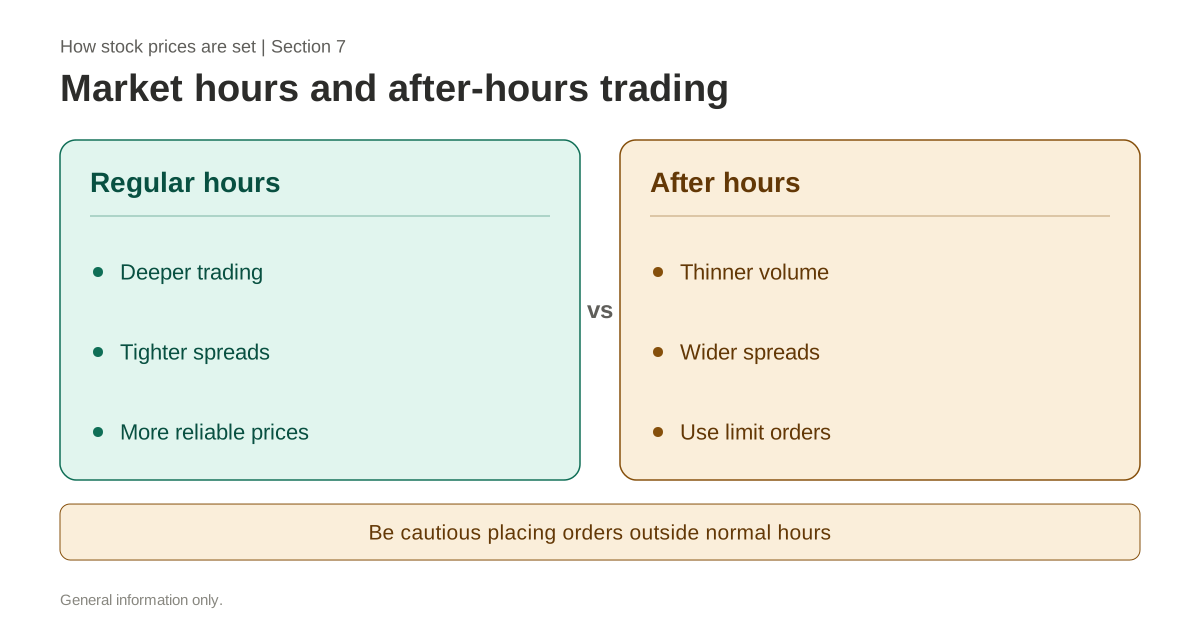
Most exchanges trade during set hours, and prices can move when the market opens and closes. Some markets also allow trading outside normal hours, but with thinner volume and wider spreads, so prices can be less reliable. Be cautious about placing orders in these periods, and use limit orders to control the price you pay.
Market makers and liquidity
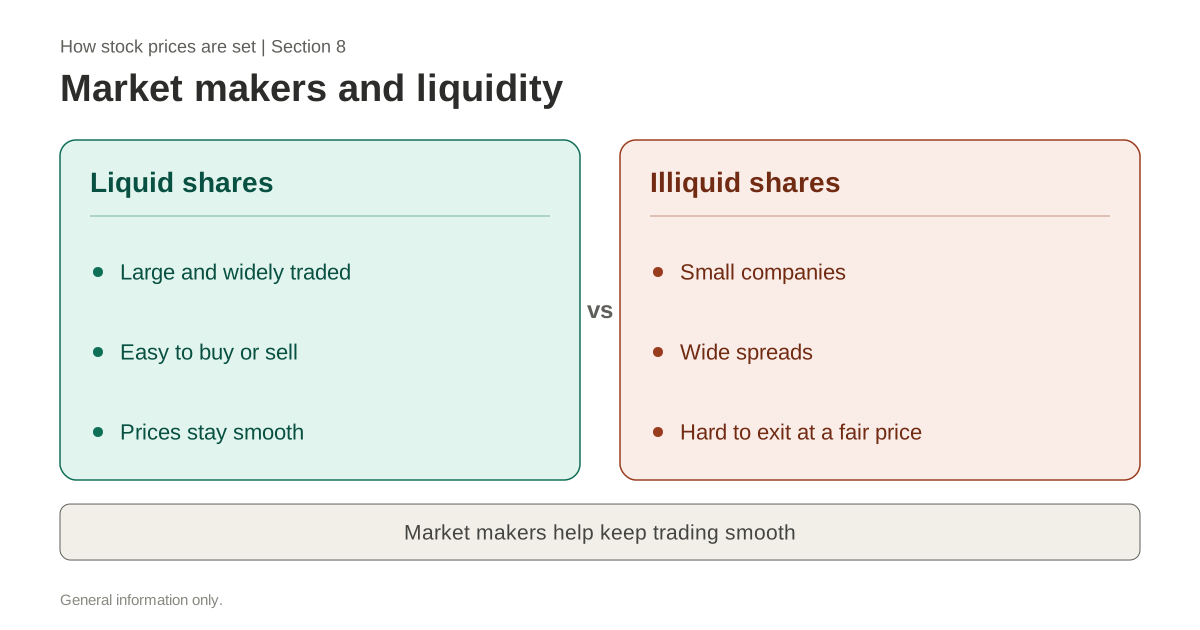
Market makers stand ready to buy and sell, which helps keep prices stable and trading smooth. Liquidity is the ease with which you can buy or sell without moving the price. Large, widely traded companies usually have high liquidity, while small companies may not, which can make it harder to exit a position at a fair price.
The bottom line
Share prices are set by trades between buyers and sellers, and they respond to news, sentiment and expectations of future profits. In the short run they can move far more than the underlying business. Over the long run, the direction tends to follow the business's earnings and cash flow, but the path can be bumpy. Use prices as information, not as a verdict.
Frequently asked questions
Who decides the price of a share?
Nobody decides it directly. It is set by trades, where buyers and sellers agree a price. The most recent trade and the best bid and offer show the current market price.
Why does a share price fall even when a company is doing well?
Prices can fall if expectations were already high, if interest rates rise, or if market sentiment turns negative. The price reflects expectations about the future, not only current results.
What is a spread?
It is the difference between the best bid price and the best offer price. A wider spread makes trading more expensive, particularly for shares that trade infrequently.
Does a share split change the value of my holding?
No. A split changes the number of shares and the price per share in proportion, so the total value of your holding stays the same at the moment of the split.