One of the most common questions about retirement is how much to save. There is no single correct answer, because the figure depends on the life you want to live, the support you will receive from public or employer schemes, and how long you expect to be retired. However, a simple structure can turn the question into a manageable plan.
This article walks through a practical approach: estimating the income you will need, working out the size of the pot that could support it, and checking whether your current saving rate is on track. It is general information, and the figures are illustrative rather than predictions.
Step one: estimate your spending
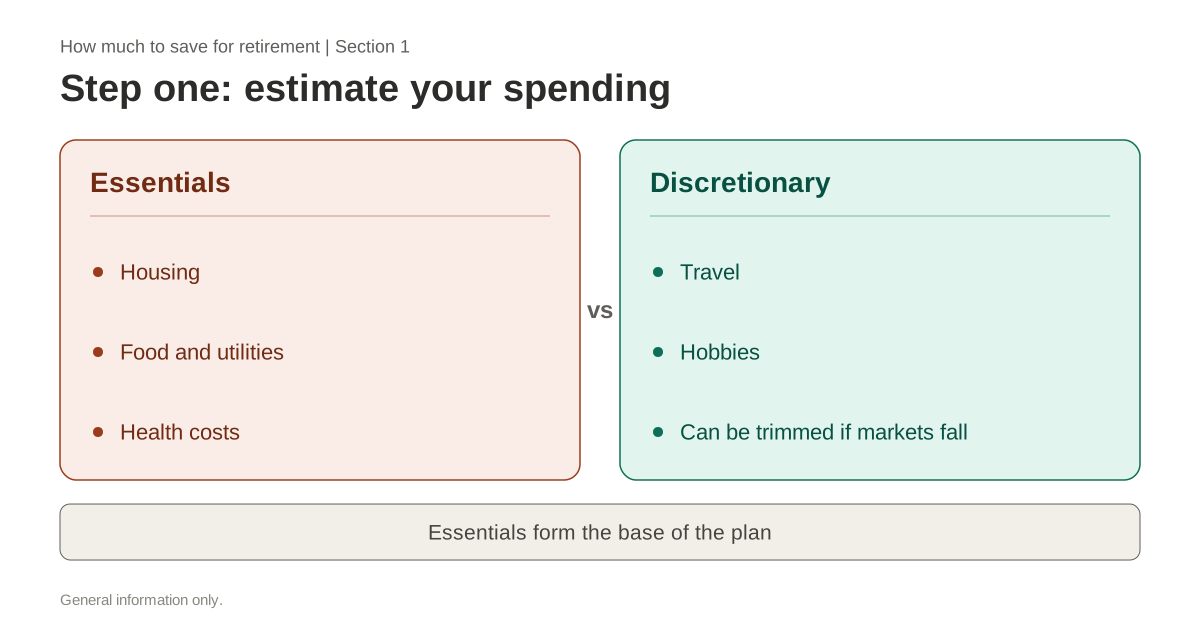
Start with the spending you expect in retirement. Many people spend less than they did while working, because they no longer pay for commuting, some work clothes or retirement savings contributions. Others spend more on health care, travel or family support. A realistic estimate is more useful than a rule of thumb.
Divide your expected spending into essentials, such as housing, food, utilities and health costs, and discretionary spending, such as travel and hobbies. Essentials form the base of your plan, while discretionary spending can be adjusted if markets fall.
Step two: subtract guaranteed income
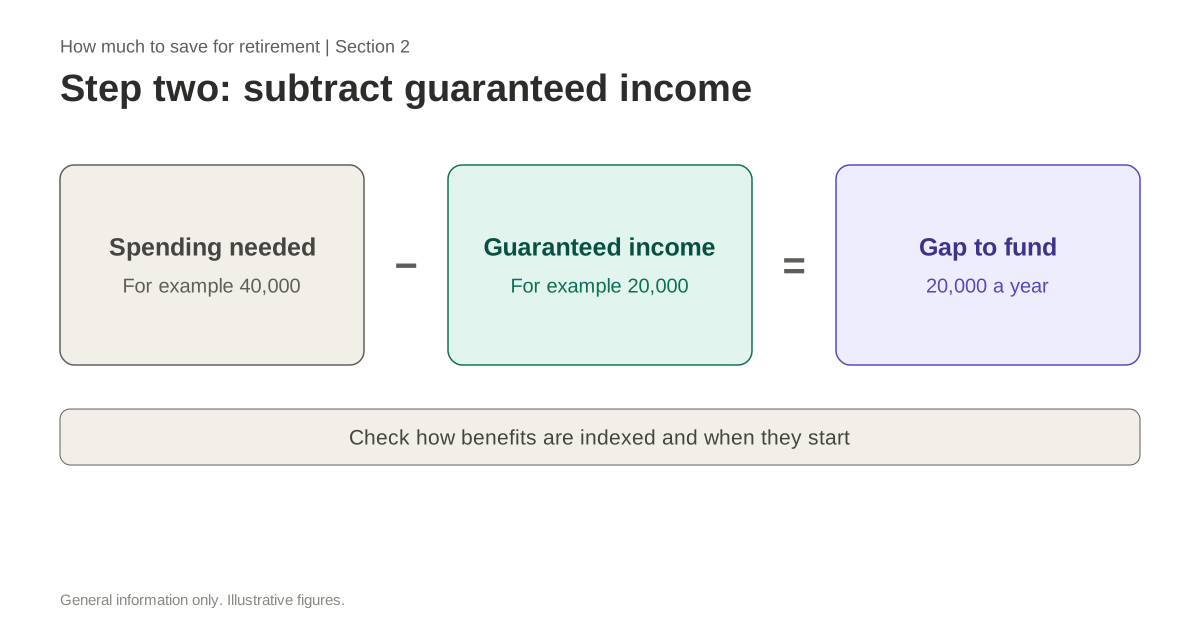
Next, estimate the income you will receive from sources you do not need to fund yourself. These may include a state or public pension, an employer scheme that pays a defined amount, or other income such as rent. Subtract that from your expected spending. The remainder is the income your savings must provide.
Check how these benefits are indexed to inflation, when they start and whether they depend on your work history or residence.
Step three: convert income into a pot
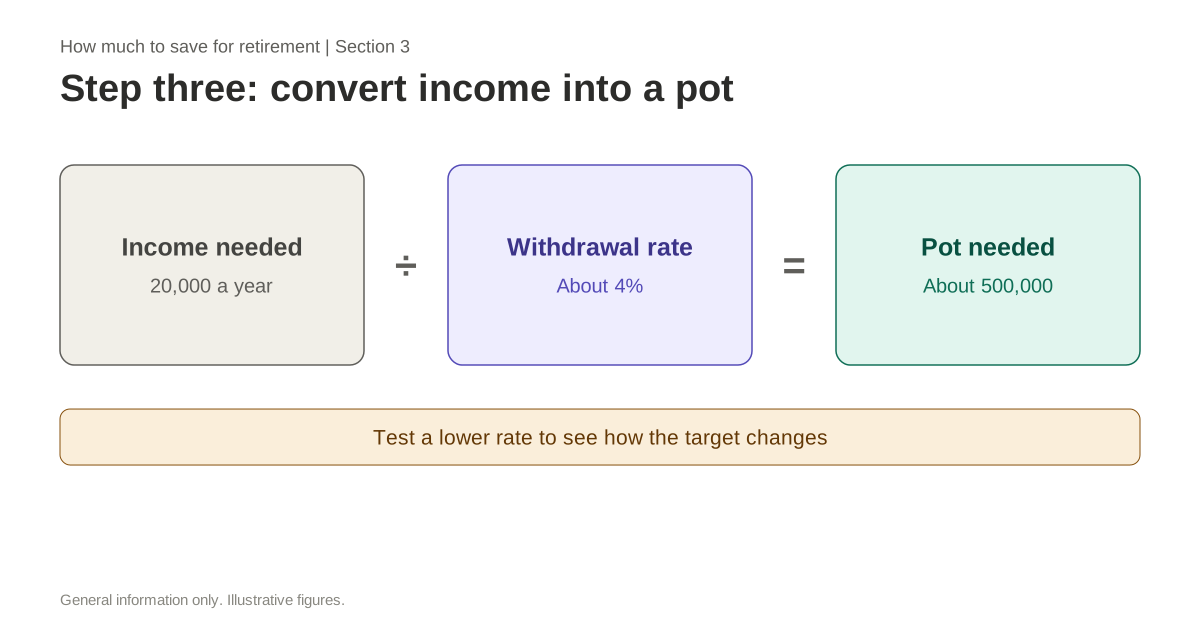
To estimate the pot needed, divide the income your savings must provide by a sustainable withdrawal rate. A rate of around four per cent a year is a common planning reference, but it is not a guarantee, and the sustainable level depends on how long you need the money to last and on future returns. A lower rate gives more security but requires a larger pot.
For example, if your savings must provide 20,000 a year and you use a four per cent rate, you would need a pot of about 500,000. Test a lower rate to see how the target changes. Our pension calculator makes this conversion for you.
Step four: work out the saving rate
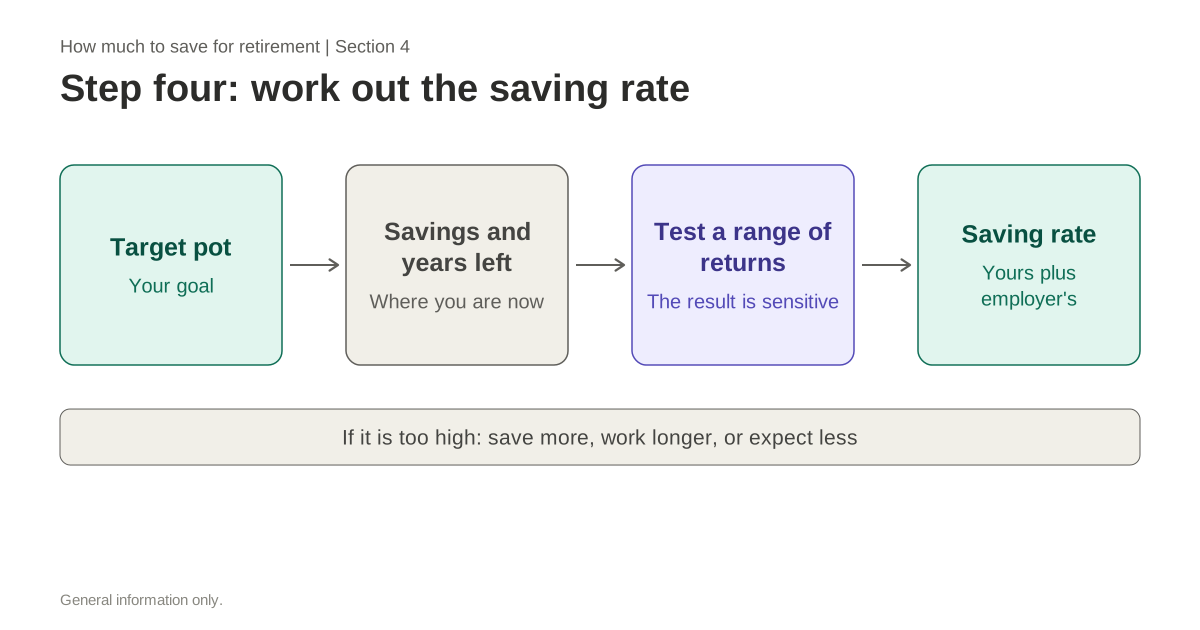
Once you have a target, estimate how much you need to save each year to reach it, given your current savings, the number of years until retirement and a realistic return. Include both your own contributions and any employer contributions. Test a range of returns, because the outcome is sensitive to the return assumption.
If the required saving rate is more than you can afford, you have three levers: save more, work longer, or accept a lower retirement income. Most people use a mix of all three.
Step five: check your progress
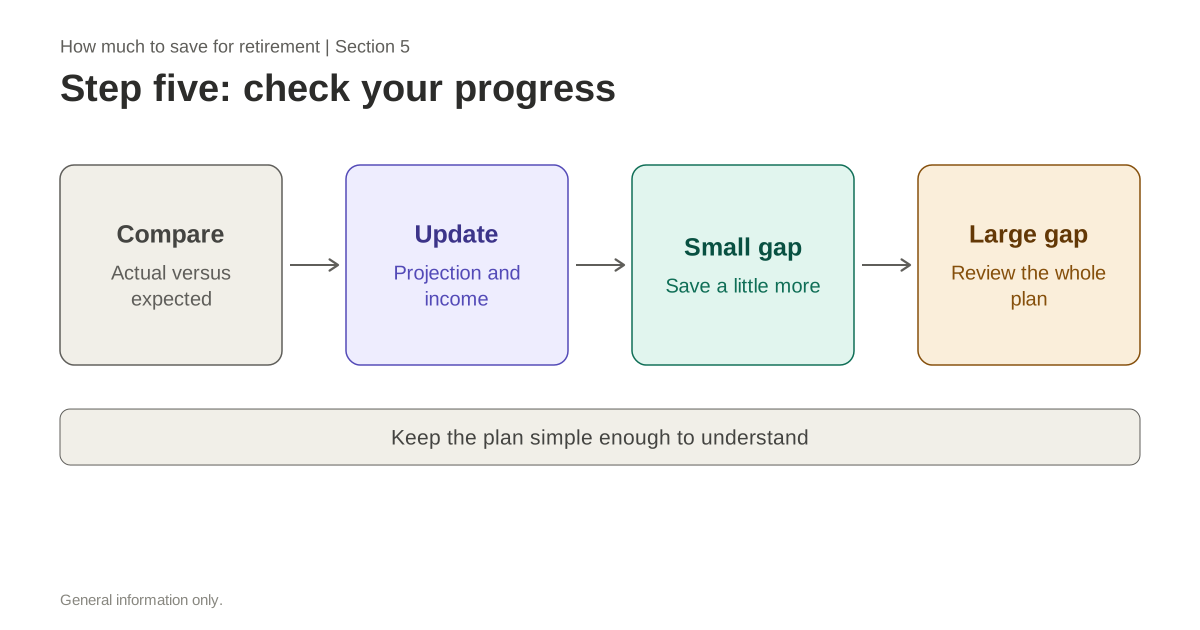
Review the plan every year. Compare your actual pot with the amount you expected to have by now, and update the projection if markets, income or spending have changed. Small gaps can usually be closed with a modest increase in contributions. Large gaps call for a more serious review.
Keep the plan simple enough that you can understand it. A transparent plan is easier to follow than a complicated model that you do not trust.
Common mistakes
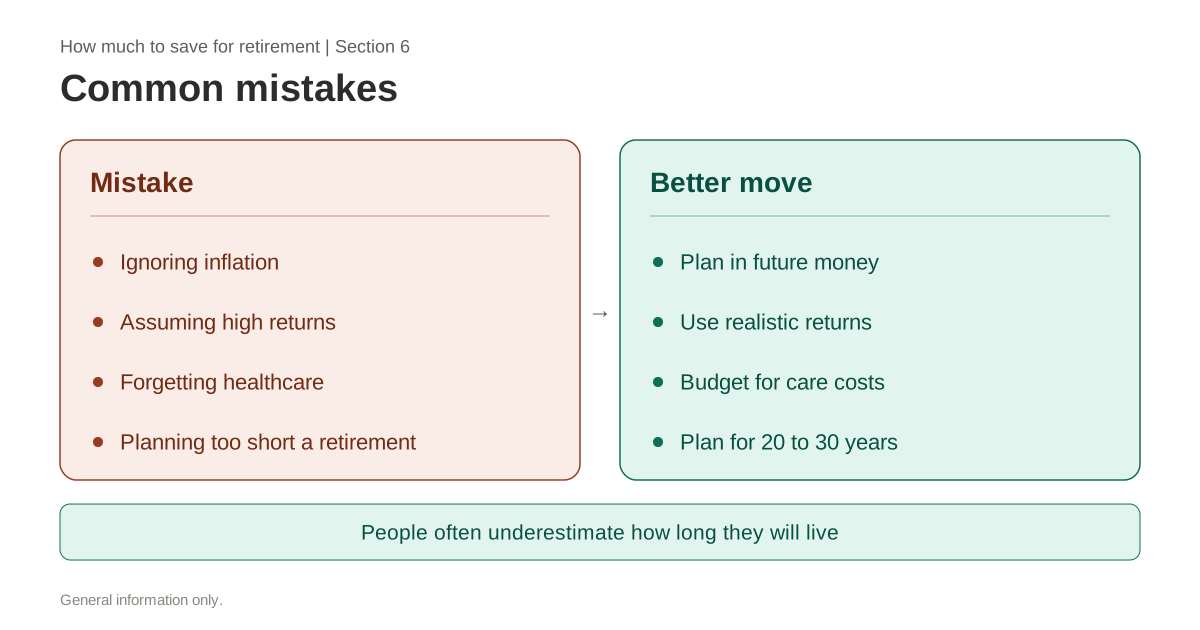
A frequent mistake is to ignore inflation and plan in today's money without adjusting for future prices. Another is to assume a high return that is not realistic over the whole period. A third is to forget the cost of healthcare or long-term care, which can be significant in later years.
People also underestimate how long they will live. Planning for a retirement of twenty or thirty years is more prudent than assuming a shorter period.
When to get advice
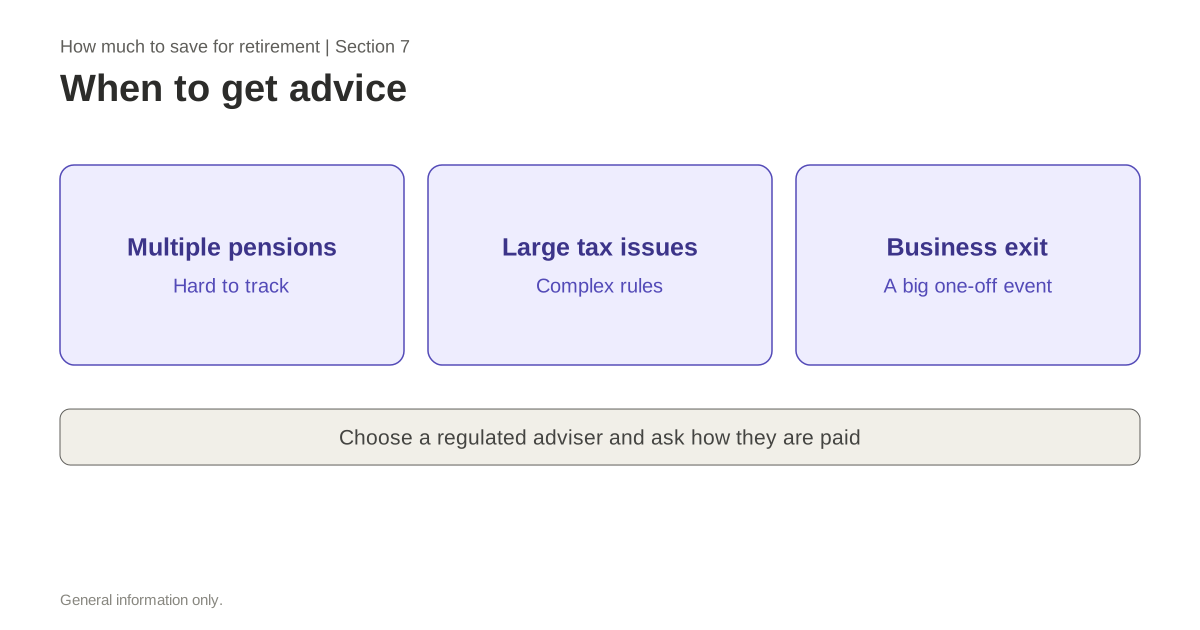
For complex situations, such as multiple pensions, large tax issues or a business owner's exit, a qualified adviser can help. Look for someone regulated in your country, ask about their fees and how they are paid, and check that their advice suits your circumstances.
Spending changes in retirement
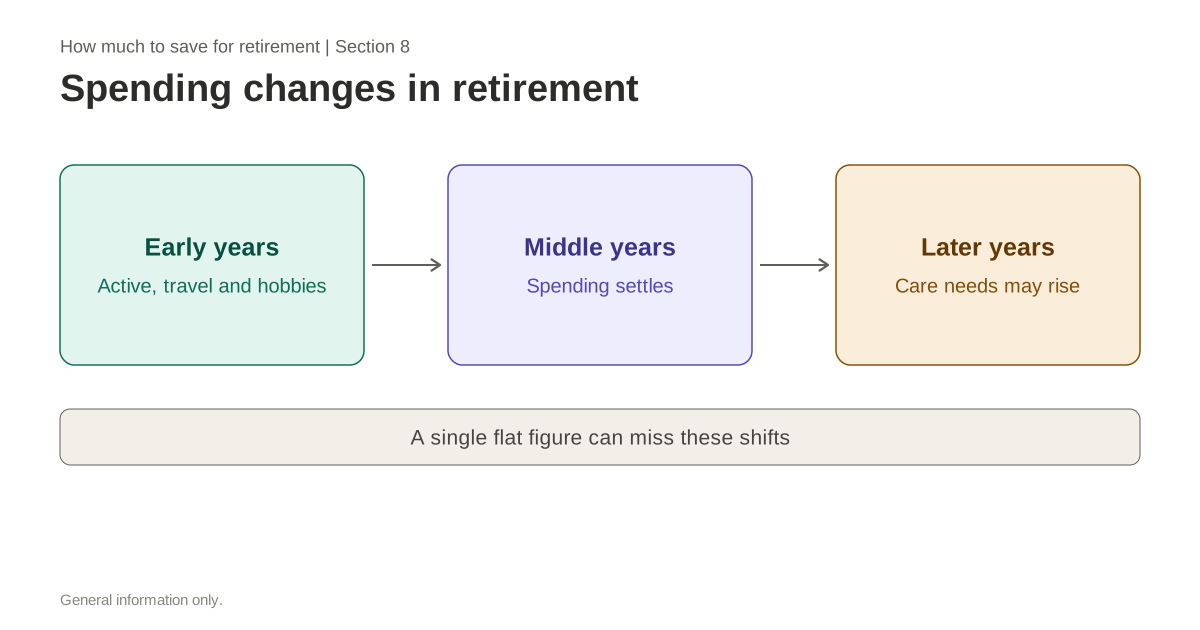
Spending often changes after retirement. Some costs fall, such as commuting and work clothes, while others rise, particularly healthcare and home maintenance in later years. Model your spending in stages, with an early active period, a middle period and a later period where care needs may increase. A single flat figure can miss these shifts.
Starting from where you are
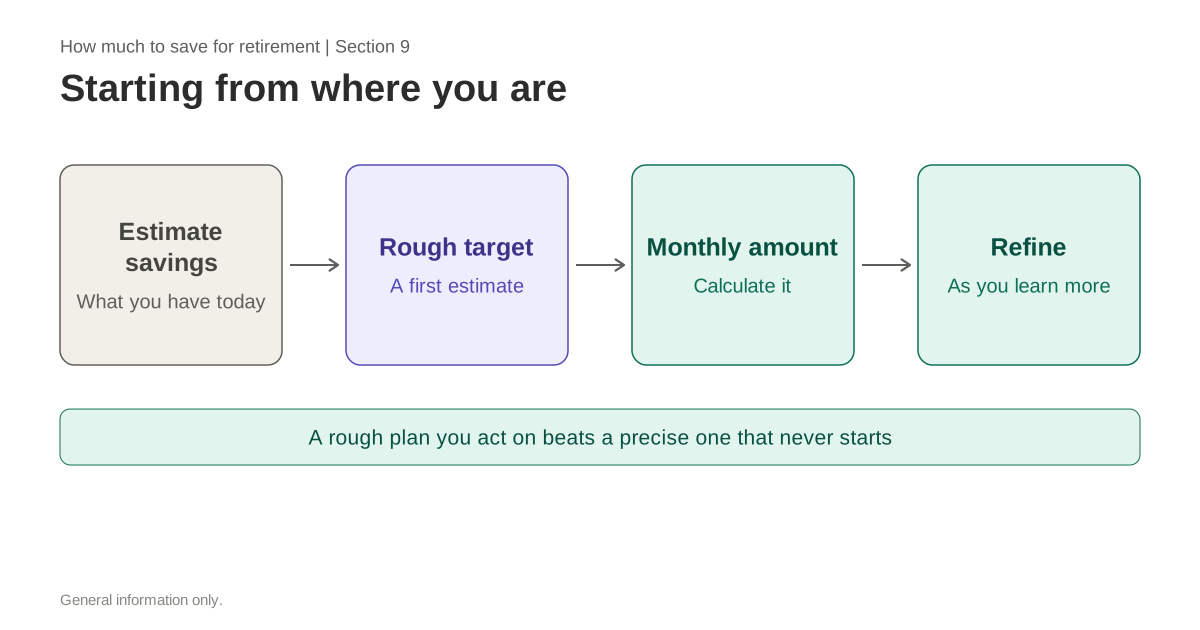
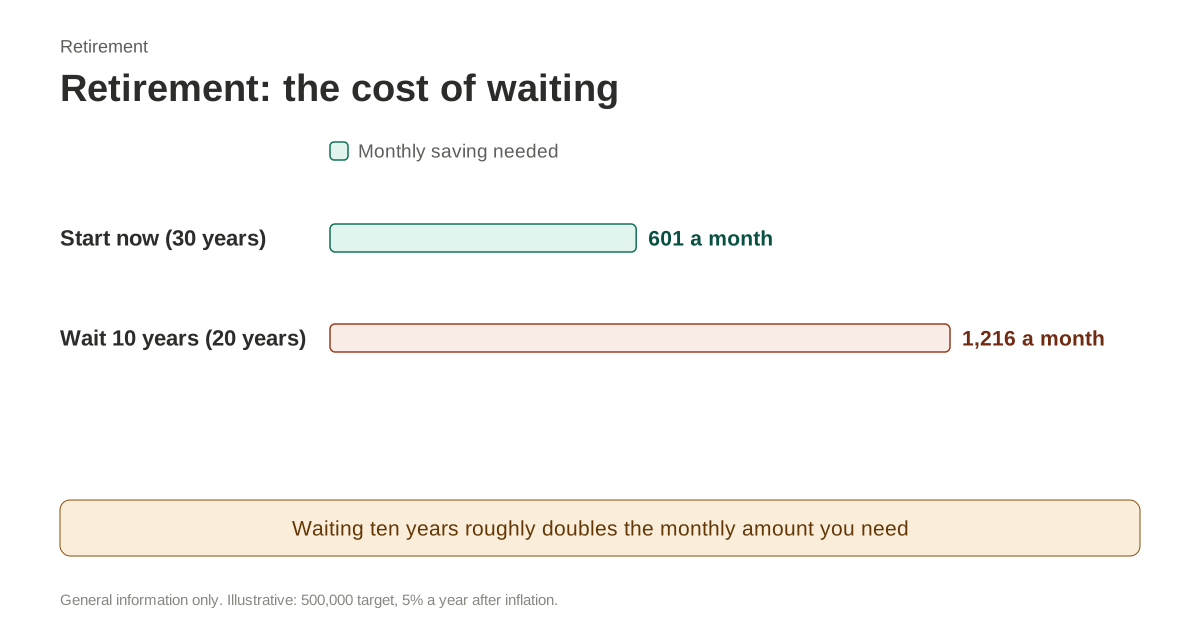
You do not need a perfect plan to begin. Estimate your current savings, your expected income and a rough target, then calculate the monthly amount needed. Refine the figures as you learn more. A rough plan that you act on is more useful than a precise plan that never starts.
Keeping the number realistic
A target that is too ambitious can discourage you before you start, while one that is too modest can leave you short later. Aim for a figure that is challenging but achievable with steady saving, and revisit it as your income and circumstances become clearer.
Testing your assumptions
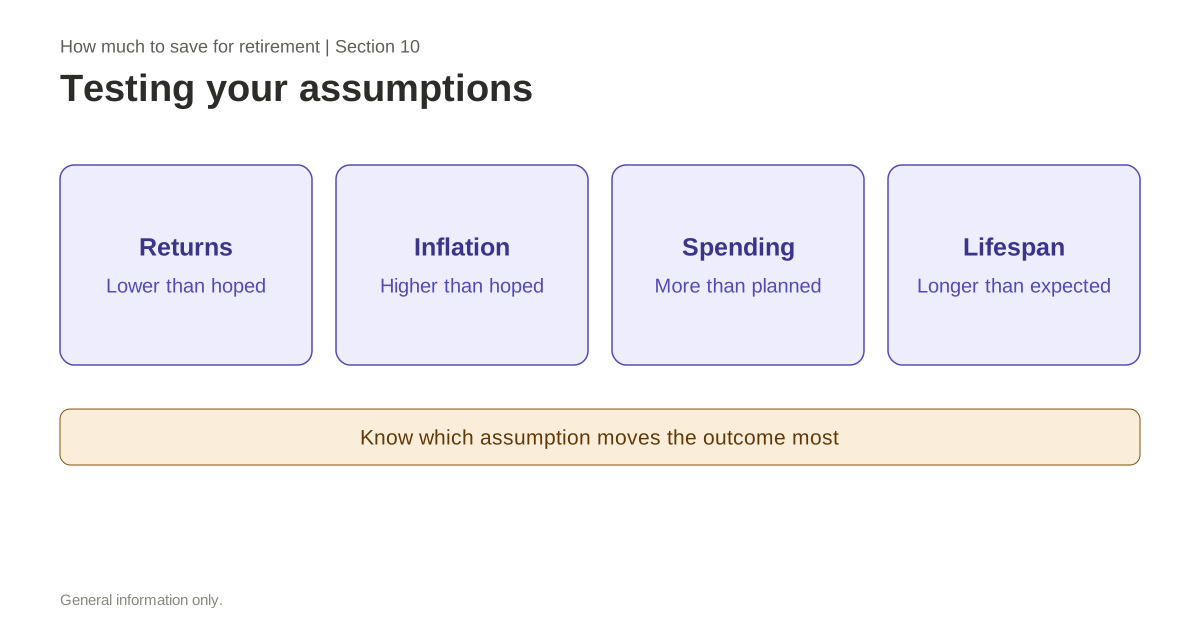
Your plan depends on assumptions about returns, inflation, spending and how long you will live. Test each one separately, and then together. A plan that works only with optimistic assumptions is fragile. Good planning shows how much the outcome changes when one assumption moves, so you know which ones matter most.
Adjusting over the years
Your target will change as your circumstances change. Revisit the calculation each year, and after major events such as a new job, a move or a family change. Small corrections made regularly are far easier than a large catch-up in the final years before retirement.
Keeping the number realistic
A target that is too ambitious can discourage you before you start, while one that is too modest can leave you short later. Aim for a figure that is challenging but achievable with steady saving, and revisit it as your income and circumstances become clearer.
The bottom line
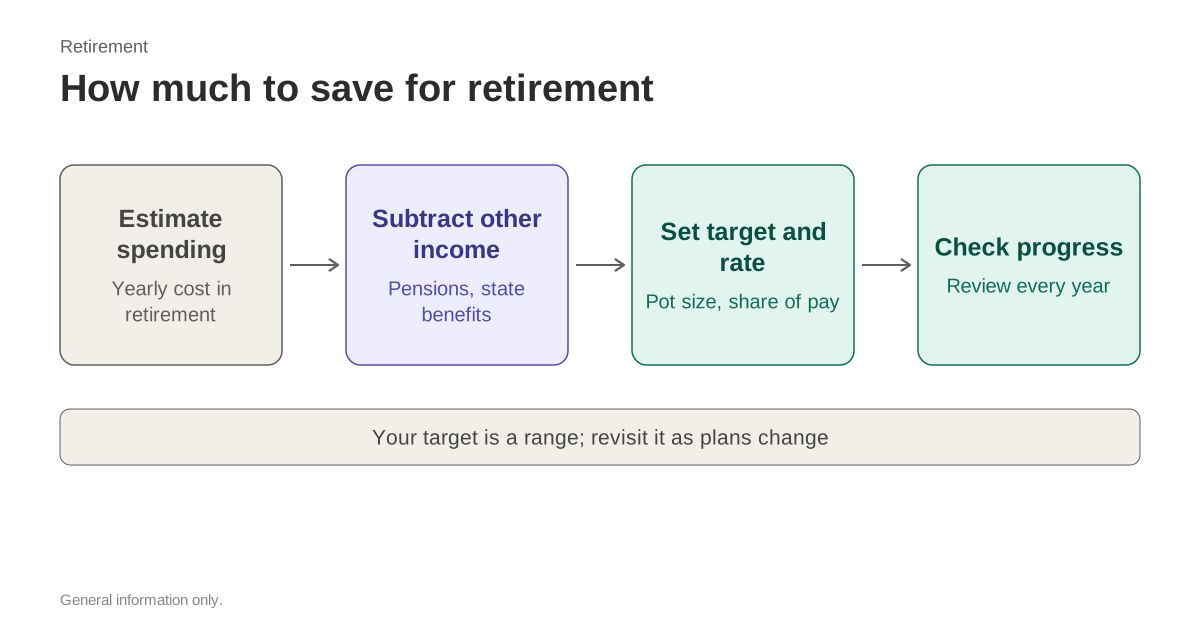
Estimating how much to save is a process: estimate spending, subtract guaranteed income, convert the gap into a target pot, work out the saving rate, and check progress every year. The figures will change, so the aim is a plan that you understand, can adjust and can follow consistently.
Frequently asked questions
Is there a standard amount I should have saved by a certain age?
Rules of thumb exist, but they are rough. A better approach is to estimate your own spending and income needs, then work out the pot required. Personal figures are more useful than general benchmarks.
What is a safe withdrawal rate?
There is no universal figure. A rate around four per cent is a common reference, but the sustainable level depends on your time horizon, the mix of your investments and future returns.
What if I cannot save enough?
Consider increasing contributions, working longer, reducing expected spending, or planning for a lower income. Most people combine several of these, and the earlier you adjust, the more options you have.
Should I include my home in the plan?
It depends. Some people plan to downsize or use home equity, but that adds uncertainty and costs. Keep the home separate from the main savings target until you have a clear plan for it.