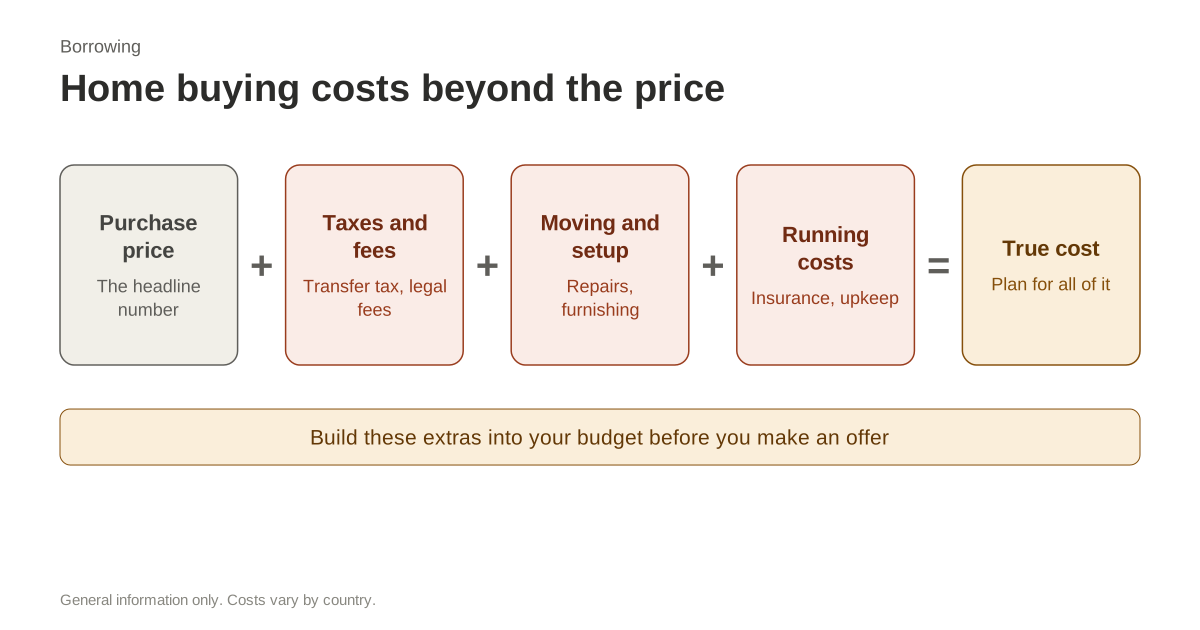
The price of a home is only part of what you will pay. Buyers often focus on the purchase price and the monthly mortgage payment, then discover a list of additional costs at the point of purchase and throughout ownership. Planning for these costs early prevents a stressful squeeze when the deal is nearly complete.
This article explains the main categories of cost, when they are paid, and how to build them into your budget. Amounts and rules vary widely by country and region, so check local figures with a lawyer, a surveyor or the relevant authority.
Costs at the point of purchase
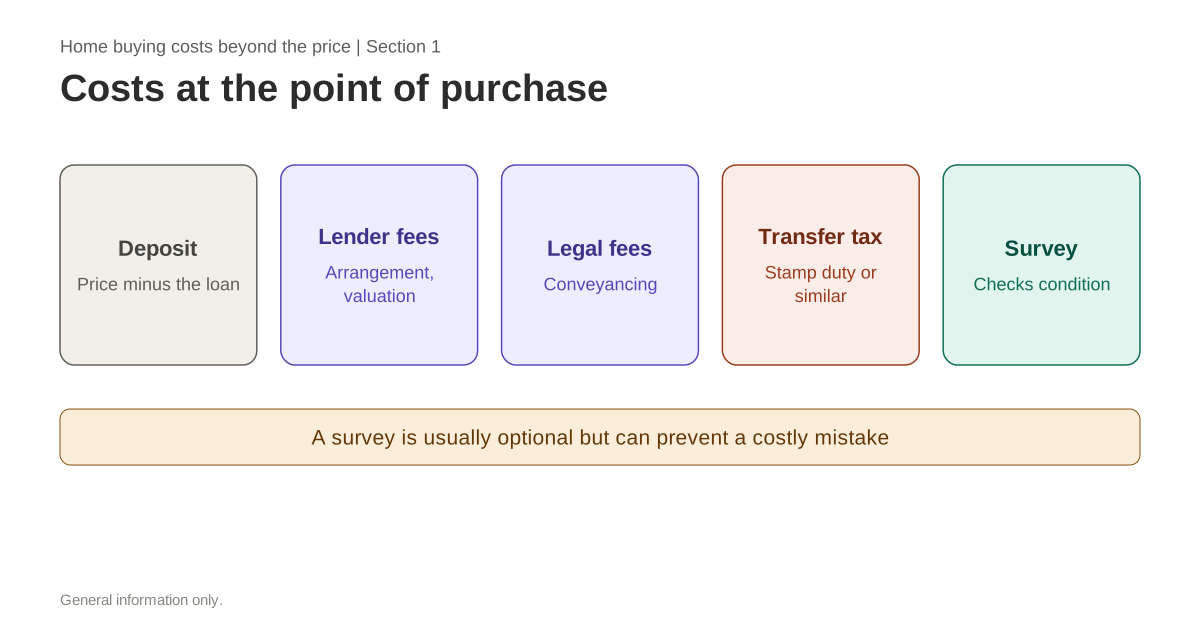
Several costs are paid when the deal completes. The largest is usually a deposit, which is the difference between the price and the amount you borrow. Lenders may also charge arrangement fees, valuation fees and legal fees. Some countries levy a transfer tax or stamp duty on the purchase, and the rate often depends on the price or on whether you are a first-time buyer.
Surveys and inspections are another cost. A survey checks the condition of the property and can reveal problems that affect the price you should pay. It is usually optional, but skipping it can be a costly mistake if the building has hidden faults.
Legal and administrative costs
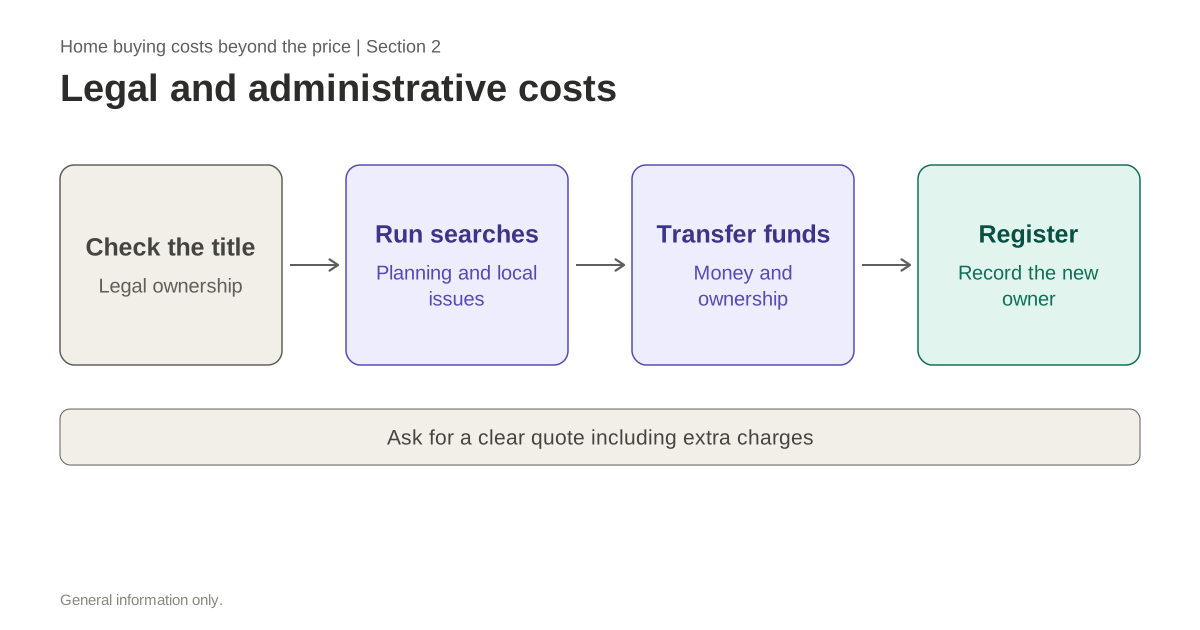
A solicitor or conveyancer manages the legal side of the purchase. They check the title, search for planning issues, and handle the transfer of money and ownership. Their fees are separate from any taxes, and you may also pay for searches and registration. Ask for a clear quote in advance, including any disbursements.
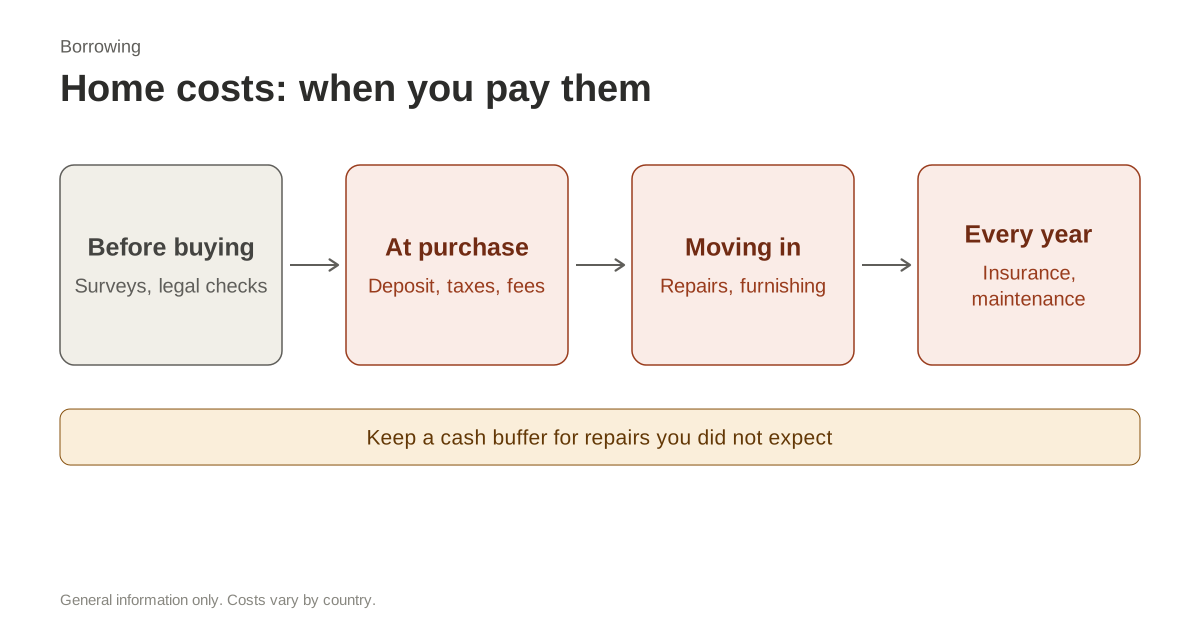
Moving costs and the price of furniture or repairs may also arrive around the time of purchase. They are easy to forget, but they can add up quickly, particularly if the property needs work.
Running costs
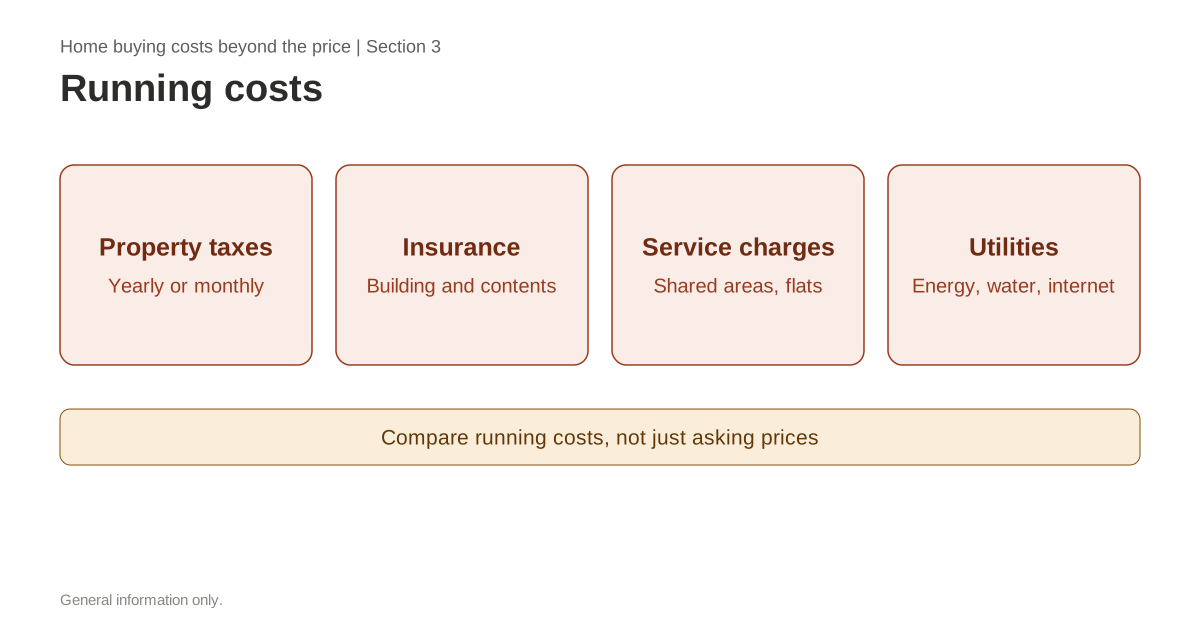
Once you own the home, costs continue. Property taxes or council tax are charged each year or each month. Home insurance is usually required by the lender and protects the building and its contents. If the property is a flat or part of a development, you may pay service charges or maintenance fees for shared areas and the building's upkeep.
Utilities, such as electricity, water, heating and internet, are ongoing costs that may be higher in a larger home. Compare the running costs of the properties you are considering, not just their asking prices.
Maintenance and repairs
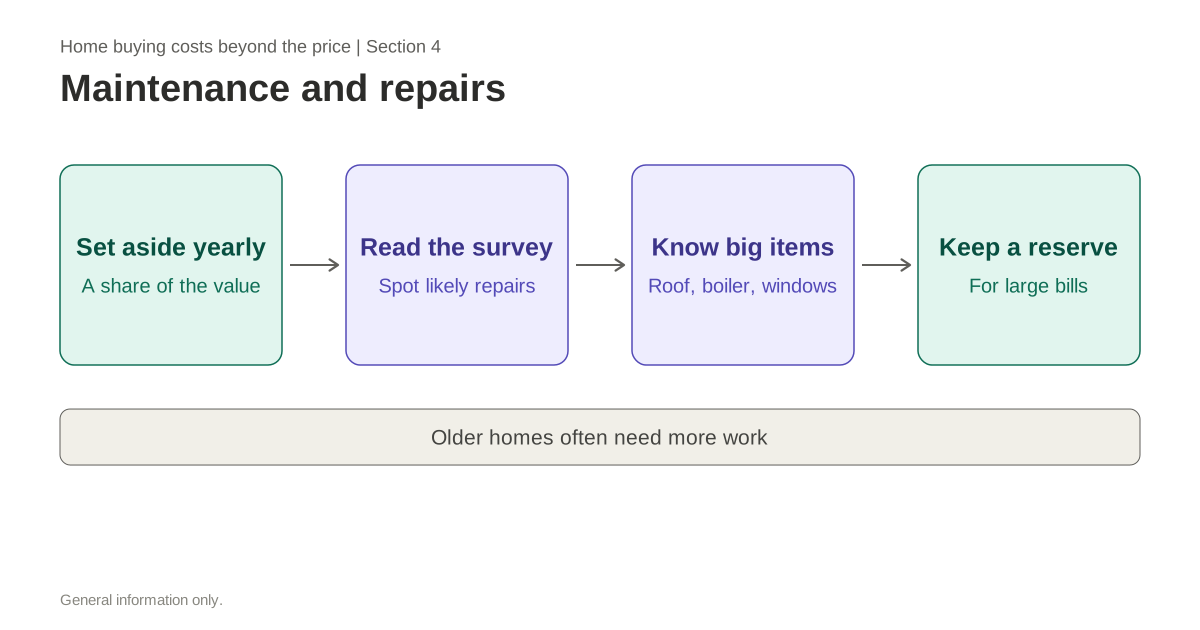
Homes need regular maintenance, and repairs can be expensive. A common planning guideline is to set aside a small share of the property's value each year for upkeep, although the right figure depends on the age and condition of the building. A new boiler, a roof repair or damp treatment can cost thousands, so keep a reserve for them.
Older homes often need more work, but they can also be well built. The survey helps you judge the likely cost of repairs before you commit.
Costs of selling later
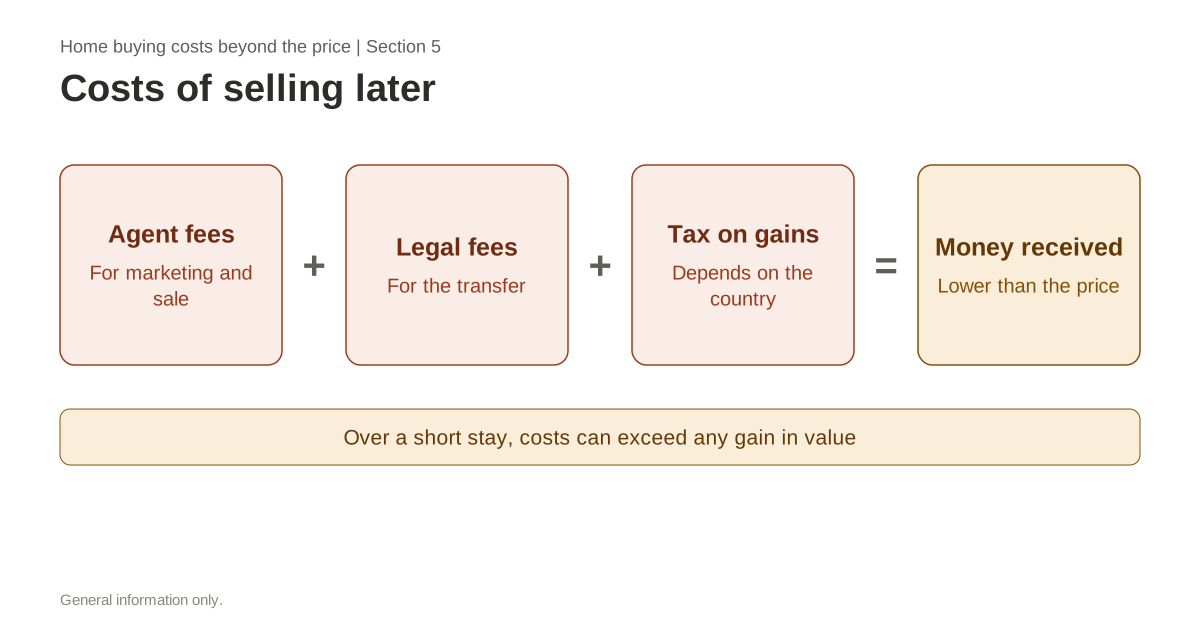
When you eventually sell, the costs include estate agent fees, legal fees and sometimes tax on any gain in value, depending on the country. These costs reduce the amount you receive. If you may sell within a few years, factor in the costs of both buying and selling, because they can exceed any gain in value over a short period.
Build a full budget
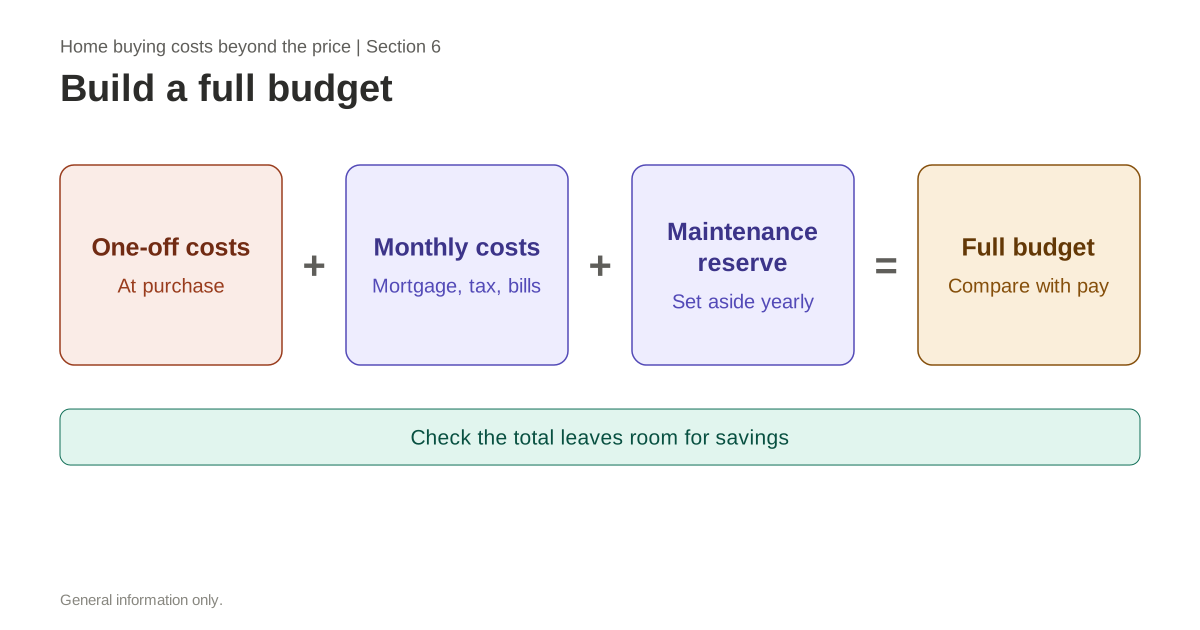
Create a list with every cost, grouped into one-off costs at purchase, ongoing monthly costs and an annual maintenance reserve. Add the total upfront costs to your deposit to see how much cash you need. Then compare the monthly total, including the mortgage, taxes, insurance, service charges and utilities, with your take-home income.
A useful test is whether the full monthly cost leaves enough room for savings and an emergency fund. If not, consider a lower price or a smaller loan.
Negotiate and check
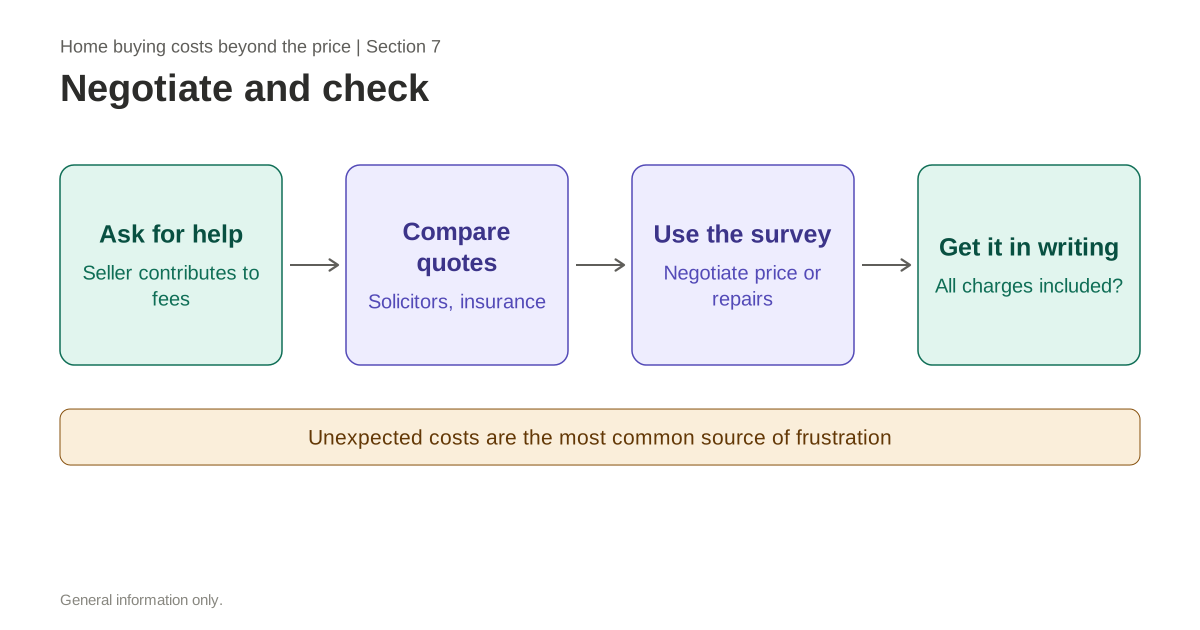
Some costs can be reduced. You can ask the seller to contribute to certain fees, compare quotes from solicitors, and shop around for insurance. If the survey finds problems, you may be able to negotiate a lower price or ask for repairs before completion.
Always ask for written quotes, and check whether they include all charges. Hidden or unexpected costs are the most common source of frustration in property purchases.
Budgeting for the first year
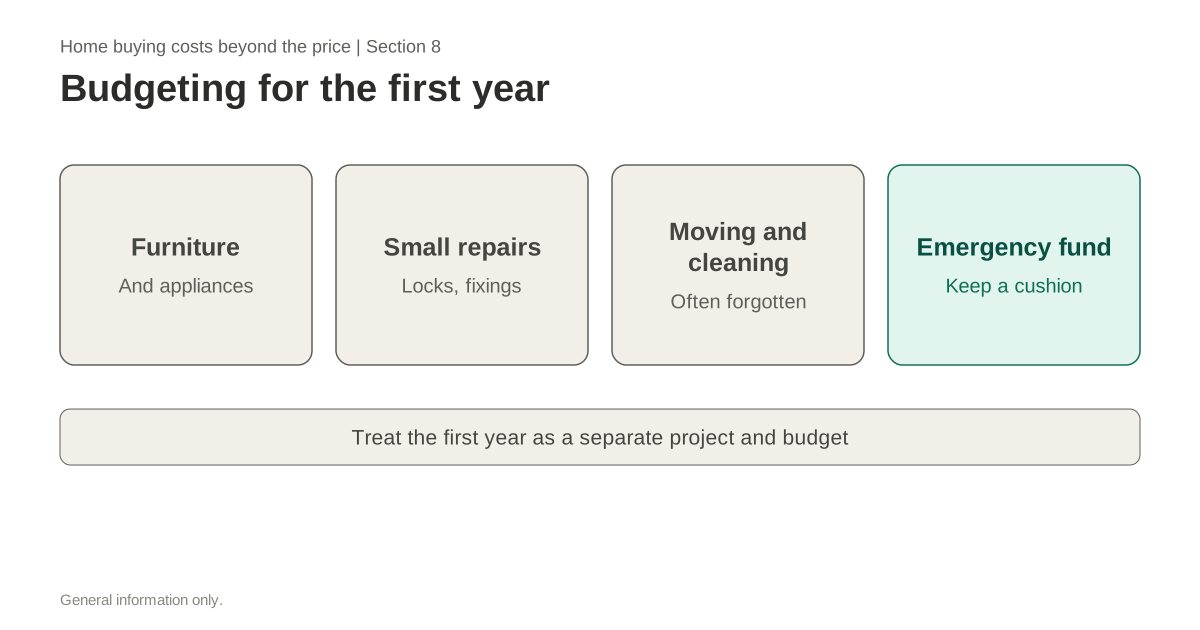
The first year in a new home often brings more costs than later years. Furniture, appliances, curtains, locks and small repairs can all be needed at once. Moving services, cleaning and any work to bring the property up to your standard add more. Plan for these as a separate project, with its own budget and timeline.
It is also sensible to keep an emergency fund in place after you buy. Using your last savings for the deposit and fees can leave you exposed to a boiler failure or a job change in the early months. A cushion, even a small one, helps you handle the transition without borrowing.
Costs that rise over time
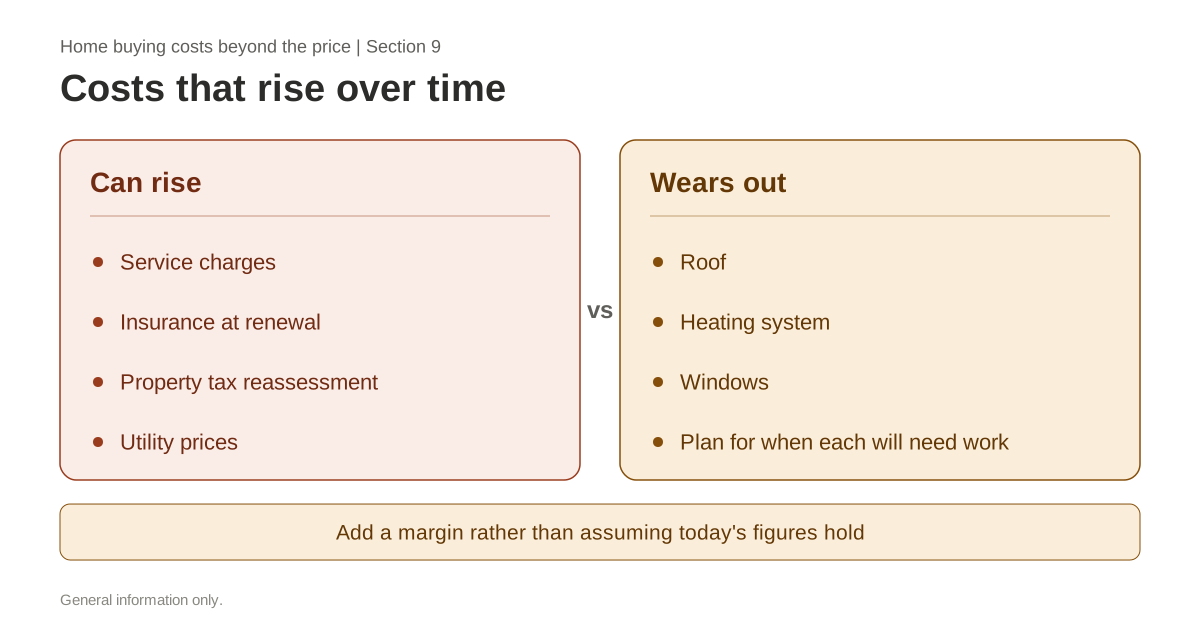
Some costs change after purchase. Service charges can increase as building maintenance costs rise. Insurance premiums may change at renewal, and property taxes can be reassessed. Utility prices move with energy markets. Include a margin for these increases when you plan, rather than assuming today's figures will hold.
Major items such as roofs, heating systems and windows have a limited life. Ask the seller or your surveyor when they were last replaced, and estimate when they are likely to need attention. Spreading these costs over the years, rather than facing them all at once, makes ownership far more manageable.
Keeping the costs in view
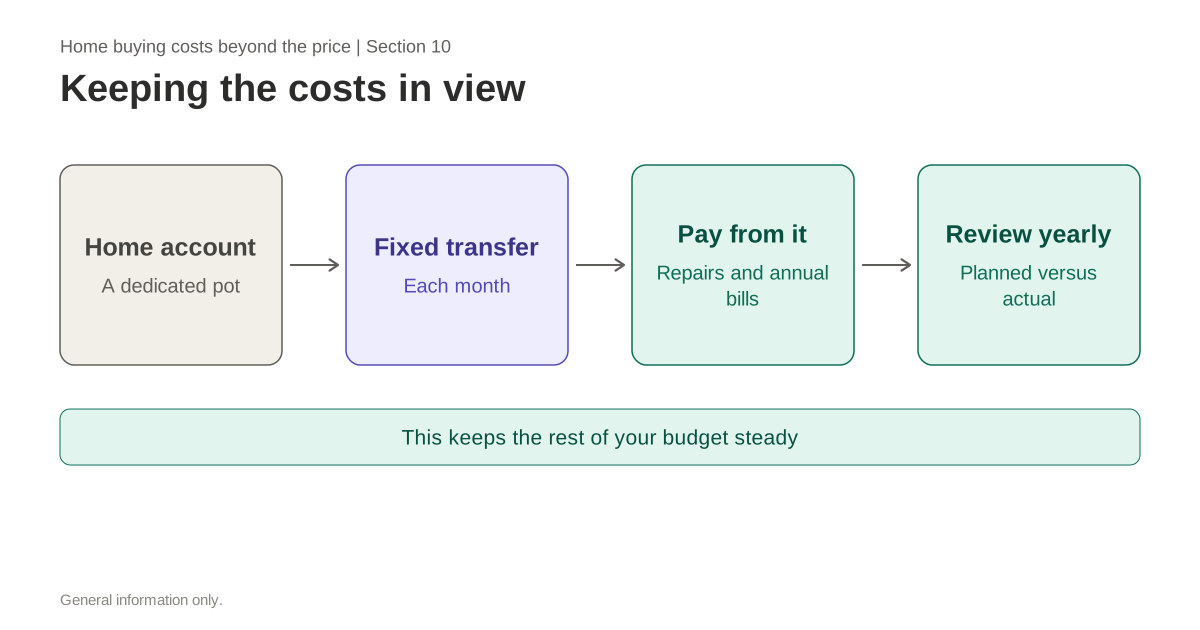
Once the purchase is complete, it helps to review the total cost of owning the home every year. Compare the actual spending on taxes, insurance, utilities and repairs with the figures you planned. Any gap shows where your estimate was too low and gives you a better basis for the next year's budget.
A simple habit is to keep a dedicated account for home costs, into which you transfer a fixed amount each month. Repairs and annual bills are then paid from that account rather than from your everyday income, which keeps the rest of your budget steady.
The bottom line
A home is a long-term commitment that carries costs well beyond the purchase price. Plan for the deposit, the legal and survey fees, taxes, running costs and maintenance from the start. A realistic total budget protects you from the strain of unexpected bills and helps you decide whether a property truly fits your finances.
Frequently asked questions
What is the most common surprise cost for first-time buyers?
Often it is the combination of legal fees, transfer taxes and moving costs paid at completion. Many buyers also underestimate maintenance and the reserve needed for repairs.
Is a survey really necessary?
It is not always legally required, but it is strongly recommended. A survey can reveal faults that affect the value or the cost of repairs, which can be far more expensive than the survey itself.
How much should I save for maintenance?
There is no universal figure. Many owners set aside a small share of the property's value each year, adjusted for the age and condition of the home. The survey helps you estimate the likely cost.
Can I afford a mortgage if the monthly payment fits my budget?
Only if the full monthly cost, including taxes, insurance, service charges and utilities, still leaves room for savings. The mortgage payment alone does not show the total cost of owning a home.