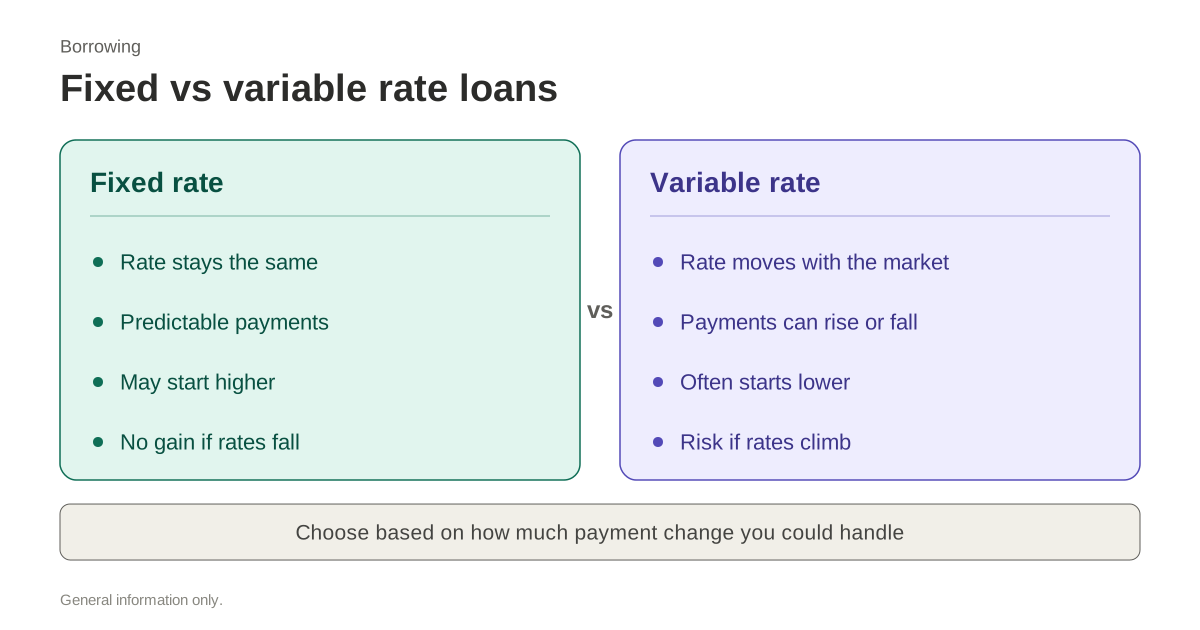
When you take a loan, one of the first decisions is whether the interest rate will stay the same for the whole term or change over time. A fixed rate stays unchanged for an agreed period. A variable rate moves with a reference rate set by the central bank or a benchmark chosen by the lender. The choice affects how predictable your payments are and how much risk you carry.
This article explains how each type works, what the trade-offs are, and how to decide which suits your situation. The details, including how often a variable rate can change, depend on the country and the lender, so read the agreement carefully.
How a fixed rate works
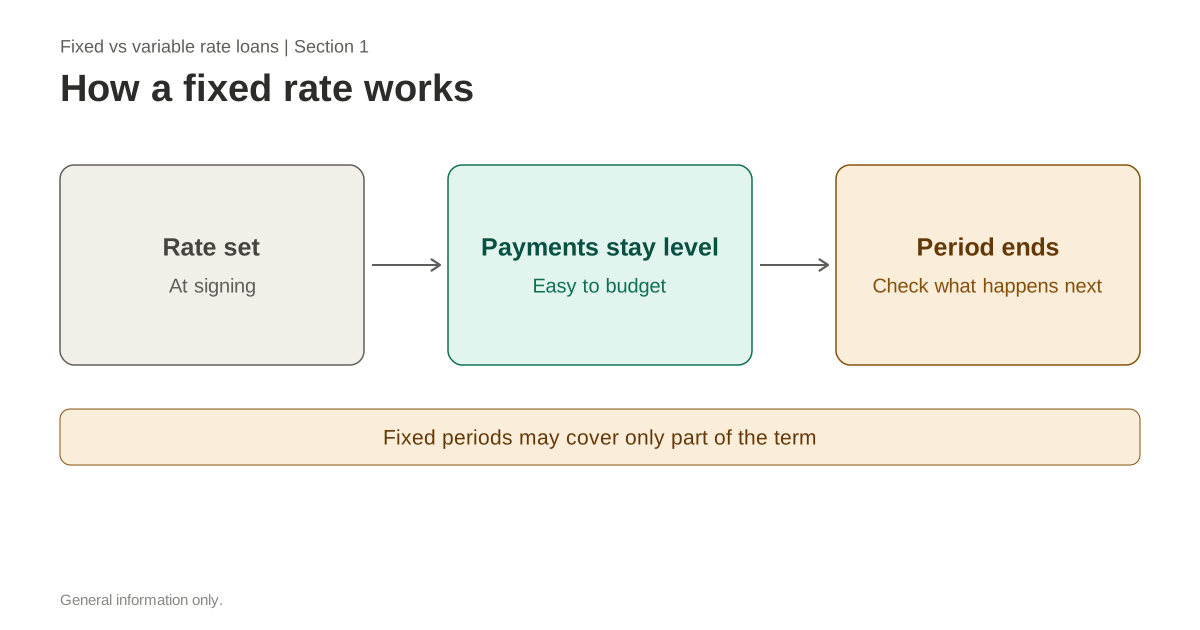
With a fixed-rate loan, the interest rate is set when you sign and stays the same for a stated period. Your monthly payment stays the same too, which makes budgeting simple. You know the cost of the loan from the start, and a rise in market rates does not affect what you pay.
Fixed rates are sometimes offered for only part of the term, such as the first two or five years. After that period, the rate may switch to a variable rate or be reset. Check what happens at the end of the fixed period, because a sudden change can raise your payments significantly.
How a variable rate works
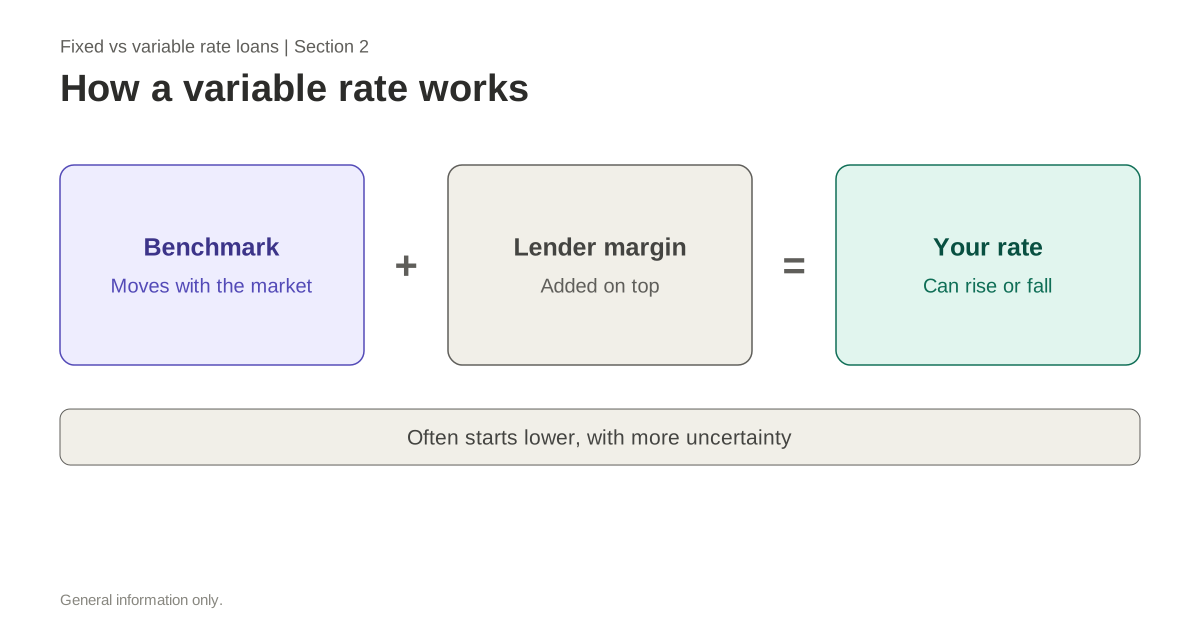
A variable-rate loan has an interest rate that moves. It is usually linked to a benchmark, and the lender adds a margin on top. When the benchmark rises, your rate and payment can rise. When it falls, your payment can fall too.
Variable rates often start lower than fixed rates, which is why they can look attractive. The trade-off is uncertainty. A loan that is affordable today may become expensive if rates rise, so the variable option carries more risk.
Comparing the two
The main advantage of a fixed rate is certainty. It protects you from rate rises and helps you plan a budget for several years. The main disadvantage is that you may pay more than the variable rate if rates fall, and some fixed-rate loans charge a fee to repay early.
The main advantage of a variable rate is flexibility and, often, a lower starting cost. Some variable loans also allow overpayments without penalty, which can reduce the total interest. The main disadvantage is that your payments can increase, and you need a margin in your budget to absorb that risk.
How to decide
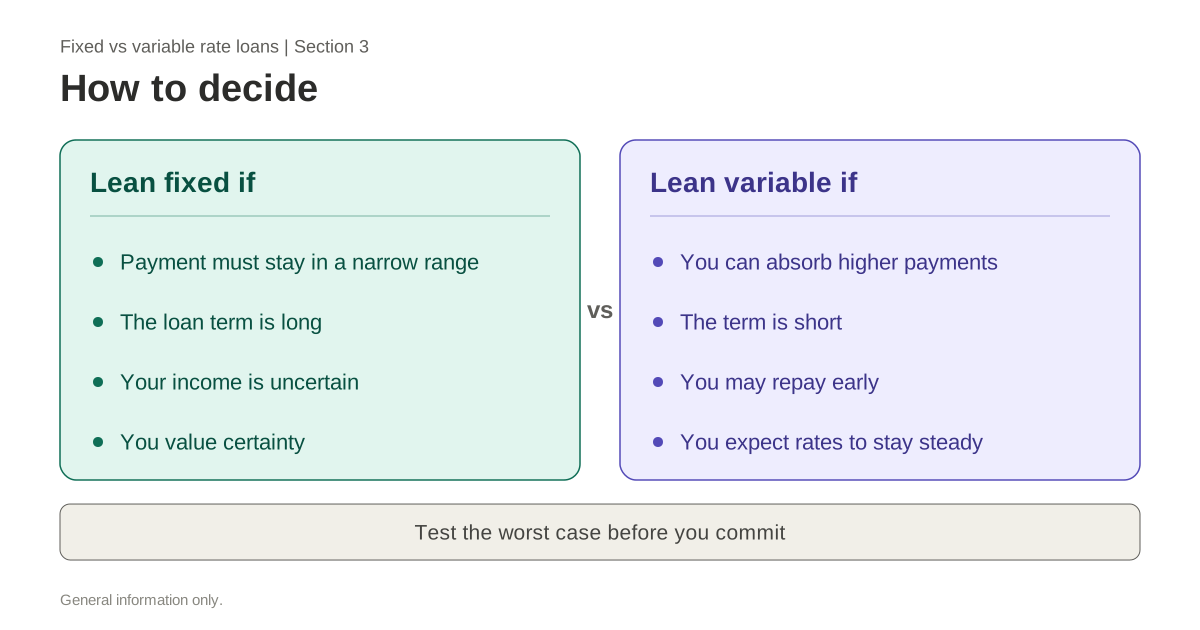
Start with your budget. If the monthly payment must stay within a narrow range, a fixed rate gives you security. If you have room in your budget and can handle a higher payment, a variable rate may save money, particularly if you expect rates to remain stable or fall.
Consider how long you plan to keep the loan. A short loan carries less risk from rate changes, because there is less time for the rate to move. A long mortgage or loan carries more exposure, so certainty may be more valuable.
Look at the flexibility you need. If you might repay early, check whether fixed-rate deals include an early repayment charge, and whether variable loans allow extra payments. The ability to repay without penalty can be worth more than a small difference in the starting rate.
Stress test your payments
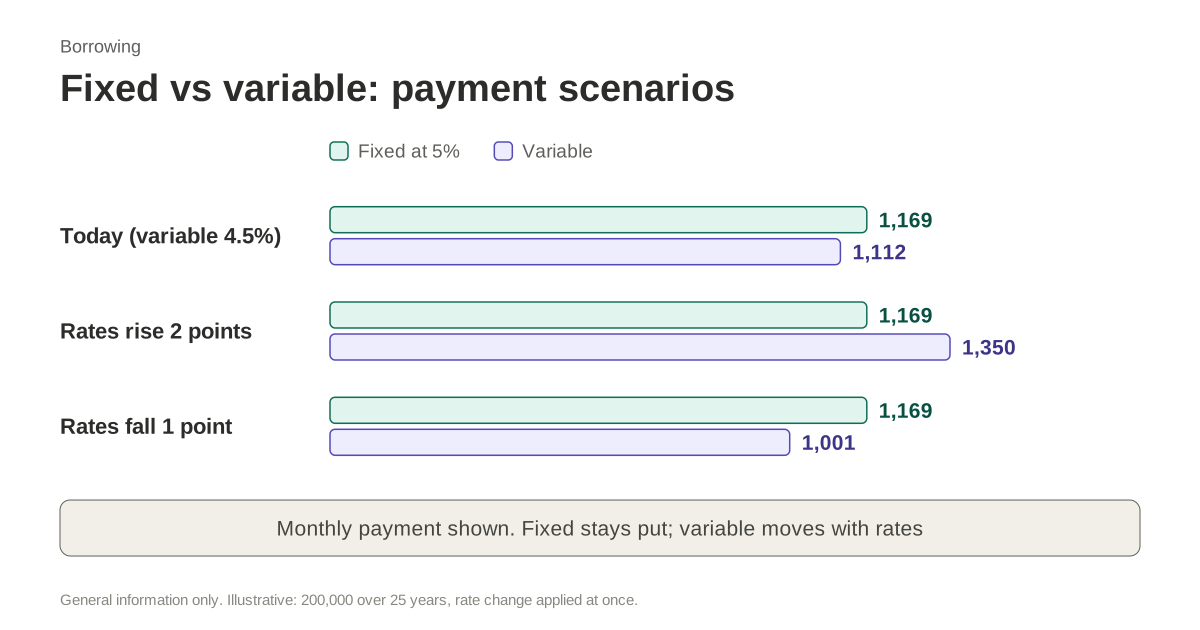
Before you choose a variable rate, ask what your payment would be if the rate rose by a few percentage points. Use a loan calculator to see the effect. If the higher payment would strain your finances, a fixed rate or a smaller loan may be the safer choice.
Think about your income too. If your earnings are uncertain, the risk of a rising payment is harder to absorb, and the case for a fixed rate becomes stronger.
Hybrid products
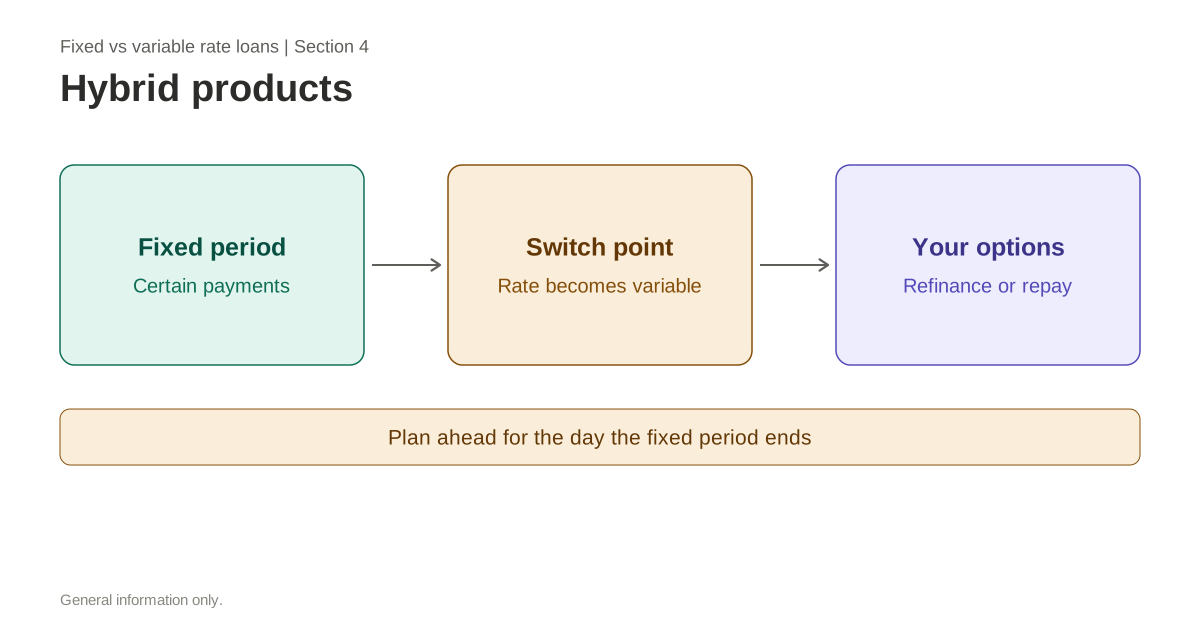
Some loans combine the two. They start with a fixed rate for a set period and then move to a variable rate. These can offer a balance between certainty and flexibility, but they require attention when the fixed period ends. Plan ahead for the change, and consider whether you will want to refinance or repay before it happens.
What to check in the agreement
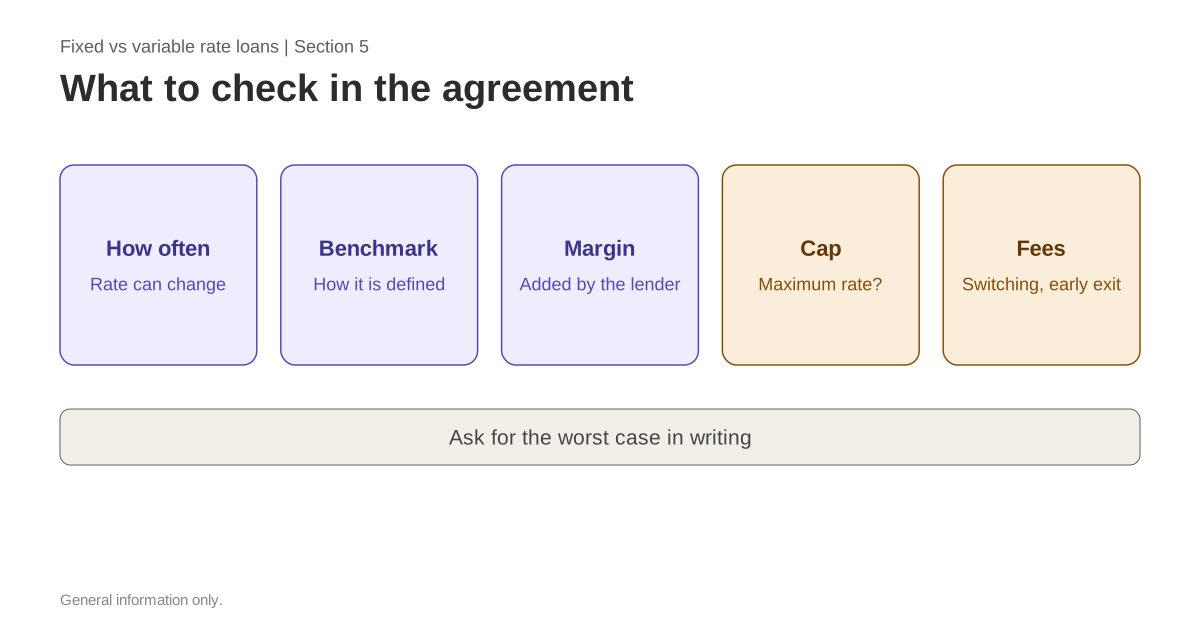
Read how often the variable rate can change, how the benchmark is defined, and what margin the lender adds. Check the maximum rate the loan can reach, if there is a cap, and whether there is a minimum payment. Look for any fees for switching products, changing the term or repaying early, and check how these are described in the total cost figures.
If the agreement is unclear, ask the lender to explain the worst case in writing. A clear answer is a sign of a fair product.
Refinancing
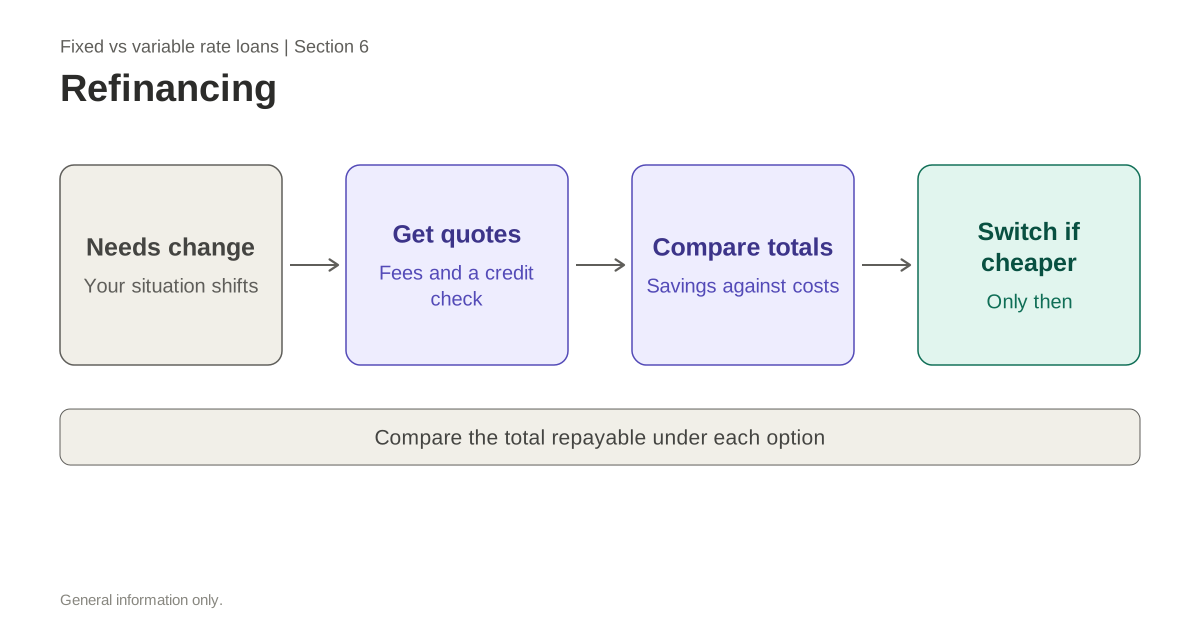
If you start with one type and your circumstances change, you may be able to refinance into the other type. Refinancing usually involves new fees and a new credit check, and it is only worth doing if the total saving is larger than the costs. Compare the total amount repayable under each option before you switch.
Worked example
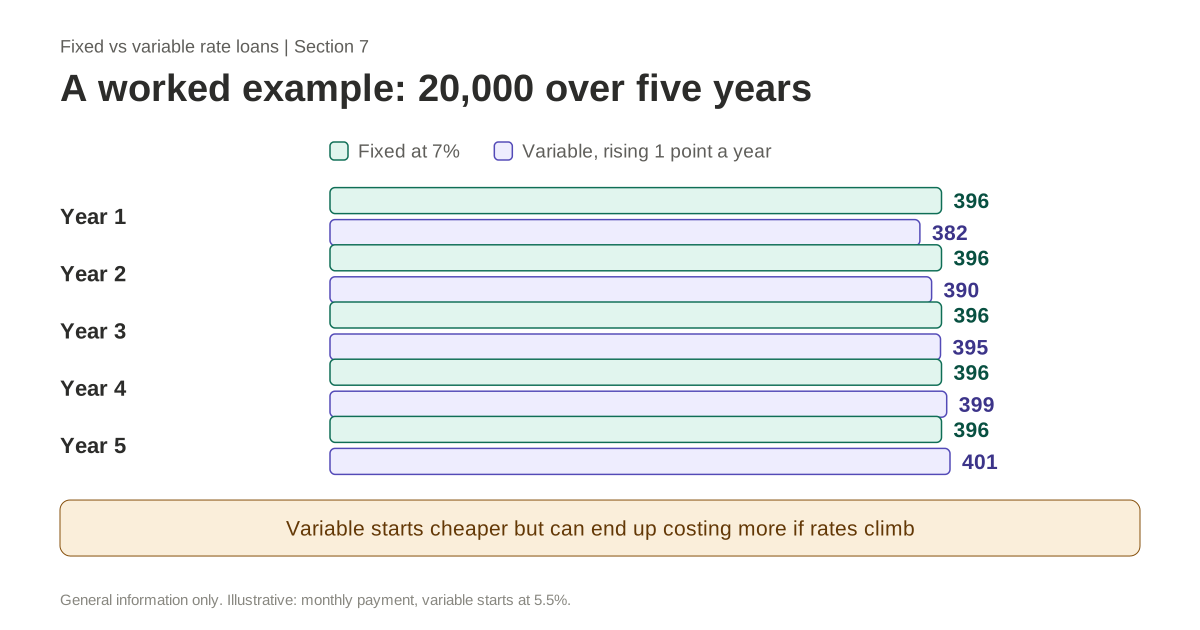
Suppose you borrow 20,000 over five years. A fixed rate of 7% gives a predictable monthly payment for the full term. A variable rate that starts at 5.5% gives a lower payment at first, but if it rises by one percentage point each year, the payment climbs in steps. The variable loan can cost less overall if rates stay low, and more if they rise sharply.
The point is not to predict rates, which nobody can do reliably. It is to check whether you could cope with the higher payments if they came. If the rise would stretch your budget, the certainty of a fixed rate is worth its premium.
The bottom line
Fixed rates buy certainty, and variable rates offer flexibility with more risk. The right choice depends on your budget, your tolerance for uncertainty, how long you will keep the loan and whether you may repay early. Test the worst case before you commit, and make sure the payment you choose is one you can afford if rates move against you.
Frequently asked questions
Is a fixed rate always better?
Not always. A fixed rate gives certainty, but a variable rate can be cheaper if rates fall or stay steady. The better choice depends on your budget and tolerance for risk.
What happens when a fixed-rate period ends?
The loan usually moves to a variable rate or is reset to a new rate. Check the terms in advance, because the change can raise your payments significantly.
Can I switch from a variable rate to a fixed rate?
Often you can refinance or change products, but this may involve fees and a new credit check. Compare the total cost of switching with the expected saving before you decide.
How do I know how much a rate rise would cost me?
Use a loan calculator and enter a higher rate to see the new monthly payment and total interest. This stress test shows whether your budget can absorb a rise.