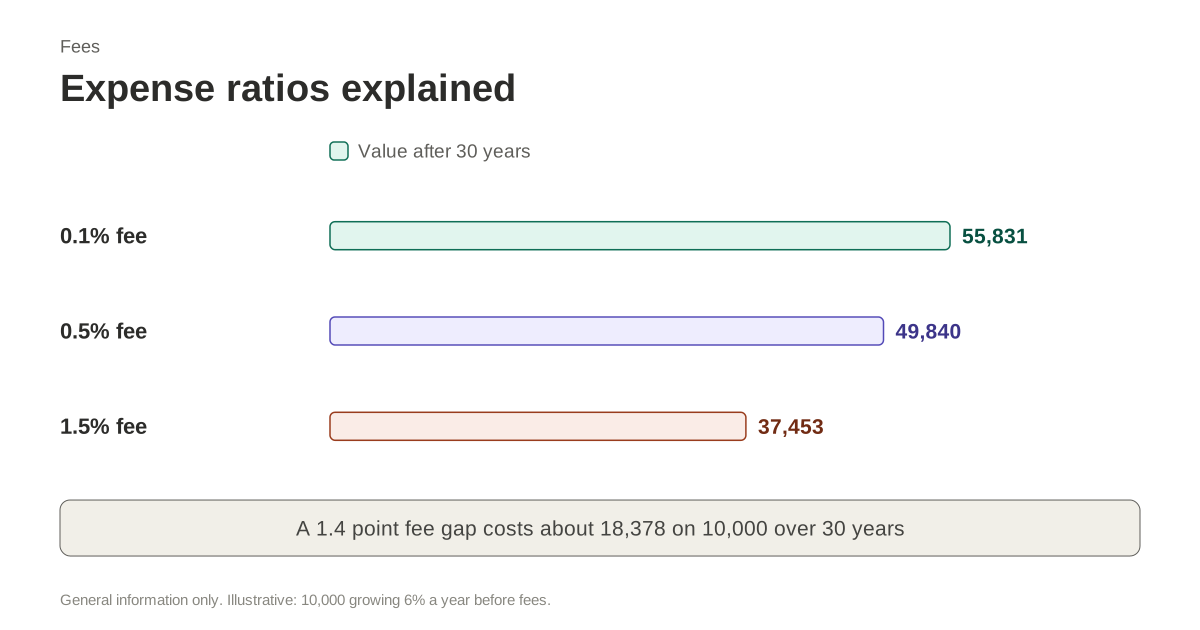
The expense ratio is the annual cost of running an investment fund, expressed as a percentage of the fund's assets. It is charged every year, deducted from the fund's value rather than billed to you as a separate item. Because it is taken automatically, many investors never notice it, yet over long periods it can reduce the growth of an investment significantly.
This article explains what an expense ratio covers, how it compounds, and how to use it when comparing funds. It is general information, and it is not a recommendation of any particular fund.
What the figure covers
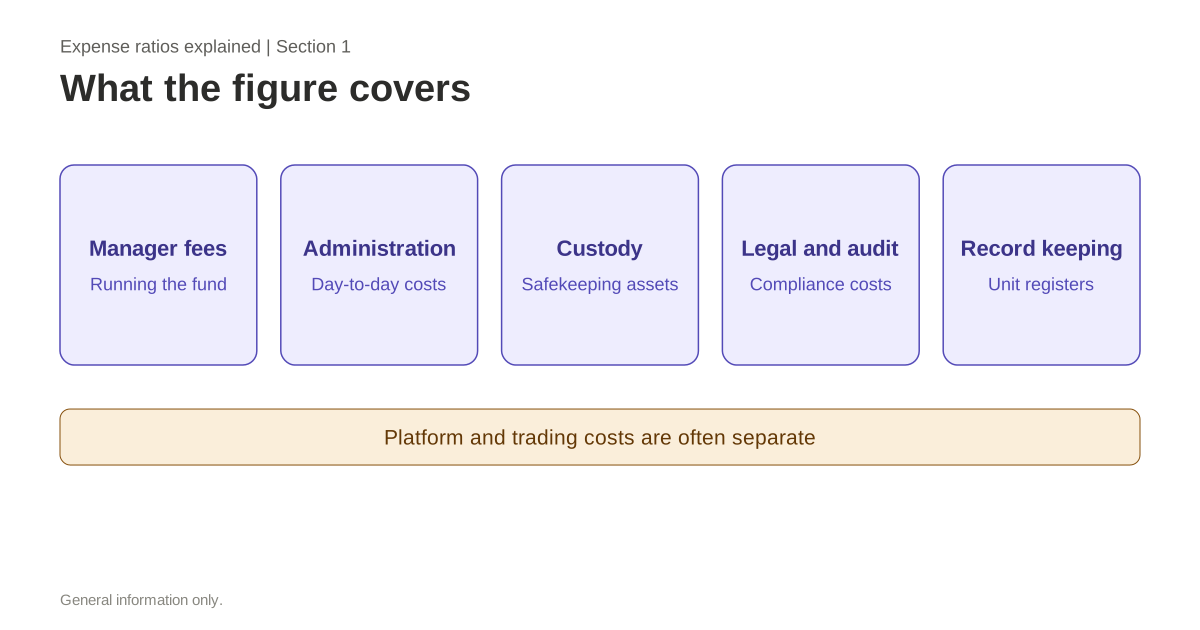
The expense ratio pays for the fund's running costs. These typically include the fund manager's fees, administration, custody of the assets, legal and audit costs, and the cost of record keeping. Some funds also include marketing costs or other charges in their ratio. The exact list is set out in the fund's documents, and it differs between funds.
The expense ratio does not usually include the cost of buying or selling the fund, which may be charged by a platform separately. It also does not always include the cost of trading the fund's holdings, which can be a further drag on performance. Check the fund's key information document for the full picture.
How it reduces your return
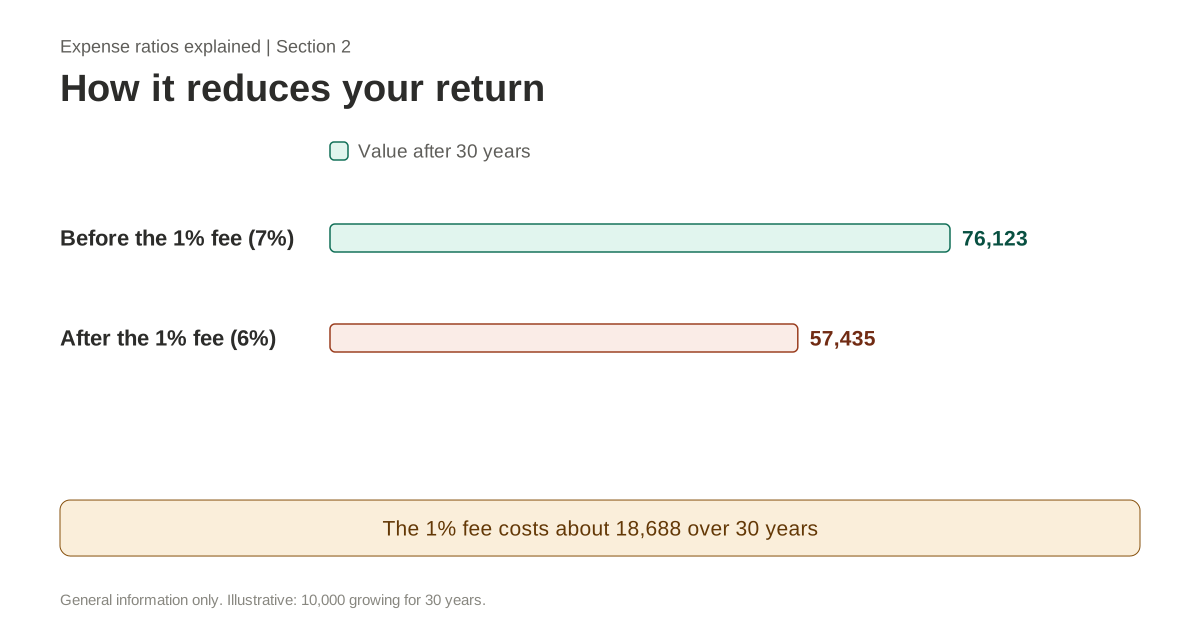
Suppose a fund earns 7% before costs and charges an expense ratio of 1%. Its net return is about 6%. The 1% looks small, but it is taken every year, and the money it removes would have grown in later years if it had stayed invested.
Over a long period, the effect compounds. An investment of 10,000 growing at 7% for 30 years becomes about 76,100. The same investment growing at 6% becomes about 57,400. The difference of around 18,700 is the cost of that 1% fee over three decades, and it is larger than the fee paid in the early years.
Comparing like with like
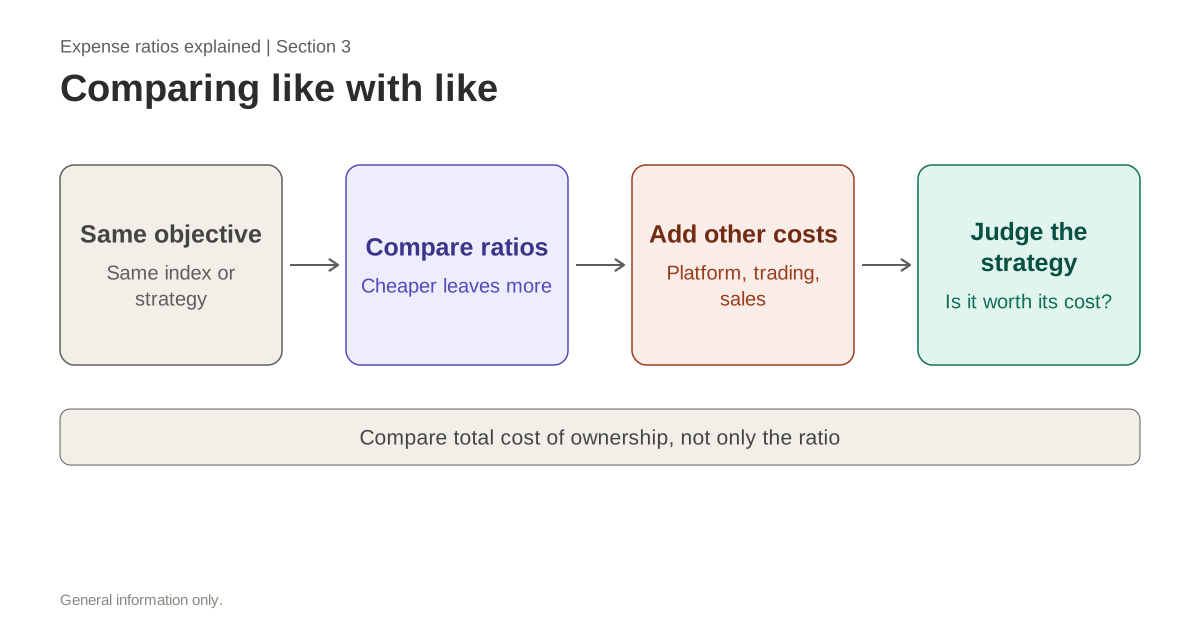
To compare two funds fairly, look at the expense ratio alongside the fund's objective. Two funds that track the same index should have similar performance before costs, so the cheaper one will usually leave you with more. For funds with different strategies, the expense ratio is still useful, but you also need to judge whether the strategy is worth its cost.
Compare the total cost, not only the expense ratio. Platform charges, trading costs and any sales charges all reduce your return, so the total cost of ownership is the right figure to compare.
Active versus passive
Actively managed funds usually charge higher expense ratios, because they pay for research and trading. Passive funds, which follow an index, tend to be cheaper. This is one reason many investors favour low-cost index funds. The higher cost of an active fund must be justified by performance that exceeds the fund's benchmark after fees, and that is hard to achieve consistently.
Remember that a higher expense ratio does not guarantee better results, and a low ratio does not guarantee a good investment. Both matter, along with the fund's strategy, its risks and your own plan.
Where to find the figure
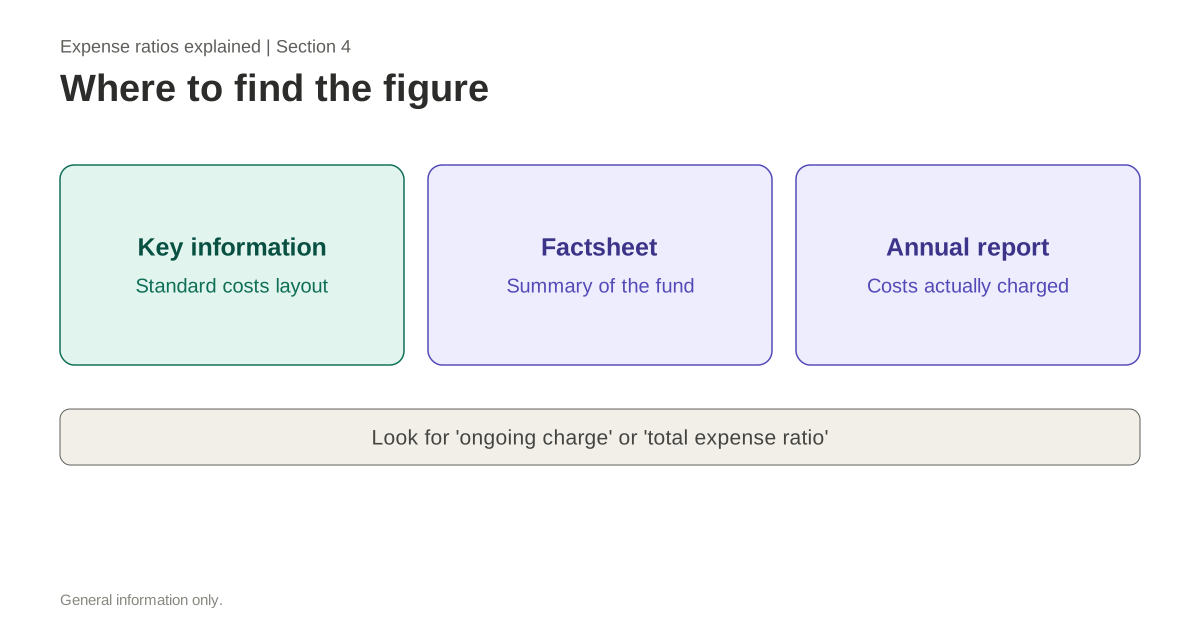
Funds publish the expense ratio, usually labelled as the ongoing charge or total expense ratio. It appears in the key information document, in the factsheet and in the annual report. Check that the figure you read is current, because it can change when the fund's costs change.
When a fund has been merged or restructured, the ratio may change. Recheck the figures once a year, and especially after any announcement from the fund company.
Making a decision
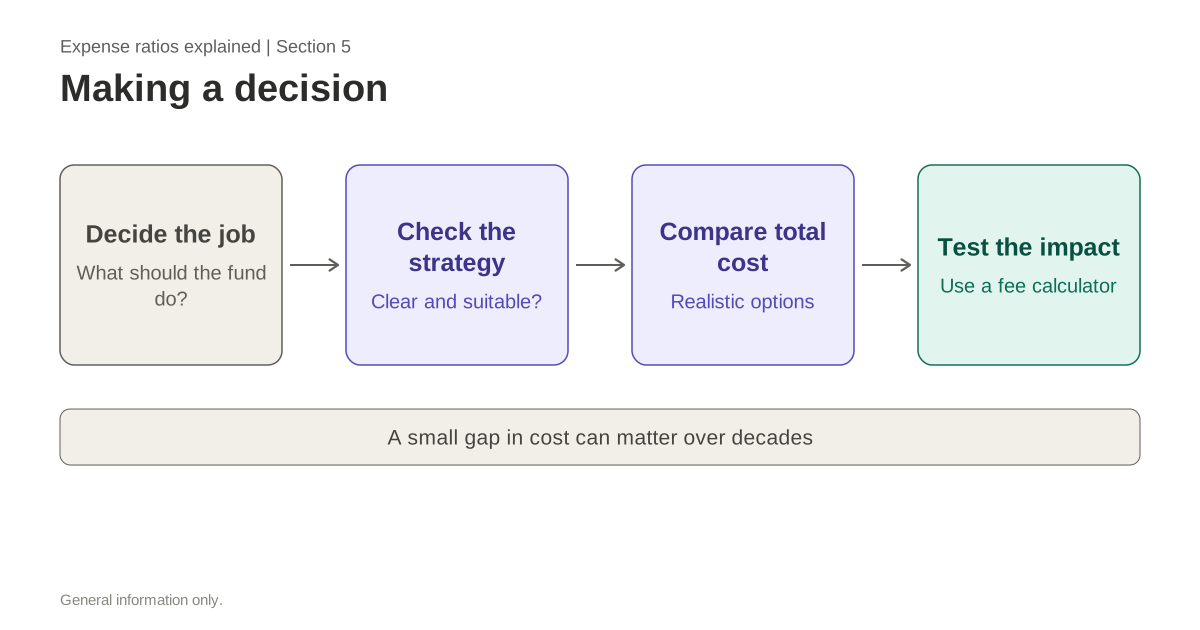
Use the expense ratio as one tool among several. Decide what you want the fund to do, check that it does that job with a clear strategy, and then compare the total cost of the realistic options. A small difference in cost, sustained over decades, can matter more than the choice between two similar strategies.
Use our fee impact calculator to see how a fund's expense ratio affects the value of your investments over time.
Fees in a bad year
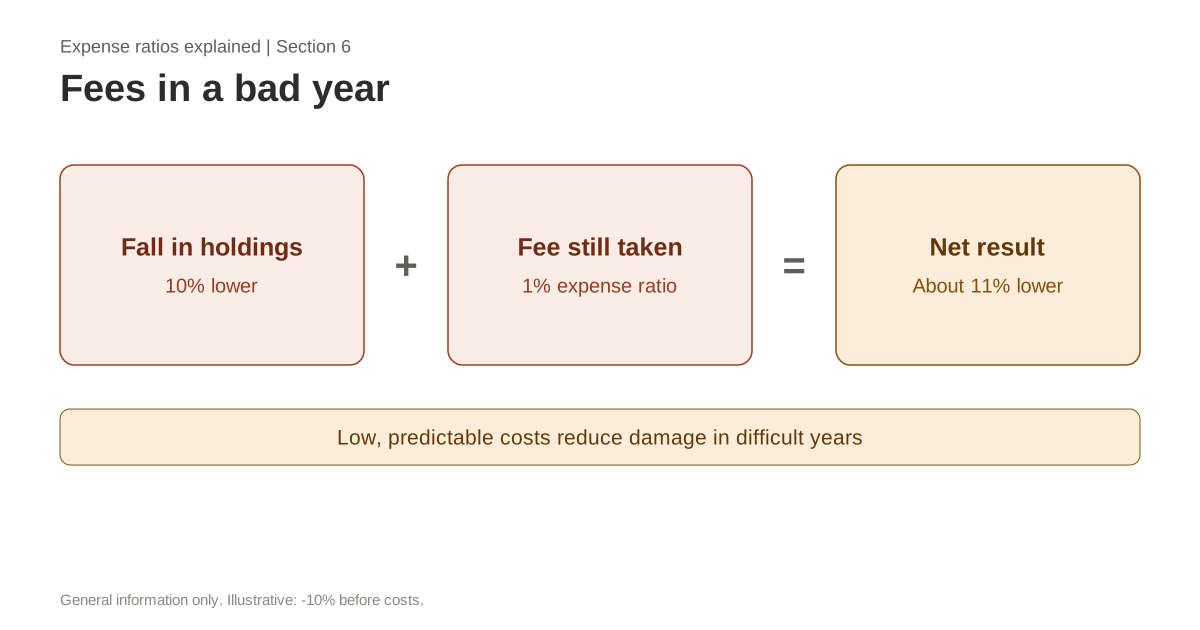
Fund charges are taken every year, including years when the fund falls. In a poor year, the expense ratio is still deducted from the fund's value, which deepens the loss. This is one reason why low, predictable costs are valuable: they reduce the damage in difficult periods as well as lowering the average return drag.
A simple rule for comparisons
When two funds look similar, choose the lower-cost one unless there is a clear, documented reason to pay more. Over long periods, the saving from a lower charge usually outweighs the difference in short-term results, and it does not depend on predicting which fund will outperform.
Where the cost goes
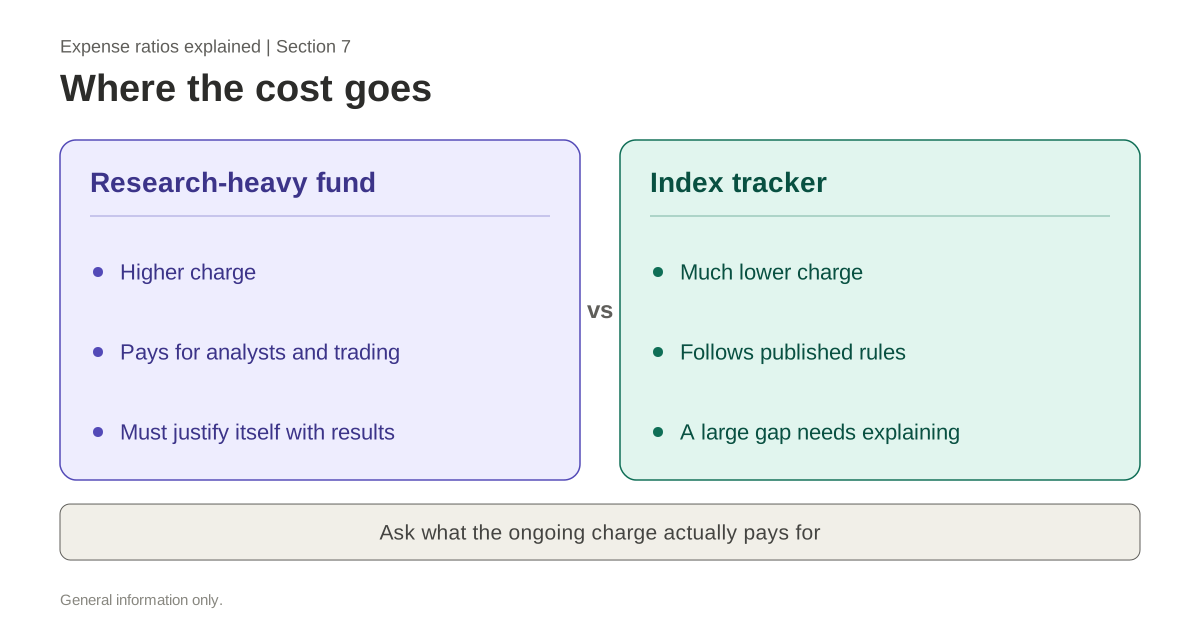
Ask what the ongoing charge pays for, because the answer shapes how you judge it. A fund that spends heavily on research may justify a higher charge if its results support it. A fund that mainly tracks an index should cost much less, and a large gap between the two needs a clear explanation.
Other costs to include
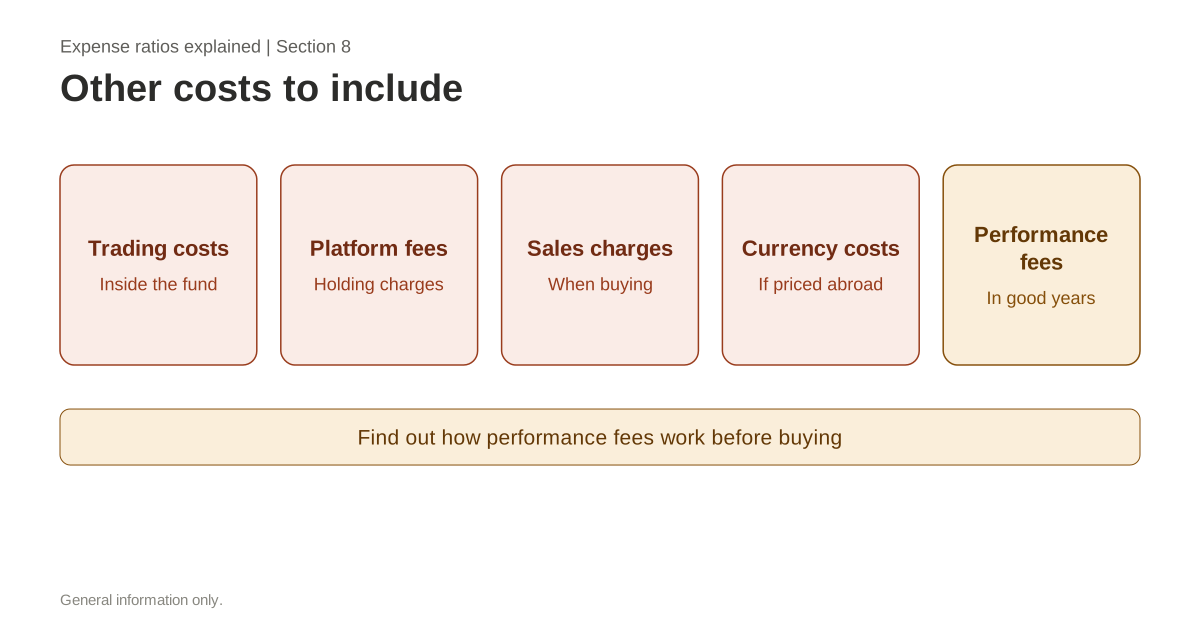
Beyond the expense ratio, check the transaction costs inside the fund, the platform charges, any sales charge and the currency conversion cost. Some funds also have performance fees, which are charged when returns exceed a benchmark. These fees can be significant in good years, so find out how they work before buying.
A quick comparison method
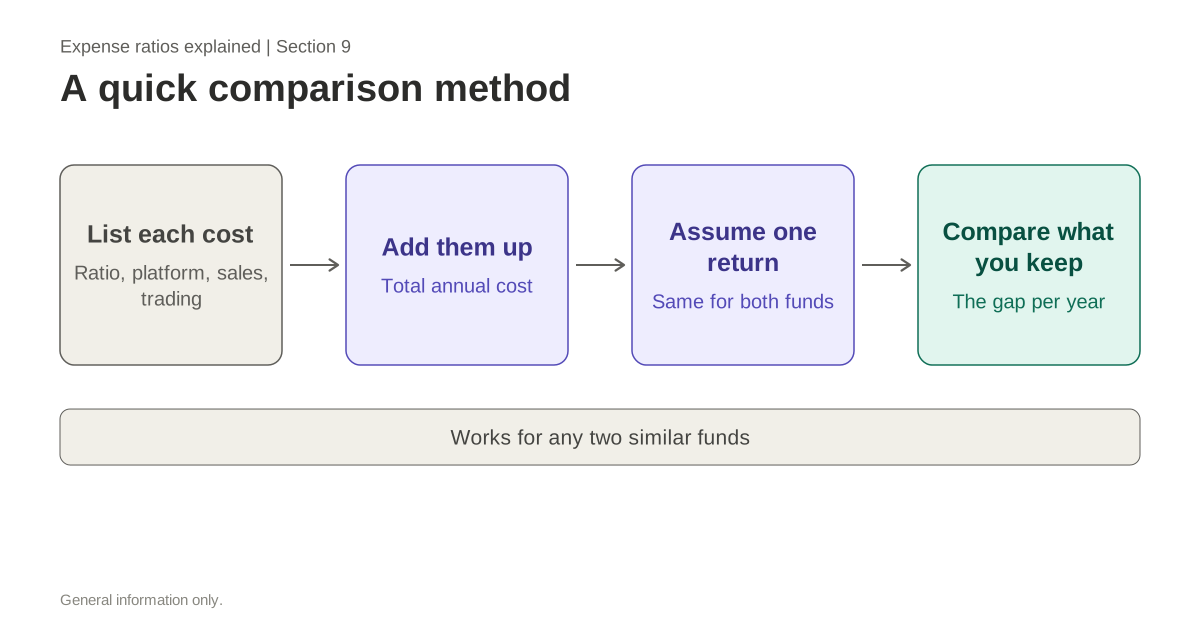
To compare two funds on cost, list the expense ratio, the platform charge, any sales charge and the estimated trading cost for each. Add them to get the total annual cost. Then compare the funds with the same expected return, to see the difference in the amount you keep each year.
Where the cost goes
Ask what the ongoing charge pays for, because the answer shapes how you judge it. A fund that spends heavily on research may justify a higher charge if its results support it. A fund that mainly tracks an index should cost much less, and a large gap between the two needs a clear explanation.
The bottom line
The expense ratio is the yearly price of owning a fund, and it compounds against you. Look at it in every comparison, check the total cost, and remember that a lower figure only helps if the fund does its job well. Small differences in cost add up to large differences in outcome over a lifetime of investing.
Frequently asked questions
Is the expense ratio the only cost of a fund?
No. Platform charges, dealing costs and any sales charges are separate. Some trading costs inside the fund are also not always included in the headline ratio.
Where do I find a fund's expense ratio?
It is shown in the key information document, the factsheet and the annual report, often labelled ongoing charge or total expense ratio. Check that the figure is up to date.
Is a higher expense ratio always worse?
Usually it leaves you with less return, all else being equal. A higher-cost fund can still be worth holding if its strategy consistently delivers enough extra return to justify the cost, but that is hard to predict.
Does the expense ratio change?
It can. Funds may change their charges, and the ratio can change after a merger or restructuring. Review it at least once a year.