Dollar-cost averaging is the practice of investing a fixed amount at regular intervals, such as every month, regardless of the price of the investment at the time. Because the same sum buys more units when prices are low and fewer when they are high, the average price you pay tends to be smoother than the price on any single day. The method is also called pound-cost or euro-cost averaging, depending on the currency used.
This article explains how the method works, why people use it, and where its benefits end. It is general information, and it is not a promise of any particular result.
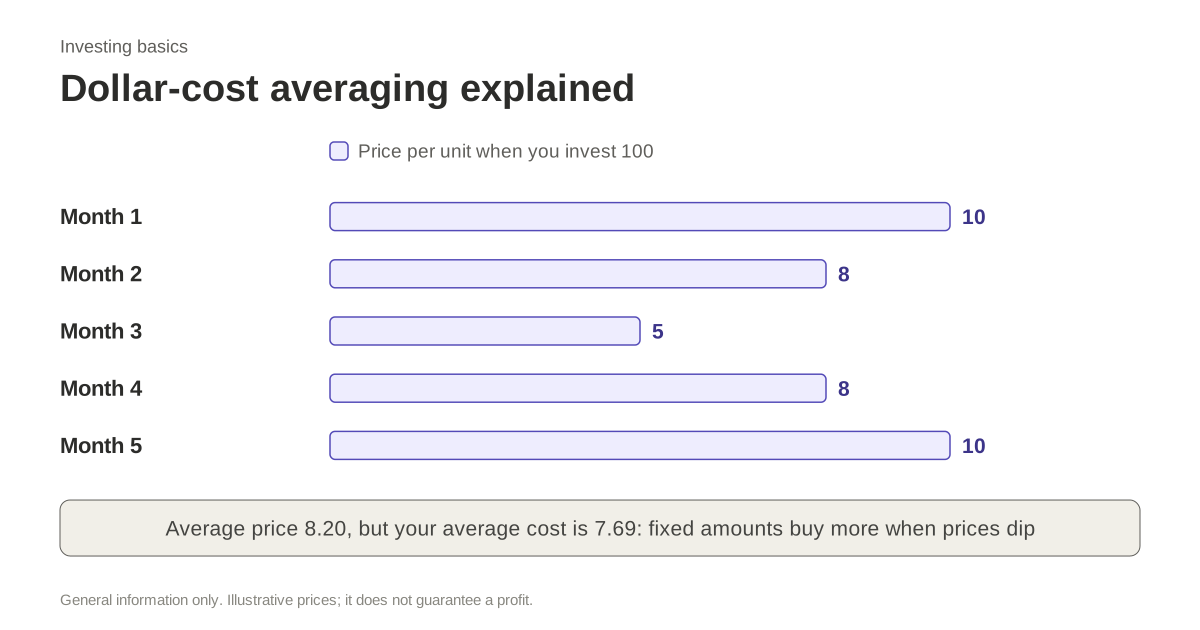
How the method works
Suppose you invest 200 every month into a fund. In a month when the price is 20 per unit, you buy 10 units. In a month when the price falls to 16, the same 200 buys 12.5 units. Over the two months, you have bought 22.5 units for 400, which is an average cost of about 17.78 per unit, lower than the simple average of the two prices, which is 18.
The effect comes from buying more when the price is low. It does not depend on predicting which months will be cheaper, which is one of the main reasons investors find it appealing.
Why people use it
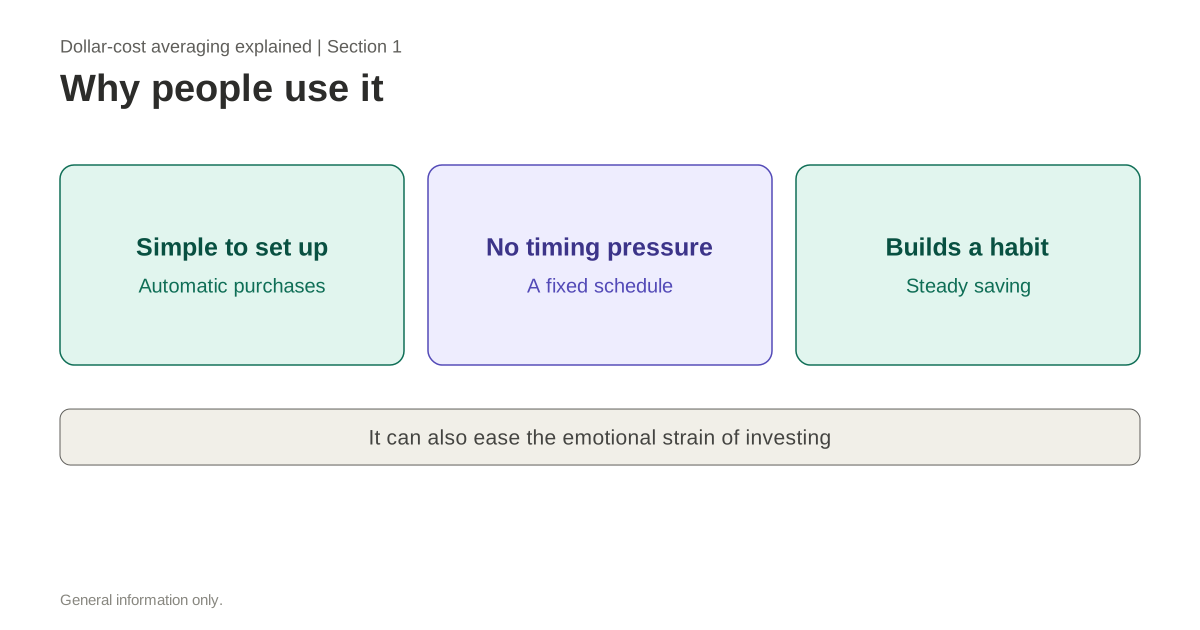
The method has three main attractions. It is simple to set up, because most brokers allow automatic recurring purchases. It removes the pressure of timing the market, since you invest on a fixed schedule rather than waiting for the right moment. And it builds a steady habit of saving, which is often the hardest part of long-term investing.
It can also reduce the emotional strain of investing. Someone who invests a large sum all at once may feel regret if prices fall soon afterwards. Spreading purchases over time can make the experience feel less stressful, even though the financial result may differ.
Comparing with a lump sum
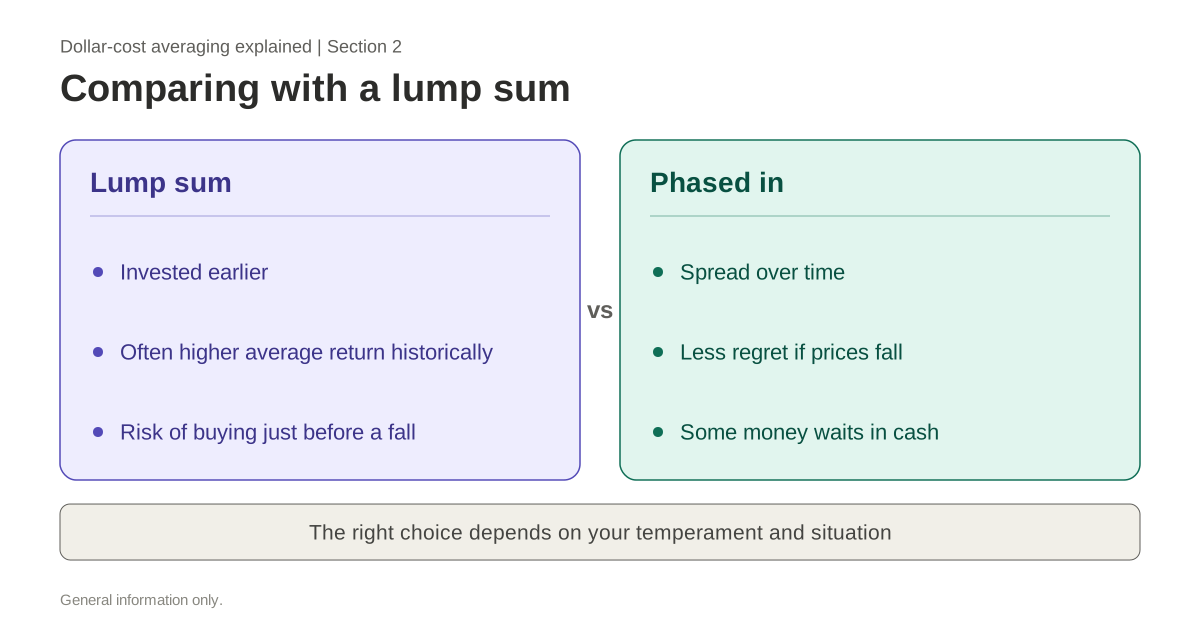
If you have a large sum to invest, the question is whether to invest it all at once or spread it over time. Historically, investing a lump sum has often produced a higher average return, because markets tend to rise over long periods and money invested earlier has more time to grow. Spreading the investment reduces the risk of investing just before a fall, but it also means some money sits in cash for longer.
The right choice depends on your temperament and your circumstances. Some people prefer the reassurance of phasing in, while others accept the risk of a single purchase in exchange for the potential of earlier growth.
What the method does not do
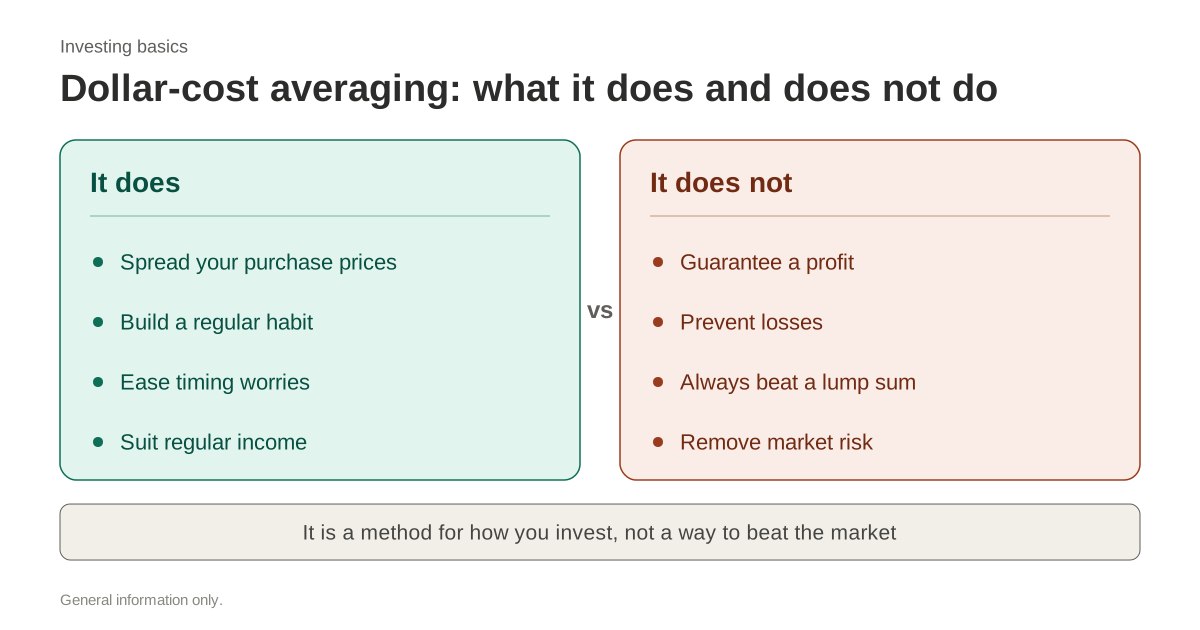
Dollar-cost averaging does not protect you from losses. If the price of the investment falls and stays low, you still lose money, even though your average cost is lower than the highest price. The method changes the price you pay, not the direction of the market.
It also does not replace choosing a suitable investment. Regular purchases into a poor-quality or very expensive product will not turn out well simply because they are spread over time. The method works best with broad, low-cost holdings that fit your plan.
Costs to check
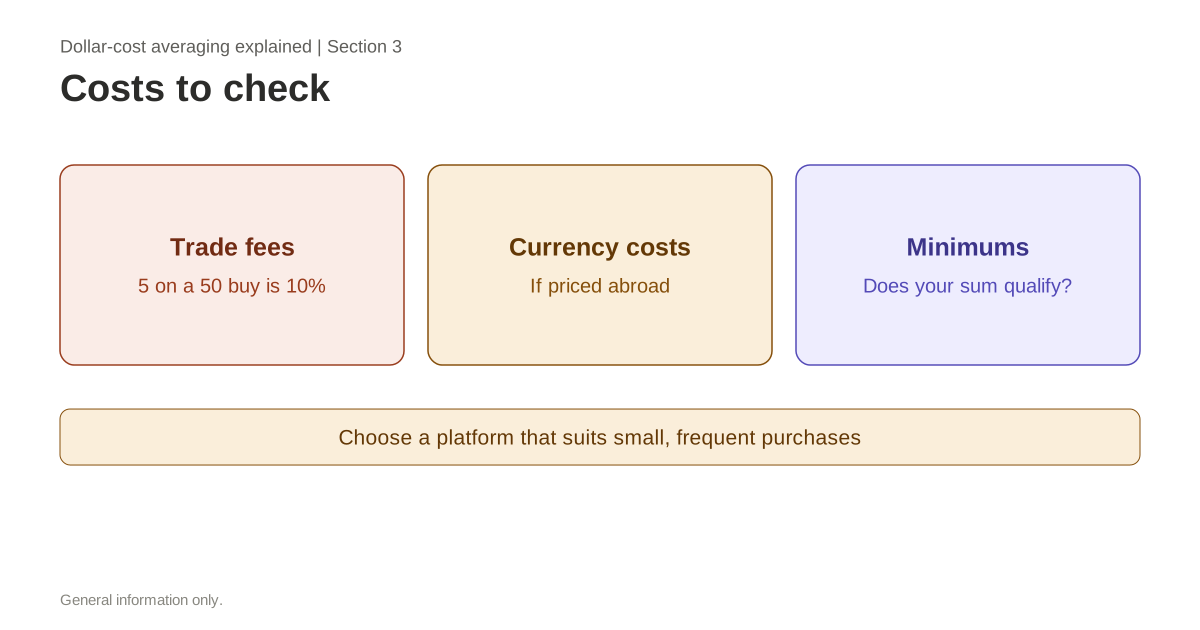
Regular purchases can be expensive if each trade carries a fixed commission. Investing 50 a month with a 5 charge per trade is a significant share of the amount invested. Look for a platform with low charges for small, frequent purchases, and check the currency conversion costs if the investment is priced in another currency.
Some funds also have minimum investment amounts. Confirm that your regular sum meets the minimum before you set up an automatic plan.
Staying the course
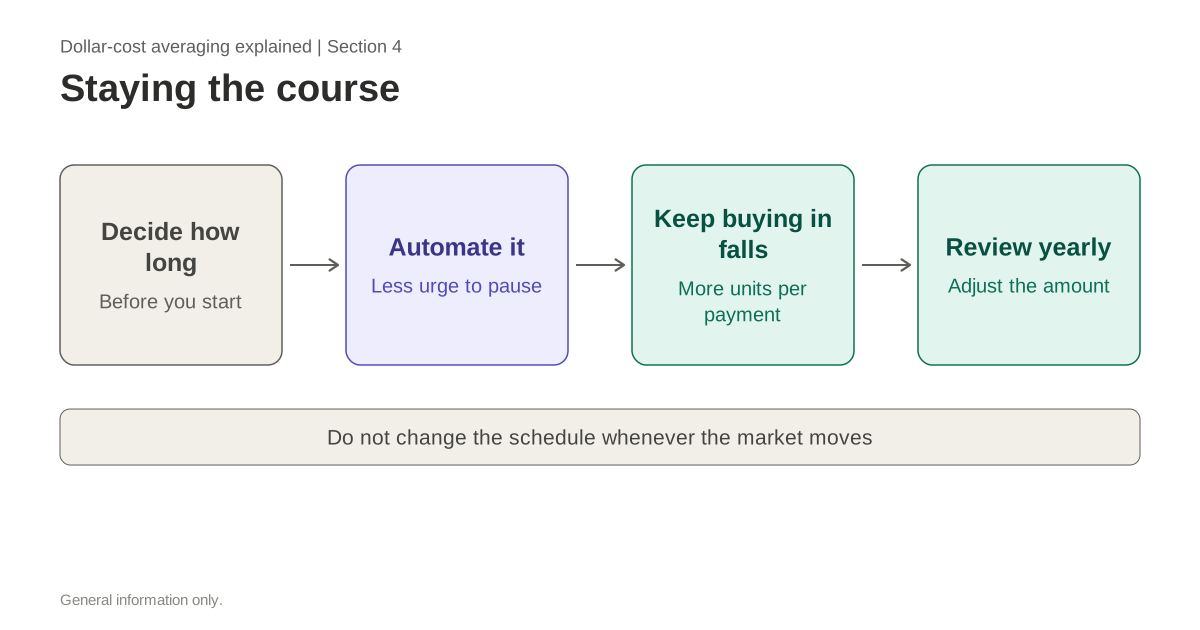
The method only works if you keep investing through both rising and falling markets. Stopping after a fall means you miss the lower prices that the strategy is designed to use. Decide in advance how long you will continue, and set up the plan so it runs automatically, reducing the temptation to pause.
Review the plan once a year. If your circumstances change, adjust the amount, but avoid changing the schedule every time the market moves.
Pairing the method with an emergency fund
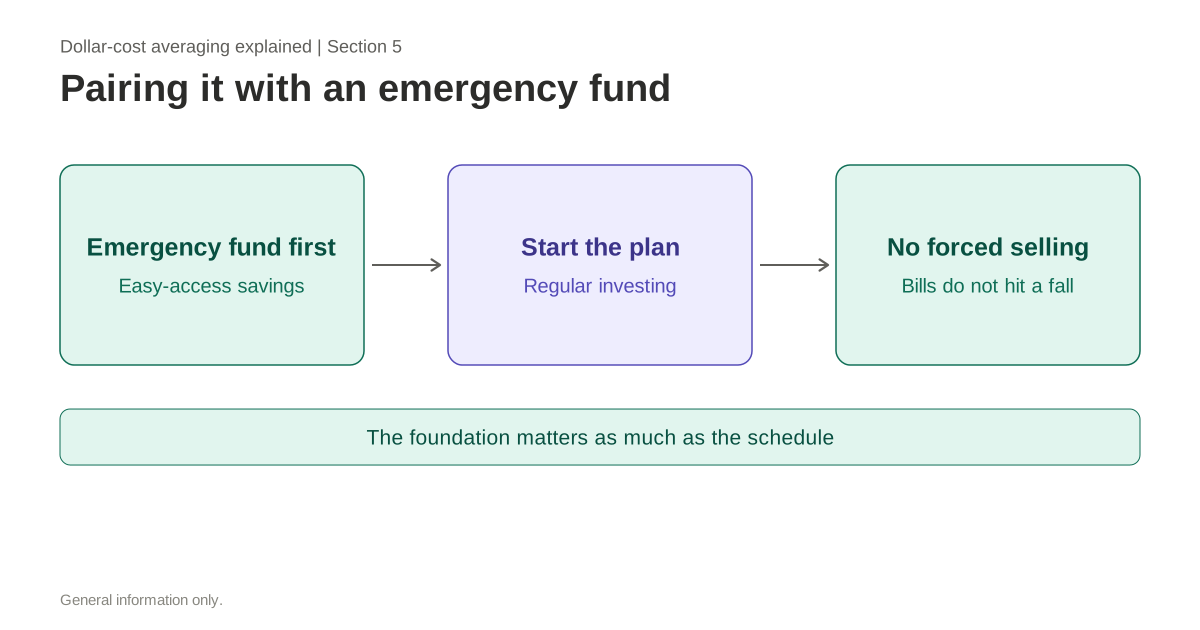
A regular investment plan works best when the money is not needed in an emergency. Keep your emergency fund in accessible savings, and start the regular plan only once that cushion is in place. If you have to sell during a fall to meet an unexpected bill, the strategy's benefits can be lost, so the foundation matters as much as the purchase schedule.
Measuring your results honestly
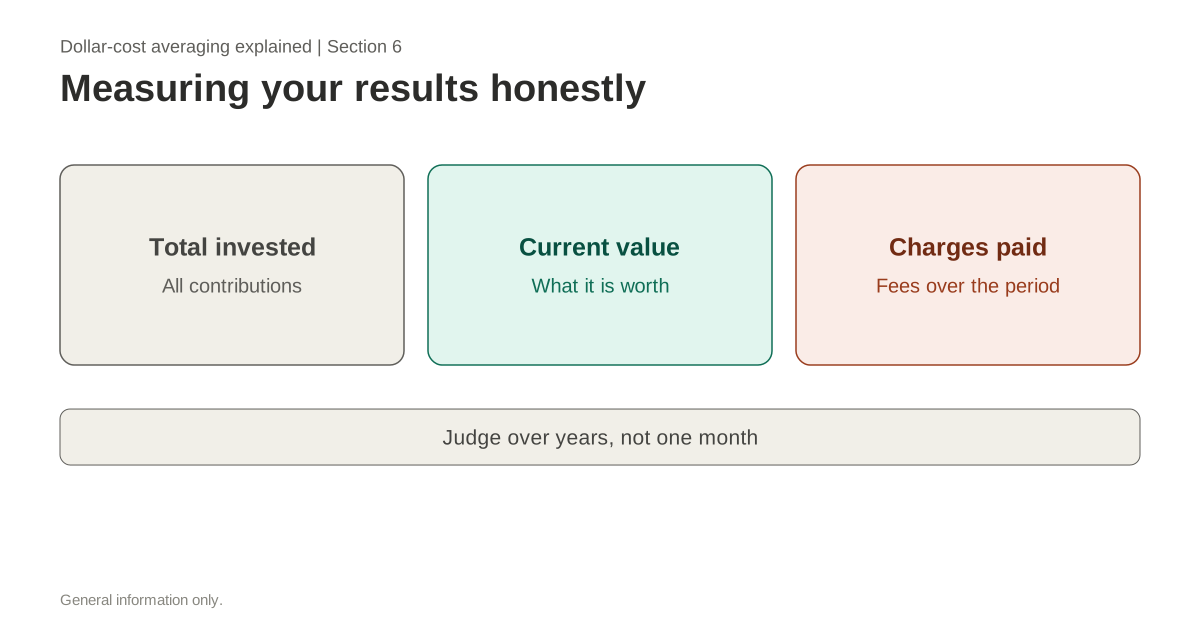
To judge a regular plan fairly, compare the total amount invested with the current value and the total charges paid. Judging it by a single month's movement can be misleading. Over several years, the combination of contributions, returns and costs tells you whether the plan is working as intended.
Setting up a plan
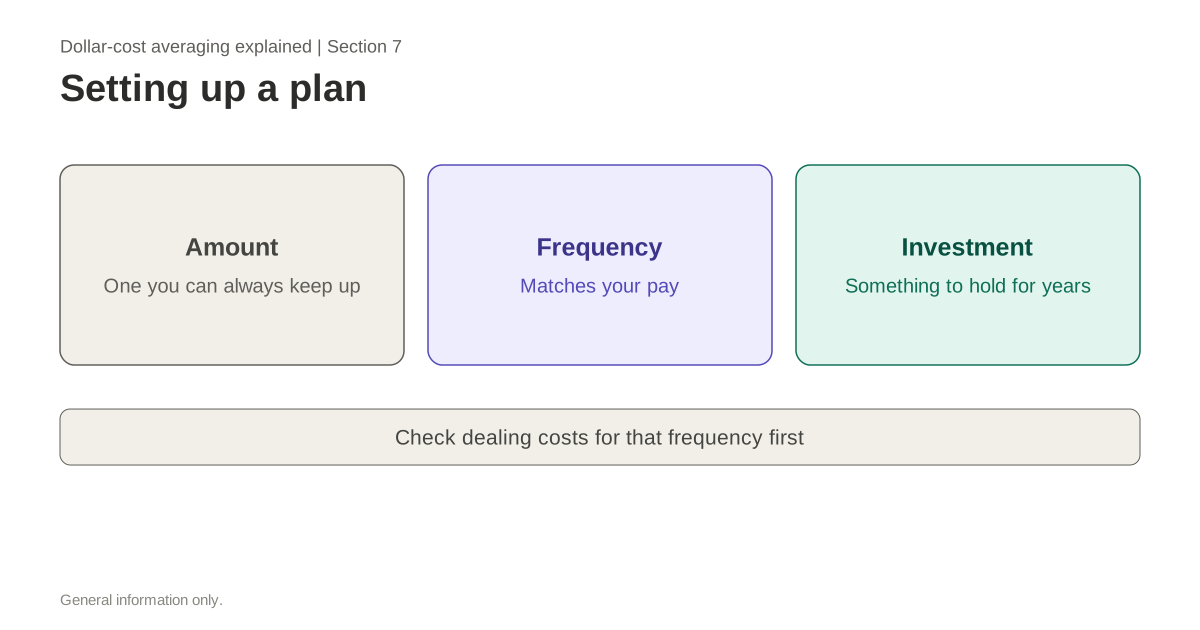
A regular plan needs three decisions: the amount, the frequency and the investment. Choose an amount that you can keep up even in a tight month, because stopping and restarting breaks the discipline the method is meant to build. Pick a frequency that matches your pay, and check the dealing costs for that frequency before you commit. Finally, choose investments you would be comfortable holding for many years.
When to review the plan
Review the plan once a year, or after a major change in your income or goals. Adjust the amount if you can afford more, but avoid stopping the plan because of short-term market news. If you decide to pause, set a date to restart so that the pause does not become permanent.
The bottom line
Dollar-cost averaging is a disciplined, simple way to invest over time. It smooths the price you pay and helps build a saving habit, but it cannot prevent losses in a falling market. Combine it with suitable, diversified, low-cost investments and a long time horizon, and it can be a sensible part of a long-term plan.
Frequently asked questions
Does dollar-cost averaging always produce a better result?
No. It reduces the risk of buying at a peak, but it does not guarantee a better outcome. Historically, investing a lump sum has often done better when markets rise over the long term.
How often should I invest?
Monthly is common because it matches income. The best frequency depends on your budget and on the trading costs of your platform, since frequent small purchases can be expensive.
What if the price keeps falling?
You keep buying more units for the same amount, which lowers your average cost, but you may still have a loss if the price stays below what you paid. Keeping to the plan is the point of the method.
Can I use dollar-cost averaging with any investment?
It works with any investment that has a price, but it suits broad, diversified holdings best. Regular buying into a narrow or very risky product does not reduce the underlying risk.