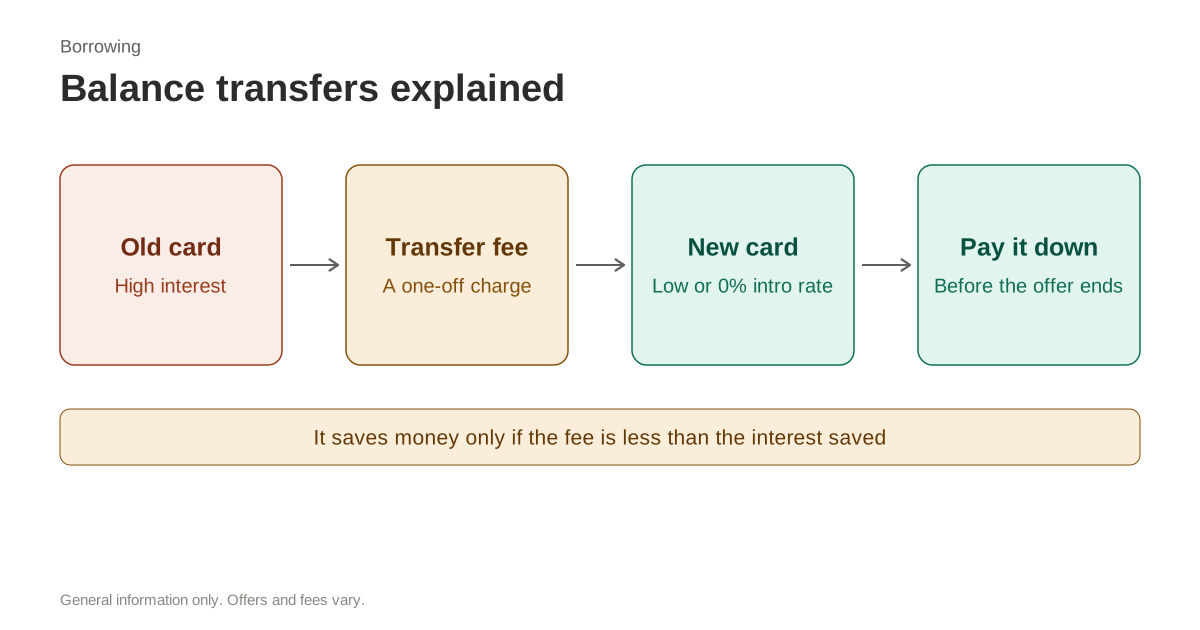
A balance transfer moves debt from one credit card to another, usually to take advantage of a lower interest rate for a set period. It can save money, but only if you understand the costs, the timing and the risks. Many people use balance transfers without checking the details, and then pay more than they expected when the promotional period ends.
This article explains how balance transfers work, what they cost, and how to decide whether one is worth doing. Rules and offers vary by country and provider, so check the current terms before you act.
How a balance transfer works
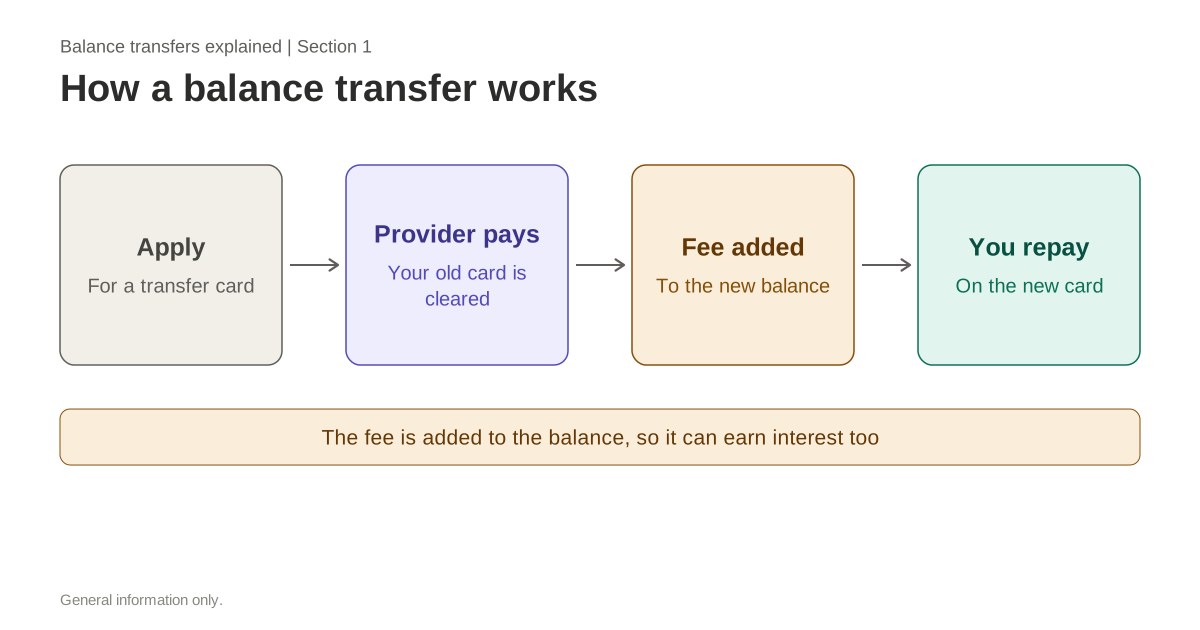
You apply for a card that offers a balance transfer, and then ask the new provider to pay off the balance on your existing card. The new provider then holds that debt, usually at a promotional rate for a set period. Some providers pay the balance directly, while others may ask you to provide the details yourself.
The transfer is not free. Most offers charge a transfer fee, usually a percentage of the amount moved, with a minimum. The fee is added to the new balance, so you pay interest on it as well.
The promotional rate
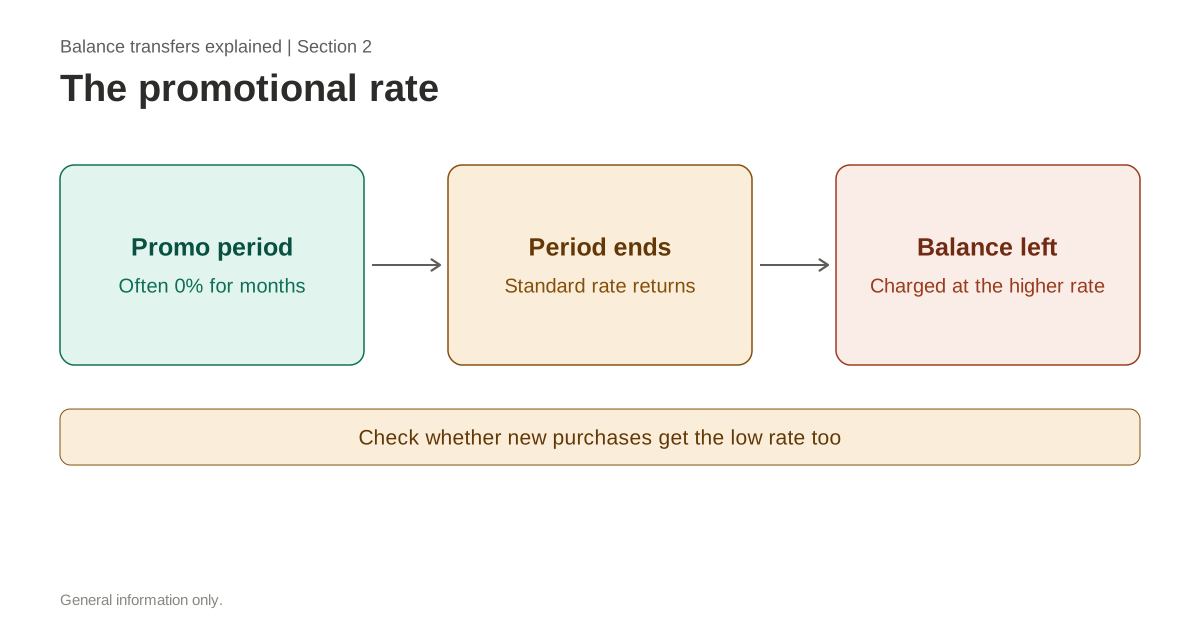
The attraction of a balance transfer is the low rate. Promotional rates may be zero or close to it, and they usually last for a period of months. When the period ends, the rate reverts to the standard rate, which can be much higher. Any balance that is still outstanding then accrues interest at that higher rate.
Check the length of the promotional period and the rate that applies afterwards. Also check whether new purchases on the card are charged at the same low rate. Often they are not, and paying off the transferred balance first may reduce the interest on the rest.
Calculate the cost
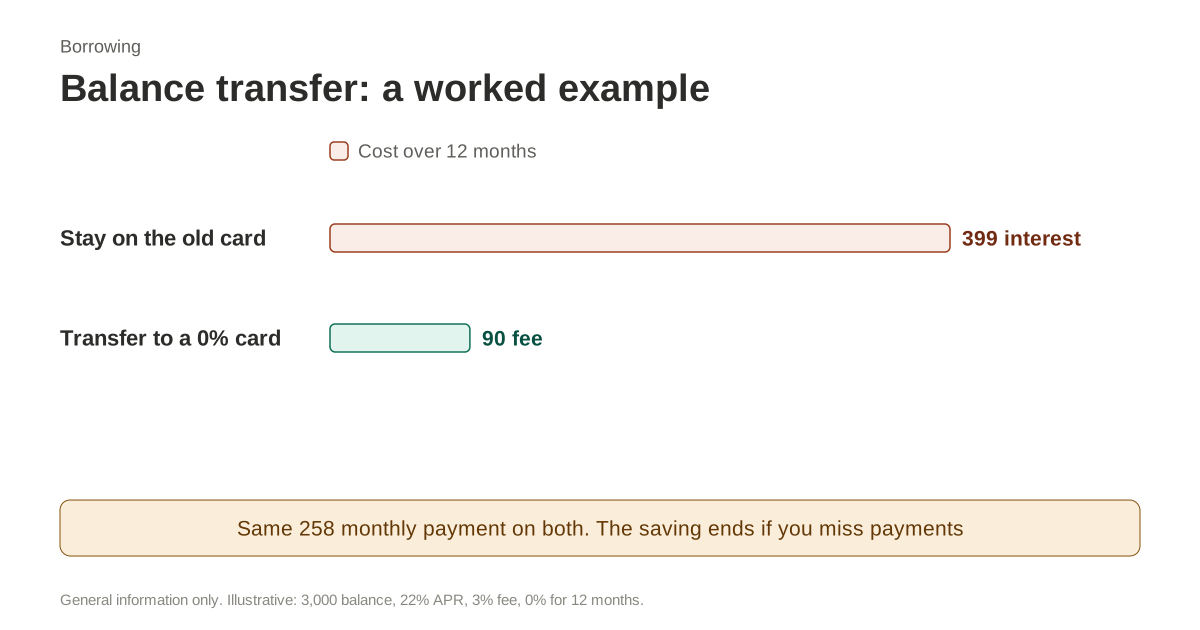
To see whether a transfer makes sense, compare the total cost of keeping the balance on your current card with the cost of transferring it. Include the transfer fee, the interest during the promotional period and the interest at the standard rate on any balance that remains afterwards.
As a simple example, a 3,000 balance at a 20% standard rate costs about 50 a month in interest. Moving it to a card with a 0% promotional rate for a year and a 3% transfer fee costs 90 upfront, and no interest during the year if you repay it. Whether that saves money depends on how quickly you repay and what the standard rate is after the promotion.
Use our balance transfer calculator to compare the options with your own figures.
Plan the repayment
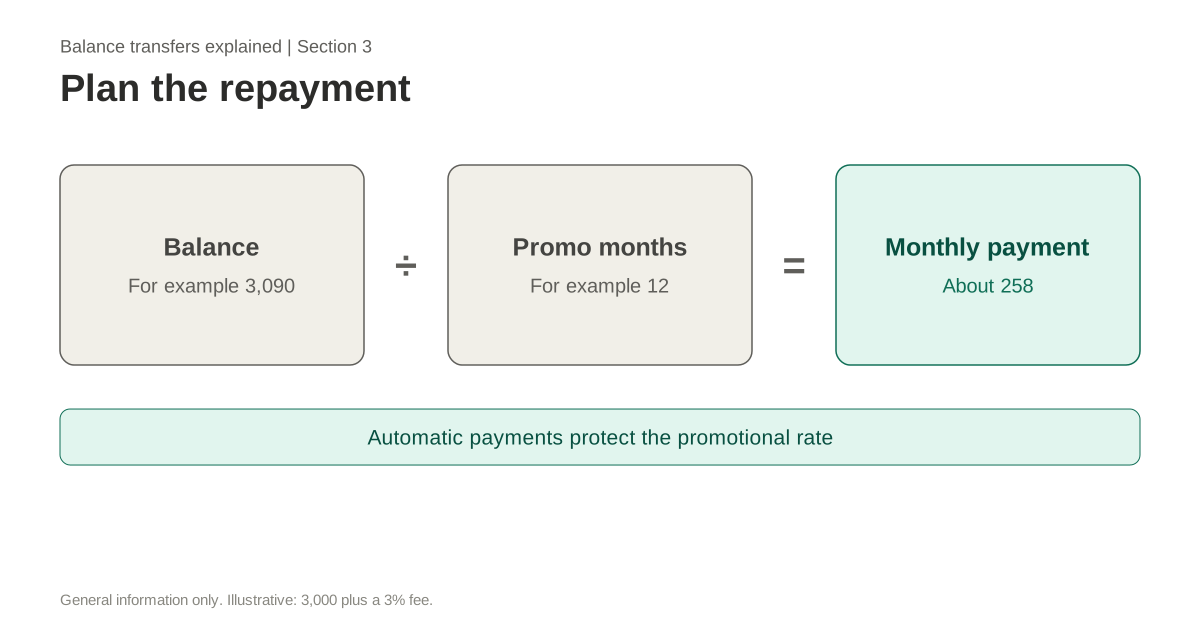
The key to a successful transfer is a repayment plan. Divide the balance by the number of months in the promotional period, and make sure you can pay that amount each month. If you cannot clear the balance in time, the remaining amount will attract the higher standard rate.
Set up automatic payments, so that you do not miss any and lose the promotional rate. Some providers end the promotion early if you miss a payment, so check the terms.
Watch for conditions
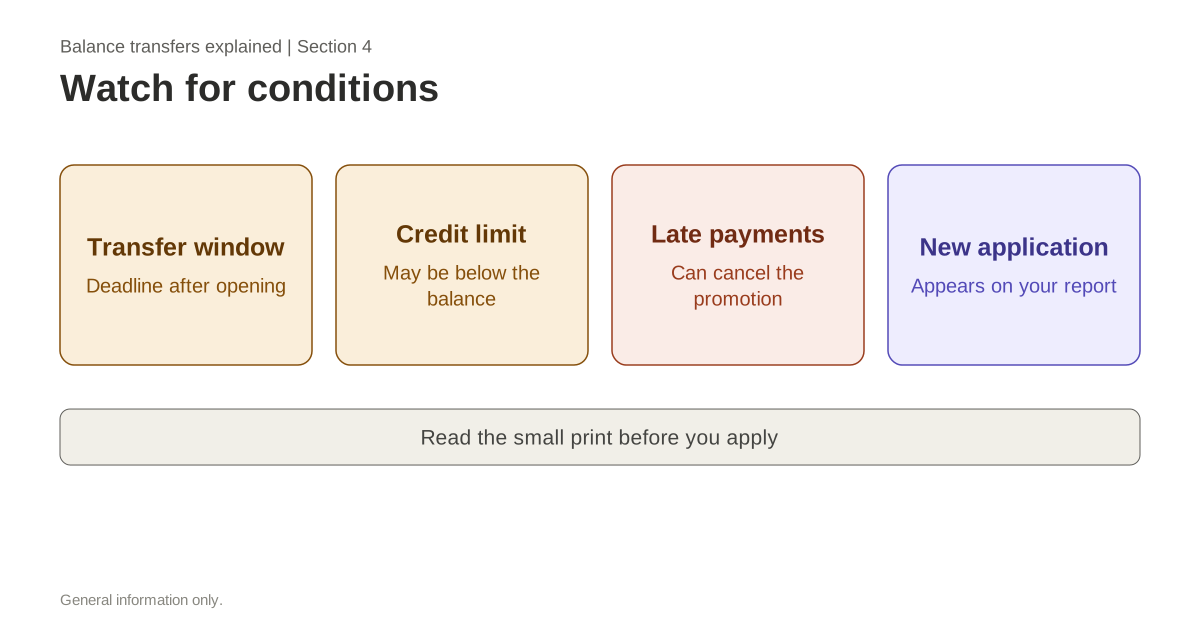
Read the small print carefully. Some offers require you to transfer within a set period after opening the card, and some apply only to balances transferred within a certain window. Check the credit limit, because the amount you can transfer may be lower than the full balance. Look at whether there are penalties for late payments, and whether the promotional rate can be cancelled.
Be aware that a balance transfer usually involves a new credit application. The application may appear on your credit report and can temporarily affect your score, so think about how many applications you are making.
Avoid the trap of spending
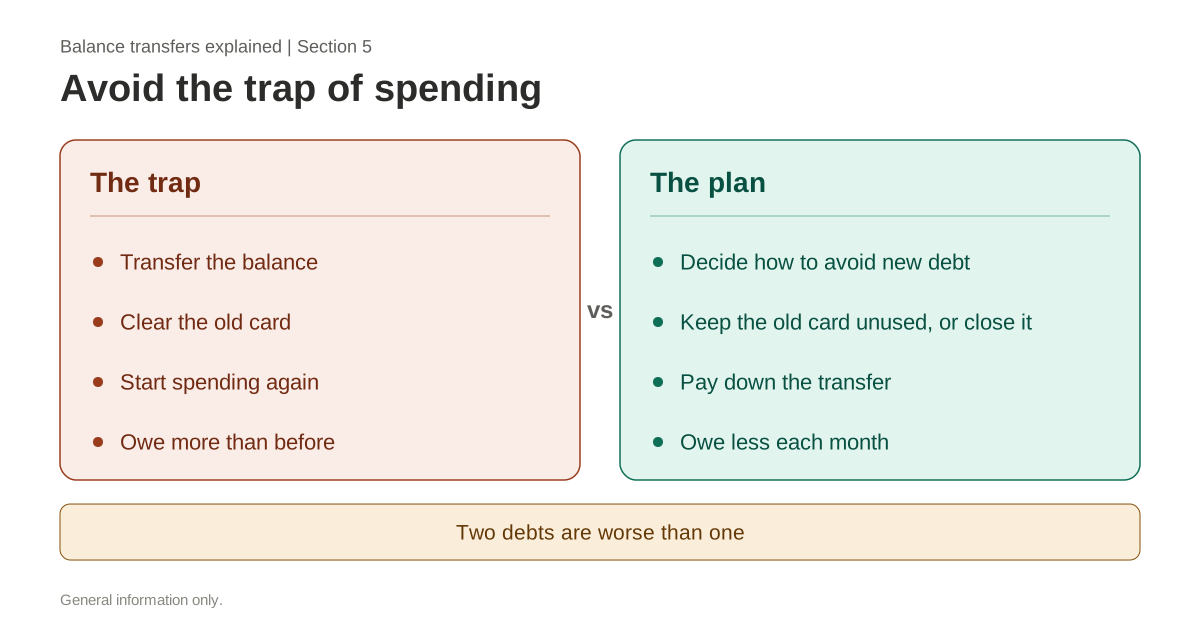
A common mistake is to transfer a balance, clear the old card, and then start using it again. The result is two debts instead of one. Before you transfer, decide how you will avoid new borrowing. Consider keeping the old card open but unused, provided it does not have an annual fee, or closing it if you are sure you will not be tempted.
When it helps and when it does not
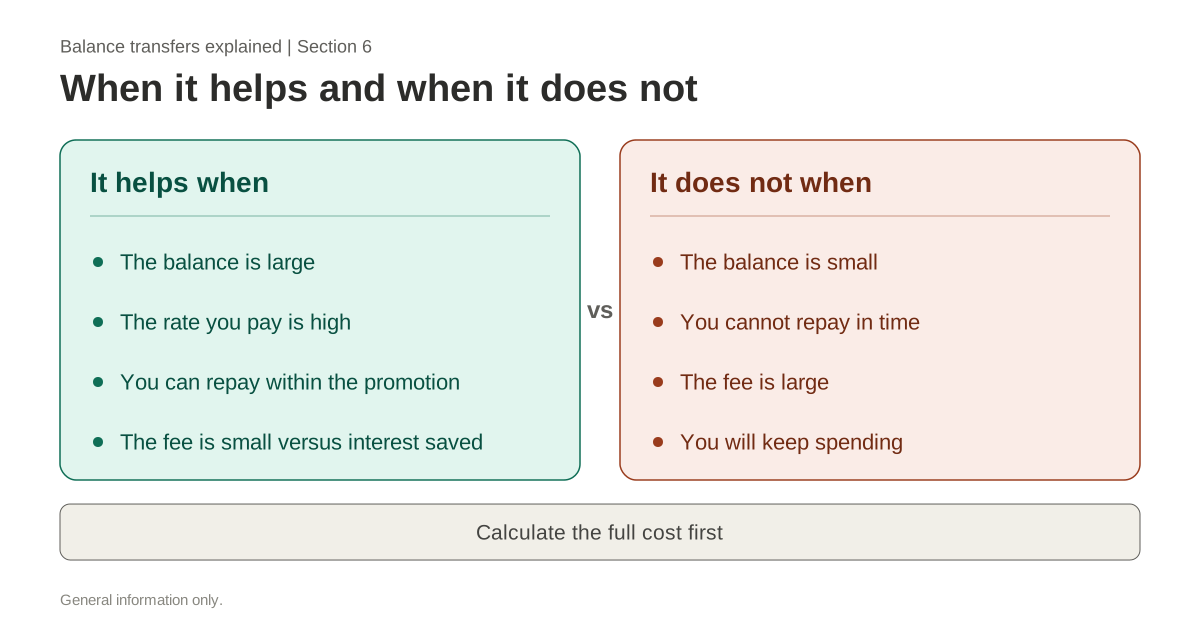
A balance transfer is most useful when you have a substantial balance at a high rate, you can repay it within the promotional period, and the transfer fee is small compared with the interest you will save. It is less useful when the balance is small, when you cannot repay in time, or when the fee is large.
It is also worth considering alternatives. A personal loan with a fixed rate can give you a set repayment plan without the risk of a sudden rise. A debt repayment plan with a free adviser may suit people who are struggling to keep up.
Read the terms for the transfer window
Many offers allow you to transfer a balance only within a set window after you open the card, often a few months. Miss that window and the promotional rate may not apply to the transfer. Some offers also limit transfers to balances from certain providers, or exclude balances already in transfer from a previous promotion.
Confirm the deadline and the eligibility rules before you apply, and make the transfer as early as you can. Keep a record of the transfer confirmation and check your statement to make sure the promotional rate has been applied to the correct amount.
Compare the transfer with other options
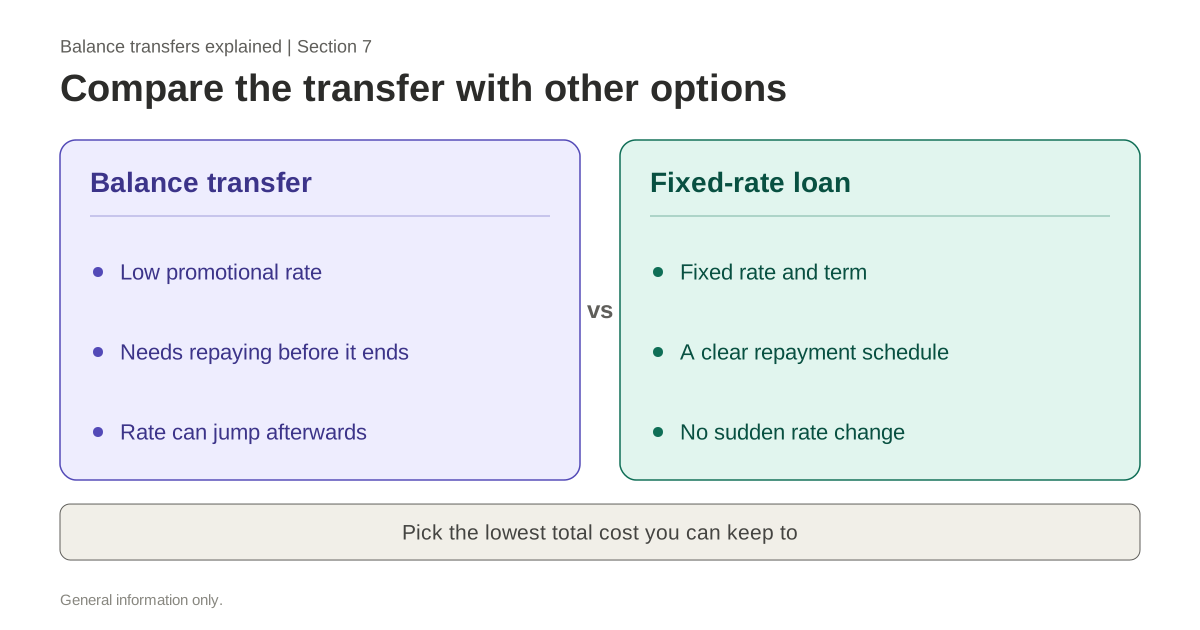
A balance transfer is one option among several. A personal loan with a fixed rate and a fixed term gives a clear repayment schedule and removes the risk of a sudden rate rise after a promotion. A debt management plan with a free adviser may suit people with several debts who need structure rather than another card.
Compare the total cost of each option over the period you expect to repay. Include the fees, the interest during the promotional period, the rate after it ends and the time it takes to clear the balance. The option with the lowest total cost that you can realistically keep to is usually the right choice.
The bottom line
A balance transfer can cut the cost of carrying a card balance, but only with a clear plan and a firm commitment to repaying the debt within the promotional period. Calculate the full cost, read the conditions carefully, avoid new borrowing, and compare the transfer with other ways of consolidating your debt before you decide.
Frequently asked questions
Is a balance transfer free?
Usually not. Most offers charge a transfer fee, often a percentage of the amount moved, which is added to the balance and may carry interest.
What happens when the promotional rate ends?
The rate usually returns to the standard rate for the card, which can be much higher. Any balance that remains is charged at that rate, so plan to repay before the promotion finishes.
Will a balance transfer affect my credit score?
A new application can have a small temporary effect. Opening a new account can also change your average account age and utilisation. The overall effect depends on your situation and how you manage the new card.
Can I keep using the old card after transferring?
You can, but it is risky. Using it again adds new debt, and you can end up owing more than before. Many people find it safer to stop using the old card until the transferred balance is cleared.