Investment scams take many forms, from fake trading platforms to offers of guaranteed returns on social media. Their common feature is that they persuade people to send money by promising high profits, low risk and quick results. Scammers are often skilled at making their offers look professional, and losses can be devastating. Knowing the warning signs and the usual tactics is the best protection.
This article explains how investment scams work, the signals to watch for and what to do if you think you have been targeted. It is general information, and it is not legal advice.
The promise of guaranteed returns
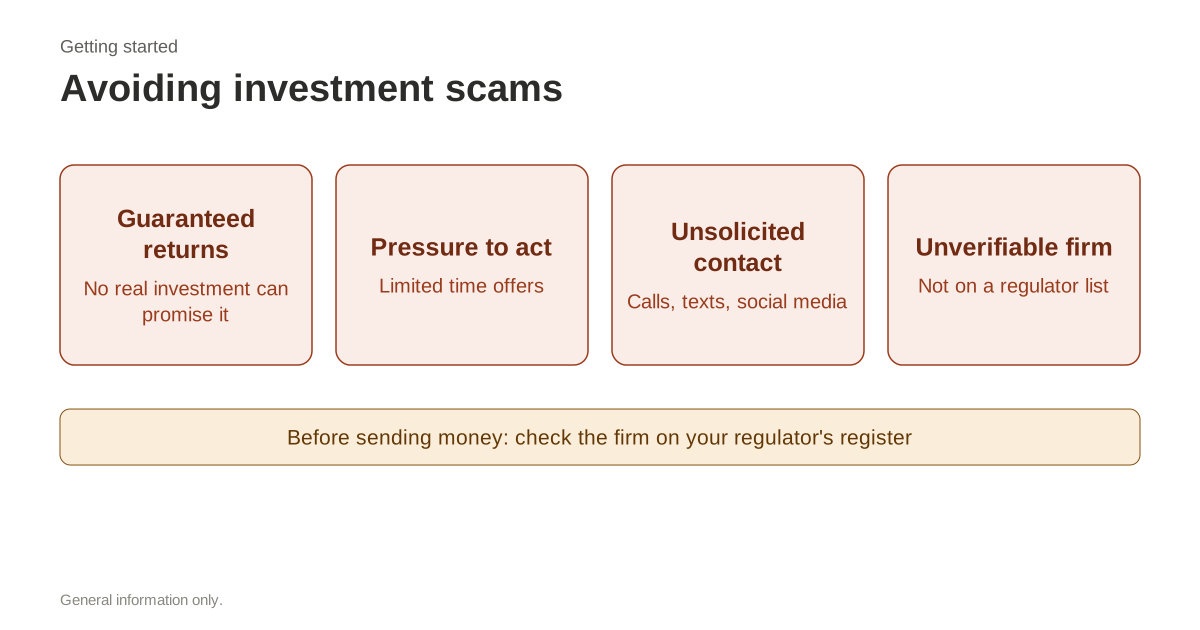
The clearest warning sign is a promise of guaranteed or unusually high returns. Genuine investments carry risk, and their returns vary. A product that promises a steady high return with no risk is almost certainly not what it claims to be. Be especially wary of offers that describe a return as certain, risk-free or guaranteed.
Remember the basic relationship between risk and return. Higher potential returns come with higher risk of loss, and no legitimate investment removes that link.
Pressure to act quickly
Scammers often create urgency. They may say the opportunity closes today, that spaces are limited, or that you must invest before a price rises. Urgency prevents you from checking the offer. A legitimate investment will still be available after you have taken time to think and to do your research.
If you feel rushed or pressured, stop. Decline the offer or ask for the details in writing, and then take your time.
Unsolicited contact
Be cautious of unexpected messages, calls or social media contacts offering investments. Scammers often find victims through text messages, direct messages, dating apps, or by posing as friends, colleagues or advisers. Some even build a relationship over weeks before introducing an investment.
Do not share personal or financial details with someone who contacted you unexpectedly, and do not click links they send you. Verify any claim independently, using contact details you find yourself.
Requests for unusual payment methods
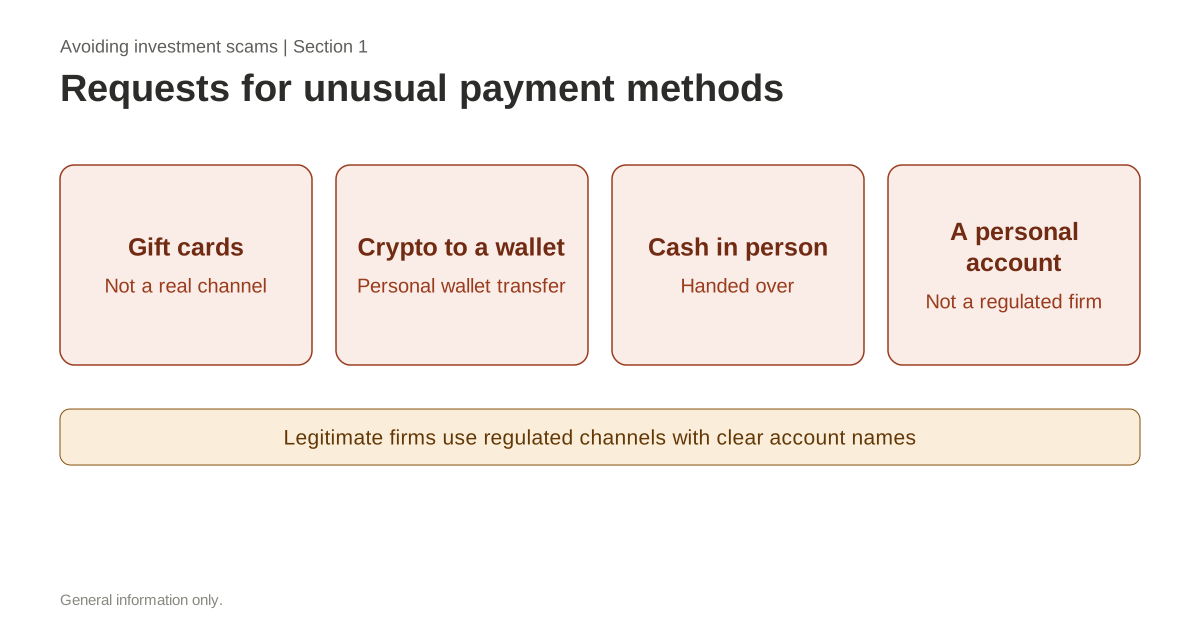
Warning signs include requests for payment by gift cards, cryptocurrency transfers to a personal wallet, cash handed over in person, or payments to an individual's account rather than a regulated firm. Legitimate investment firms use regulated channels and clear account names. Unusual payment methods are one of the strongest signs of fraud.
Unregulated firms
Check that any firm or adviser is authorised by the regulator in your country. Many regulators publish warnings about unauthorised firms, and some maintain lists of entities that are known to be fraudulent. A firm that is not regulated, or that claims to be regulated by a body that does not exist, should be treated with great caution.
Be aware that scammers may copy the name of a genuine firm, so check the web address, the contact details and the registration carefully.
Fake trading platforms
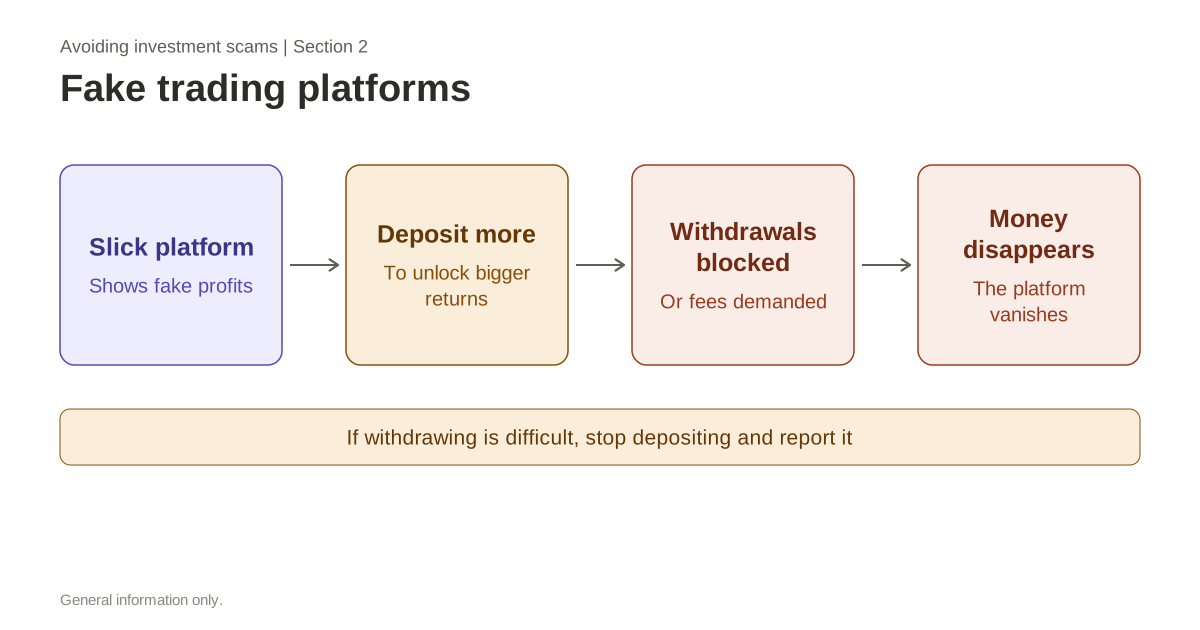
Some scams use professional-looking websites and apps that show fake profits on your account. You may be encouraged to deposit more money to unlock a bigger return, and then find that withdrawals are blocked or that you are asked to pay fees to release your funds. These platforms are designed to take money and disappear.
If a platform makes it difficult to withdraw, stop depositing and report it to the authorities in your country.
Romance and social media scams
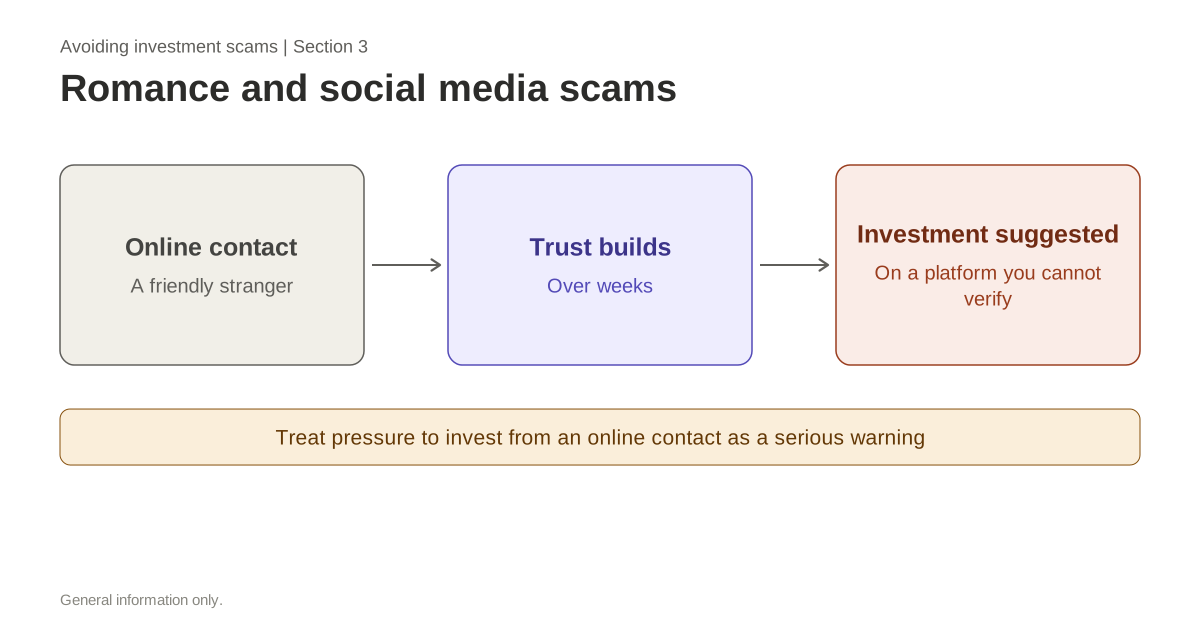
Some scammers build emotional relationships online before suggesting an investment. This type of fraud can be very persuasive, because the victim trusts the person. If someone you have met online pushes you to invest, especially in a platform you cannot verify, treat it as a serious warning sign.
Recovery scams
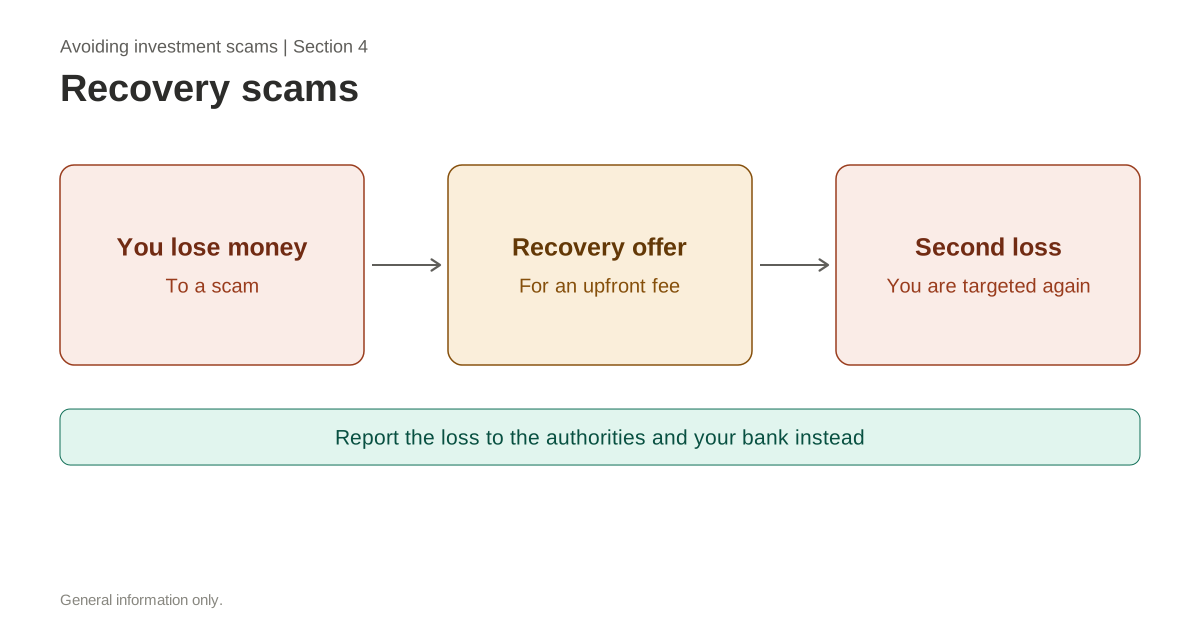
If you have already lost money, be wary of anyone who offers to recover it for a fee. Recovery scams target victims a second time, promising to get money back in exchange for upfront payments. Report the original loss to the authorities and your bank, and do not pay for recovery services you have not checked.
Before you invest
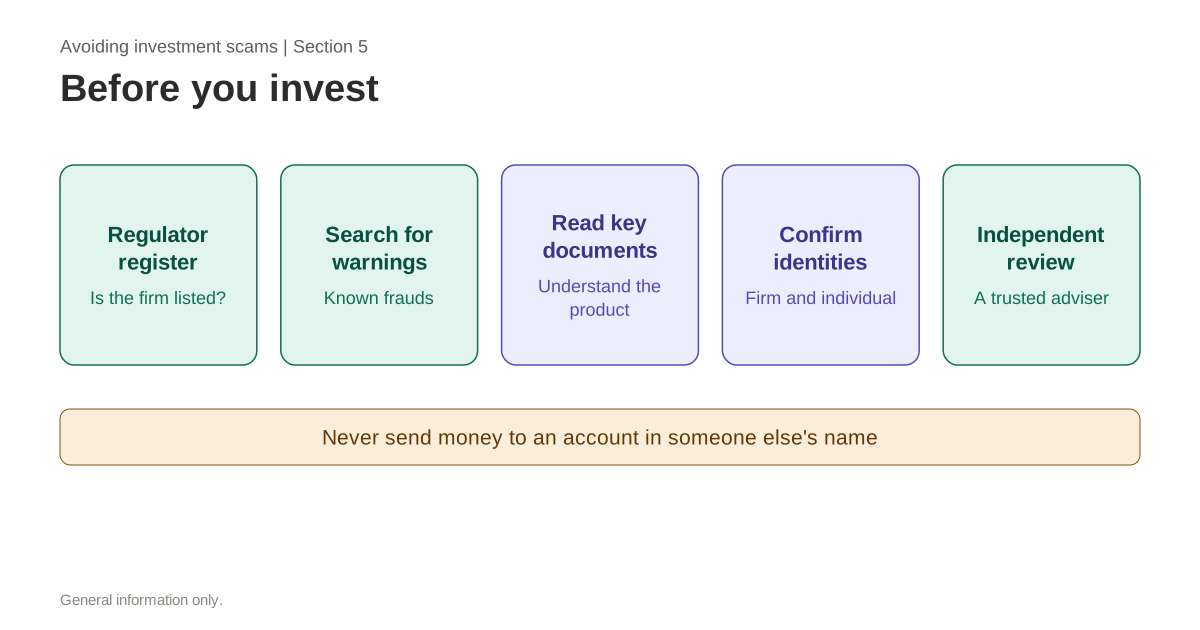
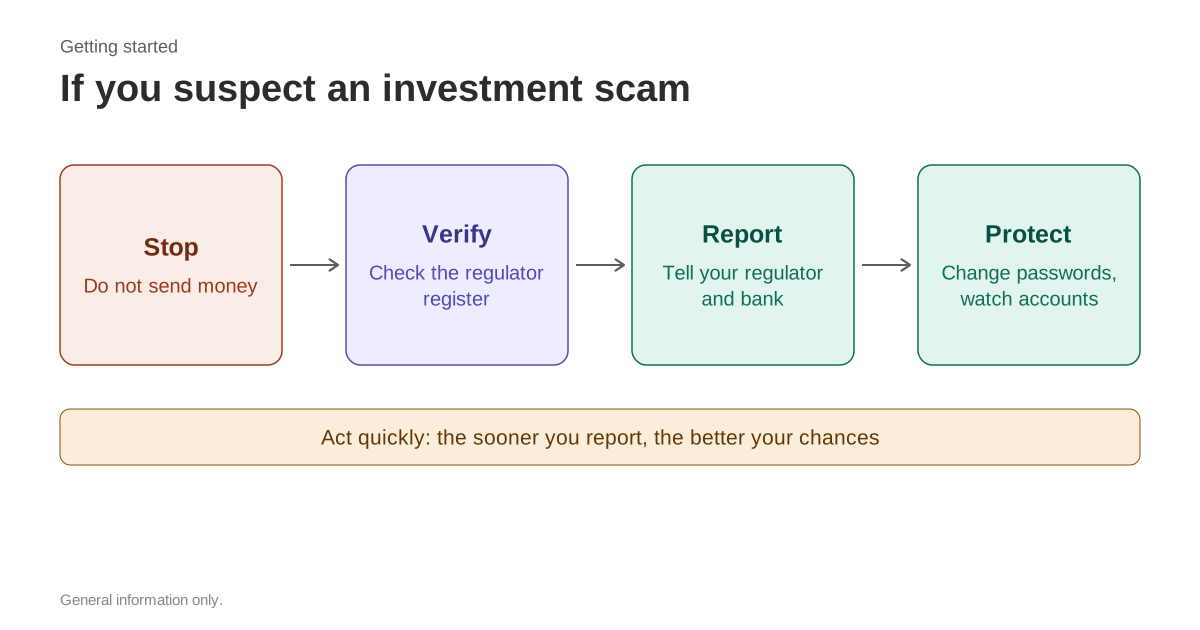
Check the regulator's register, search for warnings, and read the key documents, such as the key information document for a fund. Confirm the identity of the firm and the individual. Never invest in something you do not understand, and never send money to an account in someone else's name. Ask a trusted, independent adviser to review any offer that seems significant.
If you think you have been scammed
Act quickly. Contact your bank or payment provider, explain what happened, and ask whether the payment can be stopped or reversed. Report the scam to the financial regulator and the police or consumer protection body in your country. Keep all messages, receipts and account details, because they may be needed as evidence.
Scams that target savers
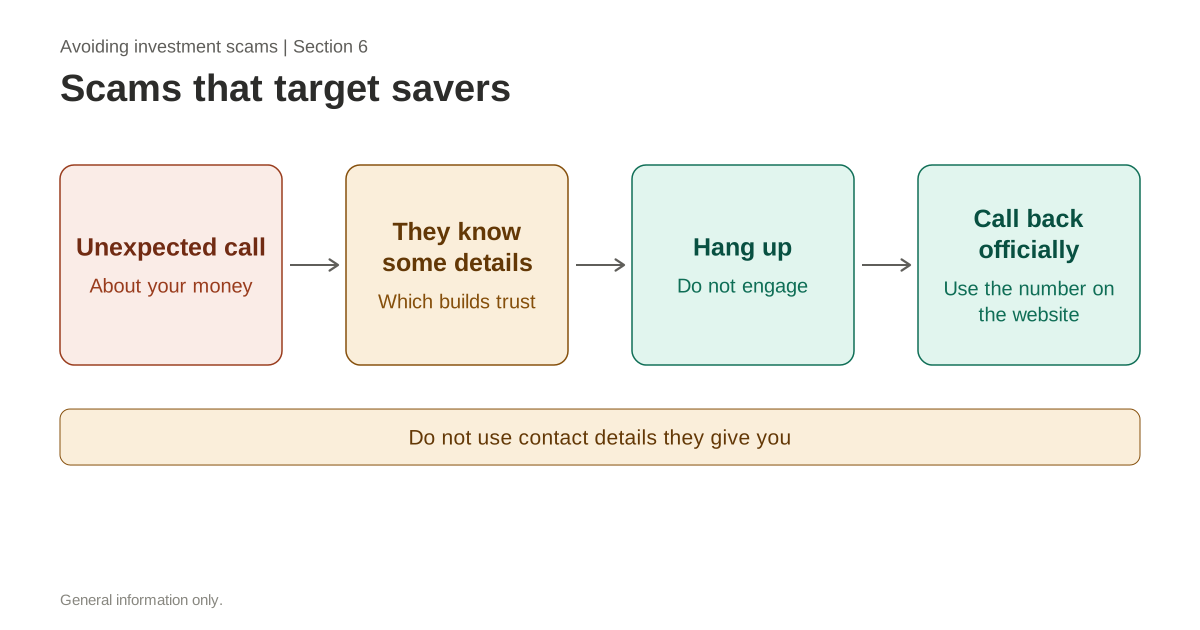
Scammers sometimes target people who already have savings, offering help with pensions, property or a supposed account review. Be sceptical of anyone who calls unexpectedly about your money, even if they seem to know your details. Contact your provider using the number on its official website, not the number they give you.
Common scam stories
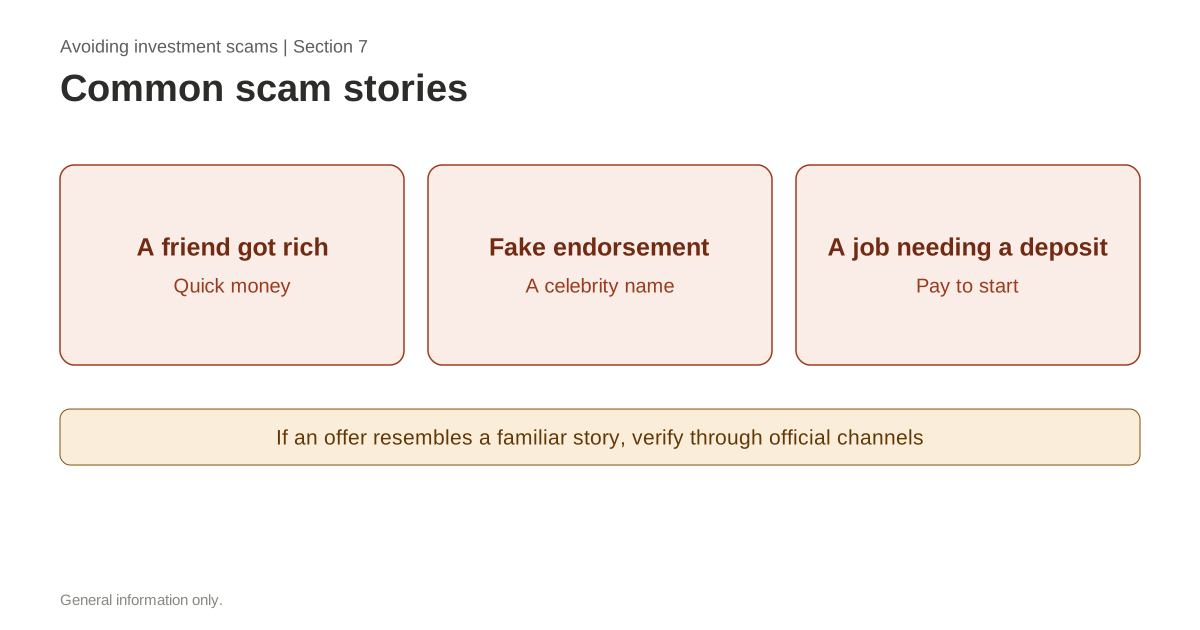
Scams often follow familiar stories: a friend who made money quickly, a celebrity endorsement that turns out to be fake, or a job offer that involves depositing money to start. Recognising these patterns helps you pause before acting. If an offer resembles a story you have heard, treat it with extra caution, and verify it through official channels.
Protecting your accounts
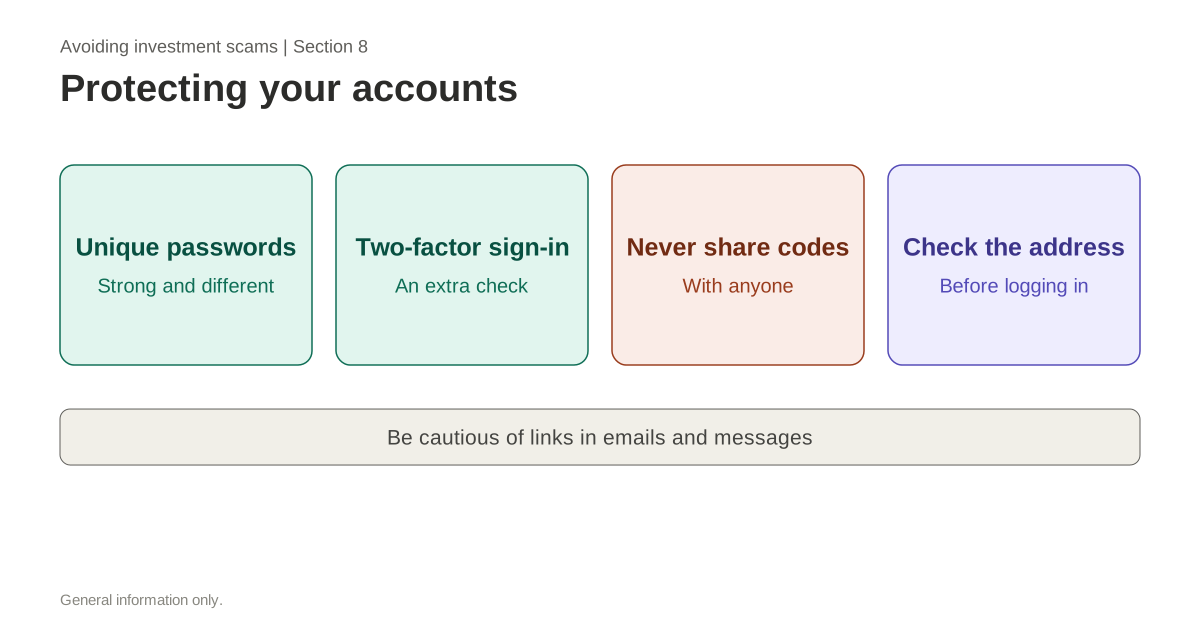
Use strong, unique passwords and two-factor authentication on investment and banking accounts. Be cautious of links in emails or messages, even if they appear to come from a known firm. Never share one-time codes or passwords with anyone, and check that the website address matches the official one before logging in.
The bottom line
Investment scams rely on promises of high returns, pressure to act quickly and unusual payment methods. Slow down, verify the firm and the individual with the regulator, read the documents and never send money to an unfamiliar account. If an offer sounds too good to be true, it almost always is.
Frequently asked questions
Is it a scam if the returns look real on the platform?
It can be. Fake platforms often show invented profits to encourage more deposits. Real returns should be verifiable through a regulated provider, and withdrawals should be possible without extra fees.
How can I check whether a firm is regulated?
Search the regulator's public register in your country using the firm's name and the individual's name. Confirm the authorisation covers the services offered, and check for warnings about the firm.
What should I do if I have sent money to a scammer?
Contact your bank or payment provider immediately, report the scam to the regulator and the police, and keep all records. Be cautious of anyone offering to recover the money for a fee.
Are scammers only targeting inexperienced people?
No. Experienced investors have also been caught, often because scams look professional or because the offer played on a specific interest. Verification is important for everyone.