When you compare loans, you will often see two figures: an interest rate and an annual percentage rate, usually shortened to APR. They sound similar, and many people assume they mean the same thing. In fact, the APR is designed to show the total yearly cost of borrowing, which includes more than the interest. Understanding the difference helps you compare offers fairly.
This article explains what each figure measures, why they can differ, and how to use both when choosing a loan.
The interest rate
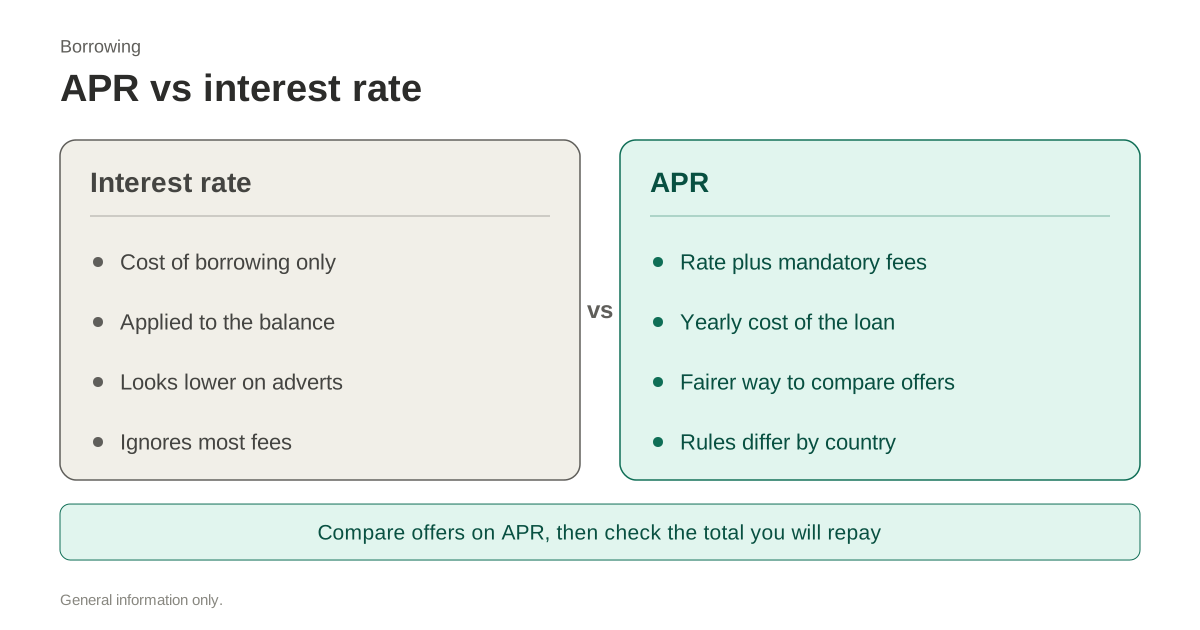
The interest rate is the percentage charged on the amount borrowed, usually calculated over a year. It determines the interest part of your repayments. If you borrow 10,000 at a 6% annual interest rate, the interest for a year is roughly 600, before any compounding or repayment effects are taken into account.
The interest rate tells you the cost of the money itself. It does not show fees, charges for opening the loan or insurance that you may be required to buy.
The APR
The APR expresses the total cost of borrowing as a yearly percentage. It includes the interest rate plus certain fees and costs that the lender charges as part of the loan, such as arrangement fees, some administrative charges and, in some countries, the cost of compulsory insurance. The exact list of costs included in an APR is set by rules in each country, so the definition can vary.
Because it includes these costs, the APR is usually higher than the interest rate when a loan has fees. When a loan has no fees, the two figures may be the same.
Why the difference matters
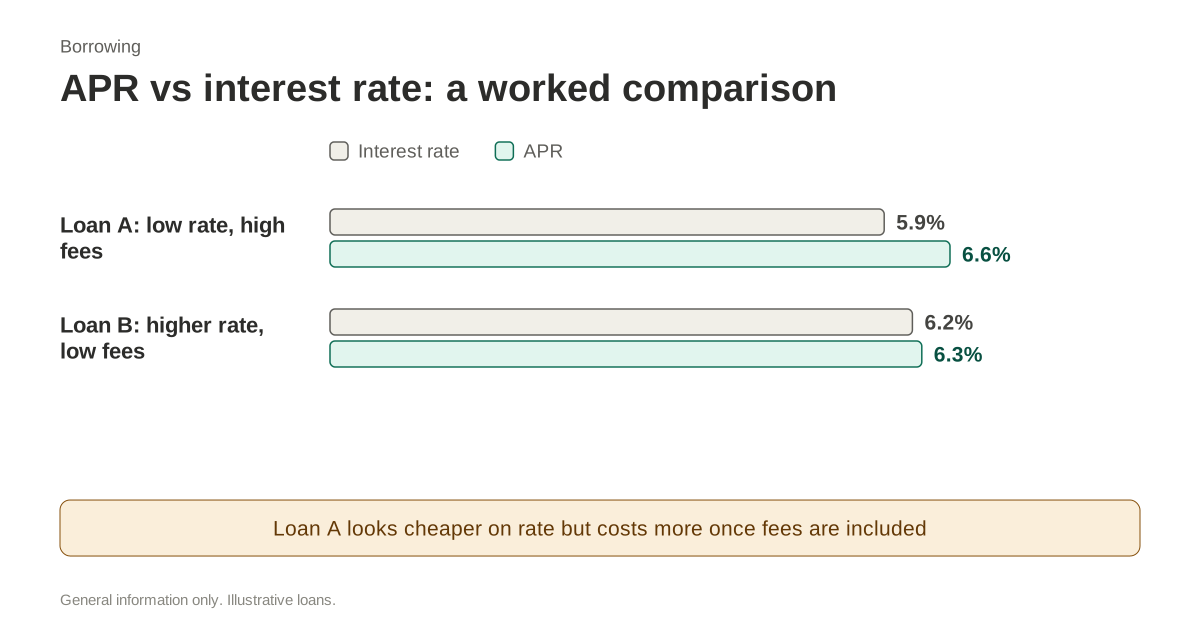
Imagine two loans with the same 6% interest rate. One charges a 500 fee on top of the interest, and the other charges nothing. The first loan costs more, and its APR will be higher to reflect that. Comparing the interest rates alone would make the two look identical.
The APR is therefore a better tool for comparing the total cost of different offers. It shows the effect of fees on the yearly price of borrowing, which the interest rate alone does not.
Limits of the APR
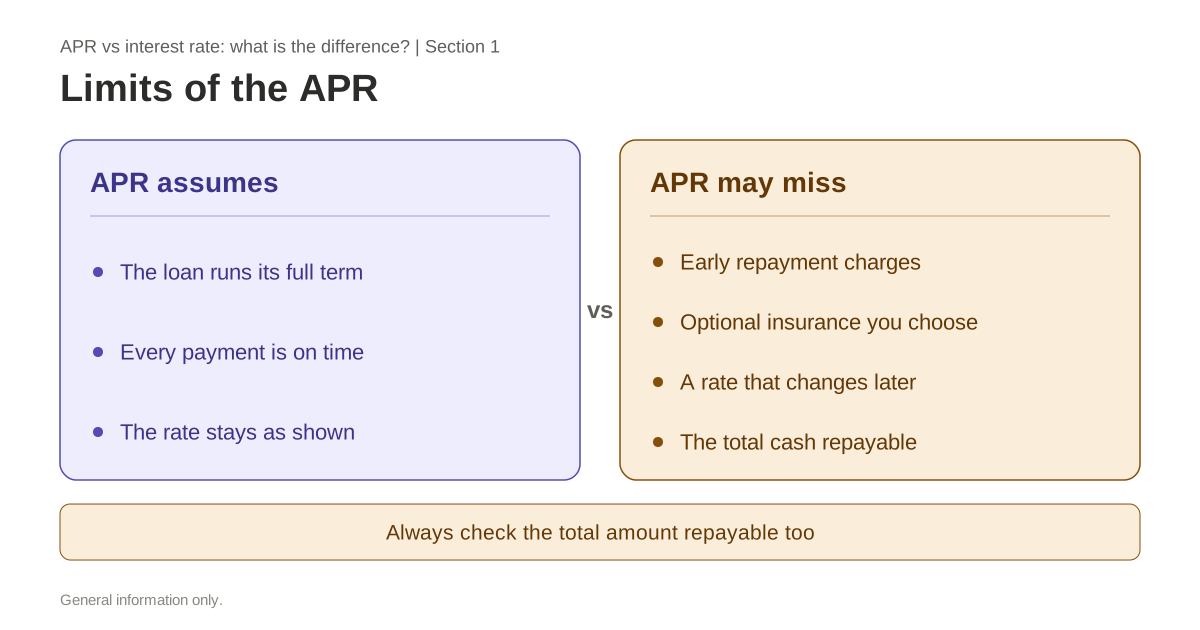
The APR is a standardised figure, but it has limits. It assumes the loan runs for its full term and that all payments are made on time. It may not reflect the effect of early repayment charges, optional insurance you choose to buy, or a rate that changes during the loan. A loan with a low introductory rate may show a modest APR, but the rate may rise later.
The APR also does not show the total amount you will repay in cash terms. A loan with a lower APR over a longer term can still cost more overall. Always check the total amount repayable alongside the APR.
Compounding and frequency
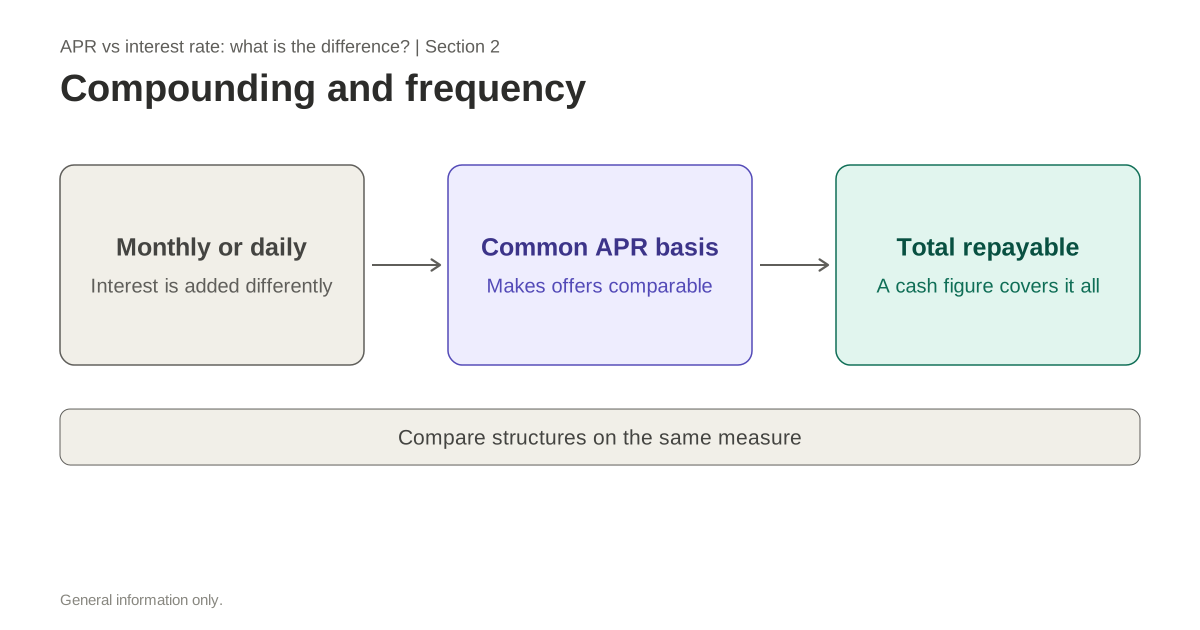
Some loans charge interest monthly, while others charge it daily. The way interest is calculated and added affects the true cost. Many countries require APR to be calculated on a common basis to make offers comparable, but the presentation of compounding can still vary between lenders.
When comparing loans with different structures, convert both to the same measure or look at the total repayment figure, which accounts for everything in cash terms.
How to compare two loans
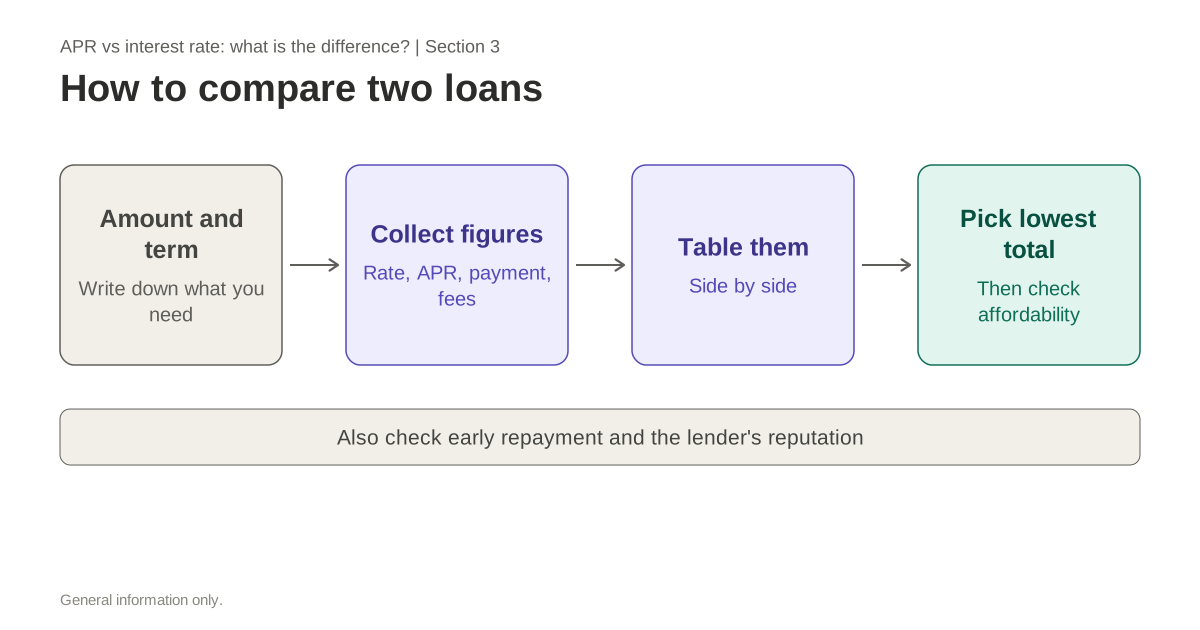
Start by writing down the amount you need to borrow and the term you want. Then collect the interest rate, the APR, the monthly payment, the total amount repayable and any fees or insurance you must pay. Put the figures in a simple table.
Choose the loan with the lowest total repayable for the term you need, but also consider whether the monthly payment fits your budget, whether early repayment is allowed without a penalty, and whether the lender is reputable. A cheaper loan that you struggle to repay is not a good deal.
Watch for the small print
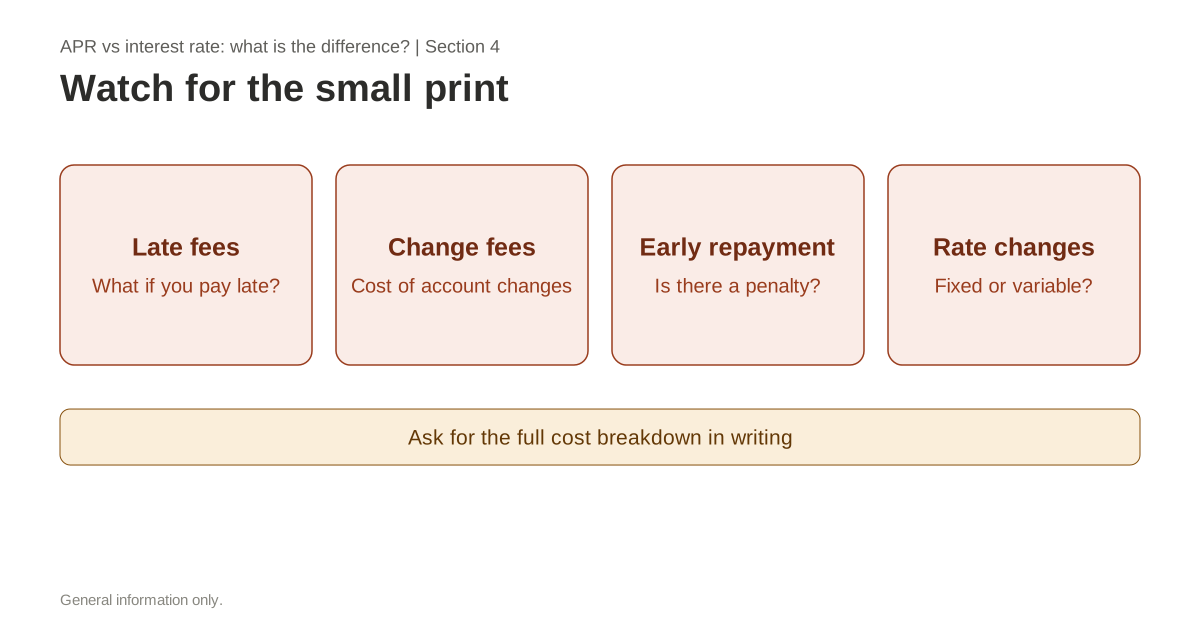
Read the agreement before you sign. Look for fees for late payments, for changes to the account, or for early repayment. Check whether the rate can change, and under what conditions. If a lender uses a figure that is not the APR, ask for the full cost breakdown in writing.
If you are unsure, our loan calculator shows the monthly payment and total interest for any combination of amount, rate and term. Use it to test each offer before you decide.
Worked example
Imagine a loan of 10,000 over five years at a 6% interest rate, with a fee of 300 added to the amount borrowed. The interest on its own is the same for both loans, but the fee increases the amount you owe, so the cost of borrowing rises. The APR for the loan with the fee will be higher than 6%, because it spreads that fee across the term.
If a second loan has a 6.5% interest rate and no fee, its APR may be closer to 6.5%. Looking only at the interest rates would suggest the first loan is cheaper. Comparing the APRs and total repayments shows which one actually costs less over the five years.
Questions to ask a lender
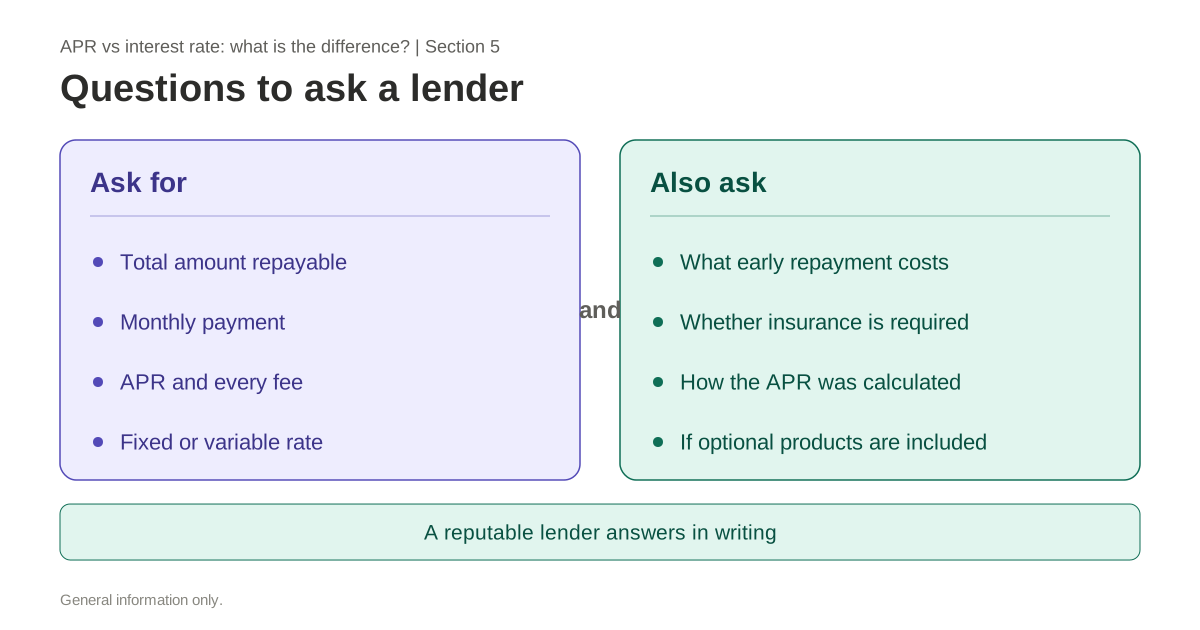
Ask for the total amount repayable, the monthly payment, the APR, and a list of every fee that applies to the loan. Ask whether the rate is fixed or variable, what happens if you repay early, and whether any insurance is required. A reputable lender will answer these questions in writing without hesitation.
It is also worth asking how the APR was calculated and whether it includes optional products. Clear answers make comparison straightforward, and vague answers are a reason to look elsewhere.
The bottom line
The interest rate describes the cost of borrowing the money. The APR describes the yearly cost of the whole loan, including many of its fees. Use both figures, but compare offers on the total amount repayable and the monthly payment you can afford. That combination gives the clearest picture of what a loan will cost you.
Frequently asked questions
Is APR always higher than the interest rate?
Usually, when the loan has fees that are included in the APR. If there are no included fees, the two figures can be the same.
Which figure should I use to compare loans?
Use the APR as the starting point, then check the total amount repayable and the monthly payment. Together they show the true cost of each offer on the same basis.
Does the APR include every cost?
No. It includes the costs that the rules in your country require, but optional charges, early repayment fees and rate changes may not be fully reflected. Read the full agreement.
Why does a longer loan with a lower APR sometimes cost more?
A longer term means more months of interest, even at a lower rate. The total amount repayable can be higher, so always compare the cash total as well as the percentage.